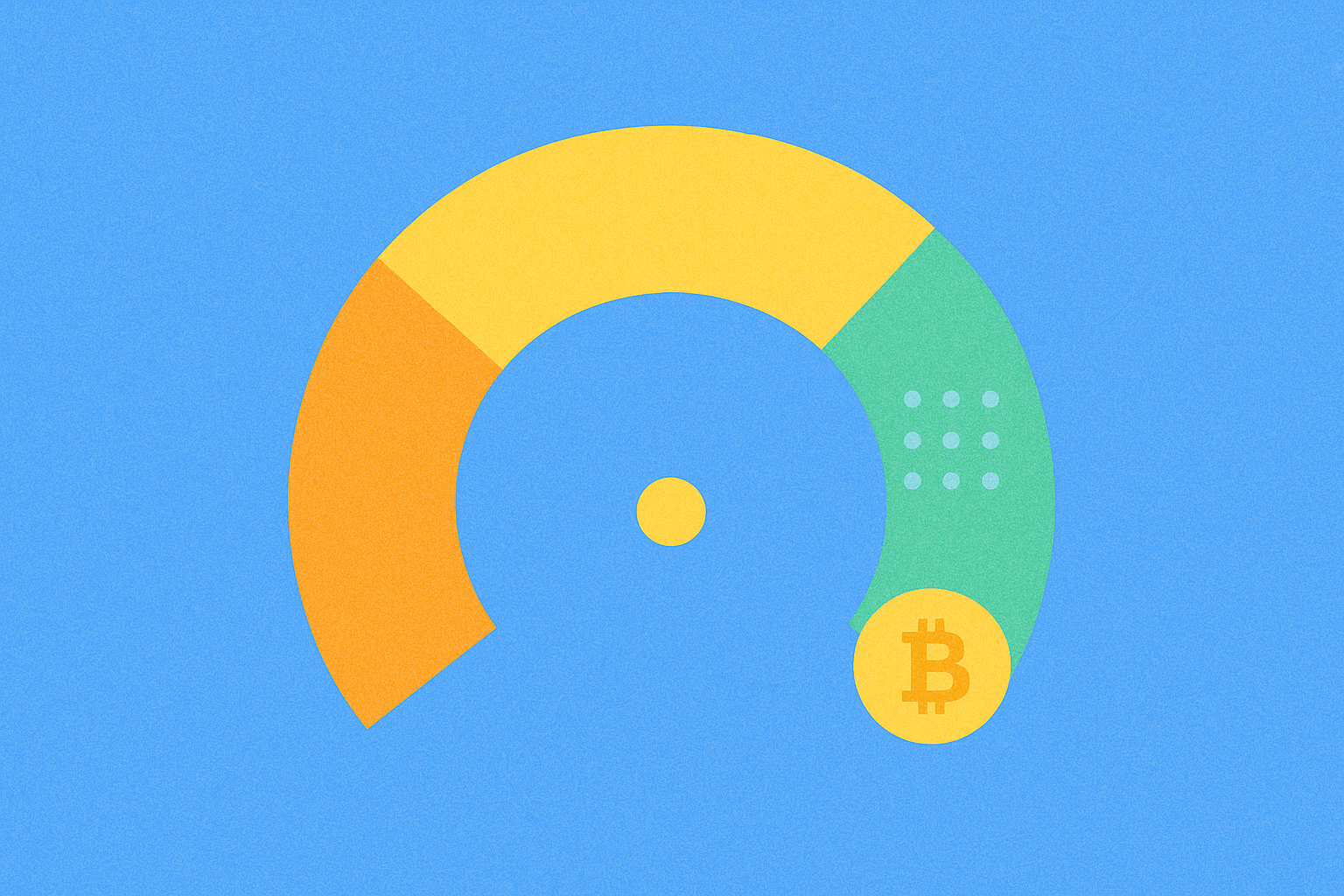
The Cryptocurrency Fear and Greed Index is a sophisticated tool measuring market sentiment on a 0-100 scale, where lower values indicate fear and higher values indicate greed. This index bridges gaps in traditional metrics by analyzing investor psychology through five weighted components: volatility, market momentum, social media activity, Bitcoin dominance, and search trends. Traders use the index to identify four distinct zones representing different market conditions and potential trading opportunities. While valuable for short-term sentiment analysis and identifying potential reversals, the index works best when combined with technical analysis, on-chain data, and other indicators. Understanding its limitations—including daily-only updates and Bitcoin-focused bias—is crucial for effective application in cryptocurrency trading strategies on exchanges like Gate.
Why is an Emotion Index Necessary?
The cryptocurrency market is characterized by high volatility, and investor emotions significantly influence investment decisions. Current cryptocurrency indices, such as the Nasdaq Crypto Index, NYSE Bitcoin Index, and S&P Bitcoin Index, provide abundant predictive data but fail to measure investor emotions and the psychological dynamics surrounding the market.
The Cryptocurrency Fear and Greed Index was developed to bridge this gap. It serves not merely as a financial tool but as a market indicator that analyzes emotions and investment psychology. This index can be used as a complementary tool when investing based on data-driven approaches like technical analysis, providing valuable insights into market sentiment that traditional metrics might overlook.
Understanding the Cryptocurrency Fear and Greed Index
The Cryptocurrency Fear and Greed Index is a sophisticated tool used to analyze the thoughts, emotions, and reactions of market participants. It collects and analyzes sentiment data related to specific cryptocurrencies from various sources and calculates them into a comprehensive indicator. This index provides investors with a quantifiable measure of market psychology, helping them make more informed decisions.
Historical Background
The Fear and Greed Index was originally developed by CNN Money in 2012 to measure various emotions and sentiments in the stock market. Subsequently, Alternative.me, a cryptocurrency analysis company, adapted it specifically for cryptocurrency analysis. The index analyzes multiple market indicators and assigns a value between 0 and 100, where '0' represents extreme fear or anxiety, and '100' indicates extreme greed. This numerical representation allows investors to quickly gauge the prevailing market sentiment and make strategic decisions accordingly.
Key Components and Market Dynamics
When the Fear and Greed Index reaches 100, investors are extremely optimistic about the future and rush to invest. Subsequently, investors realize profits, and the Fear and Greed Index begins to decline, marking a transition from greed to fear. This cyclical pattern is fundamental to understanding market behavior.
As prices fall and the Fear and Greed Index approaches below 40, panic and disappointment grip the market. During these periods, investors recognize the index decline as a buying opportunity and discover hope in the market. The interesting aspect is that investors discover greed in fear and encounter fear in greed, forming specific investment patterns that can be leveraged for strategic positioning.
How the Cryptocurrency Fear and Greed Index is Calculated
The Fear and Greed Index considers multiple market indicators and divides the data according to predetermined weights, displaying it as a number between 0 and 100. Understanding these components helps investors interpret the index more effectively and make better-informed decisions.
1. Volatility (25% Weight)
Volatility is a core indicator and accounts for 25% of the Fear and Greed Index calculation. This metric examines Bitcoin withdrawals and current market volatility. High volatility typically instills fear in investors, but it can sometimes be interpreted as their investment enthusiasm. By analyzing price swings over recent periods compared to historical averages, this component provides crucial insights into market stability and investor confidence levels.
2. Market Momentum (25% Weight)
This indicator, also referred to as the trading volume metric of the Cryptocurrency Fear and Greed Index, carries a 25% weight. It compares monthly and quarterly trading volume averages. High trading volume indicates that greed dominates the market, suggesting increased investor participation and confidence. Conversely, declining volumes may signal growing caution or fear among market participants, potentially indicating an upcoming trend reversal.
This component measures how many cryptocurrency-related posts are published on social media platforms, accounting for 15% of the index weight. It measures hashtags, social reactions, and engagement metrics across various platforms. Lunar Crush is a popular tool where you can check the number of times cryptocurrencies are mentioned on social media and their engagement levels. The social media component reflects the broader public sentiment and can often serve as an early indicator of shifting market trends.
4. Bitcoin Dominance (10% Weight)
Bitcoin Dominance carries a 10% weight and is a fairly complex but highly effective sub-indicator. An increase in Bitcoin's dominance means reduced greed for altcoins. Therefore, when Bitcoin's dominance grows, the altcoin market may move toward fear. This metric helps investors understand the flow of capital between Bitcoin and alternative cryptocurrencies, providing insights into market preferences and risk appetite.
5. Trends (10% Weight)
The Fear and Greed Index pulls search results from Google to check search volume for each coin. Changes in search volume are reflected in this index value, with a 10% weight. Increased search activity typically correlates with growing interest and potential price movements, while declining searches may indicate waning enthusiasm or market fatigue.
Advantages and Disadvantages of the Fear and Greed Index
| Advantages |
Disadvantages |
| Provides diverse perspectives on volatile markets |
Can identify short-term investment sentiment but doesn't provide a macroscopic perspective |
| The index doesn't change rapidly and moves slowly in a specific direction |
Volatility and search volume are irregular data yet are given significant weight |
| Saves market analysis time by including important data such as price volatility, dominance, and search volume |
Provides no insights when the index is close to neutral |
| Can provide useful information when assets are undervalued or in a bubble state |
Index changes can be significant without major price movements |
| Can provide balanced market outlook in bull and bear markets |
Doesn't consider whale activity, exchange inflows, or trading intensity |
| Useful when making aggressive investment decisions like Bitcoin short selling or other crypto assets |
Making investment decisions based on social media mentions is not recommended |
| Can identify dangerous moments by understanding market sentiment |
|
How Traders Use the Fear and Greed Index
Dividing the Index into Four Zones
The Fear and Greed Index can be divided into four distinct zones, each representing different market conditions and potential trading opportunities:
- Extreme Fear or Orange Zone (0-24)
- Fear or Yellow Zone (25-49)
- Greed or Light Green Zone (50-74)
- Extreme Greed or Green Zone (75-100)
Zone 1 represents extreme fear, which may indicate the best buying opportunity or that a price reversal is imminent. During these periods, many investors panic-sell, potentially creating attractive entry points for contrarian investors. Zone 2 is the fear zone, occurring at the beginning of a bear market when prices start to fall sharply. This zone often sees capitulation and widespread pessimism.
Prices begin to recover in Zone 3, where volatility is typically lowest. Increased buying volume can be observed, suggesting a somewhat bullish outlook. This zone often represents a transition period where market confidence gradually returns. Zone 4 is when buying activity is most prevalent in the market. Price reversals or corrections may occur in this zone, as excessive optimism can lead to overvaluation and subsequent market corrections.
Is the Fear and Greed Index Reliable?
Just because the index shows 'fear' in a bear market doesn't necessarily mean it's the bottom. It may simply indicate increasing chaos and price volatility. Understanding the limitations of this tool is crucial for effective application in trading strategies.
- In bear markets, 'greed' may actually trigger selling as investors rush to secure profits before further declines
- The index doesn't represent major price movements exceptionally well, sometimes lagging behind actual market action
- Emotions can be somewhat exaggerated during bull or bear markets, potentially skewing the index readings
The Fear and Greed Index is reasonably reliable, especially when used in conjunction with technical analysis indicators. It helps identify short-term investment sentiment and can provide valuable context for trading decisions. However, it may not be suitable for long-term market analysis, as it focuses primarily on immediate market psychology. Additionally, making investment decisions based solely on social media mentions is not recommended, as these can be easily manipulated or may not reflect genuine market fundamentals.
Conclusion: Fear and Greed in Cryptocurrency Markets
In conclusion, the Cryptocurrency Fear and Greed Index is an excellent tool for predicting overall market sentiment and understanding investor psychology. However, focusing solely on this index when conducting investment analysis is not advisable. A comprehensive approach yields the best results.
The perfect combination involves using the Bitcoin Rainbow Chart, which displays Bitcoin price trends in various colors to identify broader buying and selling zones, while using the Fear and Greed Index to track market sentiment. Additionally, employing on-chain analysis and charting tools to analyze the nuances of each item is the path to investment success. By integrating multiple analytical tools and maintaining a disciplined approach, investors can better navigate the volatile cryptocurrency markets and make more informed decisions that align with their investment goals and risk tolerance.
FAQ
What is the Cryptocurrency Fear and Greed Index and how is it calculated?
The Fear and Greed Index measures market sentiment on a scale of 0 to 100, where 0 indicates extreme fear and 100 indicates extreme greed. It is calculated based on Bitcoin volatility, market momentum and transaction volume, social media activity, Bitcoin dominance, and Google search trends. The index helps traders gauge short-term market psychology.
What is the numerical range of the Fear and Greed Index and what do different value ranges represent?
The Fear and Greed Index ranges from 0 to 100. Below 25 indicates extreme fear, 25-49 shows fear, 50-74 shows greed, and above 75 indicates extreme greed. Each range reflects market sentiment and investor psychology, helping traders identify potential reversal opportunities.
How to use the Fear and Greed Index to guide cryptocurrency investment decisions?
The Fear and Greed Index measures market sentiment. Extreme fear signals potential buying opportunities, while extreme greed may indicate corrections ahead. Combine it with technical analysis and other indicators for optimal trading decisions and better entry/exit timing.
What factors does the Fear and Greed Index include? How are these factors weighted?
The Cryptocurrency Fear and Greed Index comprises six equally weighted indicators: market momentum and trading volume, social media activity, Bitcoin dominance, Google search trends, market volatility, and exchange flows. Each factor contributes equally to calculate the overall sentiment score ranging from 0 to 100.
What major market events occurred when the Fear and Greed Index reached extreme values historically?
In early 2018, extreme greed levels preceded a significant market correction. In March 2020, the index hit extreme fear during the COVID-19 pandemic, followed by strong recovery. These extremes signal potential market reversals and trading opportunities.
What is the relationship between the Fear and Greed Index and mainstream cryptocurrency prices like Bitcoin and Ethereum?
The Fear and Greed Index directly correlates with cryptocurrency market sentiment and prices. Low index readings indicate undervalued assets with selling pressure, while high readings suggest overvalued conditions and potential bubbles. It reflects collective market psychology affecting Bitcoin, Ethereum, and other major cryptocurrencies' price movements.
How should investors respond in high greed and high fear market environments?
Maintain discipline and avoid emotional decisions. In high greed, take profits strategically. In high fear, identify quality opportunities. Focus on long-term goals, reassess risk tolerance, and stick to your investment plan regardless of market sentiment.
What are the limitations of the Fear and Greed Index? Can it be completely relied upon for investment decisions?
The Fear and Greed Index is based primarily on Bitcoin and cannot fully reflect overall market sentiment. It updates only once daily and should not be your sole investment tool. Use it alongside other indicators for comprehensive analysis.
How to view and track the Fear and Greed Index in real time? What are the official sources?
Visit the official Fear & Greed Index website powered by MarketPsych for real-time data. Download dedicated mobile apps available on iOS and Android for instant updates, push notifications, and historical trend analysis with intuitive gauge displays.
What is the difference between the Cryptocurrency Fear and Greed Index and the traditional stock market's Fear Index (VIX)?
The Cryptocurrency Fear and Greed Index measures investor sentiment specific to crypto markets using on-chain data and trading volume, while VIX measures stock market volatility. The Crypto Index focuses on emotional extremes, whereas VIX reflects price fluctuations in equities.
* The information is not intended to be and does not constitute financial advice or any other recommendation of any sort offered or endorsed by Gate.