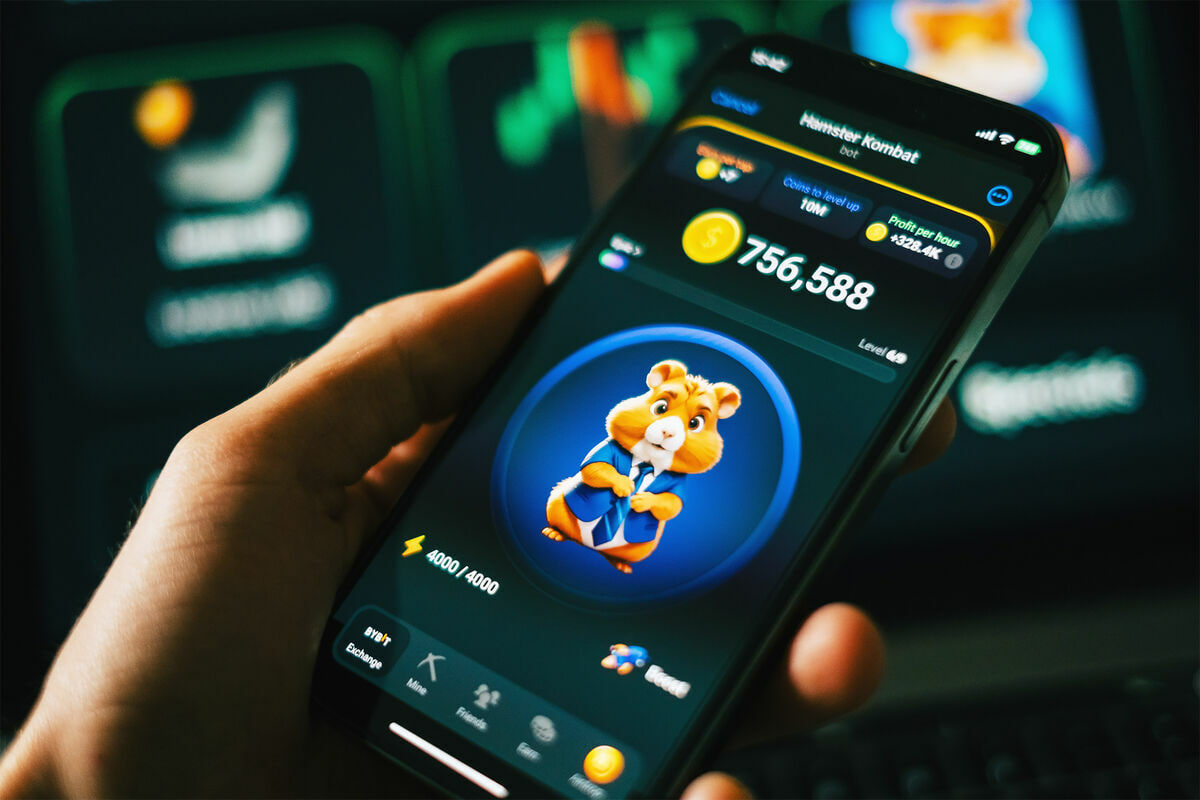
Hamster Kombat is a Telegram Mini App that combines tap-to-earn gameplay with blockchain technology. Built around the HMSTR token, Seasons, and an expanding ecosystem, it aims to lower the barrier to Web3 gaming while introducing millions of Telegram users to digital assets and on-chain participation.
Unlike traditional GameFi projects that often require crypto wallets or NFT purchases before users can begin, Hamster Kombat allows players to start instantly through Telegram. Players can first experience the gameplay and later connect to blockchain features such as HMSTR rewards and the TON ecosystem, creating a smoother onboarding experience for mainstream users.
Since its launch, Hamster Kombat has evolved from a simple tapping game into a broader ecosystem that includes community incentives, seasonal events, tokenomics, and long-term ecosystem development. This transition reflects a broader trend among Telegram-native Web3 applications toward sustainable ecosystem building rather than one-time user acquisition.
What Is Hamster Kombat?
Hamster Kombat is a blockchain-enabled idle simulation game built as a Telegram Mini App. Players take on the role of the CEO of a virtual cryptocurrency exchange, earning in-game coins, upgrading business operations, and increasing passive income while progressing through seasonal content.
The game became one of Telegram's fastest-growing Mini Apps by combining lightweight gameplay with social distribution. Because it runs entirely inside Telegram, users can access the game without downloading additional software, making it significantly more accessible than many traditional blockchain games.
Rather than focusing solely on token rewards, Hamster Kombat combines gameplay progression, community engagement, and ecosystem incentives into a long-term operating model. HMSTR functions as the ecosystem's native token, while Seasons and community activities provide ongoing engagement beyond the initial launch period.
How Does Hamster Kombat Combine Telegram Gaming with Web3?
Telegram serves as the primary gateway for Hamster Kombat. Users can launch the game directly through a Telegram bot, making onboarding significantly easier than conventional Web3 games that often require browser wallets or dedicated applications.
Blockchain features are introduced gradually rather than immediately. Most gameplay can be enjoyed without connecting a wallet, while users who want to participate in HMSTR-related activities or future ecosystem functions can later connect compatible TON wallets when required.
This staged onboarding model helps reduce friction for newcomers. Instead of asking users to understand blockchain technology from the beginning, Hamster Kombat first delivers an engaging gaming experience before introducing Web3 concepts such as digital ownership, ecosystem rewards, and blockchain participation.
The overall user journey can be summarized as follows:
Stage
User Experience
Access
Launch the game directly through Telegram
Gameplay
Tap, upgrade cards, and manage a virtual exchange
Progression
Increase Profit Per Hour and complete daily activities
Ecosystem
Participate in Seasons and community events
Web3 Integration
Connect compatible wallets for HMSTR-related features
This gradual transition from Web2 usability to Web3 participation has become one of Hamster Kombat's defining characteristics.
While tapping generates coins during the early stages, the most important performance metric is Profit Per Hour. Upgrading cards across categories such as Marketing, Markets, PR & Team, and Legal increases passive income, allowing the exchange to continue generating resources even when players are offline.
As progression continues, strategic resource allocation becomes more important than manual tapping. Higher-level cards unlock stronger passive income opportunities, shifting the gameplay from repetitive clicking toward long-term business management.
Core gameplay revolves around several interconnected systems:
Gameplay Element
Purpose
Tapping
Earn initial coins
Card Upgrades
Improve exchange performance
Profit Per Hour
Generate passive income
Daily Missions
Unlock additional rewards
Seasons
Provide ongoing progression and incentives
This progression model encourages players to optimize their exchange rather than relying solely on manual interaction, giving Hamster Kombat more depth than a typical tap-to-earn game.
What Role Does HMSTR Play in the Ecosystem?
HMSTR is the native token that connects Hamster Kombat's gameplay, community incentives, and long-term ecosystem development. Rather than functioning solely as an in-game reward, HMSTR serves as the economic layer that links players, developers, partners, and future ecosystem applications.
Unlike traditional in-game currencies that remain confined to a single application, HMSTR is an on-chain asset within the TON ecosystem. This allows value generated through gameplay to extend beyond the game itself and interact with a broader blockchain ecosystem.
According to the project's tokenomics, HMSTR is designed to support long-term ecosystem participation rather than short-term speculation. As more products and services are introduced, the token is expected to power additional ecosystem functions beyond player rewards.
Its primary roles include:
Role
Description
Ecosystem Rewards
Incentivizes Season participation and community engagement
Ecosystem Asset
Connects value across ecosystem products
Governance
Supports future community governance mechanisms
Long-Term Incentives
Funds ecosystem growth and strategic initiatives
How Do Hamster Foundation and Seasons Support Long-Term Growth?
Hamster Foundation represents Hamster Kombat's long-term ecosystem strategy. Rather than operating as a standalone game, the project aims to build a sustainable Web3 ecosystem supported by continuous product development, community participation, and developer collaboration.
Seasons are one of the ecosystem's core operating mechanisms. Each Season introduces new objectives, gameplay content, community activities, and reward opportunities that encourage users to remain active over time instead of participating only during token distribution events.
Together, Hamster Foundation and the Season model shift the project's focus from rapid user acquisition toward long-term ecosystem growth. Instead of relying solely on tap-to-earn mechanics, the ecosystem is designed to evolve through continuous updates, community engagement, and expanding utility for HMSTR.
What Products Make Up the Hamster Kombat Ecosystem?
Hamster Kombat has expanded beyond its original Telegram game into a broader ecosystem of products designed to support long-term user engagement. While the core game remains the primary entry point, additional ecosystem components are gradually being introduced.
Today, the ecosystem consists of gameplay, seasonal progression, community incentives, HMSTR, and the organizational framework represented by Hamster Foundation. Together, these components create a unified user experience that extends beyond a single Mini App.
The major ecosystem components currently include:
Product
Purpose
Hamster Kombat Game
Core gameplay experience
HMSTR
Native ecosystem token
Seasons
Ongoing progression and community incentives
Hamster Foundation
Long-term ecosystem development
Telegram Mini App
User access and application platform
As the ecosystem continues to evolve, additional Mini Apps, community initiatives, and ecosystem services are expected to expand the utility of HMSTR and strengthen user engagement.
Hamster Kombat vs. Notcoin vs. Catizen
Hamster Kombat, Notcoin, and Catizen are all major projects within Telegram's Mini App ecosystem, but each follows a different development strategy.
Notcoin primarily serves as a gateway into Web3 by introducing Telegram users to blockchain rewards through simple participation. Catizen focuses on casual gaming and expanding a broader entertainment ecosystem through multiple games and AI-powered experiences.
Hamster Kombat, by comparison, emphasizes long-term ecosystem development. Beyond its tap-to-earn origins, the project is building around HMSTR, Seasons, Hamster Foundation, and future ecosystem products to create a sustainable Web3 gaming platform.
Category
Hamster Kombat
Notcoin
Catizen
Core Experience
Business simulation game
Community mining
Casual pet simulation
Entry Point
Telegram Mini App
Telegram Mini App
Telegram Mini App
Ecosystem Focus
Seasons & ecosystem expansion
Community onboarding
Gaming platform
Native Token
HMSTR
NOT
CATI
Long-Term Vision
Web3 gaming ecosystem
Web3 user acquisition
Multi-game ecosystem
Although all three projects leverage Telegram as their primary platform, their ecosystem strategies differ significantly.
Advantages and Potential Limitations
One of Hamster Kombat's greatest strengths is accessibility. By operating entirely within Telegram, the project removes many of the onboarding barriers traditionally associated with blockchain gaming, allowing mainstream users to experience Web3 applications without extensive technical knowledge.
The project's gradual Web2-to-Web3 transition also differentiates it from many earlier GameFi projects. Users can begin with familiar gameplay before exploring blockchain features such as HMSTR and the TON ecosystem.
However, like many Telegram-based games, Hamster Kombat also faces long-term challenges. Sustaining user engagement requires continuous content updates, ecosystem expansion, and developer participation. As competition within the Telegram gaming ecosystem continues to increase, maintaining long-term growth will depend on the project's ability to deliver new products and meaningful ecosystem utility.
Hamster Kombat has evolved beyond a Telegram tap-to-earn game into a broader Web3 ecosystem centered on HMSTR, Seasons, and ecosystem development. As initiatives such as a DAO and Layer 2 roadmap gain attention, market interest is increasingly focused on the project's long-term strategy. For more on these recent developments, see Why Is Hamster Kombat Gaining Market Attention Again? Are DAO and Layer 2 the New Growth Drivers?
Summary
Hamster Kombat has grown from a simple Telegram tap-to-earn game into a broader Web3 ecosystem built around HMSTR, Seasons, and long-term community development. By combining lightweight gameplay with blockchain-based incentives, the project offers an accessible entry point for mainstream users exploring Web3.
As the ecosystem continues to expand, Hamster Kombat's focus has shifted from user acquisition toward sustainable ecosystem growth through Hamster Foundation, developer participation, and evolving utility for HMSTR. Together, these components position the project as one of the most recognizable Telegram-native Web3 gaming ecosystems.
FAQ
What is Hamster Kombat?
Hamster Kombat is a Telegram Mini App that combines tap-to-earn gameplay with blockchain technology, allowing players to manage a virtual crypto exchange while participating in a broader Web3 ecosystem.
What is HMSTR used for?
HMSTR is the native token of the Hamster Kombat ecosystem. It supports ecosystem rewards, future governance, community incentives, and long-term ecosystem development.
Do I need a crypto wallet to play Hamster Kombat?
No. Most gameplay is available directly through Telegram without connecting a wallet. A compatible wallet is only required for certain blockchain-related features and ecosystem activities.
What are Seasons in Hamster Kombat?
Seasons are recurring gameplay cycles that introduce new objectives, missions, community events, and reward opportunities, helping maintain long-term user engagement.
How is Hamster Kombat different from Notcoin?
While both projects are built on Telegram, Notcoin primarily focuses on Web3 user onboarding, whereas Hamster Kombat emphasizes long-term ecosystem development through gameplay, HMSTR, Seasons, and community participation.
Is Hamster Kombat only a tap-to-earn game?
No. Although tapping is part of the early gameplay, Hamster Kombat has evolved into a broader ecosystem that includes business simulation mechanics, seasonal progression, HMSTR tokenomics, and long-term ecosystem development.
Author: Carlton
Translator: Sonia
Reviewer(s): Matheus、Piccolo
Translation Reviewer(s): Ashely
Disclaimer
* The information is not intended to be and does not constitute financial advice or any other recommendation of any sort offered or endorsed by Gate.
* This article may not be reproduced, transmitted or copied without referencing Gate. Contravention is an infringement of Copyright Act and may be subject to legal action.
Solana faces both opportunities and challenges in its development. Recently, severe network congestion has led to a high transaction failure rate and increased fees. Consequently, some have suggested using Layer 2 and appchain technologies to address this issue. This article explores the feasibility of this strategy.
Sui is a PoS L1 blockchain with a novel architecture whose object-centric model enables parallelization of transactions through verifier level scaling. In this research paper the unique features of the Sui blockchain will be introduced, the economic prospects of SUI tokens will be presented, and it will be explained how investors can learn about which dApps are driving the use of the chain through the Sui application campaign.
This article introduces the technical principles, framework, and applications of Zero-Knowledge (ZK) technology, covering aspects from privacy, identity (ID), decentralized exchanges (DEX), to oracles.
Tronscan is a blockchain explorer that goes beyond the basics, offering wallet management, token tracking, smart contract insights, and governance participation. By 2025, it has evolved with enhanced security features, expanded analytics, cross-chain integration, and improved mobile experience. The platform now includes advanced biometric authentication, real-time transaction monitoring, and a comprehensive DeFi dashboard. Developers benefit from AI-powered smart contract analysis and improved testing environments, while users enjoy a unified multi-chain portfolio view and gesture-based navigation on mobile devices.