Image: https://acurast.com/
What Is Acurast? Project Positioning and Objectives
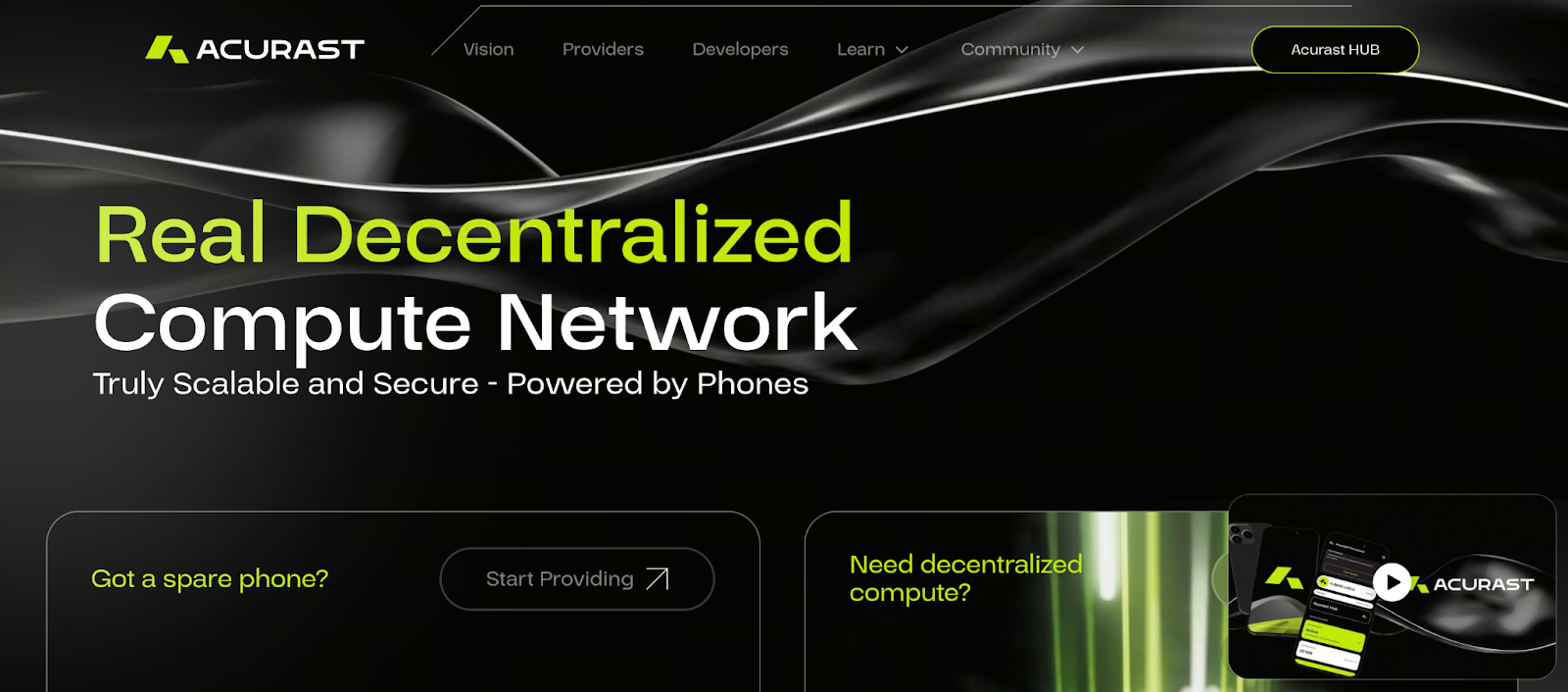
Acurast is a decentralized computing network designed to redefine global computing infrastructure. Unlike traditional cloud services, Acurast turns smartphones worldwide into distributed nodes, enabling these devices to deliver verifiable, confidential, and scalable computing power for developers, AI applications, and the Web3 ecosystem. The project aims to break the centralized monopoly of conventional data centers, creating a more open and equitable computing marketplace by leveraging edge devices such as smartphones.
At its core, Acurast integrates the DePIN (Decentralized Physical Infrastructure Network) framework with confidential computing technologies, focusing on user privacy protection and economic incentives for genuine computing power contributions.
Distinctive Mechanisms of the Decentralized Computing Network
Acurast’s standout feature is that it operates without large servers or centralized hardware, instead relying on a global network of smartphone nodes. By utilizing built-in Trusted Execution Environments (TEE) and Hardware Security Modules (HSM) on these devices, Acurast ensures both the integrity of computational tasks and the security of user data.
Regular users can connect their idle smartphones to the network as Compute Providers to earn rewards. Alternatively, users may delegate their ACU tokens to others, allowing broader participation in network incentive distribution and ecosystem engagement.
ACU Tokenomics and Distribution Structure
The native token of Acurast, ACU, serves as the ecosystem’s core economic incentive vehicle. With a total supply of 1 billion tokens, the tokenomics are structured to promote long-term ecosystem health and participant engagement.
According to official tokenomics data:
- Approximately 24% allocated for community activation and ecosystem incentives
- Approximately 24% to the community treasury
- Approximately 24% to the team and advisors
- Approximately 11.5% for operations and development funding
- Approximately 10% for liquidity incentives
- Approximately 6.5% to early supporters and rewards
This distribution is designed to balance project growth with community interests.
ACU is used for settling network transaction fees, incentivizing computing service providers, governance rewards, and cross-chain bridge operations. The token also supports staking and rewards for activity in derivative applications.
Mainnet Launch and Exchange Developments
In November 2025, Acurast completed $11 million in total funding and launched its Genesis mainnet, marking a pivotal transition from testnet to a fully decentralized network.
By early 2026, the ACU token began listing on several exchanges, with leading platforms such as Gate opening the ACU/USDT trading pair for direct user participation.
These listings are typically accompanied by liquidity provision, airdrop events, and trading volatility, all of which have had a clear impact on ACU’s market price.
ACU Market Price and Trading Activity
As of January 21, 2026, ACU was priced at approximately $0.07, with a marked increase in 24-hour trading volume and heightened market volatility.
Following the mainnet launch, circulating supply was released, making trading volume and market depth key factors in price formation. While short-term rallies and corrections have occurred, overall market interest in decentralized computing assets continues to grow.
Potential Use Cases for Acurast
Acurast’s architecture supports a range of high-security, privacy-focused applications, including:
- Confidential AI inference tasks—using decentralized computing to protect models and user data
- Blockchain indexing and on-chain analytics services
- Distributed VPN and edge computing services
- Decentralized automation and cross-chain operations
This real hardware–based, distributed computing model enables Acurast to move beyond traditional Web3 tasks and address enterprise-grade confidential computing needs.
Risk Warning and Future Outlook
While Acurast’s technology and ecosystem design are innovative, several risks remain—including market volatility, user participation thresholds, and the actual adoption rate of the decentralized network.
Additionally, ACU’s price may be significantly affected by token unlocks and changes in exchange liquidity, making short-term volatility common. Investors should carefully evaluate their own risk tolerance.
As ecosystem tools mature, developer support grows, and enterprise integration capabilities strengthen, Acurast is positioned to become a key infrastructure node in the decentralized computing market.
Click here to trade: https://www.gate.com/trade/ACU_USDT







