ARM's business model should not be limited to the broad label of "semiconductor company." Its revenue streams, ecosystem position, and growth logic are fundamentally driven by a licensing model: on one side, it charges upfront licensing fees to chip designers and device manufacturers; on the other, it earns ongoing royalties based on shipment or usage volume. To truly understand ARM stock's business model, it's essential to distinguish among architecture licensing, chip design, and chip manufacturing.
What Is Arm Holdings (ARM) and Why Is It a Key Stock in the Chip Ecosystem?
Arm Holdings is a company built around computing architecture and intellectual property. The ARM architecture is widely adopted in mobile devices, embedded systems, automotive electronics, IoT, and select data center products. Its core value isn't in "selling chips itself," but in enabling a broad base of device and chip manufacturers to develop around a unified instruction set, toolchain, and software ecosystem.

This positions ARM stock as "ecosystem infrastructure," rather than traditional hardware manufacturing. As long as ARM architecture continues to expand into new devices, new platforms, and emerging hashrate scenarios, its business footprint will keep growing. ARM architecture and low-power design details why this ecosystem expansion is critical for long-term relevance.
How Does ARM's Business Model Operate?
ARM's commercial model is typically split into two parts: upfront licensing and ongoing royalties. Upfront licensing determines whether a client can use ARM architecture or related IP; royalties are linked to chip shipments, device deployments, or protocol usage, providing a stable revenue stream.
| Revenue Segment |
Function |
Key Metrics |
| Licensing Fee |
Grants clients use of ARM architecture/IP |
Client count, licensing scope, contract duration |
| Royalty |
Generates recurring revenue from chip and device shipments |
Downstream shipment volume, device mix, market penetration |
| Ecosystem Expansion |
Drives wider platform adoption of ARM |
Software compatibility, developer support, partner ecosystem |
This approach means ARM is not dependent on a single factory's output, but rather on ecosystem expansion and device penetration. For investors, the focus should be on whether the licensing base is growing, whether royalties are increasing as device shipments rise, and whether ARM architecture is being adopted in new applications.
Why Is the ARM Architecture Important?
ARM architecture stands out for its low power consumption, high efficiency, and broad compatibility. Mobile devices have long prioritized battery life and heat dissipation—areas where ARM excels—and its reach has since extended to automotive electronics, edge AI, and select server environments.
| Dimension |
ARM Architecture Features |
Ecosystem Impact |
| Power Efficiency |
Strong focus on energy efficiency |
Ideal for battery-powered and high-density deployments |
| Compatibility |
Mature software and toolchain ecosystem |
Lowers migration and development costs |
| Scalability |
Spans from smartphones to data centers |
Expands licensing and royalty opportunities |
ARM's competitive moat is rooted not just in technology, but in ecosystem lock-in. When software, development tools, chip designers, and device makers are deeply integrated around ARM, switching costs increase—sustaining ARM's central role in the semiconductor value chain.
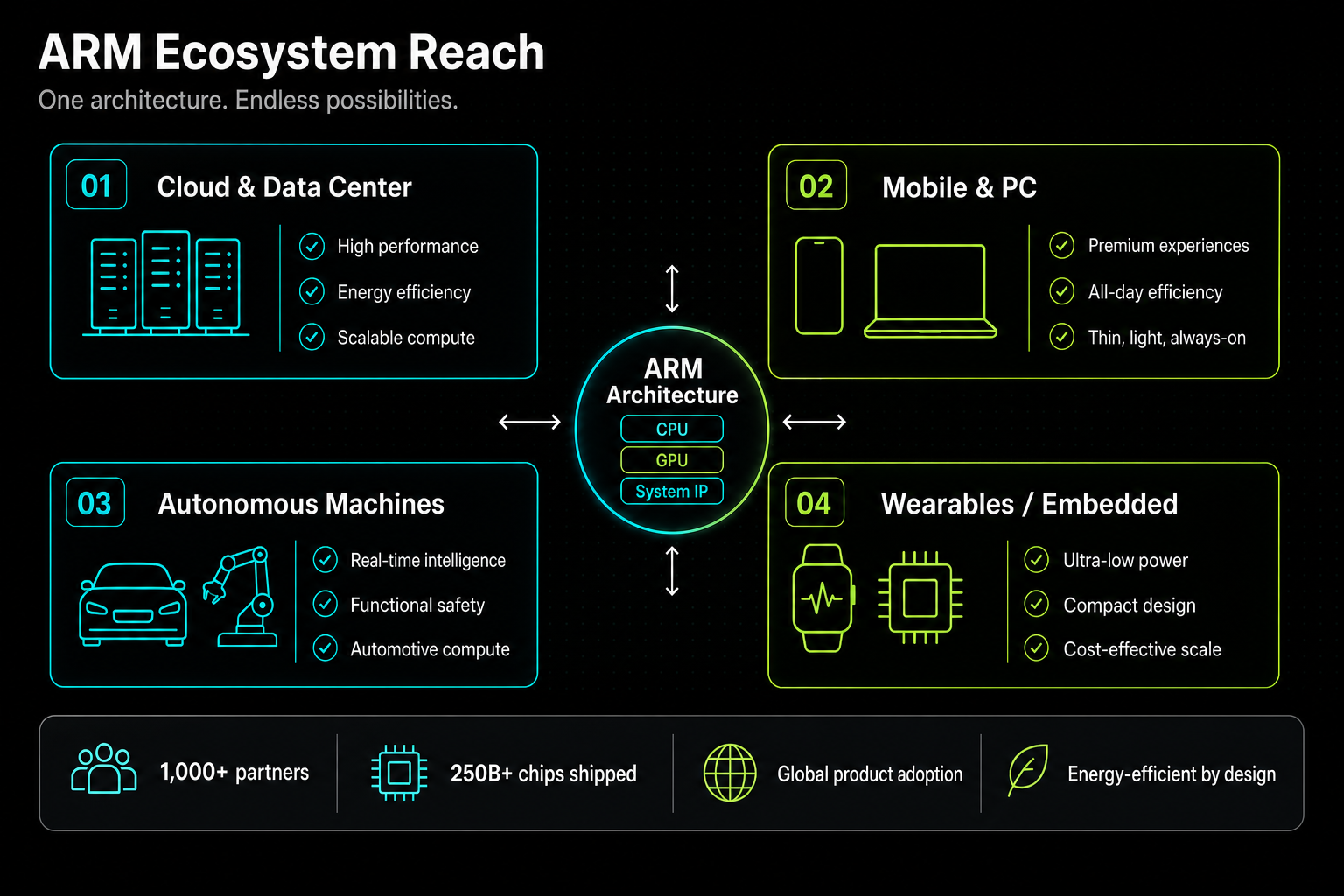 Figure 1. ARM ecosystem overview: low-power design, software compatibility, and multi-device penetration form its technical foundation.
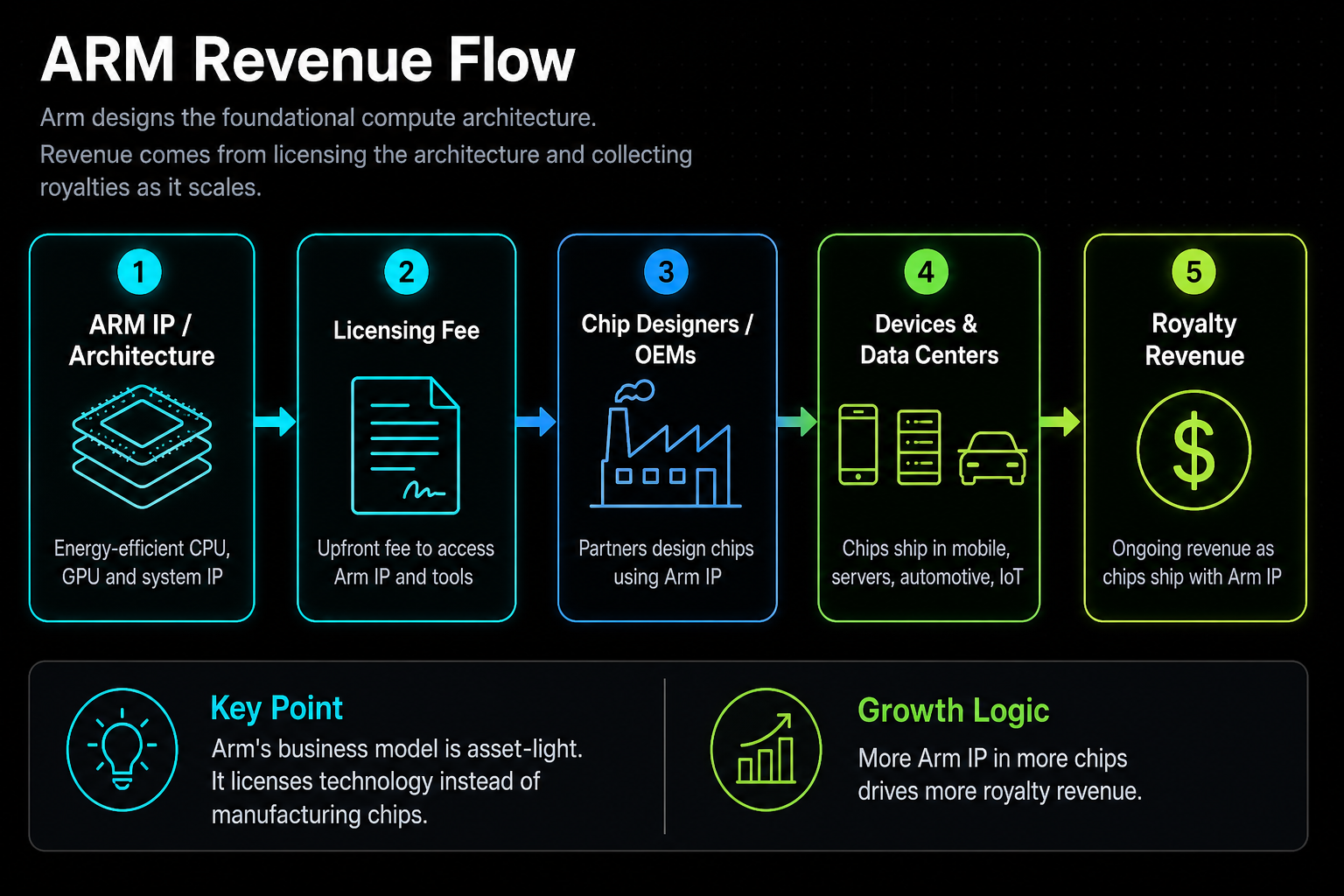 Figure 2. ARM licensing and royalty flow: revenue path from architecture IP through chip design, device manufacturing, to end-market shipment.
What Drives ARM Stock's Growth?
ARM's growth is fueled by three main drivers: sustained high penetration in mobile, continued expansion in automotive electronics and IoT, and rising demand for energy-efficient computing architectures in AI and data center markets. As long as device and chip designers require energy-efficient, compatible architectures, ARM's licensing and royalty base will continue to expand.
However, growth is not always linear. Chip cycles, shifts in device demand, customer concentration, and varying adoption rates across markets all influence revenue timing and market expectations.
What Risks Should You Consider Before Trading ARM Stock?
ARM faces risks on both the business and trading fronts. Operationally, it depends on ecosystem expansion and downstream shipments; in the market, chip cycles and AI trends can drive valuation swings; in trading, users must confirm Gate page codes, order rules, and funding criteria.
| Risk Type |
Primary Source |
Key Considerations |
| Business Risk |
Customer concentration, licensing reliance, device cycles |
Changes in licensing clients, royalty growth trends |
| Competitive Risk |
Alternative architectures, ecosystem rivalry |
x86, RISC-V, and competing architectures |
| Valuation Risk |
Overly optimistic market expectations |
Alignment of revenue growth and valuation |
| Trading Risk |
Code selection errors, order and timing rules |
Gate ARM page entity, trading history, fee structure |
Before trading, it's best to separate company analysis from platform execution. ARM stock business model provides business insight, while Trading ARM stock on Gate covers the practical order process.
How Does ARM Differ from Nvidia, Intel, and Qualcomm?
ARM's distinction from Nvidia, Intel, and Qualcomm lies in its ecosystem role. ARM is an architecture and IP platform, Nvidia is focused on GPUs and AI computing, Intel is centered on x86 chip design and manufacturing, and Qualcomm designs chips for mobile and communication devices.
| Company |
Core Role |
Main Revenue Model |
Ecosystem Position |
| ARM |
Architecture/IP licensing |
Licensing fees + royalties |
Underlying standard and platform |
| Nvidia |
AI/GPU computing platform |
Chip sales and platform ecosystem |
Hashrate provider |
| Intel |
x86 processor and manufacturing |
Chip sales and manufacturing |
General-purpose computing platform |
| Qualcomm |
Mobile communications chip design |
Chip sales and licensing |
Device connectivity and mobile computing |
This comparison underscores that ARM's value lies in controlling widely adopted architecture standards—not in directly selling end-device chips. Recognizing this is key to understanding its central place in the semiconductor ecosystem.
How Do You View and Trade ARM Stock on Gate?
Within Gate Stocks, users can search for Arm Holdings by the stock code ARM; Trading ARM stock on Gate offers a step-by-step guide from search to order placement. The Gate ARM stock page is the most direct way to confirm the entity and code.
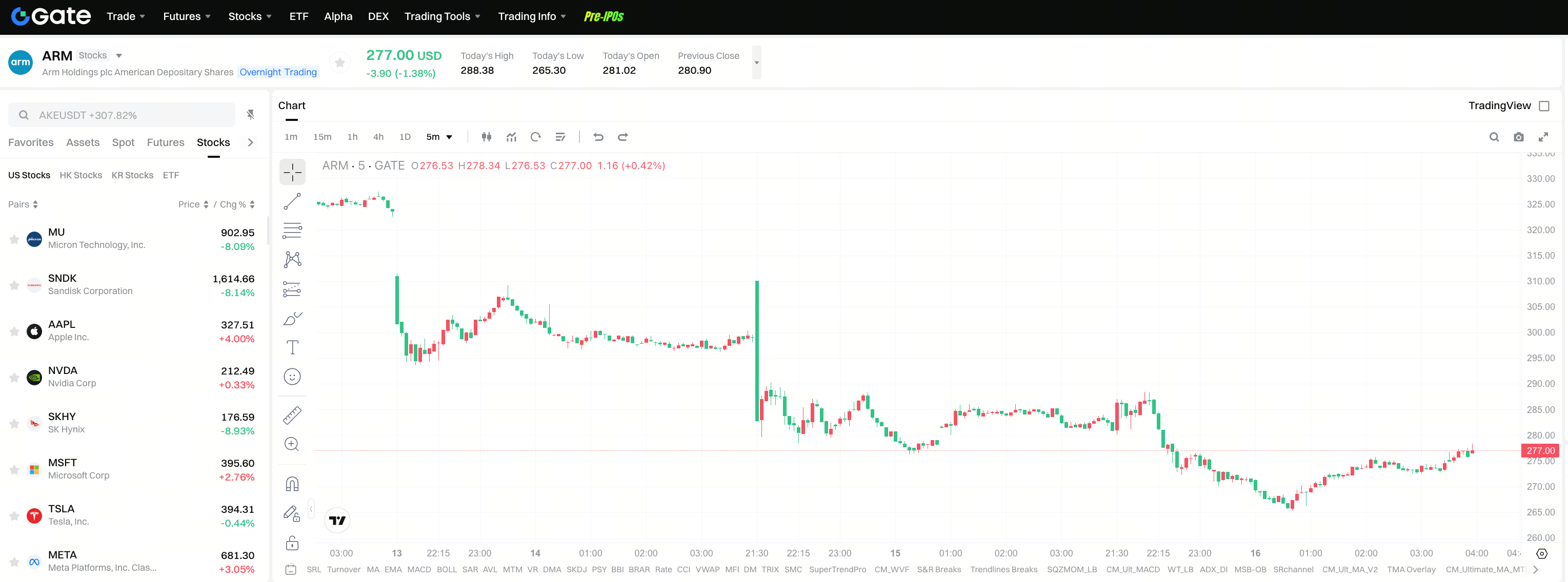
Before adding ARM to your watchlist, check three things: that the code is correct, the page entity is Arm Holdings plc, and the order rules align with your funding strategy. This helps separate company research from execution risk and reduces avoidable mistakes.
What Long-Term Metrics Should You Track for ARM Stock?
For ARM, long-term analysis should focus on growth in licensing customers, the pace of royalty revenues, device penetration rates, expansion in core segments like mobile and automotive, and adoption in new computing scenarios. Quarterly volatility rarely explains changes in long-term value.
A sounder research approach is to view ARM as a blend of ecosystem penetration and commercial licensing efficiency. As long as the licensing base grows, device penetration rises, and ecosystem stickiness persists, the long-term outlook remains strong.
Summary
The core of Arm Holdings (ARM) stock is not traditional chip manufacturing, but architecture licensing, royalty revenue, and ecosystem expansion. To understand ARM, consider its business model, technical moat, growth drivers, risk factors, and Gate Stocks trading rules—don't rely on the simple "semiconductor company" label.
FAQ
What Kind of Company Is Arm Holdings (ARM)?
Arm Holdings is focused on chip architecture and intellectual property licensing, with revenue primarily from licensing fees and royalties—not mass chip production. Its architecture is widely used in mobile, automotive, IoT, and select data center applications.
How Does ARM Make Money?
ARM's revenue comes mainly from upfront licensing fees and ongoing royalties. Licensing fees grant usage rights; royalties are tied to downstream chip or device shipments.
How Is ARM Architecture Different from x86?
ARM architecture emphasizes low power and high efficiency, while x86 has long dominated general computing and PC ecosystems. Both have mature ecosystems, but serve different use cases and industry paths.
How Is ARM Different from Nvidia?
ARM is an architecture and IP platform; Nvidia is a computing power and GPU platform. ARM relies on licensing and royalties, while Nvidia's revenue comes from chip sales and its platform ecosystem.
How Do You Trade ARM Stock on Gate?
In Gate Stocks, search for the code ARM, confirm the company name Arm Holdings plc, select the order type, check trading hours and funding criteria, and then decide whether to place an order. Always make sure the page entity matches the stock code before trading.