Arm Holdings (ARM) is typically regarded within the Gate Learn system as an “architecture licensing company” rather than a conventional chip manufacturer. ARM operates a business model based on licensing fees and royalties.

What Is ARM’s Revenue Model?
ARM’s revenue is generally comprised of two main components: licensing fees and royalties. Licensing fees are paid when clients obtain rights to use ARM’s architecture or IP, while royalties accumulate as chips or end devices are shipped over time.
| Revenue Source |
Stage |
Function |
| Licensing Fee |
Before or after design integration |
Grants clients rights to use ARM architecture |
| Royalty |
Chip shipment and end device deployment |
Provides ongoing revenue based on downstream scale |
| Ecosystem Expansion |
Long-term phase |
Drives broader adoption of ARM architecture |
This structure means ARM’s revenue flexibility is closely tied to downstream device shipments, chip penetration rates, and the number of licensing partners. Its growth is driven not by a single product, but by the continual expansion of its ecosystem.
Why Isn’t ARM a Chip Manufacturing Company?
ARM, unlike Intel, does not primarily rely on its own wafer or processor shipments, nor does it directly manage large-scale manufacturing operations. Instead, ARM provides foundational architecture standards and intellectual property, enabling chipmakers to build products on its platform.
This distinction is crucial, as it shifts ARM’s financial focus away from production capacity and factories, and toward licensing partners, device adoption rates, software compatibility, and royalty channels.
Why Is ARM’s Business Model Expansive?
ARM’s scalability is rooted in standardization and network effects. As more manufacturers adopt ARM architecture, development tools, software compatibility, and supply chain expertise become increasingly robust, making it easier for new clients to join.
| Expansion Factor |
Manifestation |
Revenue Impact |
| Ecosystem Inertia |
Existing devices and software support ARM |
Lowers migration costs |
| Multi-Scenario Penetration |
Mobile, automotive, IoT, edge AI |
Expands royalty base |
| Partner Network |
Chip designers, device manufacturers, toolchains |
Increases licensing demand |
As a result, ARM’s business model functions as a “platform-based intellectual property business.” As new applications emerge, opportunities for licensing and royalty growth continue to expand.
What Are the Key Metrics When Analyzing ARM?
When analyzing ARM, the focus should not be on short-term revenue swings, but rather on the number of licensing clients, royalty growth trajectory, device adoption rates, and penetration into new markets. Synchronized improvements in these indicators signal expanding ecosystem influence.
Client structure is another critical factor. If revenue is overly concentrated among a few major clients or dominated by a single device category, the royalty stream may be more exposed to cyclical risks.
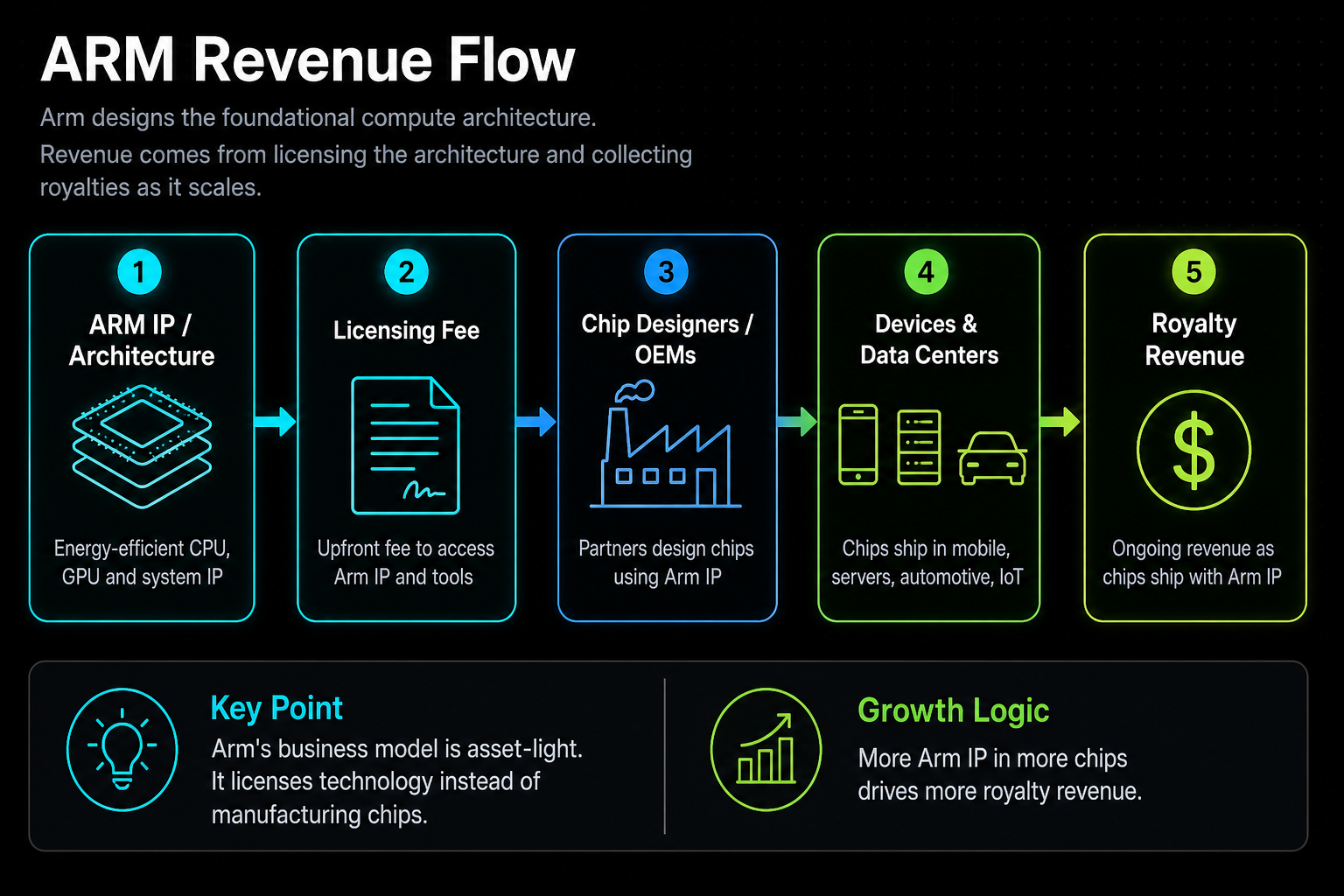 Figure 1. ARM’s revenue flow: architecture IP, chip design, device manufacturing, and end-market shipments collectively shape the royalty pathway.
How Does ARM Differ From Chip Design and Manufacturing Companies?
ARM’s role, revenue sources, and operating variables differ from those of chip design firms, manufacturers, and IDMs.
| Type |
Core Business |
Main Revenue |
Key Metrics |
| ARM |
Architecture/IP licensing |
Licensing fees, royalties |
Client count, royalties, penetration rate |
| Chip Design Company |
SoC/GPU/communications chip design |
Chip sales |
Shipment volume, ASP, client concentration |
| Manufacturing Company |
Wafer fabrication |
Manufacturing service revenue |
Capacity utilization, process node |
| IDM |
Design + manufacturing |
Chip sales and manufacturing income |
Capacity, product mix, capital expenditure |
Understanding these differences helps avoid conflating ARM with chip manufacturers. ARM’s core value lies in its standards, not its factories.
Summary
At its core, ARM stock represents a combination of architecture licensing and royalty income. To truly understand it, separate “chip manufacturing” from the “intellectual property platform,” and track long-term trends in licensing clients, device penetration, and ecosystem expansion.
FAQ
What Is ARM’s Main Source of Profit?
ARM’s primary income streams are licensing fees and royalties. Licensing fees are tied to usage rights, while royalties reflect ongoing revenue from downstream chip or device shipments.
Why Isn’t ARM a Chip Manufacturing Company?
ARM provides architecture and intellectual property, rather than directly operating wafer fabs or large-scale factories. Its business focus is on standards and ecosystem growth, not production capacity.
Why Is ARM’s Revenue Scalable?
ARM’s revenue grows as more manufacturers adopt its architecture. The more mature the software ecosystem, development tools, and device landscape, the easier it is for new clients to come on board.
What Are the Key Metrics for ARM Stock?
Key indicators include the number of licensing clients, royalty revenue growth, device penetration rates, and client structure. Synchronized improvement in these metrics typically signals expanding ecosystem coverage.