Arm Holdings (ARM) is frequently compared to Nvidia, Intel, and Qualcomm, but these four companies serve fundamentally different roles in the industry. The ARM stock business model first clarifies ARM’s position within the ecosystem, and this article further explores their differences at the business model level.
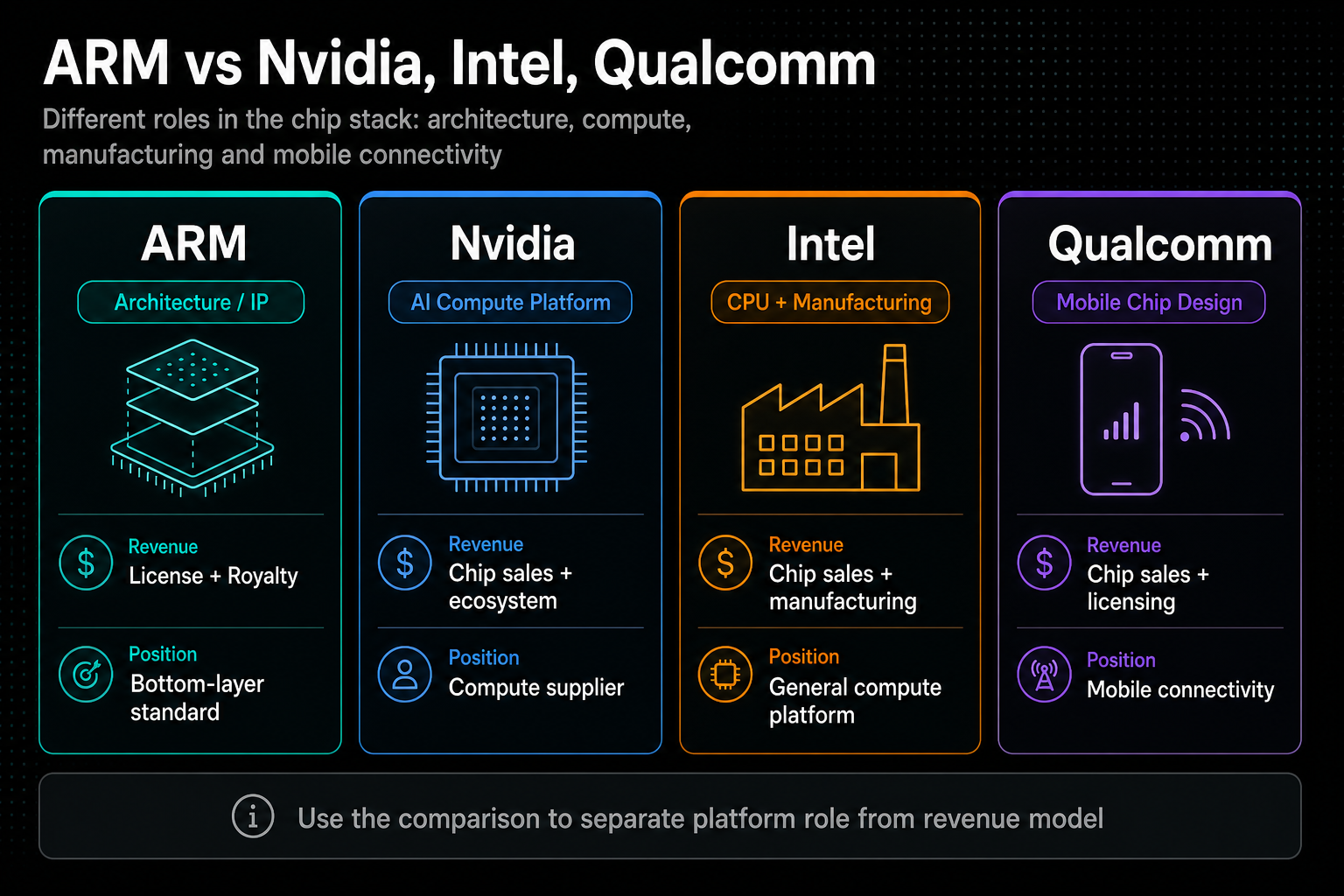 Figure 1. Comparison of ARM, Nvidia, Intel, and Qualcomm: Distinct roles in architecture licensing, compute platforms, manufacturing, and mobile chips.
What Are the Roles of ARM, Nvidia, Intel, and Qualcomm?
| Company |
Core Role |
Main Revenue Model |
| ARM |
Architecture/IP Licensing Platform |
Licensing Fees + Royalties |
| Nvidia |
GPU and AI Compute Platform |
Chip Sales + Platform Ecosystem |
| Intel |
x86 Chip Design and Manufacturing |
Chip Sales + Manufacturing Revenue |
| Qualcomm |
Mobile Communications and End-Device Chips |
Chip Sales + Licensing |
This table highlights that ARM operates at the foundational layer, Nvidia focuses on delivering compute power, Intel combines design and manufacturing, and Qualcomm centers on mobile communications and end-device chips.
How Do ARM and Nvidia Differ?
ARM supplies architecture standards, while Nvidia delivers compute products and AI platforms. ARM’s revenue is based on licensing and royalties; Nvidia’s comes primarily from chip and platform sales.
Nvidia essentially delivers computing power directly to customers, whereas ARM establishes the foundational rules and collects usage fees across the ecosystem. Both are driven by the AI trend, but their business models are fundamentally different.
How Do ARM and Intel Differ?
Intel is a traditional CPU manufacturer following the IDM (Integrated Device Manufacturer) model, responsible for both chip design and the pressures of manufacturing and process upgrades. ARM does not handle large-scale manufacturing, focusing instead on architecture and IP standards.
| Comparison Dimension |
ARM |
Intel |
| Manufactures Chips |
No |
Yes |
| Core Assets |
Architecture/IP |
CPUs, Process, Manufacturing Capabilities |
| Revenue Structure |
Licensing Fees, Royalties |
Chip Sales, Manufacturing Revenue |
| Key Risks |
Ecosystem Expansion, Licensing Dependence |
Process, Capacity, Competition |
This distinction means their financial metrics and risk perspectives are entirely different. ARM prioritizes ecosystem penetration, while Intel focuses on product cycles and manufacturing competitiveness.
How Do ARM and Qualcomm Differ?
Qualcomm’s core business is mobile communications, smartphone SoCs, and connectivity, heavily reliant on end-device brands and the mobile ecosystem. ARM provides the architectural foundation for these devices but does not directly sell complete chips to consumer electronics brands.
| Comparison Dimension |
ARM |
Qualcomm |
| Role |
Architecture Licensor |
Chip Designer |
| Target Clients |
Chip and Device Manufacturers |
Smartphone Brands, End Markets |
| Revenue Model |
Licensing Fees, Royalties |
Chip Sales, Licensing |
This distinction clarifies that ARM is the foundational platform, while Qualcomm is a chip supplier focused on end devices.
How Should Investors Analyze ARM Stock Using These Comparisons?
ARM’s value lies not in direct comparison with all chip companies, but in its ability to remain the foundational standard adopted by multiple chip manufacturers. As its architecture continues to expand, its royalty and licensing coverage may also grow.
From an investment research perspective, ARM is best understood alongside “platform-based, ecosystem-driven, and standards-setting” companies, rather than being valued solely as a hardware manufacturer.
Summary
The essential difference among ARM, Nvidia, Intel, and Qualcomm is their respective roles in the industry. ARM is an architecture platform, Nvidia is a compute platform, Intel is a design and manufacturing platform, and Qualcomm is a mobile communications chip platform.
FAQ
How Do ARM and Nvidia Differ?
ARM acts as an architecture licensing platform, while Nvidia is a GPU and AI compute platform. Both are influenced by AI, but their revenue sources and industry positions are distinct.
How Do ARM and Intel Differ?
ARM does not engage in large-scale manufacturing and primarily licenses architecture and IP; Intel combines design and manufacturing capabilities. Their business models and risk profiles are fundamentally different.
How Do ARM and Qualcomm Differ?
ARM provides the foundational architecture, while Qualcomm focuses on end-device chip design. ARM’s revenue comes from licensing and royalties; Qualcomm relies more on chip sales and licensing.
Why Is It Appropriate to Compare ARM with These Companies?
Because ARM occupies a unique position in the semiconductor value chain—it is neither a manufacturer nor an end-device chip brand. Peer comparisons help clarify its business model and valuation logic.