At the technology stack level, the growth of on-chain super apps depends on transparent settlement, auditable risk parameters, and composable market modules. At the token level, growth is driven by incentive alignment and unlock schedules, which help prevent short-term subsidies from creating artificial activity. Discussing these two layers separately avoids conflating a “price appreciation hypothesis” with an “ecosystem growth conclusion.”
The following sections are organized by utility, allocation, ecosystem roles, growth mechanisms, the relationship with the Hyperliquid token, pricing factors, risks, and long-term potential, concluding with verifiable evaluation criteria.
Core Functions and Use Cases of the BASED Token
$BASED serves as the hub for unlocking cross-product equity: holding or staking the token provides trading and prediction market fee discounts, tiered Visa card Cashback up to 8%, higher card limits, lower deposit and withdrawal friction, as well as future Launchpool participation and airdrop-related benefits. It also covers consumption quotas for Agentic AI. The core logic ties high-frequency user behaviors to token thresholds, ensuring real demand for the token comes from genuine use cases, not one-off speculation.
BASED Token Allocation and Incentive Mechanism
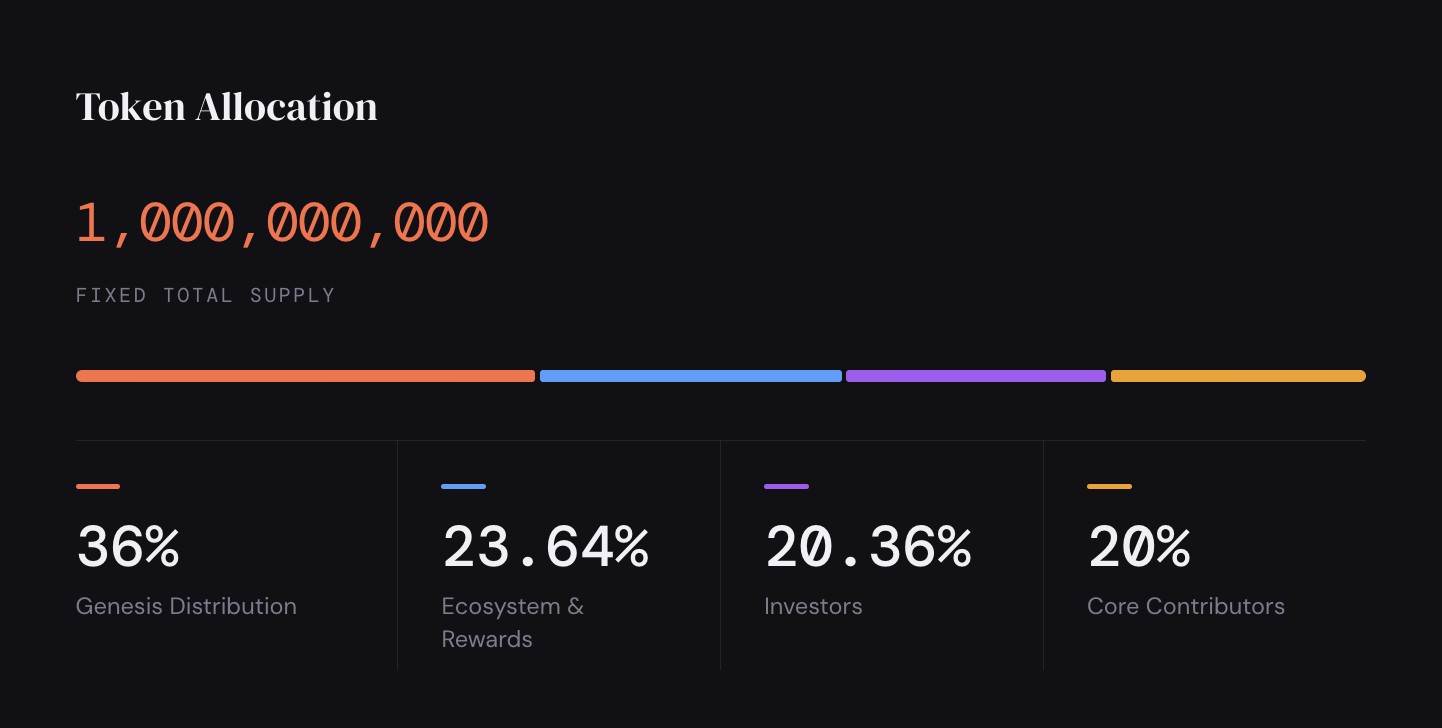
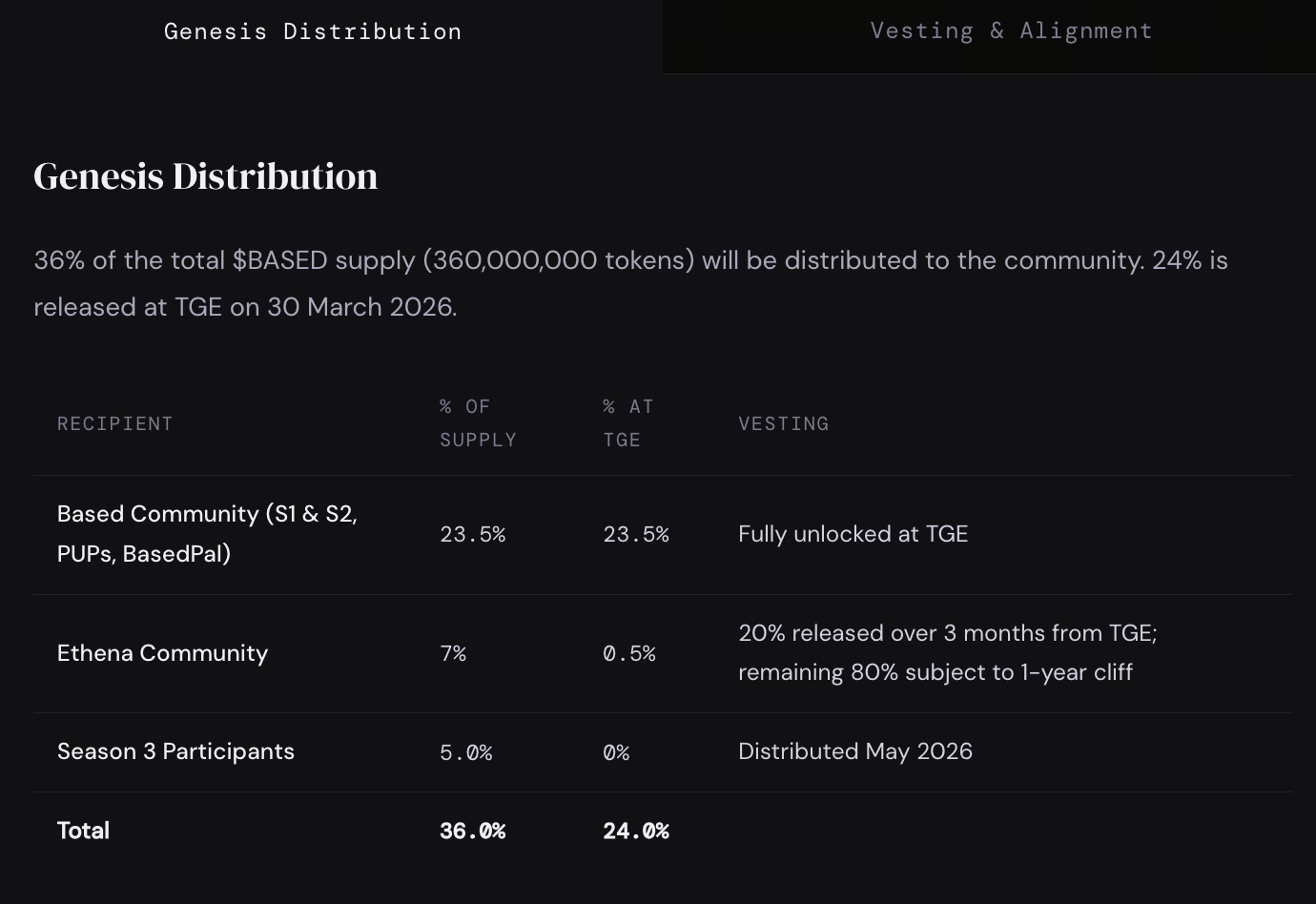
$BASED has a fixed total supply of 1 billion tokens, divided structurally as follows: approximately 36% for Genesis distribution, about 23.64% managed by the foundation for ecosystem and rewards, roughly 20.36% for investors, and about 20% for core contributors. The Genesis allocation features different TGE releases and subsequent unlock schedules for community, partner communities, and season participants. Investor and core contributor allocations typically involve longer lock-ups and linear monthly releases, reducing short-term supply shocks and reinforcing long-term commitment.
The incentive flywheel operates as follows: increased trader activity boosts platform revenue, which is then channeled into enhanced card Cashback, AI credits, and platform rewards. This attracts more users and increases distribution capacity, which in turn draws projects to launch on Based. If projects use $BASED as a utility token, external growth may flow back into token demand. The effectiveness of this cycle depends on measurable improvements at each stage, not just on narrative momentum.
BASED’s Role in Governance and the Ecosystem
Unlike models that emphasize “community voting for everything,” $BASED is publicly positioned as a utility and alignment tool. The Based Foundation is responsible for token issuance and ecosystem budget management, overseeing resource allocation, partnership development, and product cadence coordination within compliance frameworks. For ecosystem participants, token equity is closely tied to the foundation’s governance framework, disclosure schedule, and operational transparency.
From an on-chain perspective, the foundation’s ecosystem and rewards pool acts as a long-term public goods fund, subsidizing growth, incentivizing secure partnerships, and supporting builder distribution and operations. Governance quality should be judged by whether budget allocation improves retention and revenue quality, not just by the intensity of short-term incentives.
How BASED Drives User Growth and Engagement
Growth mechanisms typically involve three types of levers: fee and equity levers that reduce real usage costs; social and distribution levers that expand user acquisition; and project launch levers that introduce new assets and markets to the same user base. $BASED monetizes and tiers these levers, allowing users to exchange holdings or staked tokens for more predictable equity structures, thereby increasing cross-product migration.
Engagement metrics should distinguish between “trading activity” and “payment activity.” The former is tied to Hyperliquid builder code sharing, trading volume, and market depth; the latter relates to card spending, interchange, and cross-border FX. A token model that complements both activity types—rather than subsidizing one at the expense of the other—is more likely to achieve sustainable growth.
The Relationship Between BASED and Hyperliquid Ecosystem Tokens
Hyperliquid’s native tokens primarily support protocol security, incentives, and core network functions, while $BASED is focused on the equity and distribution system within the Based application ecosystem. These tokens are not direct substitutes but form a layered structure: “infrastructure token + application utility token.” Users trading within Based interact with both Hyperliquid market rules and Based product rules, with parallel fee and equity structures.
In builder-deployed perpetual market expansions like HIP-3, Hyperliquid typically requires staking HYPE and similar mechanisms for deployment and accountability. The Based team may also participate as builders in upstream market innovation. For investors, it’s important to price protocol-level incentives and application-level token demand separately, rather than mapping Hyperliquid ecosystem popularity directly to $BASED value.
Key Factors Influencing BASED Token Value
- The ongoing improvement of Based’s user base, trading volume, revenue structure, and retention.
- The stability of equity realization and the expansion of card product and regional availability.
- The impact of unlock and circulation schedules on the secondary market.
- Whether Launchpool and project initiatives consistently introduce new use cases.
- The systemic effects of macro liquidity and risk appetite on high-beta assets.
- Regulatory changes affecting payments, prediction markets, and token sales.
Risks to Consider When Investing in BASED
Crypto asset prices are highly volatile, and incentive or unlock events can amplify short-term swings. Application-layer tokens also face product execution risk, compliance risk, integration and Smart Contract risk, and the risk of competitors replicating the equity model in the same niche. It’s also important not to mistake “Cashback, credit limits, AI credits” for risk-free returns; these are fundamentally platform subsidies and commercialization functions, subject to change as rules evolve. Investment decisions should be based on individual risk tolerance, local regulations, and full disclosure documents.
Long-Term Development Potential of the BASED Ecosystem
Long-term potential hinges on whether Based can turn its super app distribution advantage into a repeatable project launch platform, and develop AI Agent-related consumption scenarios into billable, risk-controlled, and scalable service layers. If the ecosystem rewards pool continues to attract high-quality builders and users maintain stable trading and payment retention, $BASED’s role as a utility anchor will expand. Conversely, if growth relies on short-term airdrop expectations without revenue and retention support, the token economy risks a sharp drop in activity once incentives wane.
Conclusion
The $BASED economic model is built around fixed supply and structured allocation for long-term alignment, coupling token demand with user behavior through cross-product equity, and connecting platform revenue, user benefits, and project bootstrapping via a flywheel mechanism. Ultimately, assessing its real impact on on-chain ecosystem growth requires focusing on verifiable business and user metrics, as well as rule transparency and unlock discipline—not just price trends.