Bitlayer's relationship with BTCFi is straightforward: Bitlayer provides the execution environment and scalability, while BTCFi represents the application ecosystem built on that infrastructure. For years, Bitcoin has functioned primarily as a store of value and a settlement layer, with its network design never prioritizing support for complex financial logic. As a result, most DeFi innovation has clustered in blockchain ecosystems with smart contract capabilities, while BTC — despite commanding the largest on-chain asset base — has lacked a mature native application environment. Now, as the market refocuses on BTC's capital efficiency and asset utilization, BTCFi has emerged as a critical direction for the Bitcoin ecosystem.
Against this backdrop, Bitlayer is regarded as an infrastructure bridge connecting Bitcoin's security layer with the financial application layer. Through a Layer 2 architecture, programmable execution, and a more flexible asset operating environment, Bitlayer aims to transform BTC from a static holding asset into an active participant in the broader on-chain financial network. This is a key reason Bitlayer and BTCFi are so often discussed together.
Bitlayer and BTCFi Application Layer Expansion
Understanding the relationship between Bitlayer and BTCFi requires first defining BTCFi.
BTCFi is not a single protocol or track; it is a collection of financial infrastructure centered on BTC assets. Its focus is not on creating a new monetary system, but on improving the efficiency of Bitcoin assets in on-chain environments, enabling BTC to participate in more composable applications.
Conceptually, BTCFi can be seen as the financial layer of the Bitcoin ecosystem. Users are no longer limited to transfers or long-term holding; they can engage in asset lending, liquidity management, trade matching, revenue distribution, and other on-chain activities. This model resembles traditional DeFi, but the core assets and security foundation remain rooted in Bitcoin.
At the same time, BTCFi's formation is highly dependent on application layer scalability. Because the Bitcoin mainnet's native environment is unsuited for complex state execution, the industry has gradually adopted a layered structure: a "security layer + execution layer." The base network handles security and settlement, while the upper network manages application execution. This structure is the underlying logic behind the gradual evolution of Bitcoin Layer 2.
For Bitlayer, its role is not to directly provide financial products, but to supply the foundational capabilities needed to support BTCFi operations.
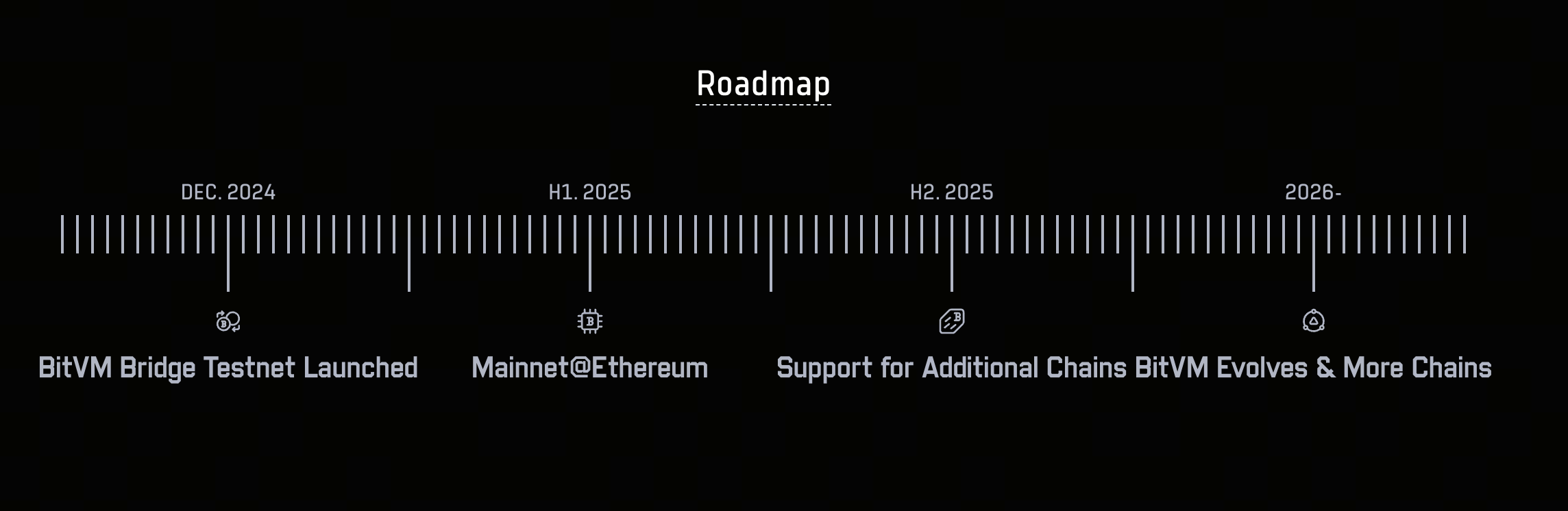
Source: bitlayer.org
Why Bitcoin Has Long Lacked a Native Financial Ecosystem
Compared to other smart contract networks, Bitcoin boasts the most mature asset consensus, yet it has never developed an on-chain financial ecosystem of comparable scale.
The primary reasons lie in its architectural design. Bitcoin was not built to support complex applications; its goals centered on decentralized bookkeeping, secure settlement, and value transfer. Consequently, the network lacked a native Turing-complete execution environment and cannot directly support complex financial protocols.
Second, Bitcoin's limited network performance makes high-frequency interaction costly. Financial applications typically require extensive state changes, asset combinations, and real-time execution — demands that are not naturally suited for a base layer.
Third, the long-standing absence of trusted asset bridging has been a major factor. Many past BTC applications relied on wrapped assets or third-party custody, which introduced additional trust costs.
These constraints do not mean Bitcoin cannot form a financial ecosystem; rather, they indicate the need for a new execution layer to expand application capabilities. This is precisely the context for the simultaneous development of Bitcoin Layer 2 and BTCFi.
How Bitlayer Provides Infrastructure Capabilities for BTCFi
Bitlayer's value is more evident at the infrastructure layer than at the application layer.
For BTCFi, what truly matters is not just smart contract support, but the creation of a complete operating environment — encompassing asset onboarding, execution, development, and ultimately trustworthiness.
Bitlayer leverages a Layer 2 architecture to handle transaction execution and application processing, decoupling complex interactions from the base network and thereby enhancing scalability. This allows developers to deploy more sophisticated logic without directly modifying Bitcoin.
Simultaneously, Bitlayer introduces a programmable execution environment, enabling developers to build application structures akin to modern on-chain financial systems — such as automated strategies, protocol composability, asset management models, and on-chain coordination mechanisms.
From a development ecosystem perspective, compatibility with existing toolchains also lowers the entry barrier. Developers can enter the Bitcoin application ecosystem without fully reconstructing their application logic.
Thus, Bitlayer's significance extends beyond scaling; it provides the foundational conditions necessary for BTCFi to function.
The Transfer and Use of BTC in a Layer 2 Environment
A critical question for BTCFi's ecosystem formation is how BTC enters the application environment.
Traditional Bitcoin usage is limited to address-to-address transfers. However, once BTC enters a Layer 2 environment, its usage begins to transform. Assets can participate in a wider range of on-chain activities while maintaining their connection to underlying value.
This shift brings core capabilities: higher-frequency trading, more complex state execution, and a broader array of asset combinations. Users are no longer confined to single transfers but can engage in continuous financial behaviors.
For infrastructure, asset transfer capabilities must balance two goals: improving usability while avoiding excessive trust assumptions. Hence, trustless bridging, state verification, and security design become essential foundations for BTCFi.
Looking at industry trends, BTC may gradually adopt a collaborative structure where the mainnet preserves value and Layer 2 handles applications.
Which Typical Financial Scenarios Does Bitlayer Support?
The capabilities Bitlayer provides free BTCFi from being limited to a single trading scenario.
Commonly discussed directions include lending protocols, decentralized exchange (DEX) environments, yield strategies, and asset issuance systems.
Lending aims to let BTC participate in capital efficiency improvements while maintaining asset exposure. Trading scenarios emphasize liquidity and market coordination. Yield protocols focus on on-chain asset portfolios and automated management. Asset issuance further expands Bitcoin's application boundaries.
| Scenario Direction |
Core Goal |
Infrastructure Requirements |
| Lending |
Improve capital efficiency |
Execution capability, risk management |
| DEX |
Support asset exchange |
High throughput, low cost |
| Yield Protocol |
Automated strategies |
Programmability |
| Asset Issuance |
Expand application layer |
State management capability |
Whether these scenarios can remain viable long-term ultimately depends on whether the infrastructure can consistently provide a stable operating environment.
Security and Liquidity Challenges Facing BTCFi
Despite widespread interest, BTCFi still faces practical constraints.
First, security. Bitcoin's security advantage comes from its base layer, but application layer expansion often introduces new verification logic, bridging mechanisms, and execution environments — these cannot be simply equated with using Bitcoin directly.
Second, liquidity. A financial ecosystem requires sustained user participation and asset accumulation. Technical capability alone is insufficient to generate long-term network effects.
Additionally, the maturity of development tools, user experience, and protocol interoperability will determine whether BTCFi can move from concept to practical use.
For infrastructure like Bitlayer, the long-term challenge is not simply improving performance, but striking a balance between security and usability.
Bitlayer's Long-Term Position in the Bitcoin Application Ecosystem
From a longer-term perspective, Bitlayer represents not just a specific technical approach, but a broader exploration of Bitcoin's application layer future.
Historically, Bitcoin has functioned as a value network. In the future, as Layer 2 and application infrastructure mature, Bitcoin has the opportunity to gradually develop an independent application ecosystem.
In this process, Bitlayer's role is closer to execution infrastructure. It seeks to connect Bitcoin's security capabilities, developer ecosystem, and financial application demands, enabling BTC to gradually enter a richer on-chain environment.
This shift does not mean Bitcoin will fully transform into an application network; rather, it suggests a clearer stratified structure: the security layer ensures trust, while the application layer drives innovation.
Summary
BTCFi's core goal is not to change Bitcoin, but to enhance its on-chain efficiency and expand its application space while preserving BTC as the underlying value asset. As user demand evolves from passive holding to asset collaboration, yield management, and on-chain interaction, Bitcoin's application layer expansion has become a long-term industry priority.
As one infrastructure practice within this trend, Bitlayer provides the conditions to support BTCFi through its Layer 2 architecture, programmability, and execution environment. It does not directly define financial products; instead, it helps Bitcoin gain the underlying ability to host applications.
Understanding the relationship between Bitlayer and BTCFi is essentially understanding how the Bitcoin ecosystem evolves from a value network into a multi-layer application system.
FAQ
What is BTCFi?
BTCFi is an on-chain financial ecosystem built around BTC assets. Its goal is to expand Bitcoin's application capabilities while maintaining its value attributes.
Is Bitlayer a BTCFi project?
Bitlayer is closer to the infrastructure layer of BTCFi, not a specific financial application.
Why does BTC need financial applications?
Financial applications improve asset utilization efficiency, allowing BTC to go beyond value storage and transfer.
Will Layer 2 change Bitcoin?
Layer 2 generally does not alter Bitcoin's consensus rules; it expands execution capabilities and application space on top of the existing base layer.