The main distinctions among CEG, Vistra, NextEra Energy, and Duke Energy stem from their company types and asset structures: Constellation Energy (CEG) is primarily a nuclear-focused independent power producer; Vistra combines nuclear and natural gas; NextEra stands out for its emphasis on renewables and regulated utility operations; and Duke Energy aligns most closely with the traditional utility model.
A frequent pitfall when comparing power stocks is focusing solely on labels like “AI electricity use,” “nuclear power,” or “clean energy.” In practice, the critical differences between power companies arise from their asset composition, revenue streams, regulatory exposure, customer base, and capital expenditure cycles. Similar labels do not equate to similar risk profiles.
A more effective way to compare CEG is to first identify whether the company is an independent power producer, integrated utility, renewable energy platform, or a hybrid focused on nuclear and natural gas. The CEG business model centers on generation assets, power markets, and long-term PPAs, shaping its revenue framework. This approach helps avoid conflating market-based generation revenue, regulated grid revenue, and long-term power purchase agreements in a single comparison.
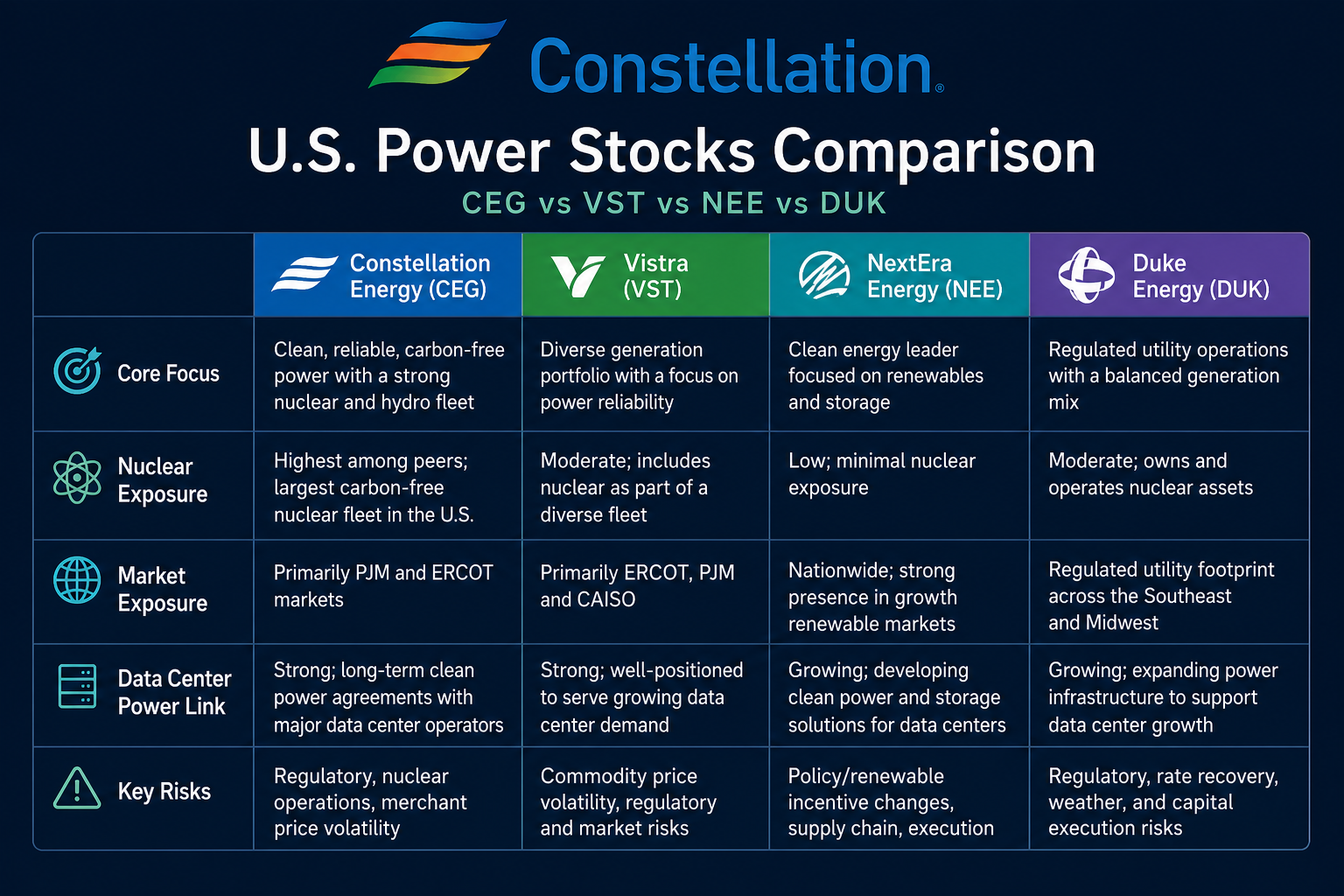 Figure 1. Comparison of CEG and U.S. power peers: nuclear exposure, renewables, regulated utilities, and data center power integration each differ.
What Type of Power Company Is CEG?
CEG most closely resembles a large-scale independent power producer and energy services provider, defined by its substantial nuclear asset base and high share of clean, reliable electricity. It serves commercial, industrial, public sector, and retail clients. CEG’s revenue is linked to the operation of generation assets, power and capacity markets, long-term contracts, and retail supply.
For CEG, market pricing and contract structure are more crucial than for traditional regulated utilities. Compared to pure renewable energy companies, CEG’s nuclear assets provide stable baseload and round-the-clock supply. The rise in AI data center demand amplifies this distinction, as data centers require uninterrupted power rather than time-limited generation.
What Type of Power Company Is Vistra?
Vistra is also a major U.S. power player, with operations spanning generation, retail electricity, and a diverse mix of energy assets. Its portfolio includes natural gas, nuclear, coal, solar, and battery storage, making its asset structure more complex than a pure nuclear player.
When comparing CEG to Vistra, focusing only on “nuclear exposure” is insufficient. Vistra’s natural gas and retail businesses impact revenue flexibility and risk sources, and factors such as coal transition, gas prices, power market volatility, and customer mix must be considered. CEG is more concentrated in nuclear, while Vistra is more diversified.
How Do NextEra and Duke Energy Compare?
NextEra Energy is best understood as a blend of regulated utilities and large-scale renewable energy development. Its business includes regulated power subsidiaries and major renewable projects. Key factors for NextEra include wind, solar, storage, transmission access, interest rates, policy incentives, and capital investment.
Duke Energy most closely resembles a traditional regulated electric utility. These businesses typically offer stable rate structures but are also influenced by regulatory approvals, capital spending, weather, fuel costs, and regional demand. Comparing Duke to CEG should focus on the distinction between regulated income and market-based generation revenue, rather than simply on “cleanliness.”
CEG vs. U.S. Power Peers: Core Differences at a Glance
| Comparison Item |
CEG |
Vistra |
NextEra |
Duke Energy |
| Core Positioning |
Nuclear-focused independent power producer |
Multi-asset generation and retail power |
Renewables + regulated utility |
Traditional regulated utility |
| Nuclear Exposure |
Very high |
High |
Low |
Medium or region-dependent |
| Market Exposure |
High |
High |
Medium |
Low |
| Data Center Power Integration |
Strong, focused on 24/7 clean power |
Strong, broad-based supply |
Strong, focused on renewables and storage |
Linked to regional load growth |
| Key Risks |
Nuclear operations, PJM, PPA, regulation |
Power prices, fuel, asset mix, transition |
Interest rates, project development, policy |
Regulatory approval, capital spending, weather |
This table demonstrates that U.S. power stocks cannot be analyzed solely by “power demand growth.” Asset differences drive variations in revenue recognition, regulatory context, and valuation logic.
How Does AI Data Center Demand Affect Power Companies?
AI data centers increase demand for reliable power, but each power company benefits differently. CEG’s advantage lies in nuclear’s stable baseload and low-carbon profile; Vistra can benefit via nuclear, natural gas, and retail power; NextEra participates through renewables, storage, and project development; Duke Energy’s gains are tied to regional load and grid investments.
Analyzing data center power demand requires considering grid connection, transmission, contracts, pricing, and regulatory frameworks. Focusing only on demand growth—without examining grid access, contract finalization, or price caps—risks overlooking execution challenges.
How to Avoid Mismatches When Comparing Power Stocks
First, determine whether a company’s revenue is mainly from market-based generation, regulated utility operations, retail power, or project development. Second, confirm the asset mix: nuclear, natural gas, renewables, storage, transmission, and distribution each carry distinct risks. Third, separate the process of trading page identification from business analysis.
For CEG, ticker identification is critical. When searching for CEG on Gate Stocks, users should ensure it refers to Constellation Energy Corporation, not another energy company. Buying CEG on Gate Stocks involves verifying search, order placement, and position review. Ticker confirmation addresses trading accuracy, while peer classification supports business understanding.
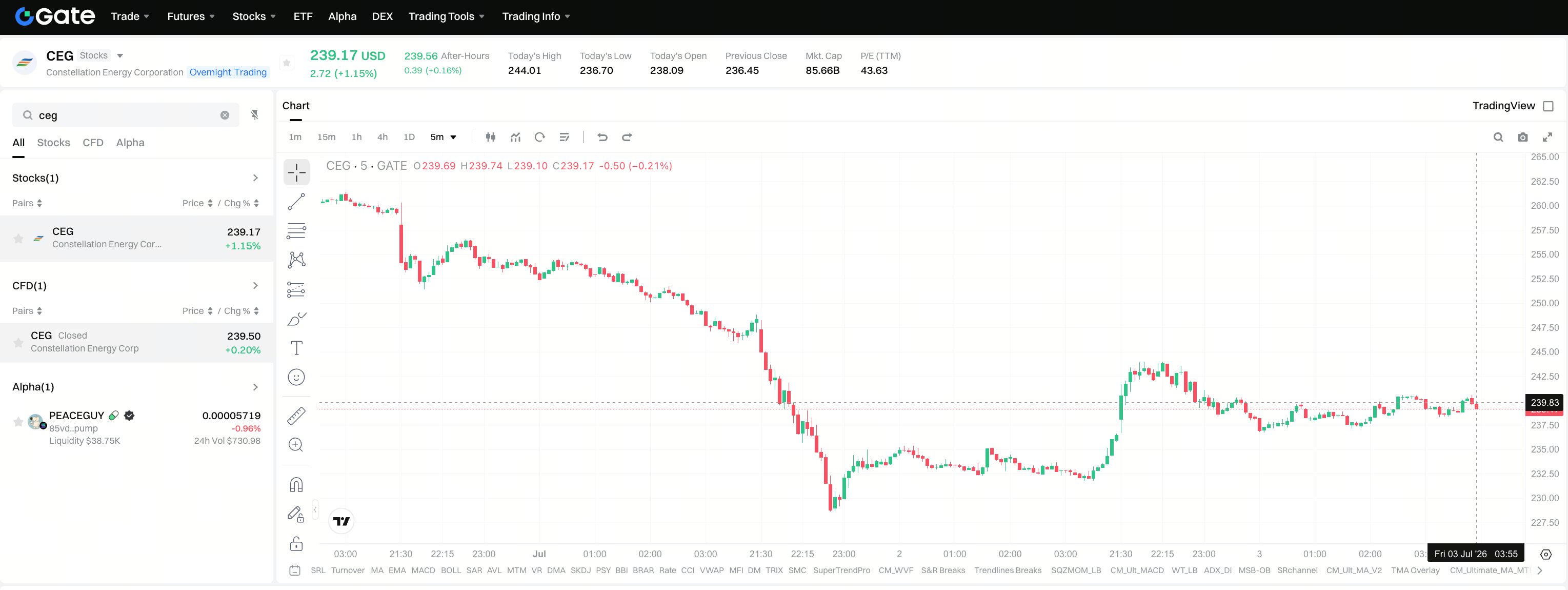
Peer classification also reduces information misinterpretation. Grouping regulated utilities, market-based generators, and renewable developers together and comparing only revenue or market cap can obscure essential differences in regulation, capital spending, and power price exposure. The CEG risk metrics checklist highlights nuclear operations, PJM capacity markets, and trade execution as key review points.
Summary
CEG, Vistra, NextEra, and Duke Energy are all influenced by U.S. power demand, but each has a distinct business model. CEG is centered on nuclear and clean, reliable power; Vistra prioritizes diversified generation and retail power; NextEra leads in renewables and regulated utilities; and Duke Energy represents the traditional utility archetype. Comparison should begin with proper classification, then factor in AI data center demand, power markets, regulation, and execution risk.
FAQ
Are CEG and Vistra the same type of company?
Both CEG and Vistra are publicly listed U.S. power companies, but their asset portfolios differ significantly. CEG is nuclear-centric, while Vistra holds assets in natural gas, coal, solar, storage, and retail power, resulting in more diversified revenue and risk profiles.
How does CEG differ from NextEra?
NextEra Energy is primarily focused on renewable energy development and regulated utility operations, with relatively low nuclear exposure. CEG, in contrast, is built around nuclear baseload and clean, reliable power, with a higher share of market-based generation and long-term contracts in its revenue mix.
Can Duke Energy and CEG be directly compared?
They can be compared within the U.S. power sector, but should not be evaluated using the same valuation or risk frameworks. Duke Energy is a regulated utility, with revenue tied to rate approvals and grid investment; CEG is more market-driven, with nuclear assets and contract structures playing a larger role.
Will AI data center demand affect all power stocks?
AI data centers have heightened the focus on reliable power, but each power company’s benefit path is unique. Nuclear, natural gas, renewables, storage, and regulated grids each face distinct grid connection requirements, contract types, and regulatory environments. It is incorrect to assume all power stocks are equally affected.
Do I need to distinguish peer companies before trading CEG on Gate?
Yes. Peer classification is essential to understand differences in assets and regulatory exposure among CEG, Vistra, NextEra, and Duke Energy. When trading CEG on Gate Stocks, always verify the ticker, company name, order type, and fee schedule to avoid misapplying business analysis directly to order placement.