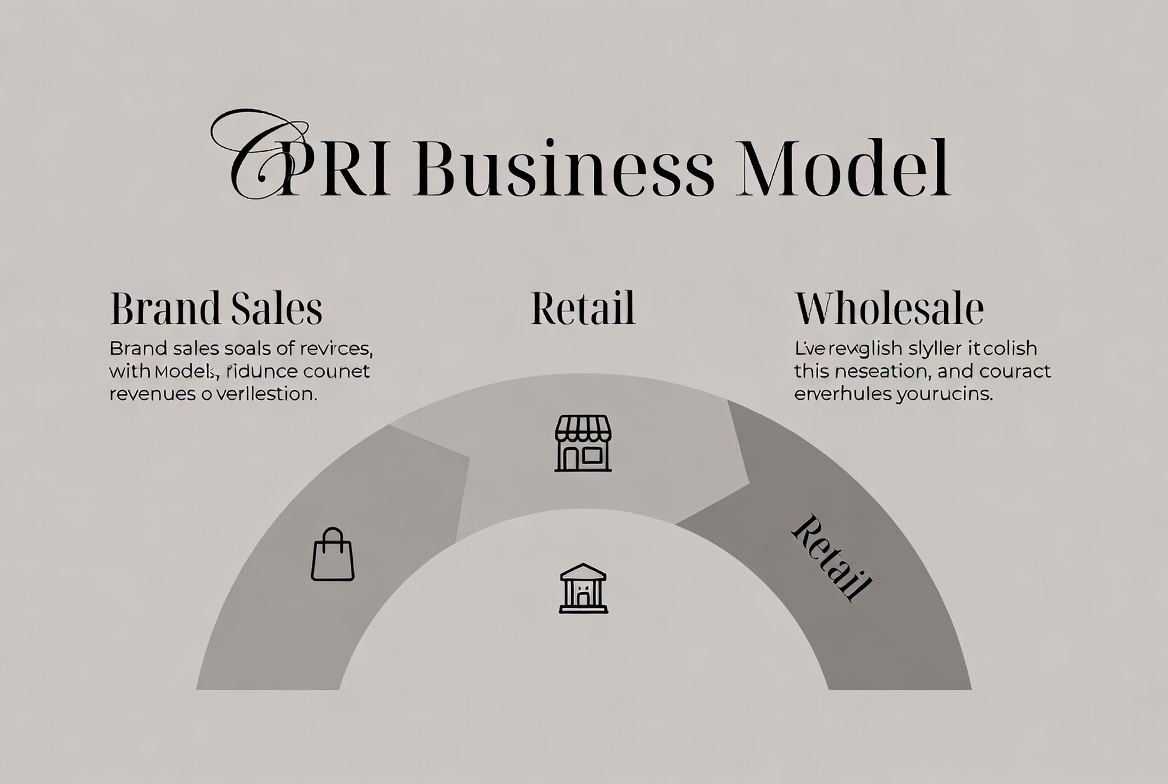
In the global luxury industry, multi-brand groups leverage differentiated brand positioning to reach a broad consumer base, thereby increasing their overall market share. CPRI's business model goes beyond reliance on any single brand's sales performance, driving long-term growth through brand portfolio synergy, channel integration, and global expansion. The diversification of the group's revenue streams and its global footprint enable it to maintain relative stability amid fluctuations in the high-end consumer market.
From a capital markets and industry ecosystem perspective, CPRI's business model offers a compelling case study of how modern luxury groups operate. Understanding its brand matrix, channel management, and revenue sources helps analyze how luxury groups sustain profitability and brand value in a fiercely competitive global market.
Core of CPRI's Business Model
CPRI's business model is fundamentally built on brand assets and global channel strategy. By owning multiple luxury brands with distinct market positions, the group achieves both breadth and depth of market coverage. Each brand differs in product style, price range, and target consumer, creating complementary effects that reduce dependence on any single market.
This multi-brand portfolio not only diversifies operational risk but also creates synergies in marketing, supply chain management, and retail channel development. The group typically coordinates each brand's global expansion, digital operations, and promotional efforts through unified strategic planning, ensuring that each brand operates independently while contributing to the group's overall competitive advantage.
At the same time, CPRI's revenue model is heavily reliant on the long-term accumulation of brand equity. A brand is more than just a product name—it embodies market recognition, design value, and consumer loyalty. Accordingly, the group closely integrates brand management with sales execution in its business model to drive mutual enhancement of revenue growth and brand value.
How Michael Kors Drives Major Revenue
As one of CPRI's core brands, Michael Kors primarily targets the mass premium consumer segment, contributing a substantial share of the group's total revenue. The brand operates an extensive global retail store network while actively expanding its e-commerce channels to create a seamless online-to-offline sales model.
Michael Kors' revenue streams include self-operated retail, wholesale channels, and licensing partnerships. Retail channels provide direct sales revenue while boosting brand exposure and customer loyalty; wholesale channels help the brand penetrate additional markets while reducing the operating costs of individual stores. Licensing partnerships generate incremental revenue, such as through licensed sales of watches, eyewear, and other accessories.
The brand's continuous innovation is also a key revenue driver. By regularly launching new collections and collaborating with designers or celebrities, Michael Kors maintains product appeal and stimulates consumer purchases, thereby sustaining a stable revenue flow.
How Versace Enhances the Group's Brand Value
Versace, as a traditional Italian luxury house, derives value not only from sales revenue but also from elevating brand image and international influence. By integrating Versace's ready-to-wear, accessories, and footwear businesses, the group positions the brand in the ultra-high-end luxury segment, thereby strengthening the group's overall brand equity.
Versace's market strategy emphasizes a premium retail experience and compelling brand storytelling. Stores are typically located in global luxury hubs, and brand identity is reinforced through store design, product display, and service excellence. Simultaneously, Versace engages younger consumers via social media and digital marketing, ensuring its brand remains globally relevant and continuously refreshed.
From a group business model standpoint, the enhancement of Versace's brand value creates synergies for other brands. For example, the group's unified management of procurement, supply chain, and marketing allows Versace's high-end cachet to indirectly lift the market perception of Michael Kors and Jimmy Choo.
Jimmy Choo's High-End Positioning and Profit Model
Jimmy Choo is primarily known for high-end footwear and accessories, and its profit model relies heavily on brand premium and limited-edition product strategies. Through scarcity and distinctive design, Jimmy Choo maintains high gross margins among affluent consumers.
In running Jimmy Choo, the group focuses on a superior global retail experience and customized services. In addition to self-operated stores and wholesale channels, Jimmy Choo actively partners with luxury e-commerce platforms and high-end department stores to diversify its sales channels. Limited-edition collections and special collaborations generate additional revenue while reinforcing the brand's exclusivity.
From a business model perspective, Jimmy Choo's high-end positioning not only contributes direct revenue but also enhances the completeness of CPRI's luxury brand portfolio, supporting the group's overall profitability and brand influence.
How Retail Channels Generate Revenue
Retail channels form the backbone of CPRI's revenue structure. Self-operated stores sell products directly to consumers while delivering a comprehensive brand experience and customer service. Through its global retail network, CPRI achieves revenue growth while strengthening brand awareness and consumer loyalty.
Retail revenue typically represents a significant share of the group's total revenue, with store location, in-store presentation, service quality, and online-to-offline integration being critical factors. The group generally opens flagship stores in high-end shopping districts while leveraging e-commerce platforms to reach new markets, thereby increasing overall sales coverage.
Additionally, retail channels provide valuable data on consumer preferences, purchasing behavior, and market trends. This data, in turn, informs product design, inventory management, and marketing strategies, creating a virtuous cycle that enhances overall profitability.
How the Wholesale Business Expands Market Coverage
The wholesale business serves as a vital complement to CPRI's business model. By selling products to large department stores, chain retailers, and international distributors, the group gains access to markets it cannot directly reach and achieves rapid sales scale.
Wholesale channels typically target a broad consumer base, characterized by high volume and lower per-unit gross margins, but they significantly boost brand market share. For Michael Kors, Versace, and Jimmy Choo, wholesale helps the brands enter additional countries and regions while reducing the initial investment risk of opening company-owned stores.
Strategically, wholesale also supports retail and brand marketing. By collaborating with retailers and distributors, the group maintains brand image consistency and expands market reach through its partner network.
Licensing and Brand Collaboration Models
Licensing and brand collaborations are flexible and efficient revenue sources within CPRI's business model. By authorizing third parties to produce and sell specific product lines—such as eyewear, watches, or fragrances—the group generates incremental revenue without increasing production or operating costs.
Brand collaborations also include co-branded collections, limited editions, and cross-industry partnerships. These initiatives boost brand visibility, attract new consumer segments, and keep CPRI active in the global luxury market. Licensing and collaboration models typically yield high gross margins and help the brand quickly establish a foothold in specific product categories.
This diversified revenue model demonstrates how modern luxury groups can flexibly respond to global competition while ensuring stable cash flow and profitability.
Advantages and Limitations of CPRI's Business Model
CPRI's business model offers clear advantages: a well-defined brand matrix, diversified revenue sources, and extensive global market reach. The multi-brand strategy reduces reliance on any single brand, generating stable cash flow through retail, wholesale, and licensing. Global expansion enables the group to earn revenue across multiple regions, mitigating the impact of any single market downturn.
However, the model has limitations. The luxury market is highly sensitive to consumer preferences and fashion trends; brand aging or lack of design innovation may erode competitiveness. Global economic volatility and shifts in high-end consumer spending can also affect revenue. Additionally, brand operations and channel management require ongoing investment, leading to high operating costs.
Overall, CPRI's business model exemplifies how modern luxury groups pursue long-term value through brand integration, channel diversification, and global expansion, while also confronting the industry's inherent market sensitivity and operational challenges.
Summary
CPRI's business model achieves revenue growth and brand value enhancement through a strategic brand matrix, retail and wholesale channels, licensing partnerships, and global expansion. Michael Kors provides stable revenue, Versace strengthens brand influence, Jimmy Choo delivers premium profitability through high-end positioning, and retail, wholesale, and licensing collectively build a diversified revenue base.
FAQ
What are CPRI's main revenue sources?
CPRI generates revenue from three primary channels: retail sales, wholesale business, and brand licensing. Retail—through Michael Kors, Versace, and Jimmy Choo's owned stores and e-commerce platforms—is the group's most important revenue source. Wholesale expands market coverage via department stores and retail partners, while licensing adds revenue from specific product lines (e.g., accessories, fragrances).
Why does CPRI use a multi-brand business model?
CPRI adopts a multi-brand model to address different consumer tiers and market needs. Michael Kors targets the mass premium segment, Versace occupies the ultra-luxury space, and Jimmy Choo focuses on high-end footwear and accessories. This combination allows the group to cover a wider consumer base effectively.
What role does Michael Kors play in CPRI?
Michael Kors is a key revenue brand for CPRI, accounting for a significant portion of the group's overall revenue. The brand leverages its extensive retail network and strong brand recognition to serve the global mid-to-high-end consumer market.
What is Versace's strategic significance to CPRI?
Versace's strategic value lies more in brand elevation than pure revenue contribution. As a prestigious Italian luxury fashion brand, Versace enhances CPRI's overall image and market positioning in the high-end luxury segment.
How does CPRI expand through wholesale channels?
Wholesale channels enable CPRI to broaden market coverage by partnering with department stores, retailers, and international distributors. This approach allows the group to enter additional countries and regions without the cost of operating its own stores.
What are the potential limitations of CPRI's business model?
While CPRI's multi-brand, multi-channel strategy offers significant advantages, it also faces common luxury industry challenges. Rapidly changing consumer preferences require continuous design innovation and marketing investment.