Gate Technology Limited is the designated legal entity under the Gate brand responsible for MiCA-compliant crypto asset services within the European Union and European Economic Area (EEA). On September 29, 2025, the Malta Financial Services Authority (MFSA) granted Gate Technology Limited a Crypto-Asset Service Provider (CASP) license under Regulation (EU) 2023/1114 on Markets in Crypto-Assets (MiCA). Its Legal Entity Identifier (LEI) is 984500D6A0F945BB5A15.
The MiCA EU crypto regulatory framework establishes minimum standards for CASPs, including capital requirements, governance, client asset segregation, and disclosure obligations. Following MFSA authorization, Gate’s European operations must adhere strictly to the service types listed in the Article 63 license and are subject to ongoing MFSA oversight. For compliance verification, focus on the contracting legal entity, authorized service list, and passported jurisdictions—not merely the brand name.
What Is Gate Technology Limited?
Gate Technology Limited is a Malta-registered entity providing MiCA-governed crypto asset services to EEA users. While the Gate brand presents a unified global presence, MiCA authorization is tied to this specific legal entity: in Europe, Spot, custodial wallet, exchange, and transfer services are delivered by Gate Technology Limited as the licensed provider; services in other regions may be handled by different group entities.
To verify compliance status, reference the legal entity name and LEI 984500D6A0F945BB5A15 in the ESMA CASP register. The Gate Technology Ltd MFSA MiCA authorization announcement details the September 29, 2025, authorization date and European business scope, which can be cross-checked against ESMA register records.
What MiCA Services Has MFSA Authorized?
MFSA’s CASP authorization for Gate Technology Limited covers six core services, as defined in MiCA Annex I. These authorized services delineate the legal business boundaries for this entity; any service not listed must be confirmed as provided by another entity or as outside MiCA’s scope.
| Authorized Service (MiCA Annex I) |
Typical Business Mapping |
Common User Scenario |
| Custody and administration of crypto-assets (Custody) |
Platform custodial wallet, on-chain asset custody |
Storing crypto assets in account |
| Operation of a trading platform (Trading Platform) |
Spot order matching and order book |
Buying and selling crypto assets |
| Exchange of crypto-assets for funds (Exchange for funds) |
Fiat deposit/withdrawal, fiat-crypto exchange |
Depositing and withdrawing EUR and other fiat currencies |
| Exchange of crypto-assets for other crypto-assets (Exchange for crypto) |
Crypto-crypto swaps |
Coin-to-coin trading, exchange |
| Execution of orders on behalf of clients (Order Execution) |
Placing and matching orders for clients |
Executing limit and market orders |
| Transfer of crypto-assets on behalf of clients (Transfer) |
On-chain withdrawals and asset transfers |
Sending crypto assets to external addresses |
This table maps MFSA-authorized services to corresponding platform functions. Leveraged contracts, staking, Earn, and stablecoin issuance are not covered under Gate Technology Limited’s MiCA authorization unless explicitly listed; users should review service terms and provider details before use.
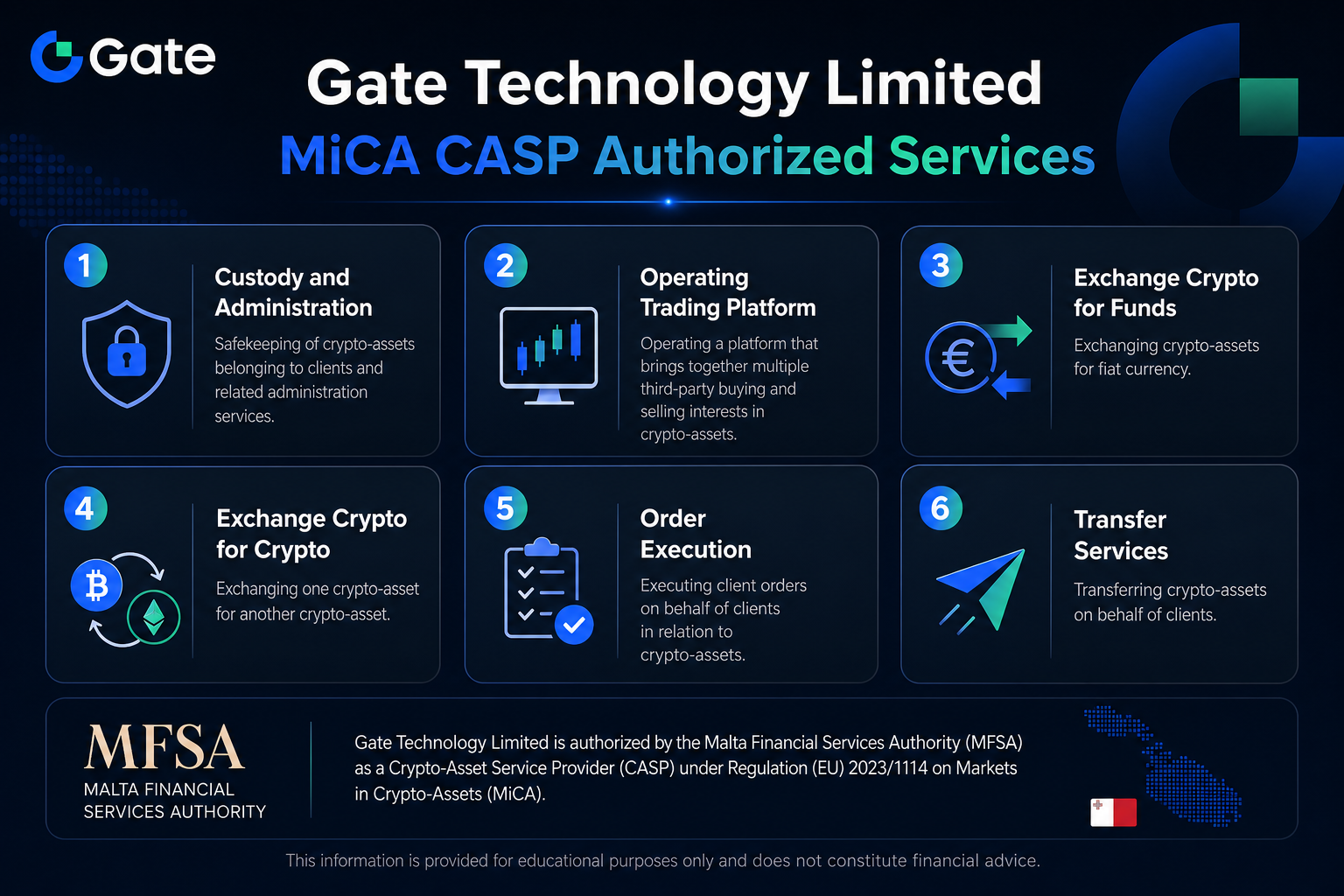
Figure 1. The six MiCA CASP services authorized to Gate Technology Limited by MFSA and their mapping to typical platform functions.
Authorization Date and ESMA Registration
Gate Technology Limited’s MiCA CASP authorization takes effect on September 29, 2025, with MFSA serving as the home competent authority. Under MiCA Article 109, ESMA centrally publishes authorization details, which can be verified by legal entity name or LEI in the CASP provisional register CSV on the ESMA MiCA page.
For compliance checks, verify the authorization date, all six service codes, and passported country list; entities not present in the register are not MiCA-authorized. MFSA is responsible for Article 63 prudential oversight and Article 65 passport notifications, with ESMA providing the unified EU index.
EEA Passport Coverage
Upon receiving MFSA Article 63 authorization, Gate Technology Limited may utilize the MiCA Article 65 passport mechanism to notify and provide authorized services across other EEA member states. The MiCA passport is notification-based: once Gate submits a cross-border notification to MFSA, the authority forwards it within 10 business days to host country regulators, ESMA, and the European Banking Authority (EBA). Gate may then operate within the authorized scope in notified host countries without country-by-country license applications.
Gate Group’s public disclosures indicate passport coverage extends to 29 EEA member states, including all 27 EU countries, Iceland, Liechtenstein, and Norway. The definitive scope is set by the “passport coverage member state” field in the ESMA register; the passport only extends to the six authorized services, and does not apply to unauthorized activities. Passport coverage of 29 countries does not mean the Gate brand is subject to MiCA in all jurisdictions globally.
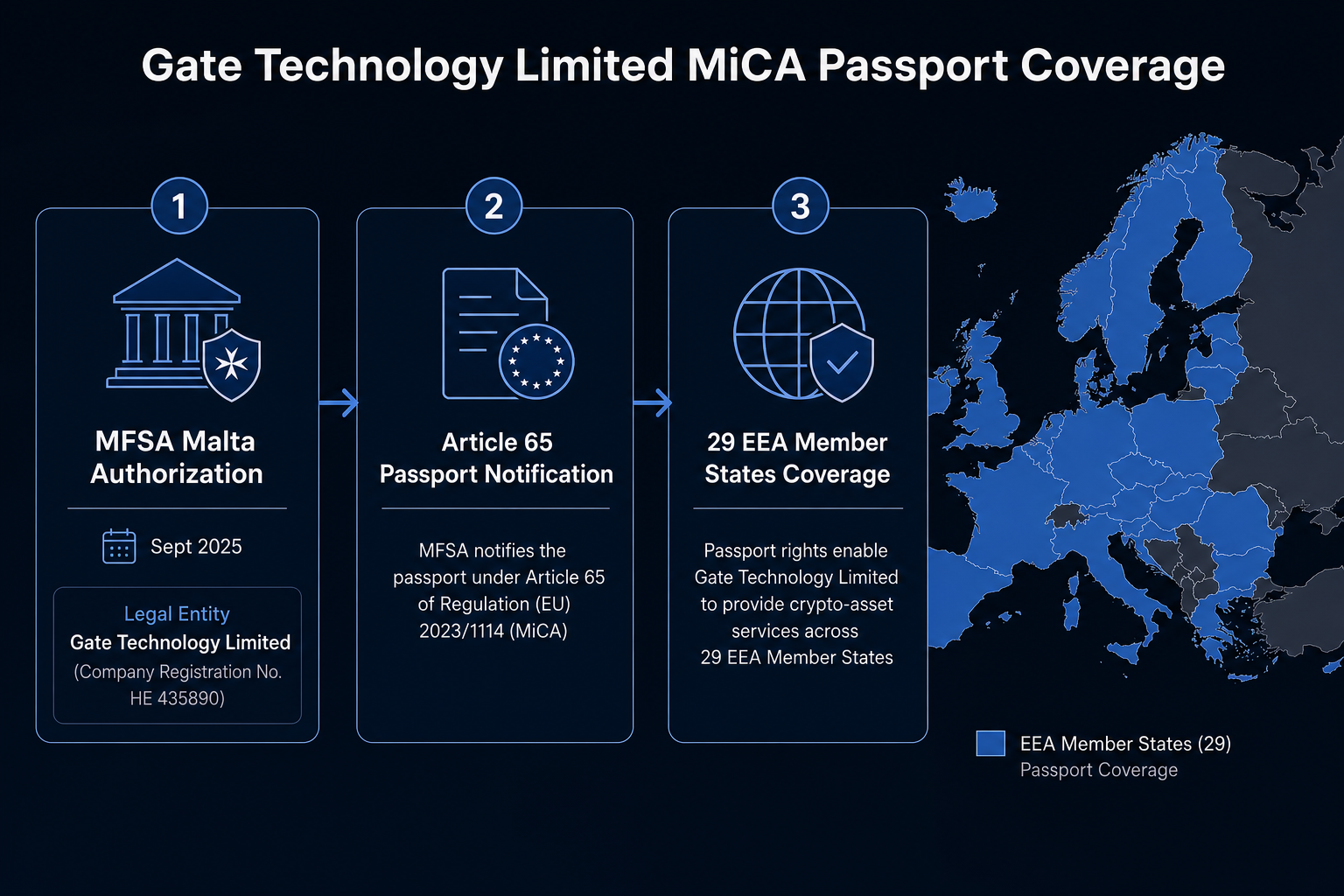 Figure 2. Gate Technology Limited’s process for extending MFSA authorization to EEA member states via the MiCA passport mechanism.
Boundaries for European Users and Global Entities
While crypto trading platforms often operate under a unified brand and interface for global users, regulatory authorizations are tied to specific legal entities. Under the Gate brand, Gate Technology Limited is exclusively responsible for MiCA-governed CASP services within the EEA; users in Asia, the Americas, or other regions may contract with different entities, each with its own rules and complaint channels.
| Verification Item |
EEA MiCA Path (Gate Technology Limited) |
Non-EEA / Other Entity Path |
| Applicable Law |
MiCA and MFSA regulatory rules |
Local license or registration system |
| Verification Source |
ESMA CASP register + MFSA |
Respective jurisdictional authority |
| Service Scope |
Six authorized services + passported countries |
Local terms of service |
| Asset Protection Rules |
MiCA Article 70 and client protection clauses |
Local laws and platform policies |
This table highlights key distinctions between the European MiCA framework and other regulatory paths. Users should confirm the contracting entity in legal documents or order confirmation pages; a brand logo alone does not substitute for verifying the legal entity and authorization scope.
What Does This Mean for User Asset Protection?
MiCA’s customer protection rules apply to services provided by Gate Technology Limited within its authorized scope. MiCA specifically mandates asset segregation under Article 70, separation of client and proprietary assets, bankruptcy remoteness, and transparency. With custodial authorization, Gate Technology Limited must ensure user crypto assets are segregated and properly recorded, per MiCA requirements.
MiCA further requires segregation of custodial assets from proprietary assets, maintenance of minimum capital, and disclosure of fees and conflicts of interest, all under MFSA’s ongoing supervision. These protections apply only to authorized services and passported countries; functions provided by other entities require independent confirmation under the respective entity’s rules.
Gate’s Global Compliance Network
MFSA MiCA authorization for Gate Technology Limited is a critical component of the Gate brand’s global compliance infrastructure, but not its only regulatory vehicle. The Gate global compliance network details how Gate operates via distinct legal entities, each holding licenses or registrations in separate jurisdictions. Regional compliance frameworks coexist and do not substitute for one another.
MiCA authorization provides unified access and customer protection for CASPs within the EEA; VASP registrations or payment licenses for other markets are held by respective group entities, each operating independently. To determine if a specific product or feature is covered by MiCA, users must separately identify the brand, regional legal entity, license type, and service scope.
Summary
Gate’s Malta MiCA license means Gate Technology Limited received MFSA Article 63 CASP authorization on September 29, 2025 (LEI 984500D6A0F945BB5A15). The license covers custody, trading platform operation, bidirectional exchange, order execution, and transfer—six core services. After ESMA registration, these services are passported to 29 EEA member states via MiCA. This brings Gate’s European trading and custodial functions under MiCA’s unified framework, but MiCA protections apply only to this legal entity, the authorized services, and passported countries; all other operations require separate identification by contracting entity and local law.
FAQ
What is Gate Technology Limited?
Gate Technology Limited is the Malta-registered legal entity under the Gate brand responsible for MiCA-compliant crypto asset services in the EU and EEA. On September 29, 2025, it was granted MFSA MiCA CASP authorization, with LEI 984500D6A0F945BB5A15. Within the MiCA scope, Spot custody, platform trading, exchange, and transfer services are provided by this licensed entity.
What MiCA services has MFSA granted to Gate?
MFSA has authorized Gate Technology Limited to provide six CASP services: custody and administration of crypto-assets, operation of a trading platform, exchange of crypto-assets for funds, exchange of crypto-assets for other crypto-assets, execution of orders on behalf of clients, and transfer of crypto-assets on behalf of clients. Only services on the authorized list are covered by MiCA.
What is Gate’s MiCA authorization date? How can it be verified on ESMA?
Gate Technology Limited’s MiCA CASP authorization date is September 29, 2025, with MFSA as the home competent authority. Download the CASP provisional register CSV from the ESMA MiCA page and search by legal entity name or LEI 984500D6A0F945BB5A15 to verify the authorization date, service list, and passported countries.
Which European countries are covered by Gate’s MiCA passport?
Following MFSA authorization, Gate Technology Limited initiated the Article 65 passport process. According to Gate Group’s public disclosure, passport coverage extends to 29 EEA member states: all 27 EU countries, Iceland, Liechtenstein, and Norway. The definitive list is found in the “passport coverage member state” field of the ESMA register.
How does Gate’s European entity differ from its global operations?
While the Gate brand serves users worldwide, MiCA authorization is specific to Gate Technology Limited as the EEA legal entity. European MiCA services are supervised by MFSA and subject to client protection rules such as Article 70; services in other regions are provided by different entities, each governed by their own jurisdiction’s licenses and regulations, and are not automatically equivalent.
What does Gate’s MiCA license mean for user asset protection?
Within the scope authorized for Gate Technology Limited, MiCA requires segregation of client crypto assets from CASP proprietary assets, maintenance of minimum capital, and compliance with governance and disclosure obligations. These protections apply only to MiCA-authorized services and passported countries; for other services or features provided by different entities, users must confirm coverage according to the relevant entity and local regulations.