The growing demand for GPU, cloud computing, and data center resources in AI model training is reshaping Microsoft’s revenue structure and the way the market values the company. Azure, Copilot, and the OpenAI ecosystem are also becoming important variables that influence MSFT’s long term growth.
MSFT ’s current growth drivers mainly include Azure cloud services, enterprise AI commercialization, data center expansion, and enterprise software cash flow. AI infrastructure investment, GPU supply capacity, and the competitive landscape in cloud computing are also affecting Microsoft’s market performance.
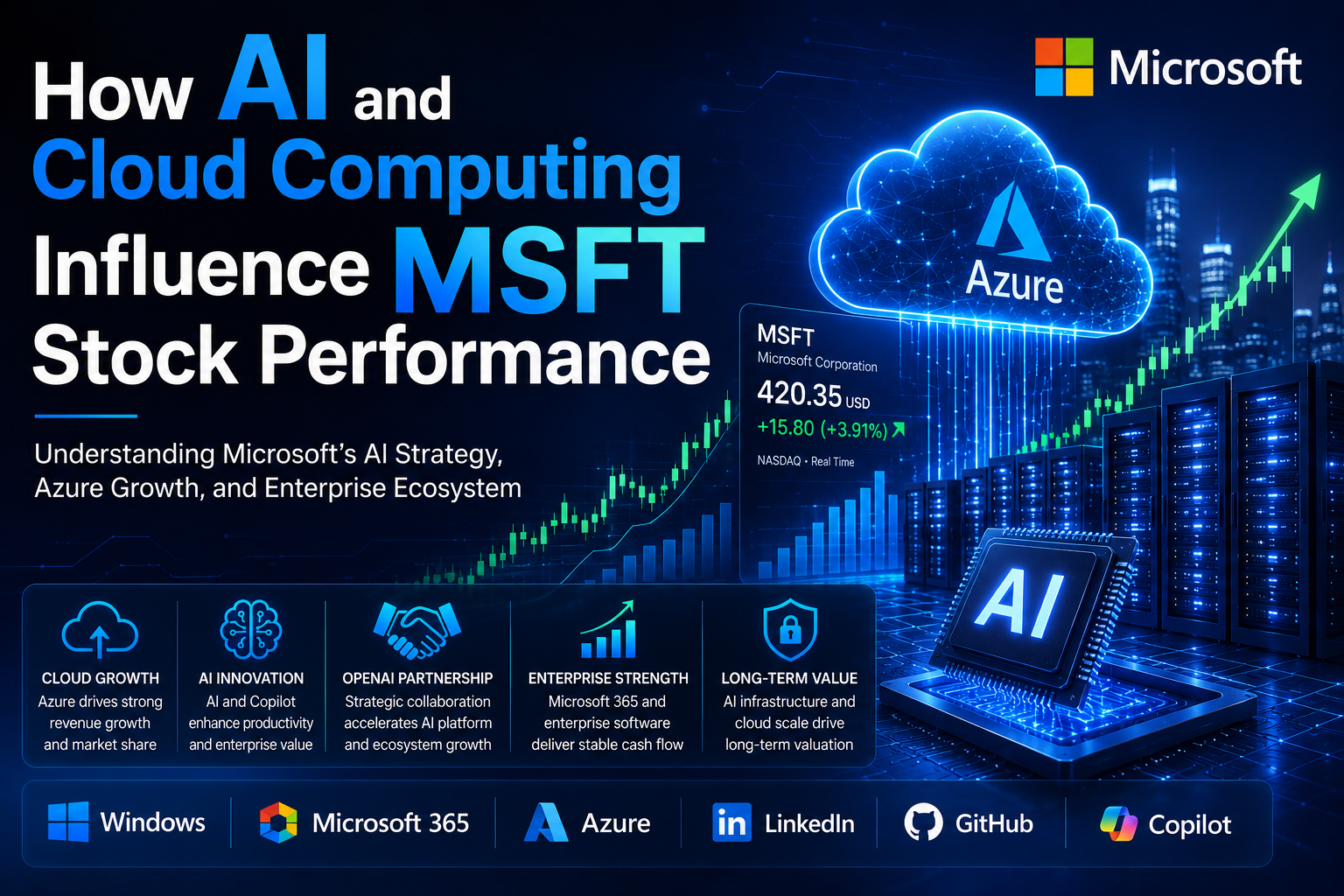
What Is the Core Growth Logic Behind MSFT Stock
The core growth logic behind MSFT stock is essentially built on the synergy between “enterprise software + cloud computing + AI platforms.” Microsoft has gradually moved away from the traditional software licensing model and shifted toward long term subscription and cloud service revenue.
Microsoft 365, Teams, and enterprise security services can continue to generate stable cash flow. Enterprise users usually stay within the Microsoft ecosystem for the long run, giving Microsoft strong revenue stability.
Azure serves as Microsoft’s cloud computing growth engine. Once enterprise data, AI services, and business systems migrate into Azure, Microsoft can continue generating cloud service revenue.
AI platforms further strengthen the stickiness of Microsoft’s ecosystem. Copilot and Azure OpenAI Service are not just new features; they also show that Microsoft is deeply integrating AI into enterprise workflows.
This structure means MSFT is no longer valued simply as a software company. Its valuation is moving closer to that of an AI infrastructure platform.
Azure has become one of Microsoft’s most important growth businesses. Changes in Azure revenue usually have a direct impact on how the market evaluates MSFT’s growth potential.
Azure’s core value lies in providing enterprises with computing, database, AI, and storage resources. Enterprises can quickly deploy cloud-based businesses without building large server systems on their own.
From a business logic perspective, Azure growth means enterprise demand for cloud computing is still expanding. AI model training, enterprise AI services, and data analytics further increase the consumption of Azure resources.
Below are Azure’s main roles within the Microsoft ecosystem:
| Module |
Core Function |
Impact on MSFT |
| Azure Compute |
Cloud computing resources |
Drives cloud revenue growth |
| Azure AI |
AI model services |
Raises AI valuation expectations |
| Azure Storage |
Data storage |
Strengthens enterprise stickiness |
| Azure Security |
Enterprise security |
Stabilizes long term subscriptions |
Azure’s importance to Microsoft is not only about revenue scale. Azure is also the key infrastructure supporting Microsoft’s AI ecosystem and the operation of OpenAI models.
How AI Business Drives Changes in Microsoft’s Valuation
Microsoft’s AI business is changing how the market values MSFT. AI platforms, enterprise AI services, and data center capabilities have gradually become important valuation indicators for technology companies.
Copilot is an important entry point for Microsoft’s AI commercialization. Microsoft 365 Copilot can help enterprises generate documents, summarize meetings, and analyze data.
Azure OpenAI Service provides enterprise grade AI model capabilities. Companies can access GPT models directly through Azure and build customer service, search, and automation systems.
Unlike traditional software feature upgrades, AI services usually carry higher subscription value. The market will pay more attention to the long term revenue potential of AI platforms rather than short term growth in software sales.
The importance of Microsoft’s AI strategy also lies in the fact that AI has already entered enterprise workflows and cloud computing systems. The deeper AI platforms move into enterprise systems, the stronger the stickiness of Microsoft’s ecosystem usually becomes.
How the OpenAI Partnership Affects MSFT’s Business Ecosystem
Microsoft’s partnership with OpenAI has become an important part of MSFT’s AI strategy. Azure data centers and OpenAI’s model ecosystem have formed a deep infrastructure based collaboration.
Training large language models requires massive GPU and cloud computing resources. Azure data centers handle a large amount of model training and inference work.
Microsoft has also integrated GPT models into Microsoft 365, GitHub Copilot, and Azure AI services. AI capabilities are gradually entering office work, development, and enterprise collaboration scenarios.
This partnership means Microsoft is not only an investor in OpenAI, but also an AI infrastructure provider. As a result, AI models, cloud computing, and enterprise software have formed stronger synergy.
Compared with independent AI companies, Microsoft’s greatest advantage lies in its enterprise ecosystem. Azure, Windows, and Office can help AI services enter the enterprise market quickly.
How Enterprise Software Supports Microsoft’s Cash Flow
Enterprise software has long formed the foundation of Microsoft’s cash flow. Microsoft 365, Teams, and enterprise security services can continue providing stable subscription revenue.
Microsoft Office has become one of the core office platforms for enterprises worldwide. Excel, Outlook, and Teams remain part of the daily work infrastructure for many companies.
Enterprise security and identity authentication systems further increase the stickiness of Microsoft’s platform. Large enterprises usually do not frequently replace their office and security systems, giving Microsoft long term customer stability.
This long term subscription model is very important for Microsoft’s AI expansion. Azure data centers, AI GPUs, and cloud infrastructure development all require sustained capital investment.
Stable cash flow means Microsoft can continue expanding AI and cloud computing spending without relying too heavily on short term financing capacity.
How Microsoft’s Data Center Expansion Affects Capital Expenditure
Microsoft is continuing to expand the scale of Azure AI data centers. Growing demand for AI model training and inference is also raising Microsoft’s capital expenditure.
AI data centers usually require GPU clusters, high speed networks, and large cooling systems. Generative AI requires significantly more data center resources than traditional cloud services.
GPU procurement is an important part of Microsoft’s AI infrastructure spending. NVIDIA’s GPU supply capacity also directly affects how quickly Azure AI services can expand.
Microsoft also needs to build more data center regions to support the global deployment of AI services. Competition in AI data centers has gradually evolved into a competition over infrastructure scale.
In the long run, data center expansion may increase capital expenditure, but it can also strengthen Microsoft’s AI platform moat. The larger Azure’s infrastructure scale becomes, the higher enterprise migration costs usually are.
What AI and Cloud Computing Risks Does MSFT Face
The core risks MSFT currently faces mainly come from AI costs, GPU supply, and cloud computing competition.
AI model training and inference require large amounts of GPU resources, so expanding AI services will increase data center operating costs. GPUs, energy, and cooling systems are all high cost components of AI infrastructure.
Amazon, Google, and Meta are also strengthening their AI platform strategies. Global technology companies have already begun competing over AI models, GPUs, and data center resources.
AI commercialization efficiency is another important variable. Although enterprise demand for AI services continues to grow, AI inference costs remain high.
Microsoft also needs to keep balancing AI investment and profit margins. If AI infrastructure spending grows faster than commercialization revenue, the market may reassess MSFT’s long term growth logic.
AI and cloud computing competition is gradually shifting from software competition to a broader contest across “GPU + data centers + AI platforms.”
Conclusion
The growth logic behind MSFT stock is increasingly centered on Azure cloud computing, AI platforms, and the enterprise software ecosystem. Microsoft is transforming from a traditional software company into a global AI and data center infrastructure platform.
Azure revenue growth, the OpenAI partnership ecosystem, and Copilot’s commercialization capabilities are driving long term changes in Microsoft’s valuation. Enterprise software subscription revenue also provides stable cash flow support for Microsoft’s AI expansion.
At the same time, Microsoft faces pressure from AI costs, GPU supply, and global cloud computing competition. Competition in AI and data centers has gradually become an important factor influencing MSFT’s long term market performance.
FAQs
Why Is MSFT Stock Affected by AI Business?
Microsoft’s AI business now covers Azure AI, Copilot, and OpenAI services. Growth in AI platform revenue directly affects the market’s expectations for Microsoft’s long term profitability.
Why Is Azure Revenue Important?
Azure is Microsoft’s core cloud computing platform. Growth in Azure revenue usually indicates rising demand for enterprise cloud services, which affects MSFT’s growth expectations.
How Does OpenAI Affect Microsoft’s Business Ecosystem?
Microsoft provides OpenAI with Azure data centers and GPU computing power, while also integrating GPT models into Office, Copilot, and Azure AI services.
Why Does Microsoft Keep Expanding Data Center Investment?
AI model training and cloud computing services require large amounts of GPU and server resources, so Microsoft needs to continue building Azure data center infrastructure.
What AI and Cloud Computing Risks Does MSFT Face?
MSFT mainly faces risks such as rising AI costs, GPU supply constraints, cloud computing competition, and pressure from data center capital expenditure.