Artificial intelligence is rapidly emerging as a pivotal force in the evolution of the healthcare industry. The traditional healthcare system has long grappled with extended R&D cycles, high development costs, uneven distribution of medical resources, and a growing demand for personalized patient care. AI technology addresses these challenges by harnessing large-scale data processing, advanced algorithmic analysis, and automated decision support to boost the efficiency of medical services. From drug discovery and disease prediction to medical imaging analysis and the creation of personalized treatment plans, AI is increasingly serving as the technological backbone driving healthcare modernization.
As the volume of healthcare data expands, digital health is fundamentally reshaping the competitive dynamics for pharmaceutical companies. For global leaders like Johnson & Johnson, digital transformation goes beyond adopting new tools—it requires reengineering R&D workflows, business models, and patient service systems. The convergence of AI and healthcare is set to become a critical engine for medical innovation, directly impacting the long-term competitiveness of pharmaceutical enterprises.
Why AI Is a Strategic Priority in Healthcare
Healthcare has always been a data-intensive sector. Every day, the industry generates massive and complex datasets—from electronic health records (EHRs) and medical imaging to genomic sequencing and clinical trial data. Traditional manual analysis methods are unable to fully exploit this information, resulting in underutilized medical resources.
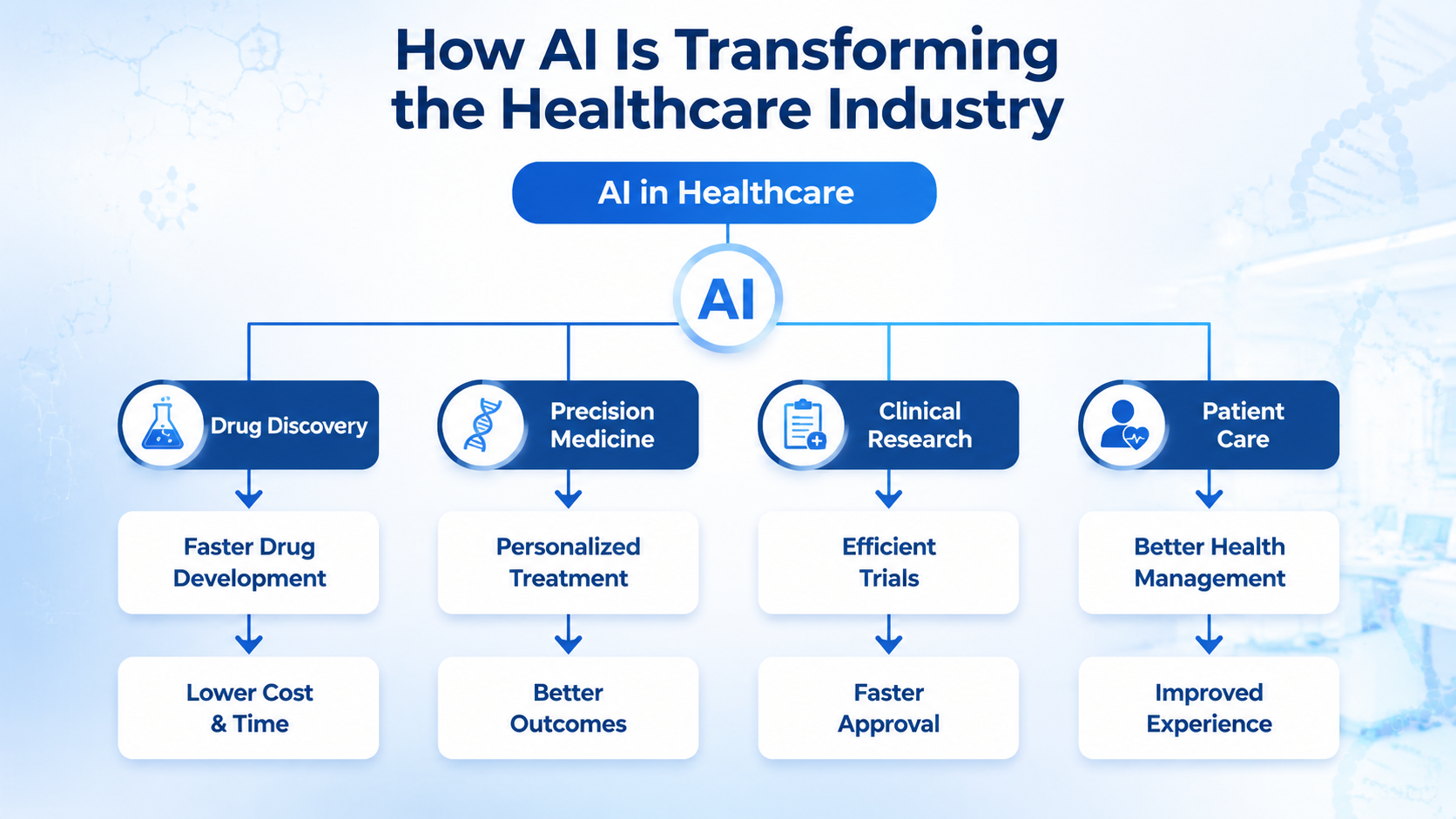
AI’s core advantage lies in its ability to rapidly process vast data volumes and uncover patterns within complex datasets. In disease diagnosis, for example, AI models can detect subtle anomalies in medical images, enhancing diagnostic accuracy and efficiency. In drug development, AI can screen extensive libraries of compounds and predict drug efficacy, reducing trial-and-error costs throughout the R&D pipeline.
For pharmaceutical companies, AI’s value extends beyond operational efficiency; it fundamentally transforms the innovation paradigm. Historically, new drug development required years of experimental validation, with many candidates failing along the way. AI enables early prediction of molecular structures, simulation of drug mechanisms, and optimization of experimental focus, significantly increasing the probability of R&D success.
In recent years, leading pharmaceutical companies worldwide have ramped up AI investment, building internal data platforms, partnering with AI technology firms, and leveraging machine learning models to guide R&D decisions. Johnson & Johnson is at the forefront of this digital transformation, making AI an integral part of its future healthcare innovation strategy.
How AI Accelerates Drug Development
Drug development remains one of healthcare’s most complex and cost-intensive processes. Bringing an innovative therapy from lab discovery to market can take years and require substantial investment. AI technology is redefining traditional R&D by introducing new avenues for optimization.
AI accelerates drug discovery by empowering scientists to analyze existing biomedical data and predict which molecules are most likely to have therapeutic value. Instead of conducting countless lab tests on random compounds, researchers can use machine learning algorithms to rapidly filter candidates and prioritize those with the highest probability of success.
AI also enhances clinical trial design. Clinical trials demand the recruitment of large patient cohorts and rigorous analysis of drug effects across diverse populations. By mining patient data, AI helps researchers identify optimal trial participants, boosting trial efficiency and reducing costs.
Additionally, AI supports drug lifecycle management. After a drug reaches the market, companies must continuously monitor safety and real-world performance. Data analytics enable faster detection of potential risks and allow companies to optimize treatment protocols based on real-world data.
Johnson & Johnson has systematically advanced its digital R&D infrastructure, integrating data science, automated experimentation, and AI-assisted research to enhance its innovative drug development capabilities. As a global pharmaceutical leader, JNJ’s digital strategy is not about replacing traditional R&D, but about augmenting scientific decision-making with AI.
How Machine Learning Drives Precision Medicine
Precision medicine has become a central focus in modern healthcare, aiming to tailor treatment plans to each patient’s genetic profile, disease state, lifestyle, and therapeutic response. Unlike the traditional “one-size-fits-most” model, precision medicine emphasizes individual differences—and machine learning is the key enabler of this transformation.
Machine learning reveals hidden patterns in massive healthcare datasets. By analyzing genomic data, clinical records, and treatment outcomes, algorithms can identify distinctions among patient groups and guide physicians toward the most effective therapies. In oncology, for instance, this is critical—patients with the same cancer type may respond differently to treatment due to unique genetic mutations.
AI also accelerates biomarker discovery. Biomarkers help clinicians assess disease risk, predict treatment outcomes, and monitor disease progression. While traditional biomarker research required extensive experimental validation, machine learning can rapidly identify potential indicators from complex medical data, streamlining research.
Johnson & Johnson is advancing precision medicine across immunology, oncology, and neuroscience—fields that involve intricate disease mechanisms and vast patient datasets, demanding robust data analytics for R&D decision-making. By integrating AI, genomic analysis, and clinical research, JNJ is deepening its understanding of disease progression and accelerating the development of innovative therapies.
For example, in oncology, precision medicine allows researchers to identify specific patient subgroups, ensuring innovative drugs reach their ideal targets. In immunology, AI helps decipher complex immune responses, supporting the development of new treatment modalities.
Looking ahead, as multi-omics data, EHRs, and wearable device data proliferate, machine learning will play an increasingly vital role in precision medicine, shifting healthcare from reactive treatment to proactive prediction and management.
Johnson & Johnson’s Application of Data Technology
As a global healthcare leader, Johnson & Johnson’s digital strategy encompasses more than isolated AI tools—it is building a comprehensive data technology ecosystem across R&D, manufacturing, clinical operations, and patient services.
In drug development, JNJ is continuously strengthening its data-driven capabilities. Modern R&D generates enormous volumes of experimental, clinical, and scientific literature data. Without effective analytics, extracting actionable insights is nearly impossible. AI and machine learning empower teams to process data efficiently and uncover new therapeutic opportunities faster.
During clinical research, data technology streamlines trial operations. Traditional trials often face long patient recruitment periods and slow data collection. Digital tools accelerate information gathering and enable real-time analysis of trial progress.
Johnson & Johnson is also driving digital transformation in medical devices. As smart devices evolve, medical hardware is shifting toward data-centric platforms. Using sensors, remote monitoring, and intelligent analytics, devices can continuously collect patient health data and deliver timely support.
JNJ’s medical device portfolio spans surgical, orthopedic, and other specialized domains. In the future, AI integration will further enhance surgical precision, optimize treatment workflows, and support more effective clinical decision-making.
Strategically, data has become a crucial asset in healthcare. Companies that possess high-quality medical data and can analyze it effectively with AI will gain a decisive competitive advantage.
How Digital Healthcare Enhances Patient Experience
AI is not only revolutionizing medical R&D but also transforming the patient experience. Digital healthcare empowers patients to manage their health more conveniently and enables providers to deliver more efficient care.
AI improves disease management by enabling continuous health monitoring and proactive intervention. Wearable devices track metrics like heart rate and activity, while AI systems analyze changes to alert patients of potential risks before they escalate.
Digital tools also increase service efficiency. Intelligent assistants, telemedicine platforms, and automated health management systems reduce wait times and maximize resource utilization. For chronic disease management, digital health enables ongoing monitoring rather than treating conditions only after deterioration.
For pharmaceutical companies, patient experience is now a critical competitive factor. Whereas the industry once focused primarily on R&D and sales, the future healthcare ecosystem emphasizes holistic patient lifecycle management. Digital technologies allow companies to better understand patient needs and deliver comprehensive therapeutic support.
Johnson & Johnson is building a digital health ecosystem that connects patients, providers, and products through data—making healthcare more continuous and personalized. This approach not only boosts patient engagement but also drives better treatment outcomes.
Technical and Regulatory Challenges for AI in Healthcare
Despite its promise, AI adoption in healthcare faces significant hurdles.
Data security is paramount. Medical data contains highly sensitive information—patient identities, health records, genomic data. Protecting privacy while leveraging data for AI-driven innovation is a core challenge for digital health.
Model reliability is another concern. Medical decisions directly impact patient well-being, so AI outputs must be accurate and interpretable. Algorithmic bias or errors can lead to misdiagnosis or inappropriate treatment.
Regulatory frameworks also play a critical role. AI technology evolves rapidly, requiring regulators to continually adapt standards to ensure tools are safe and clinically effective.
For major players like Johnson & Johnson, AI implementation demands not only technical expertise, but strict compliance with medical regulations—including drug approval, data protection, and clinical validation. The future of AI in healthcare will depend on building trustworthy, secure, and regulated systems, not just increasing automation.
Digitalization Trends in Healthcare
The digitalization of healthcare is set to accelerate over the next few years, with AI becoming foundational infrastructure linking R&D, clinical care, and patient management.
Generative AI, in particular, is emerging as a new growth driver. Unlike traditional AI, generative models offer advanced comprehension and content creation capabilities—helping doctors organize information, generate research reports, and assist scientists in analyzing complex medical data.
AI’s convergence with biotechnology is also reshaping drug discovery. Future drug development will rely more heavily on AI predictions, with experimental validation serving as a more targeted follow-up step—potentially shortening time-to-market for innovative therapies.
The healthcare data ecosystem is expanding rapidly. As genomic sequencing becomes more affordable, smart devices proliferate, and EHRs improve, the industry will have unprecedented data resources for AI analysis.
From a competitive standpoint, tomorrow’s leading healthcare companies will require not only world-class R&D but also advanced data management and AI deployment capabilities. Digital maturity will be a core measure of long-term industry leadership.
The Future of JNJ’s Digital Health Strategy
For Johnson & Johnson, AI and digital health will remain central to future growth. As global healthcare demand rises and competition in innovative drug development intensifies, JNJ must leverage technology to improve R&D efficiency and pioneer more precise, effective medical solutions.
JNJ is likely to further deepen AI deployment in core therapeutic areas such as oncology, immunology, and neuroscience—diseases that are highly complex and demand advanced data analytics and precision medicine, making them ideal applications for AI.
The company will also continue building integrated digital R&D platforms, uniting experimental, clinical, and real-world data to enhance decision-making.
In medical devices, intelligent, connected platforms will drive future growth. Through AI-powered analytics, remote monitoring, and automation, medical devices will evolve from treatment tools to gateways for continuous health data collection and analysis.
Long-term, Johnson & Johnson’s vision is not simply to be a healthcare company that uses AI, but to build a next-generation healthcare ecosystem powered by data, technology, and innovative therapies.
Conclusion
AI is ushering the healthcare industry into a new digital era. From drug development and precision medicine to patient management and smart medical devices, artificial intelligence is redefining how healthcare operates.
As a global industry leader, Johnson & Johnson is leveraging AI, machine learning, and data technology to strengthen its innovation engine and drive healthcare toward greater precision, efficiency, and personalization. As medical data continues to surge and AI technology matures, digital health will become a primary arena for pharmaceutical competition.
For JNJ, AI is not just a tool for operational efficiency—it is the foundation for next-generation medical innovation. By continuously integrating AI, biotechnology, and digital health systems, Johnson & Johnson is positioned to maintain a lasting competitive edge in the evolving healthcare landscape.