The home sharing model has fundamentally transformed the competitive landscape of the global travel industry, shifting accommodation services from a standardized, hotel group-dominated supply system to a new ecosystem driven by platform networks, user trust, and data capabilities. Airbnb has reduced the cost of transactions between strangers and enhanced platform efficiency through mechanisms such as review systems, identity verification, dynamic pricing, and intelligent recommendations.
As AI, data analytics, and personalized travel demand continue to grow, home sharing platforms are evolving from simple accommodation marketplaces into comprehensive travel service ecosystems. Airbnb’s long-term value lies not only in the scale of its listings, but also in its global user network and robust platform infrastructure.
What Is Home Sharing
Airbnb is a global home sharing platform that leverages internet technology to connect property owners with travelers, enabling private residences, apartments, villas, and unique accommodations to participate in the global tourism market. Unlike traditional hotels that purchase and operate large property portfolios, Airbnb’s core model integrates idle accommodation resources through a digital platform, offering users a more diverse range of lodging options.
Home sharing is an internet-enabled accommodation model based on converting unused spaces owned by individuals or businesses into short-term or long-term lodging via a platform. This approach allows hosts to monetize idle properties and provides travelers with personalized experiences distinct from traditional hotels.
The traditional hotel industry depends on property development and brand expansion. For a hotel group to enter a new city, it typically requires building hotels, leasing properties, or engaging in brand licensing, making expansion capital- and asset-intensive. In contrast, home sharing platforms increase market supply by aggregating decentralized accommodation resources.
Founded in 2008, Airbnb began as a platform for renting out spare rooms and has since evolved into a global accommodation marketplace. As user needs have diversified, the platform’s listings have expanded from standard residences and apartments to unique homes, luxury villas, and long-term stay options.
Home sharing has redefined the supply logic of the travel industry. Previously, the number of available accommodations during peak travel periods depended mainly on hotel capacity. Airbnb, by mobilizing a vast pool of private housing, has made the accommodation market far more flexible.
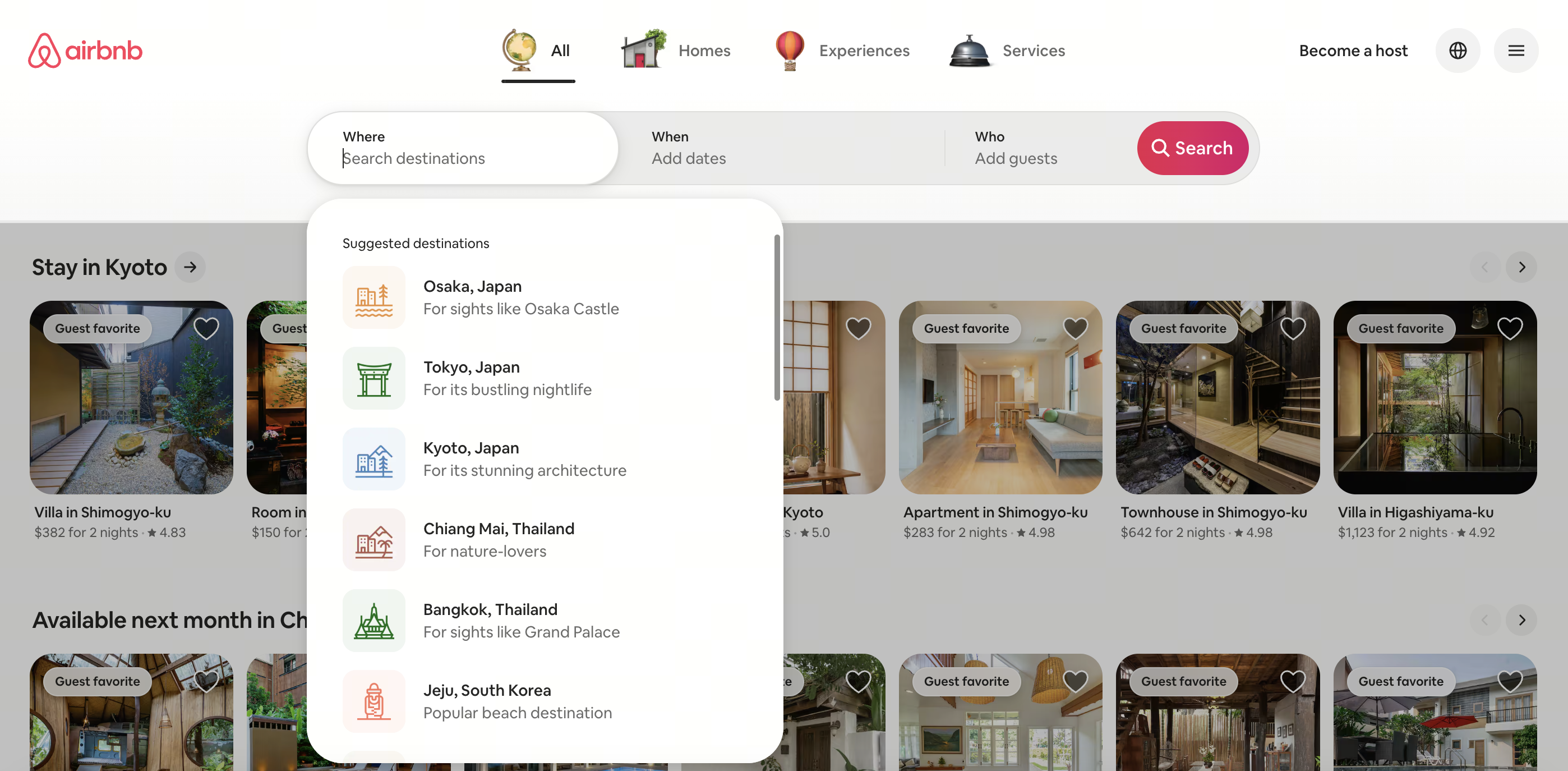
Airbnb’s core business model is a two-sided marketplace, connecting two distinct user groups and reducing transaction costs for both through technology.
On one side are hosts—owners of residences, apartments, villas, or other spaces—who seek to earn additional income by renting out their properties. On the other side are guests, who are searching for accommodations that meet their criteria for price, location, space, and experience.
Airbnb does not own a large inventory of accommodation assets; instead, it serves as the infrastructure connecting both parties. The platform provides listing displays, search functionality, payments, order management, user reviews, and customer support.
This model generates significant platform effects for Airbnb. As more hosts join, the number of available listings grows, expanding choices for users. Increased traveler demand, in turn, boosts host income, attracting even more supply.
This supply-demand cycle creates a powerful network effect, which has been central to Airbnb’s rapid expansion.
Unlike traditional hotels that scale with physical assets, home sharing platforms rely on user base and data accumulation. Once a platform reaches critical mass, it becomes difficult for new entrants to replicate its network of listings and user relationships.
How Hosts and Guests Create Value Together
Airbnb’s ongoing success relies on meeting the needs of both hosts and guests.
For hosts, home sharing provides a flexible way to monetize assets. Previously, vacant properties might only incur maintenance costs; now, Airbnb enables hosts to convert unused space into income.
In cities with strong tourism demand, short-term rentals can yield higher returns than traditional long-term leases. Airbnb also gives individual hosts access to a global user base without the need to build their own marketing channels.
For guests, home sharing offers greater choice. Compared to standardized hotel rooms, Airbnb listings are more varied and can accommodate a range of travel scenarios.
For example, family travelers may need homes with kitchens and multiple bedrooms; long-term travelers may seek more flexible pricing; younger travelers may prioritize authentic local experiences.
This value alignment between supply and demand is a key differentiator for Airbnb compared to traditional accommodations.
The biggest challenge in home sharing is establishing trust between strangers. Hotels rely on brand reputation, standardized service, and physical infrastructure, but Airbnb’s hosts and guests are often unfamiliar with each other, making a new trust framework essential.
The user review system is a foundational trust mechanism on Airbnb.
After each stay, travelers can rate the property’s environment, cleanliness, host service, and overall experience. These public reviews help future users mitigate selection risk and incentivize hosts to maintain high service standards.
The review system acts as an internal credit system—highly rated listings gain visibility, while poor-quality properties are penalized by user feedback.
Beyond reviews, identity verification is crucial to Airbnb’s trust system. The platform authenticates user identities, enhances host profiles, and offers safety measures to reduce fraud and transaction risk.
Additionally, Airbnb provides dispute resolution and protection services to enhance user confidence in the event of unexpected issues.
From a business perspective, trust is a core infrastructure for home sharing platforms. Without a reliable credit system, large-scale transactions between strangers would be difficult to sustain.
How Dynamic Pricing and Intelligent Recommendations Drive Efficiency
Data and algorithmic capabilities are central to Airbnb’s operational efficiency. The accommodation industry faces pronounced supply and demand swings—holidays, peak seasons, and major events all drive price fluctuations. While traditional hotels rely on manual price adjustments, Airbnb leverages data analytics to enable dynamic pricing for hosts.
Dynamic pricing systems factor in:
- Current market demand
- Seasonal trends
- Local events
- Competitive landscape
- Historical booking data
By synthesizing these elements, the platform helps hosts optimize pricing and occupancy. For travelers, intelligent recommendation systems are equally important.
Airbnb generates vast amounts of user behavior data—searches, browsing, booking history, and preferences. By analyzing this data, the platform can recommend listings that better match user needs.
As AI technology advances, recommendation systems will become even more sophisticated. Traditional search relies on keywords, but AI can interpret complex requirements. For example, a user might specify: “Looking for a family-friendly place near nature, with a kitchen, suitable for a one-week stay.” AI can deliver highly accurate matches through semantic understanding and data analysis.
How Airbnb Differs from Traditional Hotels
The fundamental differences between Airbnb and hotels are their business models and resource structures.
Hotels operate on an asset-driven model—acquiring or managing properties, building facilities, and delivering standardized services for revenue. This model provides stable service and strong brand recognition but is capital-intensive to scale.
Airbnb uses a platform-driven model, connecting hosts and travelers worldwide through technology, without holding large accommodation inventories. This approach enables greater scalability.
The user experience also diverges:
Hotels focus on:
- Standardized service
- Brand assurance
- Consistency
Airbnb focuses on:
- Personalized choices
- Local experiences
- Diverse accommodations
Hotel groups are also embracing digital upgrades and more personalized services. As a result, future competition is likely to produce long-term coexistence of different models rather than outright replacement.
Challenges Facing the Global Home Sharing Market
Despite Airbnb’s impact on the accommodation industry, the home sharing model faces several challenges.
Regulation
As the short-term rental market expands, some cities are scrutinizing its impact on housing supply. Regulatory measures—such as permit requirements, tax rules, and listing management—have been introduced in some regions, potentially slowing listing growth.
Service Quality
Because Airbnb listings are provided by individuals, service levels can vary. Ensuring consistent quality across listings remains an ongoing challenge. Unlike hotel chains with unified management, home sharing platforms must rely on rules, reviews, and technology to uphold service standards.
Industry Competition
Online travel agencies, hotel groups, and tech companies are all investing in digital travel solutions. Future competition will focus not only on listing volume but also on user experience, data capabilities, and technological innovation.
Looking ahead, Airbnb’s platform model is expected to become more intelligent and ecosystem-oriented.
Home sharing will increasingly integrate AI. AI can help users discover accommodations, plan trips, and assist hosts in optimizing operations.
In the future, users may bypass traditional search altogether, describing their travel needs to an AI assistant, which will automatically generate lodging and itinerary recommendations.
Airbnb may evolve from an accommodation platform to a comprehensive travel ecosystem. Traveler needs extend beyond lodging to include:
- Local experiences
- Activity recommendations
- Itinerary planning
- Local services
If Airbnb can connect more aspects of travel, its platform value will grow further.
Long-term stays are emerging as a new growth area. The rise of remote work and digital nomadism is driving demand for flexible, extended accommodations. With its global network, Airbnb is well positioned to capture this market.
In the future, the core competitive advantage for home sharing platforms will shift from “how many listings” to “how well they understand user needs.” Data, AI, and community ecosystems will be the foundation of long-term platform competitiveness.
Summary
Airbnb has reshaped the global travel industry through the home sharing model.
Its core value is not in the ownership of hotel assets, but in connecting hosts and travelers via a two-sided platform, leveraging trust systems, data analytics, and intelligent algorithms to enhance transaction efficiency.
Home sharing brings private housing into the global tourism market and offers travelers richer, more personalized lodging experiences.
With ongoing advances in AI, intelligent recommendations, and digital technology, Airbnb is evolving from an accommodation marketplace into a comprehensive travel ecosystem.
However, regulatory policies, service quality management, and industry competition remain key challenges. The future of home sharing will depend not only on listing volume, but also on the platform’s ability to connect users, improve efficiency, and create long-term value through technology.