As Web3 gaming gradually moves away from the traditional “play to earn” model and enters a new stage that places greater emphasis on open worlds and community interaction, NFTs are no longer just digital collectibles. They are increasingly becoming an important part of virtual identity, digital economies, and user participation mechanisms.
Across many Web3 gaming projects, NFT systems are designed to turn game characters, items, and virtual objects into NFTs that users can truly hold through on-chain digital asset mechanisms. Users can not only use these assets in the game, but also manage and trade them through blockchain wallets.
What Is BabyShark’s NFT System?
BabyShark’s NFT system is a game economy structure built around on-chain digital assets. Avatars, clothing, items, collectibles, and certain virtual space assets in the game may all exist on the blockchain as NFTs.
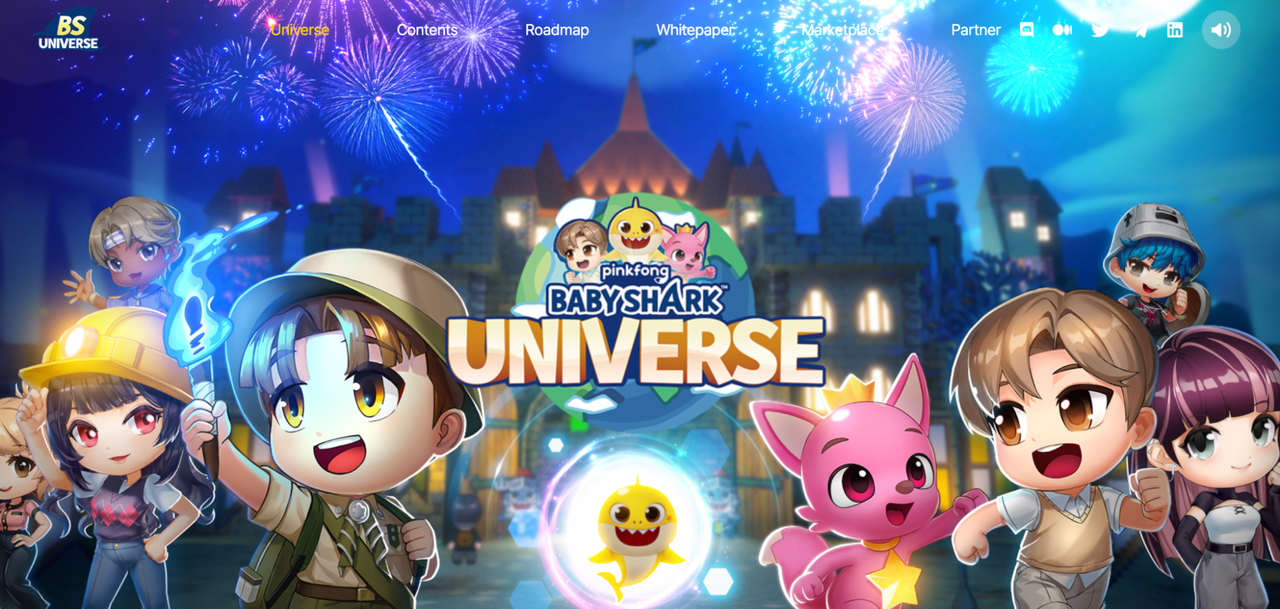
The core features of NFTs, or Non Fungible Tokens, are uniqueness and verifiability. Unlike items stored in an ordinary game database, on-chain NFTs can be truly held through a wallet, and their ownership records are permanently stored on the blockchain network.
In Baby Shark Universe, NFTs are not just static collectibles. They also play functional roles in gameplay interaction and the open world. For example, some NFTs may be used for character decoration, interactive activities, access to special scenes, or community identity display.
How Are BabyShark NFTs Generated?
NFTs in the BabyShark ecosystem are usually generated through official releases, game rewards, event mechanisms, or user participation. Some NFTs may be limited edition digital assets, while others may be created or upgraded gradually through gameplay interaction.
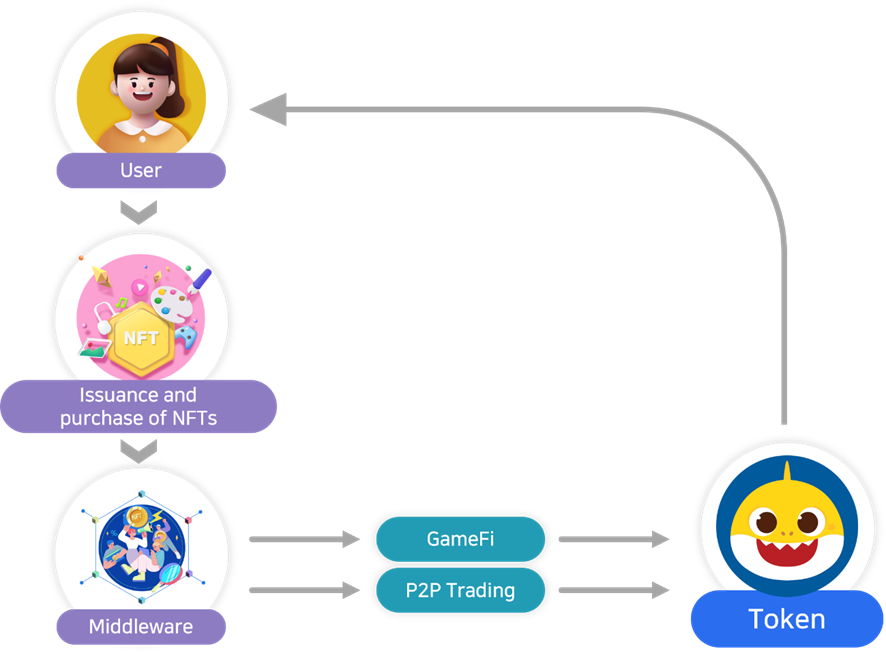
When an NFT is created, the system records its unique ID, attributes, and ownership information through a smart contract. Users can then store the NFT in an on-chain wallet and view or trade it in supported Marketplaces.
Unlike centralized databases in traditional games, NFT asset information is not entirely controlled by a single gaming platform. Even after a user leaves the game, the NFT can still remain in the user’s own wallet address. This is one of the important characteristics of Web3 gaming assets.
What Are BabyShark NFTs Used for in the Game?
NFTs in BabyShark’s open world ecosystem are not only used for display. They also serve practical functions. Different types of NFTs may correspond to different interaction scenarios.
For example, Avatar NFTs can be used to establish on-chain identity, while clothing NFTs may affect a character’s appearance or how they are displayed in the community. Some special NFTs may also be related to event participation, game access, or social interaction.
As Web3 gaming ecosystems develop, the role of NFTs is gradually expanding from simple collectibles into a more complete digital identity system. A user’s in game behavior, assets, and community activities may gradually become connected with NFTs.
How Does the BabyShark Marketplace Work?
The Marketplace is an important part of the BabyShark NFT ecosystem and is used for digital asset trading between users. Users can connect to the Marketplace through an on-chain wallet and buy, sell, or display NFTs.
During a transaction, smart contracts automatically handle asset transfers and ownership updates. Unlike traditional gaming platforms, transaction records in NFT Marketplaces are usually stored publicly on-chain, giving them a higher level of transparency.
The existence of a Marketplace means users can form an independent digital asset circulation system among themselves. The value of NFTs is no longer determined entirely by the gaming platform. It may also be influenced by community demand, scarcity, ecosystem activity, and other factors.
How Do BabyShark NFTs Reflect On-Chain Ownership?
On-chain ownership is one of the key differences between Web3 games and traditional games. In traditional games, users may be able to use game items, but those assets are usually still controlled by the gaming platform. The platform has the right to modify, delete, or restrict user assets.
In BabyShark’s NFT system, users hold NFTs through their wallets, and ownership is recorded on the blockchain network. As long as users control their wallet private keys, they can theoretically continue to control their digital assets.
This mechanism makes NFTs closer to genuine digital ownership and also shifts Web3 games from a “platform rental model” toward a “user ownership model.”
However, on-chain ownership also means users must manage their own wallets and private keys. If a user loses access to their wallet, the NFT assets may not be recoverable.
How Are BabyShark NFTs Different from Traditional Game Items?
Traditional game items are usually centralized platform assets. Their usage scope, trading rules, and lifecycle are fully controlled by the official platform. BabyShark NFTs, by contrast, place greater emphasis on openness and circulation.
The core differences are mainly reflected in asset ownership, trading methods, and ecosystem compatibility.
| Comparison Dimension |
Traditional Game Items |
BabyShark NFT |
| Ownership |
Platform controlled |
Held by users on-chain |
| Data Structure |
Centralized database |
Blockchain network |
| Tradability |
Usually limited |
on-chain Marketplace |
| Transparency |
Relatively low |
on-chain verifiable |
| Compatibility |
Within the platform |
Expandable Web3 ecosystem |
This shift is one of the important reasons Web3 gaming has attracted attention. More projects are beginning to explore how NFTs can be used to build a more open digital asset system.
What Challenges Do Web3 Gaming NFTs Face?
Although NFTs have become an important part of Web3 gaming, their development still faces several challenges.
First, NFT market liquidity can be affected by community activity and market sentiment. If user participation declines, trading demand for some NFTs may also decrease.
Second, Web3 wallets and on-chain interactions still involve a learning curve for ordinary users. Gas fees, private key management, and on-chain security remain important factors affecting the user experience.
In addition, the long term value of NFTs often depends on the game ecosystem itself. If project content is not updated sufficiently or community activity declines, the actual use cases for NFTs may also be affected.
Therefore, NFT systems in Web3 games do not depend only on technical architecture. They are also closely tied to community operations, the content ecosystem, and the project’s ability to sustain long term interaction.
Conclusion
As an important foundation of the Baby Shark Universe Web3 gaming ecosystem, BabyShark’s NFT system uses on-chain digital asset mechanisms to turn Avatars, items, and virtual objects into NFTs that users can truly hold. Compared with centralized assets in traditional games, NFTs place greater emphasis on on-chain ownership, open trading, and community interaction.
As Web3 gaming gradually moves away from a purely financialized model and toward a direction that values entertainment experiences and open world ecosystems more deeply, the role of NFTs is also expanding from digital collectibles into an important part of virtual identity and the digital economy.
FAQs
Can BabyShark NFTs Be Traded?
Yes. Users can usually buy, sell, and display NFTs through the Marketplace.
Do BabyShark NFTs Represent Real Ownership?
NFT ownership is recorded on the blockchain network, and users hold assets through their wallets. This gives them verifiable digital ownership on-chain.
What Types of NFTs Does BabyShark Have?
BabyShark NFTs may include Avatars, clothing, game items, collectibles, and certain virtual space assets.
How Are BabyShark NFTs Different from Ordinary Game Skins?
Ordinary game skins are usually controlled by the gaming platform, while NFTs place greater emphasis on user ownership on-chain and open trading.
Are There Risks with BabyShark NFTs?
NFT markets may be affected by liquidity, community activity, and the development of the project ecosystem. As a result, Web3 gaming NFTs also carry certain market and technical risks.