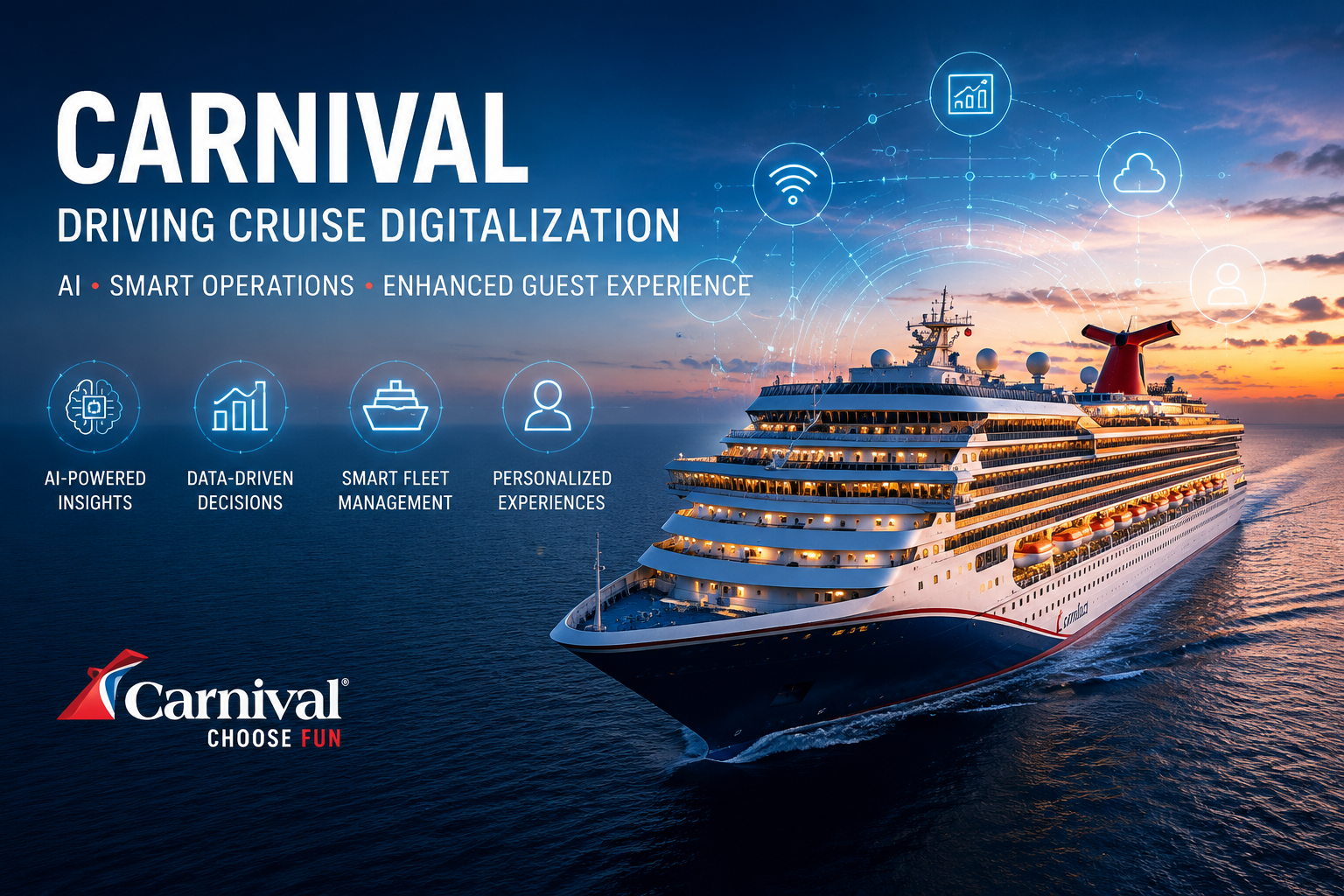
As travel spending shifts from traditional sightseeing to experiential consumption, the competitive landscape of the cruise industry is undergoing a transformation. Previously, cruise lines primarily attracted customers through fleet size, route offerings, and brand recognition. Today, AI, data analytics, smart devices, and digital capabilities have become essential drivers for enhancing operational efficiency and customer experience.
Digitalization is now a core focus for Carnival in optimizing its business model. From vessel management and Rendite forecasting to guest services, technology is embedded throughout every aspect of cruise operations. By leveraging data and artificial intelligence, Carnival aims to maximize asset utilization, reduce operational costs, and deliver a more intelligent, seamless experience at sea.
The cruise industry is inherently complex. A large cruise ship can accommodate thousands of guests and requires seamless coordination across lodging, dining, entertainment, safety, energy, logistics, and port operations. As vessels grow larger, traditional management methods alone are no longer adequate for modern operational demands.
One of the primary reasons Carnival is driving digital transformation is to enhance overall operational efficiency.
Every day, large cruise ships generate vast amounts of data—from guest spending behavior and ship performance to energy usage, weather changes, and route information. By integrating these data streams through digital systems, Carnival can make faster, more informed operational decisions and optimize resource allocation.
Digitalization is also a critical tool for increasing customer value. Today’s cruise guests expect more than just transportation and accommodation—they seek personalized experiences. For instance, guests have diverse preferences for dining, entertainment, and shore excursions. Digital technologies enable Carnival to deliver more targeted service recommendations based on guest data.
Furthermore, the cruise sector is capital-intensive, with significant costs for shipbuilding, fuel, labor, and maintenance. Intelligent systems can streamline operations, reduce unnecessary resource consumption, and improve the profitability of each ship.
With the global cruise market rebounding, competition is shifting from fleet size to operational efficiency and guest experience. Digitalization is now a vital strategy for Carnival to maintain long-term competitiveness.
How AI Drives Operational Efficiency for Cruises
Artificial intelligence (AI) is a key technology for Carnival’s operational advancement. Unlike traditional management that relies on manual expertise, AI processes vast real-time data sets, supporting more accurate forecasting and decision-making.
In ship operations, AI analyzes variables such as weather, sea conditions, port logistics, and shifting guest demand to optimize route planning. When weather or port schedules change, intelligent systems help operations teams quickly adapt sailing plans, maximizing vessel utilization.
AI is also transforming equipment maintenance. Large cruise ships contain complex mechanical systems—propulsion, energy, safety, and more. Traditional maintenance follows fixed schedules, but AI leverages sensor data to continuously monitor equipment health and predict potential failures.
This predictive maintenance approach reduces unexpected breakdowns, boosts operational reliability, and lowers long-term maintenance costs.
Energy management is another crucial AI application for the cruise industry. With fuel as a major expense, intelligent systems evaluate speed, weather, route length, and energy consumption to optimize fuel efficiency.
For Carnival, AI is not just about improving isolated processes—it’s about building a data-driven operational framework that transitions cruise ships from simple transportation to intelligent travel platforms.
How Data Analytics Optimizes Routes and Rendite Management
Data analytics is revolutionizing business decision-making for cruise lines.
Designing cruise routes involves much more than picking destinations—it requires a holistic view of consumer demand, seasonal shifts, port resources, and operational costs.
By analyzing historical bookings and guest behaviors, Carnival can assess demand across regions and strategically deploy its fleet. The Caribbean, for example, remains a Hot market, while Mediterranean routes are highly seasonal. Data analytics allows Carnival to reallocate ships based on demand trends, boosting year-round operational effectiveness.
Rendite management is another key digital application.
Similar to airlines and hotels, cruise lines are increasingly adopting dynamic pricing strategies. Carnival adjusts fares in real time based on booking pace, cabin type, travel dates, and market demand, optimizing average revenue.
During peak seasons, the company can use demand forecasting to raise prices; during slower periods, targeted promotions can boost occupancy.
Data analytics also empowers Carnival’s marketing. By understanding guests’ travel history and spending habits, Carnival can make tailored product recommendations—such as family-oriented cruises for families or premium upgrades for high-spending guests.
This data-driven approach increases conversion rates and creates more onboard spending opportunities.
How Smart Services Enhance Guest Experience
Digital transformation impacts not only operations but also the cruise experience for guests.
Modern cruise ships are shifting from traditional manual services to intelligent service systems.
Mobile apps now serve as the primary interface between guests and the cruise line. Through digital platforms, guests can check itineraries, book activities, reserve dining, manage spending, and access information—reducing wait times and enhancing convenience.
Digital systems also enable personalized recommendations. Based on guest interests, the system suggests entertainment, dining, or shore excursions tailored to individual preferences.
Digitalization streamlines onboard spending. Guests can use mobile devices to purchase specialty dining, entertainment, internet, and other premium experiences. For Carnival, this not only elevates guest satisfaction but also increases average revenue per guest.
Looking ahead, as AI technology matures, intelligent assistants will become central to cruise services. Guests will interact naturally to check schedules, receive recommendations, and even design custom travel plans.
How Carnival Leverages Digital Technology for Fleet Management
Fleet management is a cornerstone of Carnival’s digital strategy.
As one of the world’s leading cruise companies, Carnival manages a vast fleet and must ensure efficient operations across diverse markets and routes. Digital technology is vital for maximizing asset utilization.
Smart monitoring systems collect real-time data on vessel operations—propulsion status, energy use, equipment performance, and environmental metrics—enabling managers to quickly identify issues and optimize performance.
In supply chain management, digitalization plays a pivotal role. Large cruise ships require daily deliveries of food, supplies, and maintenance equipment. Inaccurate supply planning can lead to waste or higher costs.
With advanced data systems, Carnival can streamline procurement, inventory, and logistics, boosting supply chain efficiency.
Digital technology also supports lifecycle management for ships. As long-term assets, cruise ships require strategic decisions on maintenance, upgrades, or replacements. With long-term data, Carnival can make more informed fleet management decisions and maximize asset value.
Key AI Applications in the Cruise Industry
AI’s role in the cruise industry will continue to expand.
Smart customer service is a major opportunity. AI assistants allow guests to quickly access itinerary details, onboard facilities, and activity information, reducing the burden on human staff.
Safety management is another promising area. By integrating video analytics, sensor data, and intelligent alert systems, cruise lines can enhance passenger safety and improve emergency responses.
In marketing, AI enables demand prediction and more accurate product recommendations based on guest behavior, driving marketing efficiency.
AI also supports green operations. By analyzing energy consumption, smart systems help cruise lines optimize fuel use and lower carbon emissions.
As technology evolves, cruise ships are poised to become highly intelligent, mobile travel environments.
Challenges of Digitalization in the Cruise Industry
Despite the clear benefits, digitalization brings several challenges for cruise lines.
First, technology investment costs are high.
Upgrading large cruise ships for digitalization requires substantial investment in software, data infrastructure, smart devices, and connectivity—a long-term commitment for capital-intensive companies.
Second, data security is a critical concern.
Cruise companies manage vast amounts of guest data, including spending, personal details, and travel preferences. Protecting this data and preventing leaks are essential for digital progress.
Integrating new technologies with traditional operations also presents difficulties.
The cruise industry’s complex workflows mean that digitalization requires not just new technology but also changes in management practices and workforce roles.
AI technology is still evolving, and many applications require further validation. Companies must balance innovation with proven results.
The Future of Carnival’s Smart Operations
Carnival’s smart operations will continue to advance around data, AI, and sustainability.
First, the company will further strengthen its data-driven capabilities. As its data ecosystem grows, Carnival can build more accurate predictive models for route planning, Rendite management, and guest services.
Second, AI will become even more integrated into the guest experience—from smart customer service to personalized recommendations, creating seamless connections between guests and cruise services.
Digital technology will also drive sustainable cruising. Through intelligent energy management, optimized navigation, and equipment monitoring, Carnival can lower costs and meet global environmental standards.
In the long term, competition among cruise lines will shift from fleet size to digital capabilities. Those who best harness data and AI to boost efficiency will lead the market.
Summary
Carnival’s digital transformation is setting a new benchmark for the global cruise industry.
Leveraging AI, data analytics, and intelligent operational systems, Carnival is optimizing fleet management, increasing efficiency, and elevating the guest experience. From route planning and customer service to energy management and Rendite optimization, digital technology is redefining the modern cruise business.
The future of cruising will be more intelligent, personalized, and sustainable. For Carnival, digitalization is not just a technical upgrade—it’s a strategic imperative for long-term competitiveness.
As global travel rebounds and demand for high-quality experiences rises, cruise lines that effectively leverage AI and data will be best positioned to win in the market ahead.