Over the past two decades, the value generated by online communities has largely been captured by the platforms themselves. Whether on social media, forums, live-streaming platforms, or content websites, it is the users who create content, drive discussions, and generate traffic—yet it is typically the platforms that monetize that community growth.
With the emergence of blockchain and Web3, the market has started exploring a different idea: what if a community could have its own currency system, allowing participants to directly share in the value created by the community's growth? This concept gave rise to community currencies, and Flipcash—recently gaining market traction—is built around exactly that core design philosophy, aiming to foster a digital economy that is more open, more free, and more participatory.
A community currency is a digital currency issued and used by a specific community, organization, or group. Its primary purpose is to facilitate value exchange and interaction within that community. Unlike public blockchain assets like Bitcoin or Ethereum, community currencies are not designed as global payment instruments. Instead, they focus on a specific audience or use case—for example, creator communities, membership clubs, brand fan groups, gaming communities, or online forums may each issue their own currency.
In traditional online environments, platforms often rely on points, membership credits, or virtual rewards to keep users engaged. However, these assets are usually non-transferable and lack transparent management. By leveraging blockchain technology, community currencies become holdable, transferable, verifiable, and tradable—transforming them into digital assets with genuine economic properties.
The founding team of Flipcash believes the future of the online economy will shift from platform-centric to community-driven models. In traditional platform architectures, even though communities can amass large user bases, the community itself often fails to accumulate lasting value. Creators who build massive followings may still be constrained by platform policies, algorithm changes, or revenue-sharing rules. Flipcash aims to change that by giving communities their own economic system. When members participate in discussions, create content, promote events, or provide services, they can earn community currency as a reward. Beyond reflecting participation, these currencies become a medium of exchange within the community. In short, Flipcash seeks to upgrade communities from mere interactive spaces into digital markets with their own economic cycles.
Under Flipcash's design, each community can create its own dedicated currency. Once a community is established, the system sets a fixed supply or specific issuance rules, giving the currency a clear circulation mechanism.
The typical flow works as follows:
- The community creates its own currency system.
- Members earn currency rewards by participating in activities, contributing content, or completing tasks.
- With the currency in hand, users can make payments, exchange services, join events, or unlock specific benefits within the community.
As the community grows, the currency's circulation scope and usage demand also expand, forming an internal economic loop. The key difference from traditional platform points systems is that community currencies are built on blockchain, providing far greater transparency and autonomy.
Many people first encountering community currencies mistake them for a souped-up version of membership points. While both can be used as rewards, the differences are substantial. Traditional points are entirely controlled by the platform, which dictates distribution rules, usage terms, expiration dates, and can even terminate the program at will. In contrast, community currencies sit on a blockchain, meaning their issuance volume, transfer records, and circulation status are all publicly verifiable. Furthermore, community currencies tend to have higher liquidity—holders can not only use them on a specific platform but also transfer, exchange, or integrate them into other blockchain applications. As a result, community currencies are more akin to digital assets than mere platform reward mechanisms.
One of Web3's core principles is returning ownership of digital assets and online identities to users. But without the right economic tools, it's hard for communities to form truly independent digital economies. Community currencies fill this gap by providing a native, internet-born mechanism for value circulation. When a community has its own currency, many activities that previously required a platform—rewarding creators, paying for services, supporting governance, driving participation, or even building standalone markets—can be handled by the community itself. In this sense, community currencies are not just payment tools; they are mechanisms for coordinating relationships and distributing value within a community.
How Flipcash Combines Stablecoins and Community Currencies
 (Source: flipcash)
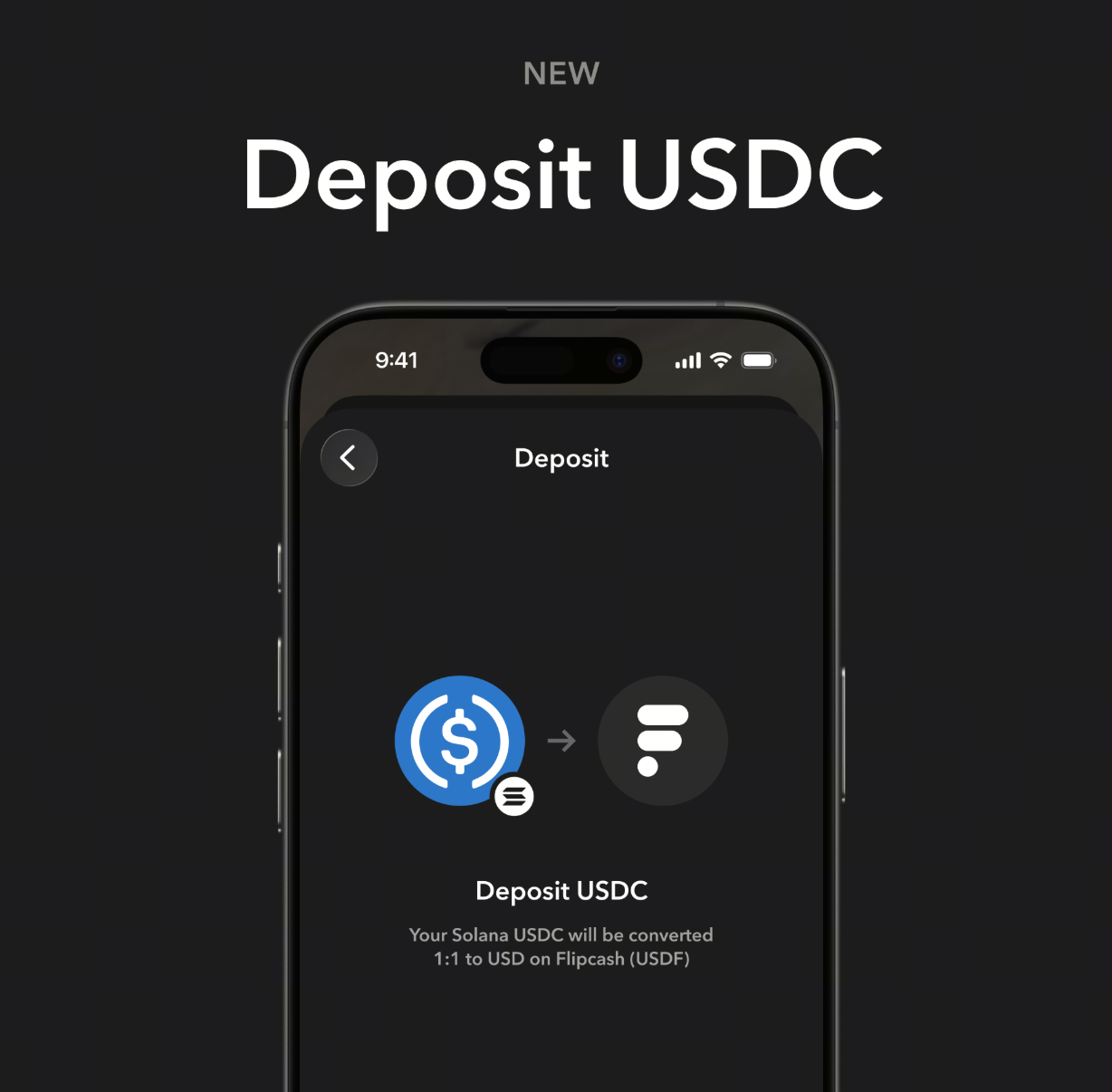
Beyond community currencies, Flipcash's recently launched USDF stablecoin also plays a key role. While community currencies help build community economies, their value is often tied to community size and activity levels, leading to volatility. Stablecoins offer a stable unit of payment. By integrating USDF, Flipcash serves both needs: community currencies handle interaction and value accumulation, while USDF handles payment, settlement, and trading. This dual-layer architecture allows the platform to support both community economics and everyday payments, giving users greater flexibility when participating in community activities.
As Web3 technology matures, the use cases for community currencies are likely to expand. In the creator economy, creators can build direct fan support systems with community currencies, reducing reliance on ad revenue. For brands, community currencies enable loyalty and rewards programs that boost engagement. In gaming and virtual worlds, they can serve as a key medium of exchange among players. Looking ahead, if combined with DAO (Decentralized Autonomous Organization) governance models, community currencies could even become the basis for voting and governance rights. These developments show that community currencies are evolving from simple reward tools into a fundamental building block of the Web3 economy.
Despite their potential, community currencies face significant challenges. One of the biggest is value stability. If a community is small or activity declines, currency demand may drop, hurting circulation efficiency. Many community currencies also lack mature use cases—without sustained demand, it's hard to establish a real economic cycle, even with solid technical design. The regulatory landscape is another concern. As governments worldwide ramp up digital asset oversight, how community currencies comply with diverse regional regulations will be a crucial issue for the industry.
Summary
The community currency model championed by Flipcash reflects Web3's search for an alternative to the traditional platform economy. With community currencies, users are no longer mere traffic providers; they become active participants in creating and sharing community value. Paired with payment tools like the USDF stablecoin, Flipcash is building a digital economic system that combines community interaction with real payment capabilities. While community currencies are still in their early stages, as blockchain technology, stablecoin infrastructure, and Web3 applications continue to mature, they are poised to become a vital economic tool for digital communities—playing an increasingly important role in the creator economy, fan economy, and on-chain payments.







