In this process, natural gas must not only be produced and processed, but also transported through a vast infrastructure network to coastal liquefaction terminals. As one of the largest natural gas infrastructure operators in the United States, WMB (Williams Companies) occupies an important position in this value chain. Understanding how the LNG export value chain works helps explain Williams’ strategic value in the U.S. energy market.
How the LNG Value Chain Works
LNG stands for Liquefied Natural Gas. Its core principle is to cool natural gas to about minus 162 degrees Celsius, turning it into a liquid that takes up far less volume and can be shipped efficiently over long distances by sea.
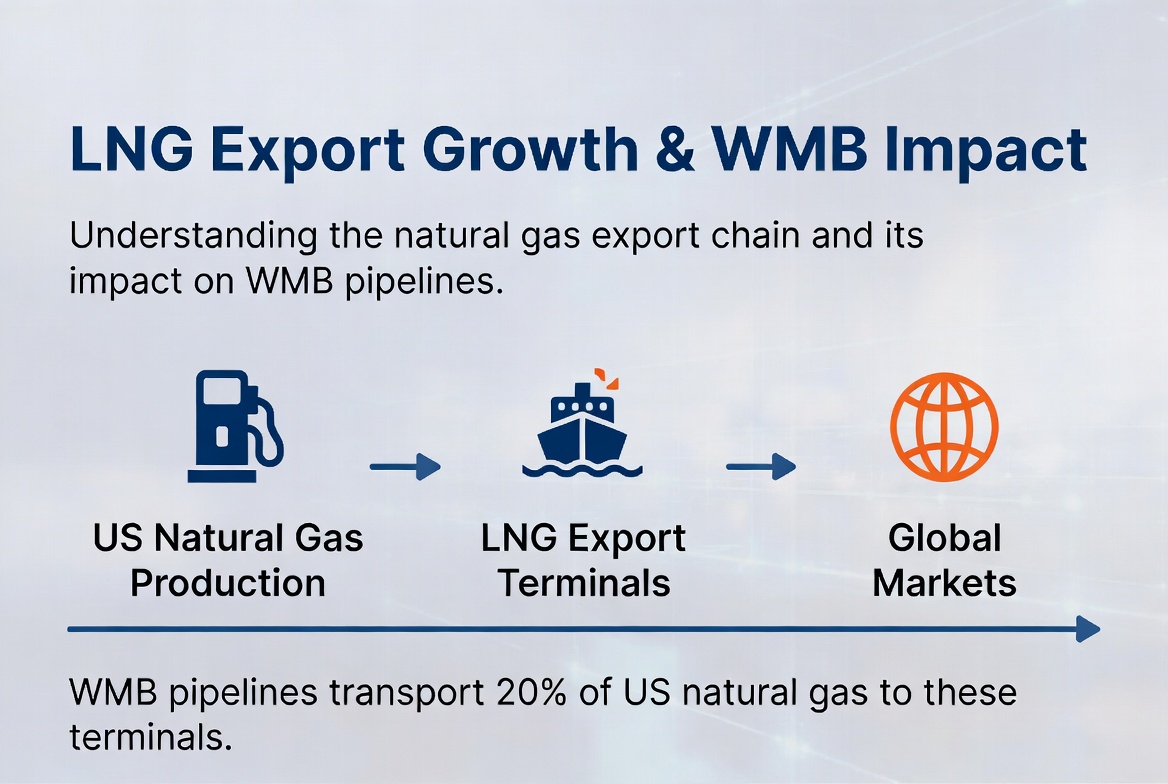
A complete LNG value chain typically includes several stages, including natural gas production, gathering and transportation, liquefaction, marine shipping, receiving terminals, and final consumption. Natural gas is first produced in gas fields, then moved through pipeline systems to liquefaction plants. Once liquefied, LNG is loaded onto specialized carriers and shipped along international routes to global markets.
After LNG arrives in an importing country, it must be regasified at a receiving terminal and connected to the local natural gas pipeline network before ultimately reaching power plants, industrial companies, and residential households. Because the value chain involves multiple layers of infrastructure, expansion at any single point can help drive growth across the broader industry.
For energy companies, the LNG value chain is not only a model for international trade, but also an important mechanism connecting global natural gas supply and demand. As the global energy structure continues to shift, LNG is becoming one of the fastest growing areas of the international energy market.
Why the United States Has Become a Major Global LNG Exporter
Over the past decade, the U.S. energy industry has changed profoundly. One of the most important turning points was the shale gas revolution. The large scale use of horizontal drilling and hydraulic fracturing enabled U.S. natural gas production to grow rapidly, gradually giving the country a leading global advantage in natural gas resources.
As domestic natural gas supply continued to increase, the U.S. market began to develop substantial surplus capacity. At the same time, rising natural gas demand in Europe and Asia encouraged U.S. companies to actively build LNG export facilities. Through LNG exports, the United States can send its abundant natural gas resources to international markets.
The U.S. natural gas market also benefits from a mature infrastructure system. Well developed pipeline networks, gas storage facilities, and large liquefaction terminals along the Gulf Coast together provide the essential foundation for export growth. These facilities allow the United States to efficiently connect inland gas fields with global energy markets.
Today, the United States has become an important participant in global LNG trade. Rising export volumes have not only reshaped the U.S. energy industry, but also created new growth opportunities for natural gas infrastructure operators.
The Role of Natural Gas Pipelines in LNG Exports
Although LNG ultimately enters international markets by ship, natural gas pipelines are where the entire export system begins.
Natural gas resources are usually located in inland production regions, such as the Appalachian Basin, the Haynesville Shale, and the Permian Basin. Liquefaction terminals, by contrast, are mainly located along the Gulf Coast and in some coastal areas. Natural gas must rely on long distance pipelines to connect production areas with export terminals.
Without pipeline networks, even abundant natural gas resources cannot effectively support LNG export growth. In practice, pipeline systems serve as the energy logistics network, playing a role similar to railways and ports in international trade.
As LNG export capacity continues to expand, liquefaction terminals also require increasing volumes of natural gas supply. This means utilization of natural gas pipelines that connect production areas with terminals generally rises as well, supporting business growth for infrastructure operators.
How WMB Connects Production Areas with Export Terminals
Williams is an important participant in the U.S. natural gas transportation system. One of its core sources of value lies in connecting natural gas production areas with consumption markets.
The Transco natural gas pipeline system operated by the company spans multiple states in the eastern United States and is one of the largest and highest volume natural gas pipeline networks in the country. The system can move natural gas from major production areas such as Appalachia to markets on the East Coast and along the Gulf Coast.
As the LNG industry develops, large volumes of natural gas must reach coastal liquefaction facilities. Williams’ pipeline network is well positioned to handle this transportation function, providing liquefaction terminals with a stable gas supply. As a result, although the company does not directly produce or export LNG, it participates deeply in the overall value chain through its transportation services.
From a value chain perspective, Williams acts much like a bridge between natural gas resources and international markets. Whether the natural gas ultimately flows to power plants, industrial users, or overseas markets, pipeline networks remain essential infrastructure.
How Global Energy Demand Affects Natural Gas Exports
Growth in LNG exports is fundamentally driven by changes in global energy demand. As economies develop and the energy transition advances, more countries are increasing the share of natural gas in their energy mix.
In Europe, natural gas has long been an important energy source. In recent years, greater attention to energy security has pushed European countries to further increase LNG import capacity and diversify energy supply. At the same time, Asia continues to expand natural gas consumption.
China, Japan, South Korea, and Southeast Asian countries generally view natural gas as an important fuel for power generation and an important industrial energy source. As their economies grow and energy consumption rises, these regions are expected to maintain strong long term demand for LNG.
Therefore, growth in global natural gas demand affects not only exporters, but also infrastructure operators throughout the value chain. For Williams, expanding international market demand can ultimately show up as higher natural gas transportation volumes and increased pipeline utilization.
Why LNG Growth Is an Important Opportunity for WMB
For Williams, growth in LNG exports does not mean directly selling natural gas. It means a sustained increase in natural gas flows.
As natural gas moves from production areas to liquefaction terminals, it must pass through extensive pipeline infrastructure. As export terminals continue to expand, the need for reliable gas supply also rises. As an important pipeline operator, Williams can benefit from growing transportation demand.
In addition, LNG projects usually have long construction cycles and long operating lives. Once a liquefaction terminal begins operation, it typically requires a steady and continuous supply of natural gas. This long term demand can strengthen the utilization of natural gas infrastructure and increase the strategic value of related assets.
Over the long run, the energy transition, rising natural gas consumption, and expanding international trade are all supporting the growth of the LNG industry. With its large pipeline network and Transco system, Williams holds an important position in the U.S. natural gas export value chain. For this reason, many investors view it as a key representative of the natural gas infrastructure sector.
Summary
LNG exports have become an important growth driver for the U.S. natural gas industry. From natural gas production to liquefaction and export, the entire value chain depends heavily on infrastructure networks. As a leading natural gas infrastructure operator in the United States, WMB (Williams Companies) connects natural gas production areas with export terminals through large pipeline systems such as Transco, playing a key role in the LNG value chain. As global natural gas demand grows and U.S. LNG exports expand, the importance of natural gas transportation networks is expected to rise further, and Williams is positioned to continue benefiting from this long term industry trend.
FAQs
What is LNG?
LNG stands for liquefied natural gas. It is natural gas converted into liquid form at extremely low temperatures, so it can be transported over long distances by sea.
Why has the United States become a major LNG exporter?
The main reasons include growth in natural gas production driven by the shale gas revolution, a mature infrastructure system, and expanding demand in international markets.
What role do natural gas pipelines play in LNG exports?
Natural gas pipelines transport gas from inland production areas to coastal liquefaction terminals and are an important part of the LNG value chain.
Does WMB directly export LNG?
No. Williams mainly operates natural gas transportation and infrastructure businesses, serving the LNG value chain through its pipeline network.
Why is Transco important to Williams?
Transco is one of the largest natural gas pipeline systems in the United States and one of Williams’ most important core infrastructure assets.
Why is LNG export growth beneficial for WMB?
Growth in export volumes means more natural gas needs to be transported through pipelines to liquefaction terminals, which can increase utilization of Williams’ pipeline network and demand for its services.