A demanda dos grandes modelos de linguagem por GPU, largura de banda de rede e recursos de data center superou de longe o que os sistemas tradicionais de servidores corporativos conseguem suportar. O treinamento de modelos de IA exige não apenas enorme poder computacional, mas também troca de dados em alta velocidade e orquestração continuamente estável de recursos em nuvem.
As aplicações da MSFT em IA e data centers se concentram na infraestrutura Azure AI, gerenciamento de clusters de GPU, serviços corporativos de IA, computação de alto desempenho e plataformas de inferência de IA. O ecossistema de IA da Microsoft evoluiu de uma oferta centrada em software para uma que abrange data centers e infraestrutura em nuvem.
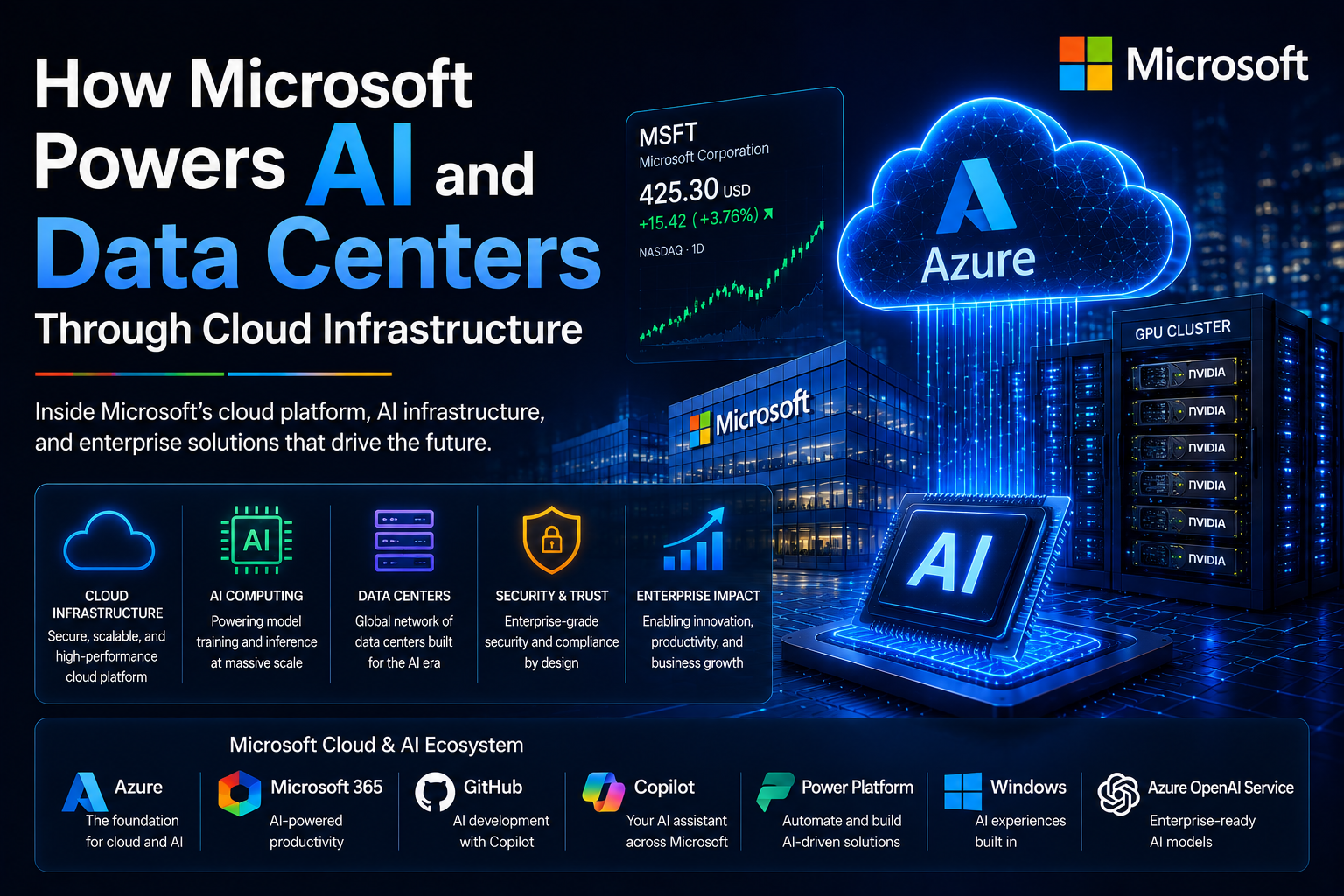
O Papel da MSFT no mercado de IA
O papel central da MSFT no mercado de IA é o de provedor de infraestrutura de IA de nível corporativo. A Microsoft não apenas oferece capacidades de modelos de IA, mas também possui e opera os data centers, a computação em nuvem e os sistemas de software corporativo que os sustentam.
A Azure se tornou a pedra angular da estratégia de IA da Microsoft. As empresas podem acessar recursos de computação GPU, APIs de modelos de IA e gerenciamento de dados por meio da Azure sem precisar construir seus próprios clusters de IA em grande escala.
A parceria da Microsoft com a OpenAI consolidou ainda mais a posição da Azure no ecossistema de IA. O treinamento, a inferência e a implantação corporativa do modelo GPT agora dependem fortemente da infraestrutura de nuvem da Microsoft.
Ao contrário das empresas de software tradicionais, a estratégia de IA da MSFT se assemelha mais a uma "plataforma de sistema operacional de IA". Windows, Microsoft 365, GitHub e Azure formam um ecossistema corporativo de IA unificado.
Como a Microsoft Alimenta os Data Centers de IA
A espinha dorsal dos data centers de IA da Microsoft é uma rede distribuída de clusters de GPU que abrange o mundo todo. Os data centers da Azure lidam tanto com serviços corporativos em nuvem quanto com tarefas de treinamento e inferência de modelos de IA.
Arquitetonicamente, os data centers de IA da Azure consistem em clusters de GPU, redes de alta velocidade, sistemas de armazenamento e agendadores de recursos. Durante o treinamento de modelos de IA em grande escala, os nós de GPU precisam trocar dados continuamente em alta velocidade.
A Microsoft integra recursos de GPU, rede e armazenamento em uma única estrutura de agendamento. O sistema Azure aloca dinamicamente recursos de computação e ajusta automaticamente as cargas de GPU com base nos requisitos da tarefa de treinamento.
A tabela abaixo descreve os principais componentes da arquitetura do data center de IA da Microsoft:
| Módulo |
Função principal |
Papel primário |
| Data center Azure |
Infraestrutura em nuvem |
Fornece recursos de computação |
| Cluster de GPU |
Treinamento de IA |
Potencializa a computação do modelo |
| Rede de Alta Velocidade |
Troca de Dados |
Reduz a latência do treinamento |
| Serviços Azure AI |
Implantação de Modelos |
Entrega capacidades de IA corporativas |
Essa arquitetura significa que a Azure é muito mais do que uma plataforma de nuvem tradicional. É um ambiente operacional de infraestrutura de IA. Quanto maior o modelo de IA, maior a demanda por recursos coordenados de GPU e rede.
Como a Azure Acelera o Treinamento de Modelos de IA
A plataforma Azure AI depende de treinamento distribuído e virtualização de GPU. O treinamento de grandes modelos de linguagem geralmente requer milhares de GPUs operando em paralelo, tornando as configurações tradicionais de servidor único inadequadas.
Assim que as empresas enviam dados de treinamento, a Azure aloca automaticamente recursos de GPU, armazenamento e rede. O sistema de treinamento distribuído coordena vários nós de GPU simultaneamente para calcular os parâmetros do modelo.
A taxa de transferência de dados impacta diretamente a eficiência do treinamento. A rede de alta velocidade e os clusters de GPU da Azure trabalham juntos para minimizar a latência de dados entre os nós.
Em comparação com a implantação local de IA, a Azure enfatiza o escalonamento elástico de recursos. As empresas podem escalar dinamicamente a capacidade de GPU com base no tamanho do modelo, sem precisar manter seus próprios data centers de IA.
Os serviços Azure AI também permitem a implantação rápida de modelos de IA. Uma vez treinados, os sistemas de IA podem ser diretamente integrados ao Azure OpenAI e às plataformas de negócios corporativos.
Chips de IA da Microsoft e Aplicações de GPU
Os chips de IA e GPUs da Microsoft são usados principalmente para treinamento de modelos de IA, serviços de inferência e infraestrutura de IA em nuvem. As GPUs se tornaram o recurso computacional crítico no cenário de IA generativa.
A plataforma Azure AI atualmente depende fortemente de GPUs da NVIDIA para treinamento. Grandes modelos de linguagem exigem clusters de GPU de alta densidade, e o fornecimento de GPUs afeta diretamente a expansão dos serviços Azure AI.
A Microsoft também avança em seu próprio portfólio de chips de IA. Os chips Maia e Cobalt são projetados para otimizar a eficiência de inferência e o desempenho da computação em nuvem.
Do ponto de vista comercial, silícios personalizados reduzem os custos de infraestrutura a longo prazo. A Microsoft pretende diminuir a dependência da cadeia de fornecimento externa de GPUs, ao mesmo tempo que aumenta a eficiência dos serviços Azure AI.
Os chips de IA e GPUs da Microsoft são usados em:
- Treinamento de modelos de IA
- Serviços de inferência de IA
- Sistemas Copilot
- Automação corporativa de IA
O ecossistema de chips de IA importa não apenas para o desempenho, mas também para a estrutura de custos de longo prazo da plataforma Azure AI.
Impacto da MSFT nos Serviços Corporativos de IA
A influência da MSFT na IA corporativa vem da integração profunda do Microsoft 365, Azure AI e Copilot. A Microsoft incorporou capacidades de IA em ferramentas de escritório e colaboração.
O Microsoft 365 Copilot auxilia na geração de documentos, resumos de reuniões e análise de dados. A IA agora faz parte dos fluxos de trabalho corporativos diários.
O Azure OpenAI fornece APIs de IA de nível corporativo. As empresas podem construir sistemas de suporte ao cliente de IA, pesquisa automatizada e bases de conhecimento por meio da Azure sem precisar treinar grandes modelos do zero.
Teams, Outlook e GitHub Copilot estendem ainda mais o ecossistema de IA da Microsoft. O foco não é um único produto de IA, mas a automação do fluxo de trabalho corporativo.
Ao contrário da IA voltada ao consumidor, a Microsoft enfatiza a colaboração de IA de nível corporativo. Os serviços de IA se conectam diretamente aos dados corporativos, sistemas de permissão e processos de negócios em nuvem.
Aplicações de Computação de Alto Desempenho da Microsoft
O ecossistema de computação de alto desempenho (HPC) da Microsoft abrange supercomputação de IA, computação científica e análise de dados corporativos. As plataformas de HPC exigem clusters de GPU, redes de baixa latência e sincronização massiva de dados.
O Azure HPC oferece recursos de alto desempenho para empresas e instituições de pesquisa. Descoberta de medicamentos, modelagem financeira e simulação climática se beneficiam da computação densa de GPU.
As linhas entre IA e HPC se tornam tênues. O treinamento de modelos de IA em grande escala é essencialmente uma tarefa de computação massivamente paralela.
A Microsoft conecta nós de GPU por meio de redes de alta velocidade e usa o agendador da Azure para gerenciar recursos. Recursos de GPU, CPU e armazenamento devem manter coordenação de baixa latência.
Arquitetonicamente, o Azure HPC funciona como uma "plataforma de supercomputação em nuvem". As empresas podem acessar recursos de supercomputação de IA diretamente pela Azure sem precisar construir seus próprios clusters de HPC.
Desafios Enfrentados pela Infraestrutura de IA da Microsoft
A infraestrutura de IA da Microsoft enfrenta três desafios principais: fornecimento de GPU, consumo de energia e concorrência global em nuvem de IA.
O treinamento de IA consome vastos recursos de GPU, e o fornecimento da NVIDIA restringe diretamente o crescimento dos serviços Azure AI. A escassez de GPUs também aumenta os custos de construção de data centers.
As demandas de energia aumentam. Grandes clusters de GPU exigem refrigeração de alta potência, tornando os custos operacionais da infraestrutura Azure AI significativamente maiores que os das plataformas de nuvem tradicionais.
Google, Amazon e Meta estão intensificando a concorrência em nuvem de IA. Gigantes globais de tecnologia estão em uma corrida de infraestrutura focada em modelos de IA, GPUs e data centers.
A Microsoft precisa equilibrar a monetização da IA com a eficiência dos gastos de capital. Embora os data centers de IA alimentem o crescimento da Azure, eles também exigem investimentos substanciais de longo prazo.
A concorrência em infraestrutura de IA evoluiu de software para uma corrida abrangente de "GPU + Data Center + Plataforma em Nuvem".
Resumo
A MSFT se tornou uma plataforma de infraestrutura fundamental para a indústria global de IA e data centers. A computação em nuvem Azure, os clusters de GPU e os serviços corporativos de IA formam o núcleo do ecossistema de IA da Microsoft.
A crescente demanda por treinamento de modelos de IA, automação corporativa de IA e computação de alto desempenho continua a reforçar a posição estratégica da Microsoft no mercado global de IA. O ecossistema Azure e OpenAI está impulsionando a Microsoft em direção a um modelo de negócios de IA completo.
Ao mesmo tempo, a Microsoft enfrenta ventos contrários devido a restrições no fornecimento de GPU, custos de data center e concorrência em plataformas de IA. A concorrência global em infraestrutura de IA se tornou um desafio definidor para o crescimento de longo prazo da Microsoft.
Perguntas Frequentes
Qual é o papel central da MSFT no mercado de IA?
A MSFT fornece infraestrutura para treinamento de modelos de IA e implantação corporativa de IA por meio da plataforma em nuvem Azure, da parceria com a OpenAI e de serviços corporativos de IA.
Por que a Azure é adequada para treinamento de modelos de IA?
A Azure oferece clusters de GPU, computação distribuída e recursos de rede de alta velocidade, permitindo que grandes modelos de IA sejam treinados e inferidos em escala.
Por que a Microsoft está desenvolvendo seus próprios chips de IA?
A Microsoft desenvolve chips de IA para melhorar a eficiência dos serviços Azure AI e reduzir os custos operacionais de longo prazo dos data centers.
Quais funções os data centers de IA da Microsoft desempenham?
Os data centers de IA da Microsoft suportam treinamento de modelos de IA, serviços Copilot, inferência corporativa de IA e agendamento de recursos em nuvem.
Quais aplicações corporativas de IA a MSFT oferece?
A MSFT incorporou IA no Microsoft 365, Teams, GitHub Copilot e Azure OpenAI para automação de escritório e colaboração corporativa de IA.