Users usually pay attention to AI Agent automated on-chain actions because they want to understand how AI Agents can actually call blockchain applications, rather than remaining limited to chat or data analysis. Traditional smart contract interactions usually require users to sign and operate manually, while Warden Protocol attempts to let AI Agents complete these processes automatically.
Warden Protocol’s automated execution system typically involves Intent requests, the Solver network, execution verification and multi-chain coordination. This topic usually spans four layers: AI Agent integration, automated execution, on-chain verification and cross-chain interaction.
How AI Agents Connect to Warden Protocol
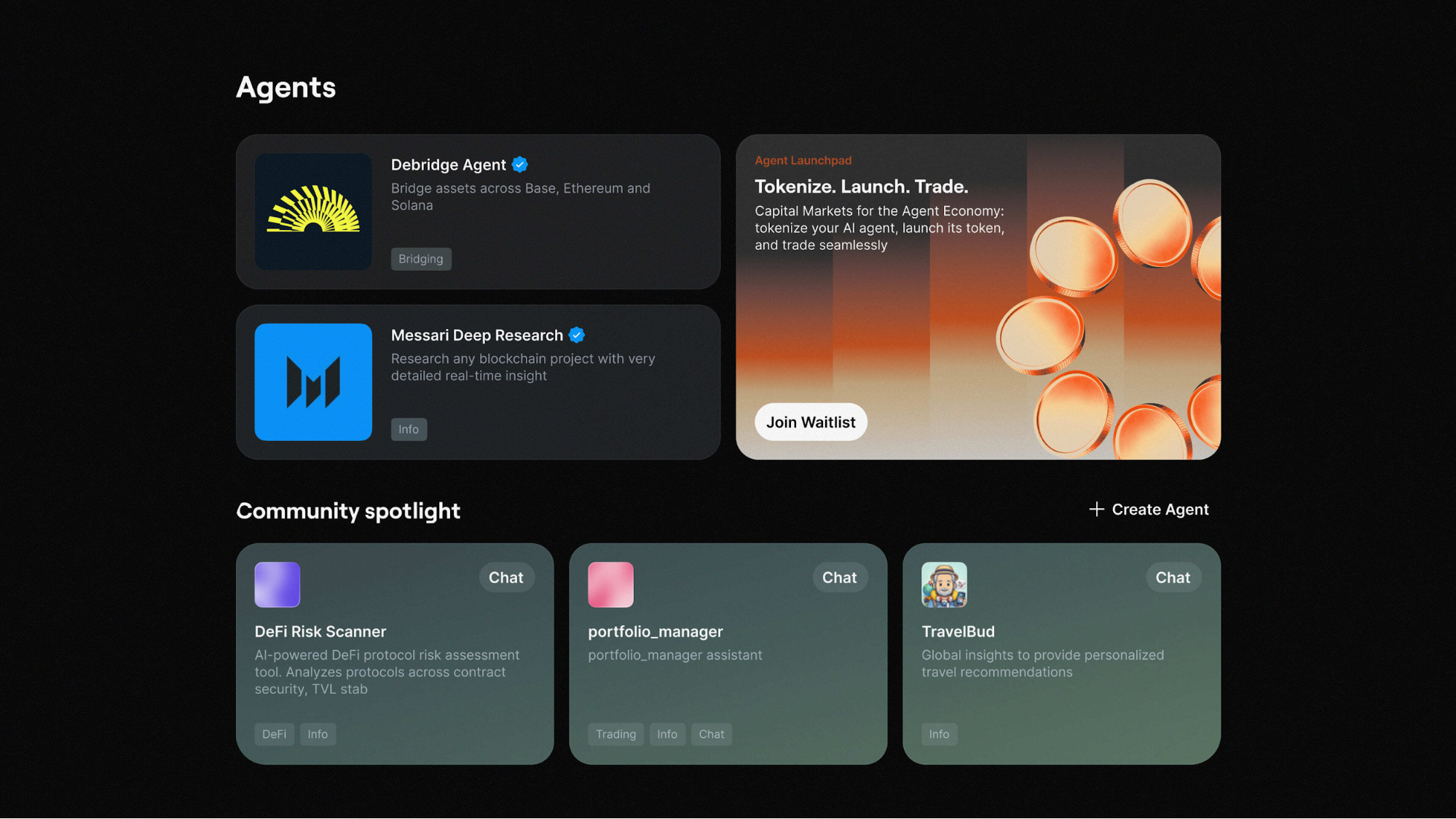
Warden Protocol supports AI Agent access to on-chain networks through its Intent system and execution interfaces. AI Agents can convert user goals into on-chain execution requests.
First, developers connect AI Agents to Warden Protocol’s Intent layer. The AI Agent then parses the user’s input. Next, the AI Agent converts those needs into structured Intent requests.
Structurally, AI Agent integration with Warden Protocol usually includes:
-
Intent parsing
-
Execution interfaces
-
Solver collaboration
-
Multi-chain support
This mechanism means AI Agents do not need to operate complex smart contracts directly. Warden Protocol is responsible for handling on-chain execution logic and task matching.
How Users Submit On-Chain Tasks Through AI Agents
Users can submit on-chain goals through AI Agents without manually building complex transactions. Warden Protocol’s Intent system places greater emphasis on “expressing goals” than on “operation steps.”
First, users submit task requirements to an AI Agent. For example, a user may want to complete a cross-chain swap or an automated yield strategy. The AI Agent then converts those requirements into an Intent request.
Next, Warden Protocol analyzes the execution path and finds the corresponding Solver network to complete the task. In the end, users only need to confirm the execution result.
Unlike traditional wallet interactions, Warden Protocol places greater emphasis on automated task processing. Users do not need to operate multiple protocols and on-chain tools separately.
How Warden Protocol Verifies Execution Conditions
Warden Protocol uses its Intent verification mechanism and Solver network to confirm whether an on-chain task meets the required execution conditions. Automated execution systems usually need to verify user permissions, asset status and the on-chain environment.
First, Warden Protocol reads the Intent request. The Solver network then checks the target chain, assets and protocol status. Next, Warden Protocol verifies whether the task meets the preset conditions.
| Verification Module |
Main Function |
| User permissions |
Verifying authorization |
| On-chain status |
Checking asset conditions |
| Solver network |
Matching the execution path |
| Intent verification |
Confirming the task goal |
This mechanism can reduce the risks caused by incorrect execution and invalid tasks, while strengthening the automated execution capabilities of AI Agents.
How the Solver Network Handles Automated Operations
The Solver network is responsible for handling automated execution tasks in Warden Protocol. Solvers are closer to on-chain automated execution nodes than traditional validator nodes.
First, the Solver network receives an Intent request. The Solver then analyzes the target path and executable options. Next, the Solver calls the corresponding protocols to complete transactions and cross-chain interactions.
Finally, the Solver network submits the execution result and waits for system verification. Some Solver nodes can receive rewards through network incentives.
Unlike traditional blockchain nodes, Warden Protocol’s Solver network places greater emphasis on task execution capability rather than simple block validation capability.
How AI Agents Call Multi-Chain Applications
One of Warden Protocol’s core advantages is its support for AI Agents to automatically call multi-chain applications. Multi-chain environments often involve complex interactions and fragmented protocols.
First, an AI Agent submits a unified Intent request. Warden Protocol then identifies the target chain and protocol environment. Next, the Solver network automatically handles the interaction logic across different chains.
This mechanism means AI Agents do not need to separately adapt to the complex rules of each chain. Warden Protocol helps AI Agents execute cross-chain tasks through a unified process.
Unlike traditional cross-chain bridges, Warden Protocol places greater emphasis on task execution and Intent coordination, rather than simple asset bridging.
What Limitations Does AI Agent Automated Execution Face
AI Agent automated execution usually requires strong verification capabilities, so Warden Protocol faces challenges around execution security and permission control. If an automated system lacks proper verification mechanisms, it may create the risk of incorrect execution.
The scale of the Solver network also affects execution efficiency. If Solver network activity is insufficient, multi-chain tasks may suffer from inadequate path optimization.
AI Agent automated execution also depends on on-chain data and protocol compatibility. If certain protocols cannot support Intent calls, Warden Protocol’s automated execution scope may be limited.
Warden Protocol also needs to keep expanding its developer ecosystem. AI Agent networks usually depend on broad application integration, so ecosystem scale directly affects automated execution capability.
Summary
Warden Protocol supports AI Agents in automatically completing on-chain actions through its Intent system and Solver network. It also helps AI Agents handle multi-chain interactions and automated task execution.
Compared with traditional smart contract interactions, Warden Protocol places greater emphasis on goal-oriented execution. Through Warden Protocol, AI Agents can automatically call on-chain applications without requiring users to manually operate complex transaction flows.
FAQs
How Does Warden Protocol Support AI Agent Automated Execution?
Warden Protocol helps AI Agents automatically complete on-chain tasks and multi-chain interactions through its Intent system and Solver network.
What Role Does the Intent System Play in the AI Agent Network?
The Intent system converts user goals into structured on-chain requests, helping AI Agents automatically match execution paths.
Why Is the Solver Network Important?
The Solver network is responsible for executing automated tasks in Warden Protocol and handling on-chain transactions and cross-chain operations.
Can AI Agents Call Multi-Chain Applications Through Warden Protocol?
Warden Protocol supports AI Agents in automatically calling protocols and applications across different chains to complete cross-chain interactions.
How Is Warden Protocol Different from Traditional Wallet Interactions?
Traditional wallets usually require users to manually operate transactions, while Warden Protocol emphasizes Intent-driven automated execution.
What Limitations Does AI Agent Automated Execution Face?
AI Agent automated execution is usually affected by permission verification, Solver network scale, multi-chain compatibility and protocol support capabilities.







