When it comes to OpenAI, one of the most common misunderstandings is confusing the company name with the nature of the asset. OpenAI, as a private AI research company, has equity stakes determined by its own issuance and transfer arrangements. If you interact with the OPENAI symbol via Gate Pre-IPOs, you are engaging with an asset certificate disclosed by the platform, not the company’s actual stock. What is OpenAI clearly separates the business entity from the product structure: the first layer describes the company’s activities, while the second outlines what rights holders of the product can claim.
The official definition is explicit: OPENAI Asset Certificates are mirror notes issued before OpenAI’s IPO, designed to reflect the company’s market value before and after its public debut, and are classified as contingent payment notes. Having a similar name does not create a record of share ownership. For those searching “How to buy OpenAI stock,” the crucial first question is whether you are acquiring equity or a note, and only then should you review the relevant terms.
What Does the OPENAI Asset Certificate Officially Represent?
Gate’s project FAQ makes it clear: asset certificates are structured to track and reflect the company’s market value before and after listing, and are contingent payment notes. The platform hedges its exposure by acquiring OpenAI equity in the market, offering a range of exit and long-term holding options aligned with the fair market value of the underlying company. This describes how the product is designed and hedged, but does not mean that stock is delivered or registered to certificate holders, nor does it constitute any commitment by OpenAI to allocate shares to outside holders.
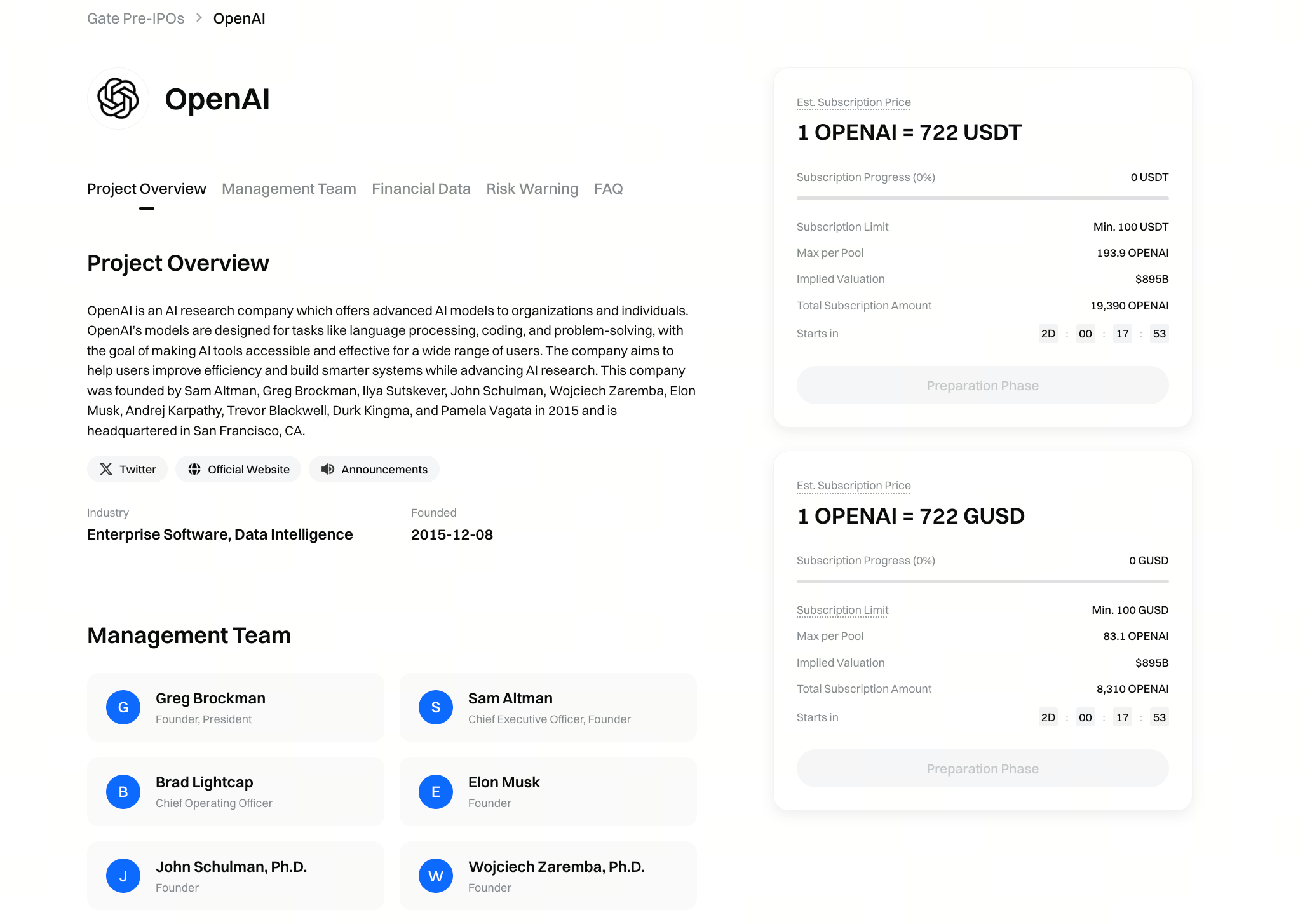
PANews’ Chinese coverage is consistent: the OPENAI Asset Certificate is a mirror note issued before the IPO, mapping the company’s market value before and after listing, and is a contingent payment note. The key to understanding “mirror” is recognizing it as a value-mapping mechanism—not a share-by-share custodial or transfer arrangement. Misinterpreting “mirror” as “mirror copy of the shareholder register” leads to a fundamental misunderstanding of the rights involved.
Why Isn’t OPENAI the Same as OpenAI Stock?
OpenAI stock represents units of ownership in the company, typically linked to a shareholder register, share classes, and relevant legal frameworks. OPENAI, on the other hand, is a value-mapping note issued by the platform: its economic performance may reference the market value of common stock, but its legal status is set by the product’s terms. The project page directly answers, “Does holding OPENAI make me an OpenAI shareholder?”—No; holding OPENAI gives you a contractual claim (economic interest), not direct equity ownership.
The disclaimer further clarifies: this product is a mirror note, not actual OpenAI stock or shares, and does not create any legal relationship between investors and OpenAI; its issuance is independent of OpenAI; OpenAI has not participated in, authorized, or endorsed the product or its marketing materials; OpenAI will not receive any funds raised and has not provided information to Gate. As such, Mirror Notes vs. Traditional Pre-IPO compares three fundamentally different types of rights, not just different names for the same asset.
| Dimension |
OPENAI Asset Certificate |
OpenAI Actual Equity |
| Official Classification |
Mirror Note / Contingent Payment Note |
Company Shares or Equity Interests |
| Relationship to OpenAI |
No Legal Relationship |
Shareholder-Company Relationship |
| Voting / Dividends |
Not Granted |
According to Share Class and Company Documents |
| Fund Flow |
OpenAI Does Not Receive Funds Raised |
Depends on Financing or Transfer Transactions |
This table is for verifying disclosure standards, not for predicting returns or availability.
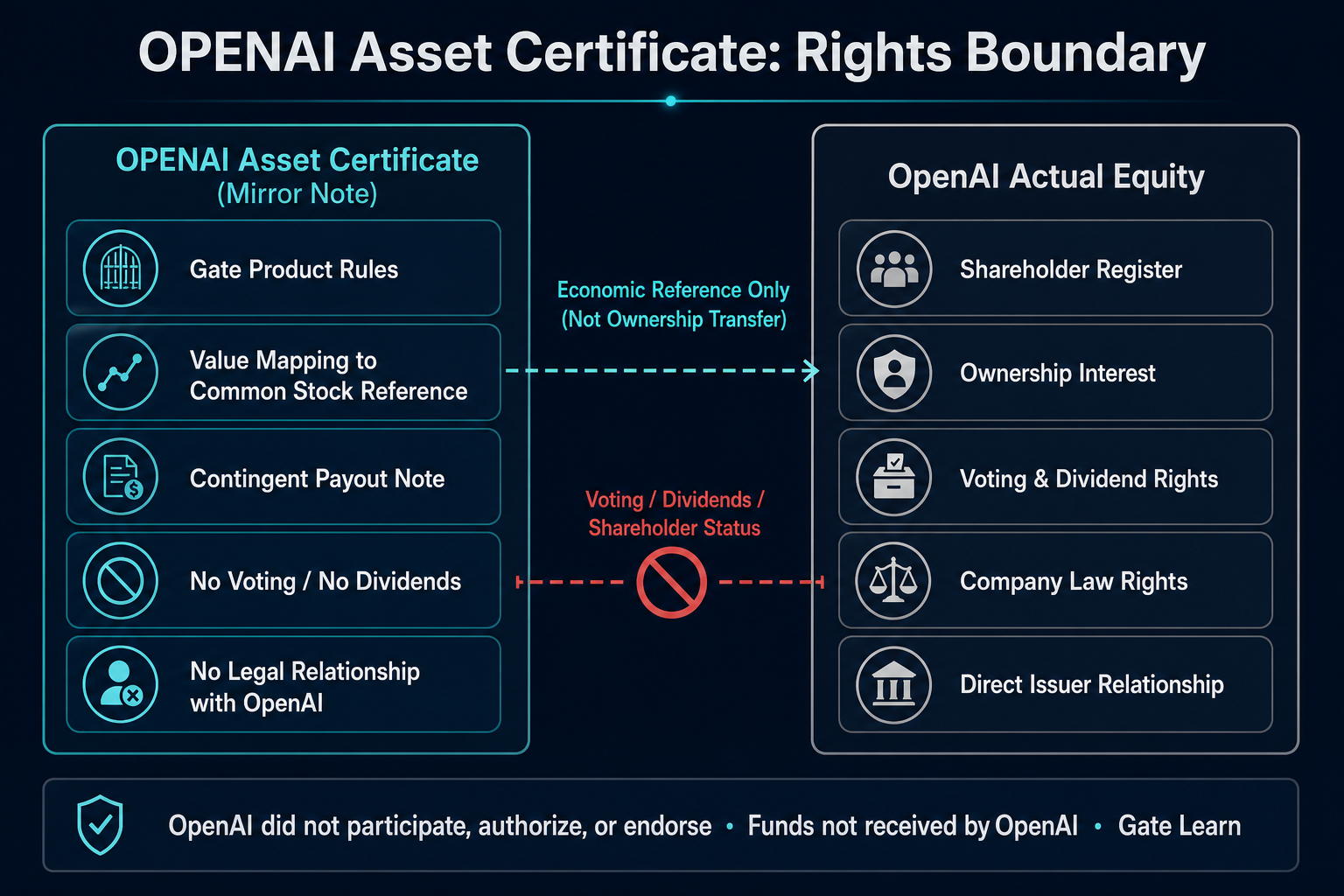 OPENAI references the value of OpenAI common stock but does not transfer shareholder registration or corporate governance rights.
What Product Features Do Holders Have—and What Company Rights Don’t They Get?
Gate’s disclosures state that holders can track arrangements such as subscription allocation, phased unlocking, pre-market transfers, redemption options after lockup periods, and settlement upon maturity or specific events. These are platform product rules and settlement mechanisms, subject to account eligibility, jurisdictional restrictions, and the platform’s disclosures.
Holders do not have OpenAI voting rights, dividend rights, or other shareholder privileges, nor can they assert corporate-level claims against OpenAI by virtue of holding the certificate. Even if future redemption paths emerge after a listing, those rights arise from Gate’s settlement terms—not from the certificate automatically conferring original shareholder status.
How Do Company Actions Affect the Mirror Relationship?
Official announcements specify: if the company issues new shares, that may dilute per-share value; if a stock split, reverse split, or other reclassification occurs, user holdings will be recalculated and adjusted, with details announced separately. The product is defined as a mirror note tracking the value of OpenAI’s common stock, so company actions change the reference basis and calculation approach.
These adjustments ensure continuity of the value mapping, but do not give holders the right to attend shareholder meetings, vote, or directly receive company securities. Implied Valuation and Dilution explains how the committed price and reference share count produce the period’s implied valuation of about $895 billion, and why changes in share count affect the calculation.
| Company Action |
Key Points for Mirror Notes |
| Issuance / Cancellation |
Reference per-share value and implied valuation may shift |
| Stock Split / Reverse Split |
Holdings adjusted according to the actual event |
| Common Stock Reclassification |
The definition of the reference unit may be revised |
What Are the Risks of Treating OPENAI as Equity?
The main limitation is that it is not equity: economic reference does not equal shareholder status. An unlisted company’s IPO timing, capital structure, mergers, or bankruptcy can all affect reference value and settlement results; pre-IPO markets also face liquidity and price volatility risks. Even if the platform states it hedges market exposure to align with fair market value, this only describes product design and risk management—not the transfer of beneficial ownership to holders.
Product Risk Checklist should be read in order: “Product Definition → Rights Scope → Reference Adjustments → Eligibility and Settlement.” Calling OPENAI “OpenAI stock,” or misunderstanding platform hedging/exit arrangements as OpenAI’s commitment to third parties, contradicts the official disclaimer. Similarly, treating the project page’s valuation table as a settlement guarantee for OPENAI misapplies company disclosures to product terms.
For those seeking to understand OpenAI, a prudent approach is: first confirm if the discussion concerns company equity or a platform note; then check if rights like voting or dividends are present; and only then review subscription price, implied valuation, and exit terms. If this order is reversed, the “OpenAI” name can easily obscure the legal distinctions.
Summary
OpenAI the company and Gate’s OPENAI Asset Certificate are not the same legal entity. The former is a private AI company with potential equity arrangements; the latter, as officially disclosed, is a mirror note and contingent payment note designed to reflect market value before and after an IPO, but does not deliver actual shares or establish a legal relationship with OpenAI. Distinguishing between “value reference” and “ownership” is essential for understanding participation in OpenAI and for avoiding the mistake of applying stock concepts to note terms.
FAQ
What Is an OPENAI Asset Certificate?
According to Gate and public Chinese sources, the OPENAI Asset Certificate is a mirror note issued before the OpenAI IPO, mapping the company’s market value before and after listing, and is classified as a contingent payment note.
Is Gate’s OPENAI the Same as OpenAI Stock?
No. The official disclosure states that OPENAI does not represent actual OpenAI stock or shares, and holders do not have direct equity ownership in OpenAI.
Do OPENAI Holders Have Voting or Dividend Rights?
No. Holders do not have shareholder rights, including voting or dividends, nor do they establish any legal relationship with OpenAI by holding the certificate.
Has OpenAI Participated in or Endorsed the OPENAI Product?
The disclaimer states: OpenAI has not participated in, authorized, or endorsed this product or related materials, will not receive any funds raised, and has not provided information to Gate.
How Do Company Issuance or Stock Splits Affect OPENAI?
Issuance may dilute per-share reference value; in the event of a stock split, reverse split, or common stock reclassification, the platform will adjust holdings accordingly and announce details. These adjustments are product arrangements and do not mean holders participate in company actions.
How Do Mirror Notes Track OpenAI’s Value?
Mirror notes reference the price performance of OpenAI’s common stock according to product terms, along with disclosed transfer and settlement arrangements. The mapping does not require the certificate to correspond to or deliver actual OpenAI shares.