As real world assets, or RWAs, gradually move onto the blockchain, market demand is rising for infrastructure that is both compliant and efficient. While traditional public chains can process transactions, they still fall short in asset lifecycle management, regulatory compliance, and institutional grade requirements.
Against this backdrop, KAIO has built dedicated technical architecture. Through its AppChain and modular design, KAIO embeds traditional financial logic into onchain systems and enables asset movement across multiple chains, making it a key piece of infrastructure connecting institutional assets with DeFi.
Overview of KAIO’s Technical Architecture
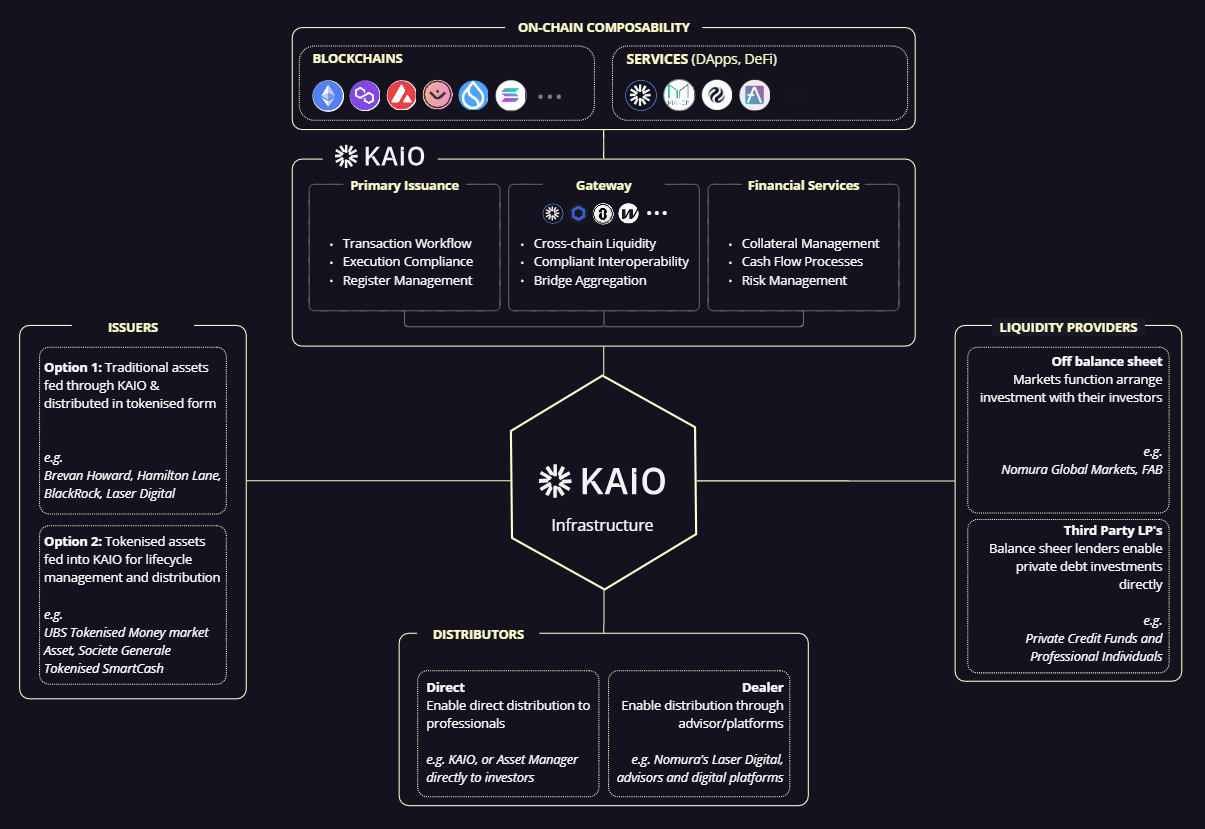
KAIO’s technical architecture is a modular system made up of the application layer, AppChain core layer, cross chain layer, and infrastructure layer, where:
-
AppChain is responsible for asset execution and management
-
The compliance engine controls investor and transaction rules
-
The tokenization engine brings assets onchain
-
The cross chain mechanism supports multichain circulation
This structure allows KAIO to issue assets efficiently and support their cross chain use while maintaining compliance.
The Core Layered Logic of KAIO’s Architecture
KAIO’s system uses a layered design, with each layer taking on different responsibilities while the overall system operates around the asset lifecycle.
The outermost layer is the application layer, which connects users and institutions. The middle layer is the AppChain, which executes asset logic. The cross chain layer handles asset circulation across different chains. The base layer provides network and data support.
This layered structure keeps the system clear and easier to scale, while also adapting to the complex needs of different asset types.
KAIO’s Application Layer: Connecting Institutions with Onchain Systems
The application layer serves as the entry point, connecting KAIO with external participants, including traditional financial institutions, fund managers, investors, and DeFi protocols.
Through standardized APIs and SDKs, these participants can access the KAIO platform to issue, manage, and distribute assets without needing to understand the underlying blockchain structure in depth. This design significantly lowers the technical barrier for traditional institutions entering the onchain world.
KAIO AppChain: The Core Execution Logic
KAIO AppChain is the core execution layer of the entire system, responsible for managing the full process from asset creation to circulation. At this layer, several key modules work together so traditional financial assets can operate onchain in a programmable way.
The compliance module enforces rules such as KYC, AML, and investor eligibility screening, controlling asset compliance from the source. The tokenization module handles fund structure design, token issuance, and net asset value calculations, allowing assets to exist in digital form.
The smart contract system plays the execution role, automating operations such as subscription, redemption, and settlement, which reduces manual intervention and improves efficiency. At the same time, the data and oracle module brings offchain information, such as asset NAV and pricing, onto the blockchain to ensure that asset value is accurately reflected.
Through the coordination of these modules, KAIO can closely reproduce the operating logic of traditional financial assets and turn it into part of an onchain system.
KAIO’s Cross Chain Mechanism: Asset Movement in a Multichain Ecosystem
To prevent assets from being limited to a single chain, KAIO introduces a cross chain layer that allows assets to move between different blockchains.
Its core component is the cross chain bridge, which connects chains through asset mapping and information synchronization. In this process, assets can move from the source chain to the target chain, while related state information is updated at the same time to maintain asset consistency.
In addition, the cross chain mechanism also involves liquidity routing and security verification, which optimize asset movement paths and help ensure the reliability of cross chain operations. This allows KAIO assets to connect with a broader DeFi ecosystem and improves their overall usage efficiency.
KAIO’s Infrastructure Layer: The Foundation Supporting System Operations
The infrastructure layer provides KAIO with performance and security support. Its core components include the validator network and data storage system.
The validator network is responsible for transaction confirmation and consensus, ensuring system stability and security. At the same time, the data storage system combines onchain and offchain structures to manage asset states and historical records, supporting the operational needs of complex financial products.
This layer allows KAIO to meet institutional grade requirements for performance and reliability.
Core Strengths of KAIO’s Architecture
KAIO’s technical architecture creates clear advantages in several areas:
First, compliance logic is embedded into the system, allowing institutional assets to enter the blockchain safely.
Second, AppChain provides customized execution capabilities that can support complex financial products.
Third, the cross chain mechanism improves asset liquidity and allows assets to be used across multiple ecosystems.
Fourth, the modular design improves system scalability and compatibility.
Together, these features form KAIO’s technical foundation in the RWA sector.
Conclusion
Through a modular architecture centered on AppChain, KAIO migrates the issuance and management processes of real world assets onto the blockchain, while using cross chain mechanisms to enable circulation across multiple ecosystems.
This technical path allows KAIO to meet the compliance needs of traditional finance while adapting to DeFi’s open environment, making it an important part of RWA infrastructure.
FAQs
What Parts Make Up KAIO’s Technical Architecture?
It consists of the application layer, AppChain core layer, cross chain layer, and infrastructure layer.
What Role Does AppChain Play in KAIO?
AppChain is the core execution layer, responsible for onchain operations such as asset issuance, trading, and settlement.
Why Does KAIO Need a Cross Chain Mechanism?
The cross chain mechanism allows assets to circulate across multiple blockchains, improving liquidity and expanding their range of use.
How Does KAIO’s Compliance Engine Work?
It controls asset circulation through rules such as identity verification, investor screening, and geographic restrictions.
What Is the Biggest Advantage of KAIO’s Architecture?
It balances compliance, scalability, and multichain interoperability.