Robinhood Chain Architecture and Use Case Overview has established the network’s core mission: to seamlessly integrate consumer-grade onboarding with on-chain verifiable execution within a unified product workflow. In this context, ecosystem opportunities go beyond simply “migrating existing protocols”—they require reimagining the entire user journey, from account creation and authorization to trading, reconciliation, and risk management. For application developers, the most impactful directions focus on scalable, auditable, and composable middleware capabilities.
What Applications Are Possible on Robinhood Chain?
Robinhood Chain’s application landscape falls into five categories: account onboarding, payment & settlement, asset services, data & risk control, and developer tools. The first two serve end users directly, while the latter three primarily support application teams, market makers, compliance, and operations within the ecosystem. This layered structure helps avoid the pitfall of “chasing frontend hype” at the expense of foundational sustainability.
| Application Type |
Typical Scenarios |
Core Capabilities |
| Account Onboarding |
One-click wallet login, social recovery, permission tiers |
Account abstraction, signature policies, session management |
| Payment & Settlement |
Merchant payments, subscription billing, on-chain reconciliation |
Reliable confirmations, low fees, traceable transaction history |
| Asset Services |
Tokenized asset subscriptions, tiered custody, redemption routing |
Asset mapping, clearing & settlement, permission control |
| Data & Risk Control |
Abnormal transaction detection, on-chain audit reports |
Observable data, rule engines, alert systems |
| Developer Tools |
SDKs, indexing services, API gateways |
Standardized APIs, documentation, testing environments |
From an ecosystem development perspective, onboarding and payment applications typically launch first, as they directly enhance user experience. Data & risk control and developer tools accelerate as transaction volume grows. Only when both tracks advance together does the ecosystem achieve a “user growth + developer growth” virtuous cycle.
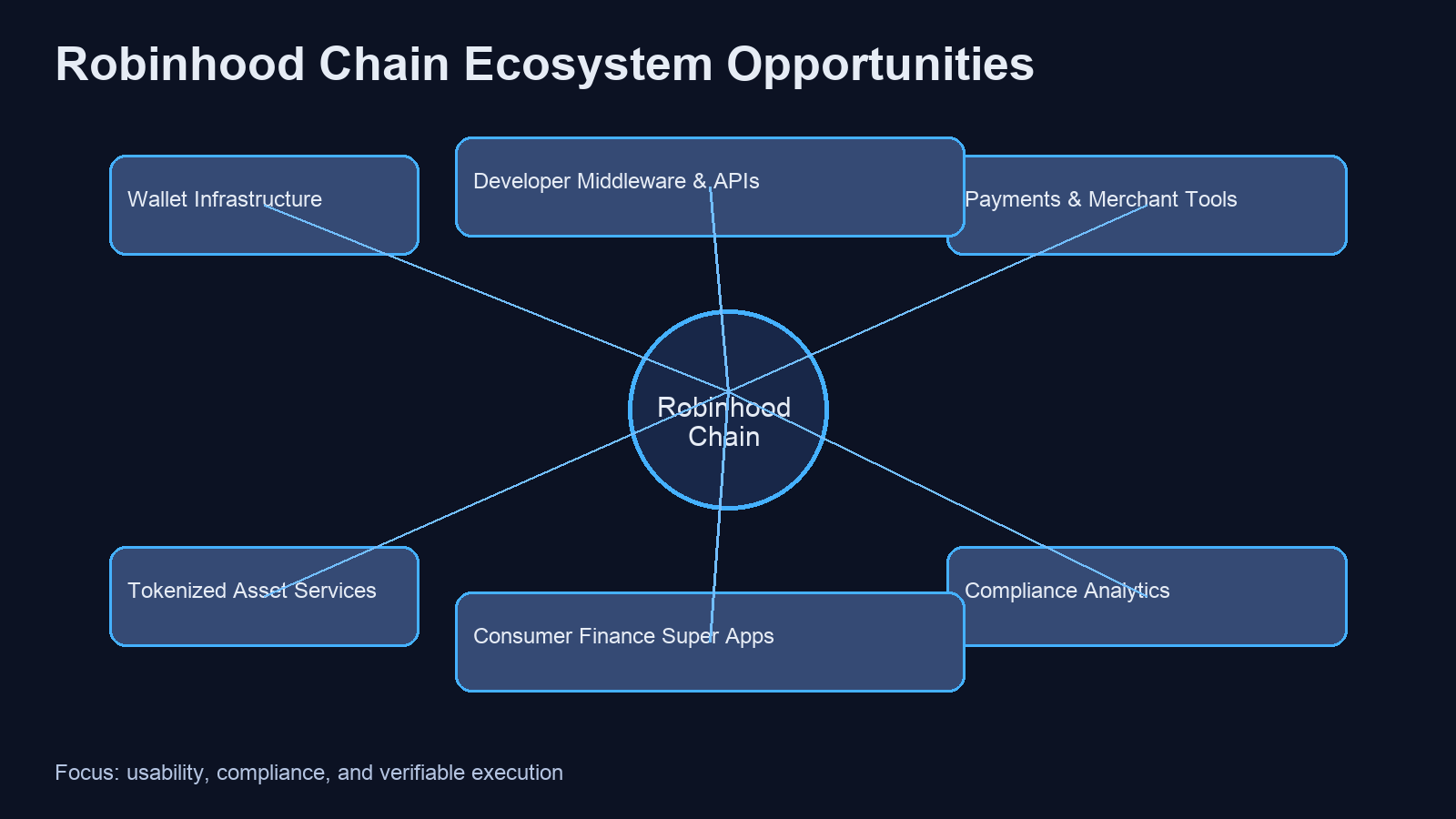
Figure 1. Robinhood Chain ecosystem capability layers and application map.
Why Is Robinhood Building Its Own Blockchain?
Robinhood’s primary motivation for building on-chain infrastructure is not just technical innovation, but the elimination of system boundaries within the product flow. Traditional centralized systems often fragment trading, clearing, accounting, and auditing into separate layers, resulting in slow rollouts, lengthy reconciliation, and difficult cross-system risk management. By moving key functions to a verifiable execution layer, business rules are unified and anomalies are easier to trace within a single data layer.
This is a key distinction between Robinhood Chain and general-purpose public chains. As detailed in Robinhood Chain vs. Base vs. Arbitrum, Robinhood prioritizes “end-to-end service consistency” rather than leaving complexity for users to assemble themselves.
Building a proprietary chain offers two practical advantages: First, it enables account permissions, compliance rules, and trading restrictions to be embedded in traceable workflows. Second, it allows abstraction layers to be designed around the platform’s user base, lowering the barrier for on-chain operations. These benefits manifest not in short-term feature counts, but in long-term operational efficiency and rapid risk response.
How Can Developers Deploy Applications on Robinhood Chain?
Developers should treat “technical deployment” and “business compliance launch” as a single, integrated process. Deploying contracts without a permission model, logging, or rollback mechanism is unlikely to achieve stable operation in consumer-grade scenarios. For a product-driven network like Robinhood Chain, development follows a product engineering approach, not just protocol experimentation.
| Stage |
Key Actions |
Common Pitfalls |
Recommended Deliverables |
| Requirement Definition |
Define trading targets, user flows, risk boundaries |
Focusing on features, not rules |
State machine and permission matrix |
| Contract & Account Design |
Select account model, implement core contracts |
Over-reliance on single-key permissions |
Contract interface and permission policy docs |
| Integration & Testing |
Connect wallets, indexing, alerts, monitoring |
Lack of stress testing for edge cases |
Test reports and monitoring dashboards |
| Launch & Operations |
Gradual rollout, fee optimization, contingency planning |
No rollback plan post-launch |
Runbooks and audit log standards |
A solid understanding of account and execution models will greatly reduce redesigns during deployment. In particular, early design quality for signature policies, transaction lifecycle, failure retries, and fee estimation directly determines long-term stability.
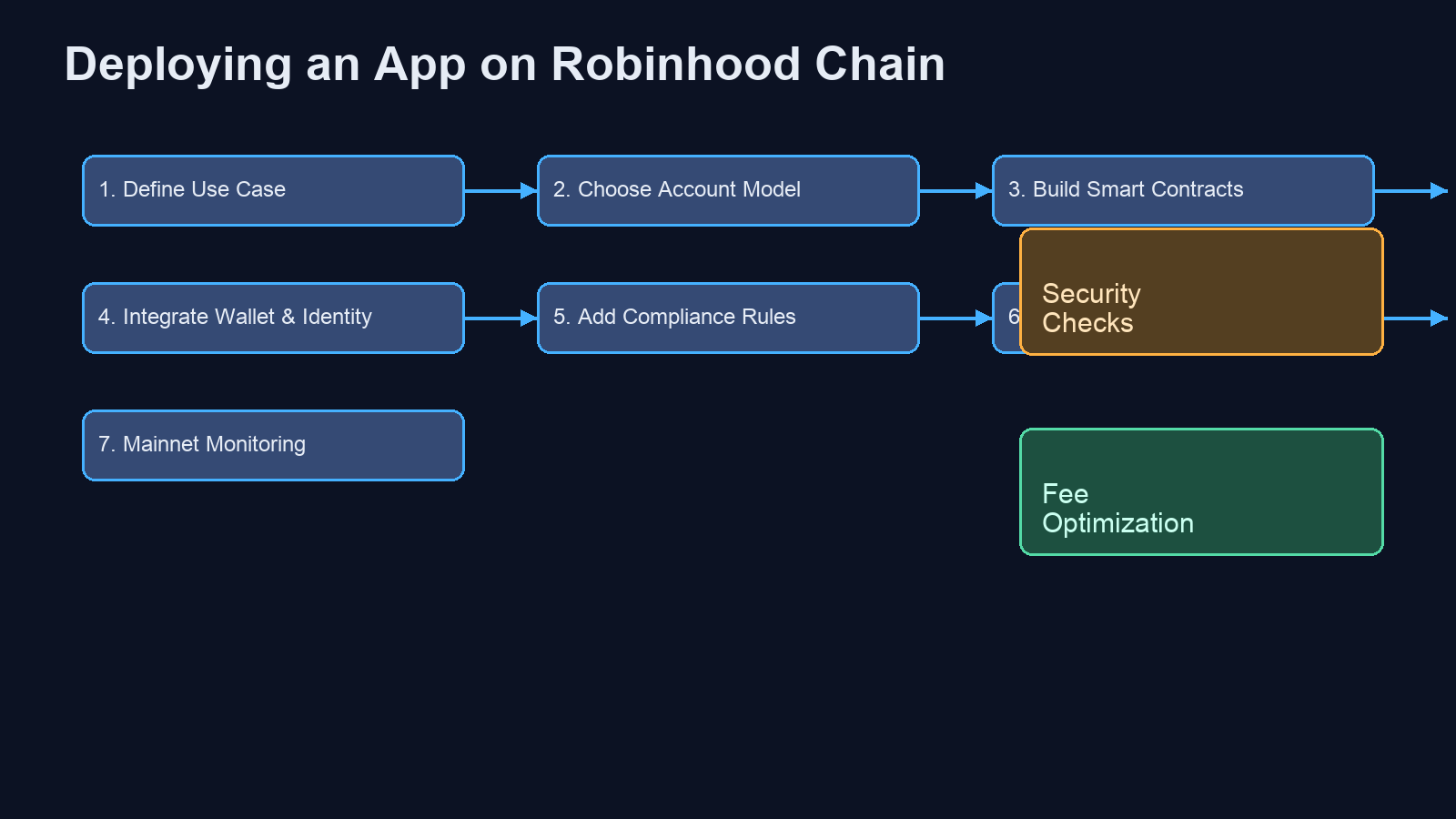 Figure 2. Robinhood Chain application deployment process and key governance checkpoints.
How Does Robinhood Chain Differ from Base? Does This Matter for Application Choice?
Both Robinhood Chain and Base can power consumer-grade applications, but they differ in ecosystem focus, account abstraction approach, and platform integration. Base is aligned with open L2 ecosystem expansion, while Robinhood Chain is tailored for a closed-loop, platform-centric user journey. The former emphasizes open composability, the latter process consistency.
For development teams, the question is not “which is more advanced,” but “which better fits your users and risk management needs.” If your core is open DeFi composability, Base’s tools and external liquidity are compelling. If you need low-friction onboarding, unified accounts, and auditable operations, Robinhood Chain’s productized integration is advantageous. Teams should compare account systems, fee predictability, data observability, and compliance support depth when making decisions.
Are Robinhood Chain’s Fees High? How Do Applications Differ in Fee Sensitivity?
Robinhood Chain’s fees should be evaluated not just by transaction amount, but by “fee stability + cost predictability.” In consumer scenarios, users care about understanding total costs upfront, minimizing friction from failed transactions, and whether high-frequency, small-value operations are sustainable. For application providers, fee strategies impact retention, conversion, and business models.
Fee sensitivity varies by application: payments and micro-transfers are highly sensitive to fees, while asset management and institutional workflows tolerate higher absolute fees but demand stability. If fees are volatile—even if the average is low—operational challenges increase. When assessing “are fees high,” also consider throughput, confirmation time, rollback, and batch processing capabilities.
What Foundational Elements Are Needed for Robinhood Chain’s Ecosystem to Succeed?
Converting application opportunities into a thriving ecosystem requires four foundational elements to mature together: robust developer tools, observable data layers, clear asset pathways, and executable risk governance. Without any of these, solutions may demo well but fail to scale.
For risk governance, security, compliance, and transparency mechanisms are the backbone of long-term operation. Teams must integrate KYC/KYB, address risk scoring, abnormal transaction blocking, and audit trails into products from the start. For users, these mechanisms determine whether asset flows are verifiable and issues are traceable.
In the long run, Robinhood Chain’s strength is aligning usability and verifiability within a unified engineering framework. Its limitations are real: platform-centric architecture can introduce some centralization, cross-chain bridging and asset mapping remain technically complex, and ecosystem openness requires ongoing expansion. Sustainable application opportunities depend on building reusable, auditable, and resilient product capabilities within these constraints.
Summary
Robinhood Chain’s application opportunities center on “scalable user experience” and “verifiable on-chain execution.” The greatest potential lies not in a single breakthrough, but in a synergistic network of account onboarding, payments, asset services, risk data, and developer tools. For teams, integrating product design, technical implementation, and compliance from the outset makes it much easier to build sustainable applications in this ecosystem.
FAQ
What Applications Are Possible on Robinhood Chain?
Robinhood Chain is ideal for account onboarding, payment & settlement, asset services, risk analytics, and developer tools. These applications require low-friction interaction and traceable execution. Unlike single-protocol apps, these scenarios emphasize end-to-end product flows.
Why Is Robinhood Building Its Own Blockchain?
The main reason is to unify account, trading, settlement, and audit flows—reducing friction from fragmented systems. A proprietary chain allows business rules and risk controls to be enforced at the execution layer, supporting both rapid product iteration and issue tracking.
How Can Developers Deploy Applications on Robinhood Chain?
Deployment follows four steps: requirement definition, contract & account design, integration testing, and launch operations. Each stage must address both technical and compliance requirements. Without a permission model, monitoring, and rollback, applications will struggle to serve consumer-grade users reliably.
How Does Robinhood Chain Differ from Base?
The main differences are in ecosystem focus and product integration. Base is geared toward open L2 expansion, while Robinhood Chain is built for an integrated, platform-driven user experience. Application selection should weigh account models, fee stability, composability, and risk control.
Are Robinhood Chain’s Fees High?
Fees should be assessed not just by transaction size, but by stability, predictability, and how failure costs are managed. High-frequency, low-value use cases are more fee-sensitive, while institutional workflows focus on stability and traceability. Consider confirmation time, rollback, and batch processing when evaluating fees.







