Robinhood Chain’s security and governance must be evaluated within the context of its architecture and use cases: it is not a single protocol experiment, but integrates consumer account access, on-chain execution, and risk management into a unified operational chain. Assessment should go beyond on-chain throughput, considering whether custodial responsibilities are clearly defined, compliance rules are enforceable, and transparency can be independently verified.
Is Robinhood Chain Secure? Is It Centralized?
Security in such systems encompasses three distinct layers: the account layer (preventing unauthorized actions), the protocol layer (minimizing execution and settlement anomalies), and the operational layer (providing traceable incident resolution).
Centralization is not a simple binary. Robinhood Chain typically features a hybrid structure—centralized operational responsibilities combined with transparent on-chain records. User access, compliance policies, and certain key permissions may be governed by the platform, while transaction status, asset flows, and some execution logic remain on an auditable on-chain data layer. The critical factor is not absolute decentralization, but whether authority boundaries are publicly disclosed, changes are traceable, and anomalies can be reviewed.
How Is Custody Divided Between Custodial and Self-Custodial Paths?
In Robinhood Chain discussions, “custody” refers to the platform managing keys, risk controls, and operations, while “self-custody” allows users independent control of addresses and signing rights. Account abstraction and layered permissions determine whether users can choose between usability and control, which is directly tied to the account and execution mechanism.
| Division Dimension |
Custodial Path |
Self-Custodial Path |
| Key Responsibility |
Platform manages core security and recovery |
Users independently safeguard keys or signing devices |
| Compliance Execution |
Embedded identity, AML, and risk controls |
Rules supplemented via gateway or app layer |
| Operational Threshold |
Suited for frictionless daily use |
Emphasizes on-chain awareness and self-governance |
| Incident Resolution |
Relies on platform response and transparency |
Relies on user backup and emergency handling |
This division underscores that custody is not inherently insecure, nor is self-custody inherently low-risk. Security depends on clear responsibilities, minimized permissions, and pre-designed failure paths.
How Are Assets Deposited and Withdrawn on Robinhood Chain?
Asset movement in and out of the chain typically involves five steps: source verification, compliance check, mapping or settlement, crediting to the target address, and redemption or withdrawal. Transparency of the process matters more than the number of steps.
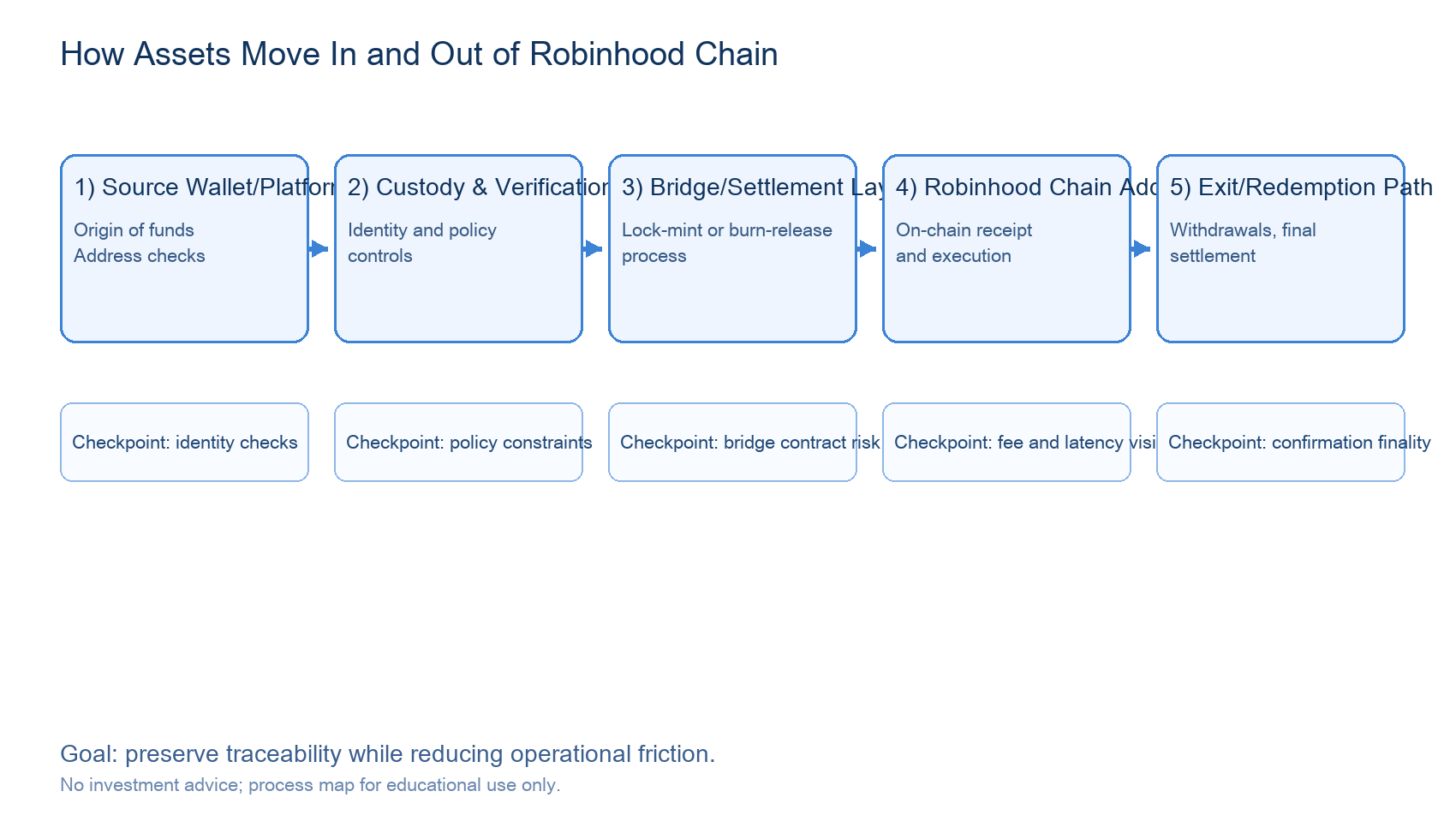
Figure 1. Robinhood Chain asset deposit/withdrawal process and risk checkpoints.
During deposits, key issues include whether the asset source is recognized, rules permit its entry, and the bridge contract is reliable. During withdrawals, clarity of redemption paths, public confirmation conditions, and traceable rollback for failures are essential. Inconsistencies between on-chain records, platform reconciliation, and user-visible status undermine both transparency and security.
What Is the Relationship Between Robinhood Chain and Ethereum?
Robinhood Chain and Ethereum are best described as having a collaborative division of labor, not a simple replacement relationship. Ethereum delivers general public settlement and an open ecosystem; Robinhood Chain emphasizes consumer-facing productization, account experience, and compliance collaboration.
Differences from mainstream L2s follow the same logic: Robinhood Chain focuses on integrated access experience and operational governance, while generic L2s prioritize open protocols and developer flexibility. For technical and governance trade-offs, see Robinhood Chain vs Base vs Arbitrum.
Why Is Robinhood Building Its Own Blockchain?
The primary motivation is not to reinvent underlying technology, but to unify account management, transaction execution, compliance auditing, and asset settlement across disparate systems into traceable workflows. For platforms serving large-scale retail users, on-chain capabilities are not just added features—they are foundational for reducing operational friction and reconciliation complexity.
This architecture also accelerates product iteration: when account models, risk rules, and settlement paths evolve together, the platform can more reliably launch payment, transfer, asset management, and developer interface features. The prerequisite is that governance mechanisms remain interpretable, avoiding the opacity that weakens on-chain transparency.
What Applications Can Robinhood Chain Support?
Robinhood Chain is well-suited for applications requiring low entry barriers and verifiable workflows—on-chain payment routing, auditable settlement, compliant asset channels, account abstraction wallet services, and digital asset management tools for mainstream users. These use cases demand not only smart contract functionality, but also alignment between operational rules and on-chain evidence.
For ecosystem expansion, developers must design for both user experience and regulatory boundaries to transform applications from experiments to sustainable operations. For specific tracks and product opportunities, see ecosystem and application opportunities for prioritization.
How Are Compliance and Transparency Verified Simultaneously?
Compliance and transparency are not inherently at odds, but verification must be layered: compliance checks whether rules are enforced, transparency checks whether execution leaves traceable, auditable records. Only when both are present does the governance framework gain lasting credibility.
| Verification Target |
Key Evidence |
Common Failure Points |
| Compliance Executability |
Identity verification, risk triggers, incident logs |
Rules not public or trigger inconsistency |
| On-Chain Transparency |
Queryable transactions, state change logs, repeatable reconciliation |
Data is visible but lacks business clarity |
| Custodial Security |
Permission layering, cold/hot strategies, audit logs |
Permission concentration, lack of minimization |
| User Verifiability |
Unified status page, clear failure reasons, processing sequence |
User info disconnected from on-chain state |
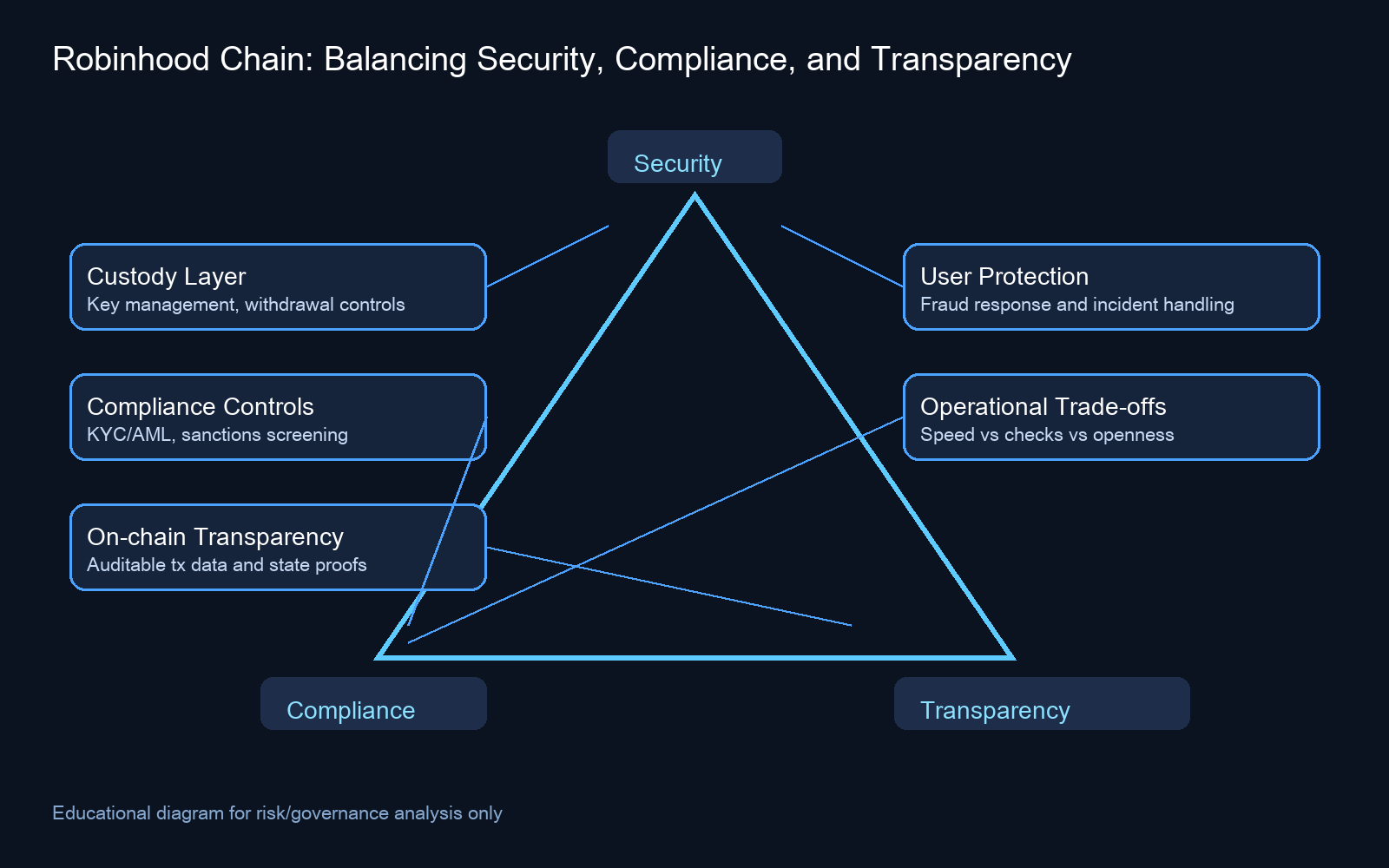 Figure 2. Robinhood Chain’s framework for balancing security, compliance, and transparency.
In governance, the key is not merely “declaring transparency,” but enabling all stakeholders to verify the same facts: users can trace asset paths, auditors confirm process consistency, and regulators verify rule enforcement.
What Are the Advantages, Risks, and Limitations of Robinhood Chain?
Robinhood Chain’s advantages are integrated processes and traceability: unified accounts and execution frameworks reduce friction for everyday users and facilitate standardized risk and audit mechanisms. For cross-application scenarios, this consistency lowers operational costs caused by fragmented states.
Risks are concentrated in three areas: first, excessive concentration of critical operational permissions may create governance bottlenecks; second, cross-chain and asset mapping processes introduce technical and liquidity risks; third, insufficient disclosure of rule updates may misalign user expectations and actual execution.
Limitations stem from the long-term balance between ecosystem openness and governance complexity. Excessive control stifles composable innovation, while weak constraints undermine compliance.
Summary
Assessing Robinhood Chain’s security requires more than reviewing on-chain technology or platform compliance statements. Effective evaluation checks three things: clear custodial responsibilities, enforceable compliance processes, and verifiable on-chain evidence. Only when these three form a closed loop can the tension between centralized operations and on-chain transparency be sustainably managed.
FAQ
Is Robinhood Chain Secure? Is It Centralized?
Robinhood Chain’s security depends on account control, execution stability, and incident response mechanisms. Its governance typically combines platform operational responsibilities with public on-chain records, not full decentralization. Focus on authority boundaries, traceability, and verifiable evidence—not just labels.
How Are Assets Deposited and Withdrawn on Robinhood Chain?
Asset movement involves source verification, compliance checks, bridging or settlement, crediting the target address, and redemption or withdrawal. Safe usage requires verifying supported paths, confirming rule transparency, and ensuring clear rollback and handling for failures. Consistency between on-chain records and platform status is key to reliability.
What Is the Relationship Between Robinhood Chain and Ethereum?
The two operate in a collaborative division of labor: Ethereum provides open settlement, Robinhood Chain focuses on consumer productization and governance. Interoperability depends on compatibility, bridging, and settlement—not chain similarity.
Why Is Robinhood Building Its Own Blockchain?
The main reason is to unify accounts, transactions, compliance, and settlement, reducing reconciliation and operational complexity from fragmented systems. A proprietary chain allows systematic risk and audit management. Governance rules must remain interpretable and auditable to avoid information silos.
What Applications Can Robinhood Chain Support?
Robinhood Chain is ideal for low-barrier, verifiable workflow applications: payment routing, compliant asset channels, auditable accounting, and consumer-grade wallet services. Sustainable adoption depends on user experience, rule enforcement, and on-chain evidence. On-chain features alone, without verifiable governance, cannot support large-scale use.







