In the traditional internet, the Domain Name System (DNS) allows users to access websites through human-readable URLs without needing to memorize complex server addresses. SNS serves a similar purpose within the blockchain ecosystem by mapping long wallet addresses to simple and memorable domain names, improving user experience while reducing barriers to adoption.
As Web3 applications continue to expand beyond asset trading into social networking, community governance, and digital identity management, blockchain-based domain names are evolving from simple address tools into foundational infrastructure. As a result, SNS use cases continue to grow, making it an increasingly important component of the Solana identity layer.
SNS: An On-Chain Domain Name Protocol on Solana
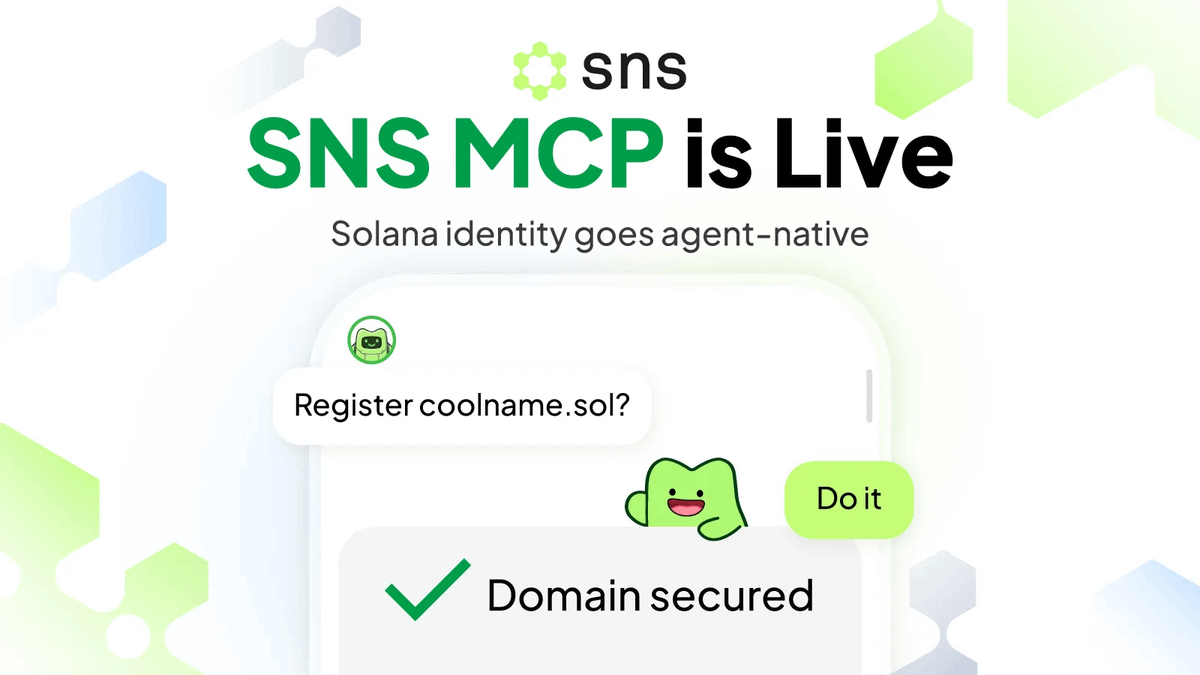
SNS, short for Solana Name Service, is an on-chain domain name protocol built on the Solana network. Users can register .sol domains and associate them with wallet addresses, social profiles, text records, and other forms of on-chain data.
The core value of SNS lies in improving blockchain readability. Compared with complex wallet addresses, domain names are easier to recognize and remember. For example, sending assets to a .sol domain is generally more convenient than copying and verifying a lengthy wallet address, while also reducing the likelihood of input errors.
Beyond address mapping, SNS enables domains to store additional on-chain information. When combined with identity data, content systems, and digital assets, domains become more than simple naming tools and increasingly serve as an important gateway to Web3 identity systems.
Source: sns.sol
How SNS Simplifies Wallet Transfers
Wallet transfers are among the most widely used applications of SNS. Blockchain wallet addresses typically consist of long strings of random characters, requiring users to carefully verify address information before completing transactions.
SNS addresses this challenge through its domain resolution mechanism. When a user sends assets to a .sol domain, the system automatically queries on-chain records and identifies the associated wallet address. The process is similar to how internet browsers use domain names to access websites, allowing users to complete transactions without directly interacting with complex addresses.
In practice, SNS first checks whether a domain has been tokenized. If the domain is represented by an NFT, assets are sent to the wallet controlled by the NFT holder. If no tokenized record exists, the system reads the SOL Record associated with the domain and verifies the destination address using a valid signature. If no valid record is found, assets are ultimately transferred to the domain owner's wallet.
This resolution logic ensures consistency between domain ownership and asset-receiving rights while making SNS an important piece of payment infrastructure within the Solana ecosystem.
How SNS Supports Web3 Identity Systems
Digital identity is widely regarded as one of the foundational pillars of Web3 infrastructure. Traditional online identities are typically controlled by social media platforms, email providers, or centralized companies, meaning users do not fully own their identity data.
SNS introduces an on-chain identity model. Users can associate wallet addresses, profile images, social media links, and other information with a single .sol domain, creating a unified digital identity.
When multiple applications support SNS domains, users can share identity information across platforms without repeatedly creating new accounts. This mechanism improves user experience while enabling the development of cross-platform on-chain reputation systems.
For social applications, content platforms, and community organizations, SNS domains are increasingly becoming an important bridge connecting identity, assets, and behavioral records.
How SNS Is Used for NFTs and Digital Asset Management
SNS domains are themselves digital assets that exist on-chain. Users own and control their domains and can transfer, trade, or hold them in the same way as other blockchain-based assets.
Within the Solana ecosystem, some SNS domains have already been tokenized, with ownership represented through NFTs. When a domain NFT is transferred to a new owner, control over the corresponding domain is transferred automatically.
This mechanism transforms domains from identity tools into tradable digital assets. Scarce domain names, branded domains, and names with particular significance often attract market interest and can develop into independent trading markets.
At the same time, combining domains with NFT collections, digital art projects, and on-chain accounts can further enhance identity representation and improve digital asset management efficiency.
How SNS Serves DAOs and Community Ecosystems
DAO organizations often rely on wallet addresses for governance voting, treasury management, and community coordination. However, large numbers of complex wallet addresses can make governance processes more difficult and reduce account recognizability.
SNS provides a more intuitive identity layer for DAOs. Community treasuries, governance accounts, and project teams can use dedicated .sol domains instead of complex wallet addresses, improving transparency and visibility.
For community members, domain names help identify official accounts and reduce exposure to phishing attacks. When governance proposals, treasury activities, and on-chain operations are linked to consistent domain identities, overall community trust can be strengthened.
As DAOs continue to emerge as an important organizational structure within Web3, the role of on-chain identity infrastructure becomes increasingly significant.
How SNS Supports Brands and Personal On-Chain Identity
As the digital asset ecosystem continues to evolve, individual creators, project teams, and businesses are placing greater emphasis on on-chain brand development.
In the traditional internet, organizations establish brand recognition through website domains and social media accounts. Within Web3, .sol domains are beginning to serve a similar purpose. A recognizable domain can represent not only a wallet address but also an important element of a digital brand.
For individual users, SNS domains can function as unified identity portals that showcase assets, social information, and on-chain activity records. For businesses and projects, domains can help establish trusted brand identities and improve community recognition.
As Web3 identity systems continue to mature, blockchain-based domains may become an increasingly important category of digital brand assets.
Challenges Facing the On-Chain Domain Name Ecosystem
Although blockchain domain markets have grown rapidly, several challenges remain. First, awareness of Web3 identity systems and blockchain-based domains remains relatively limited among mainstream users. Most users entering the blockchain industry continue to focus primarily on trading and investment activities.
Second, multiple domain protocols exist across different blockchain ecosystems, including ENS, SNS, and various alternative naming systems. Because cross-chain identity standards have not yet been fully unified, users may need to manage multiple domain assets across different networks.
Additionally, domain value depends heavily on ecosystem adoption. If insufficient applications integrate domain services, practical utility may remain limited. Consequently, the future development of blockchain domains depends not only on individual protocols but also on the broader maturity of the Web3 identity ecosystem.
As demand for digital identity solutions continues to grow, many of these challenges may gradually be addressed. However, the industry remains in its early stages of development.
Conclusion
SNS is a key domain name infrastructure layer within the Solana ecosystem. Through .sol domains, it enables wallet address mapping, payment optimization, digital identity management, and on-chain brand development. As NFTs, DAOs, and Web3 social applications continue to evolve, SNS has expanded beyond traditional domain name services and is becoming an increasingly important component of Solana's identity infrastructure.
The growth of blockchain-based domains not only improves usability but also provides critical infrastructure support for the future development of a decentralized internet.
FAQ
What is the primary use case of SNS?
SNS is primarily used to map complex wallet addresses to easy-to-recognize .sol domains while supporting payments, identity management, and digital asset presentation.
How does SNS improve the transfer experience?
Users can send assets directly to a .sol domain, and the system automatically resolves the corresponding wallet address, reducing errors and improving payment usability.
Can SNS domains be traded?
Yes. Some SNS domains have been tokenized as NFTs, allowing users to transfer or sell domain ownership in the same way as other digital assets.
How does SNS support Web3 identity?
Users can associate wallet addresses, profile images, social profiles, and other on-chain data with a domain name, creating a unified blockchain-based identity.
What is the difference between SNS and ENS?
SNS operates on the Solana network and uses .sol domains, while ENS operates on Ethereum and uses .eth domains. Each serves a different blockchain ecosystem.







