In today’s RWA market, USYC and BUIDL stand out as two of the most prominent on-chain Treasury products. Both introduce traditional money market funds to the blockchain, but they differ significantly in their target audience, ecosystem role, liquidity design, and strategic direction. USYC is positioned as a yield-generating asset within the digital dollar ecosystem, while BUIDL is designed to serve as a bridge for traditional financial institutions entering the blockchain space.
With a growing number of institutions focusing on on-chain yield assets, these products not only signal the direction of tokenized funds but also embody distinct approaches: one rooted in crypto-native finance, the other in traditional financial institutions’ entry into on-chain markets.
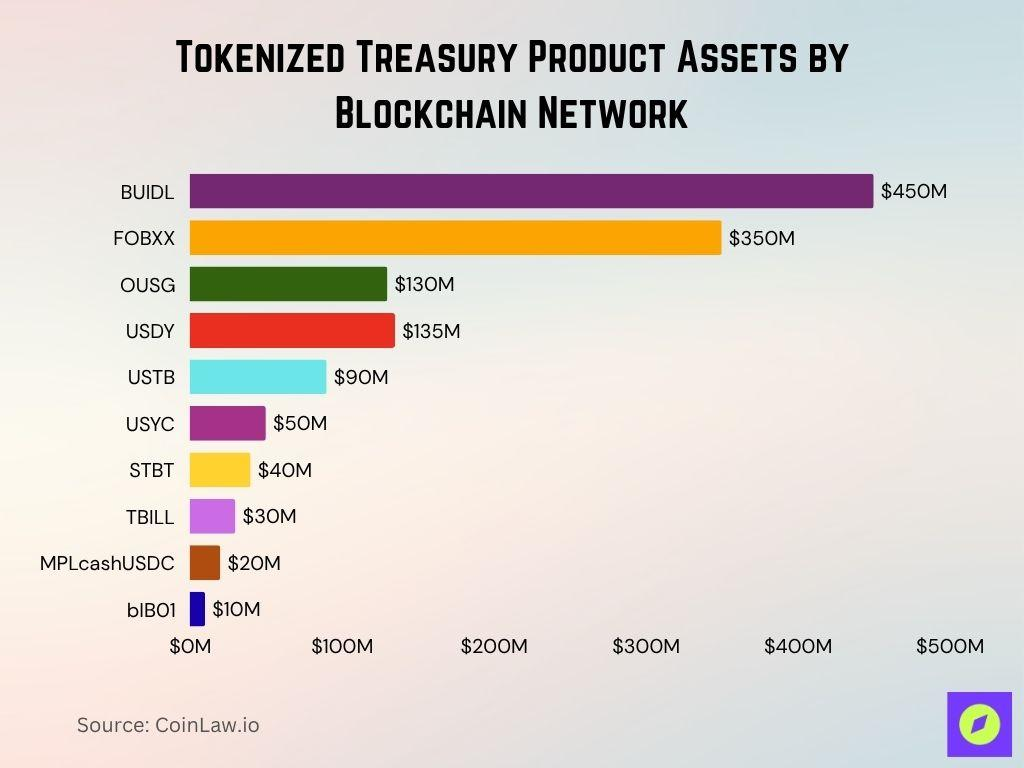
What Is USYC?
USYC is a tokenized money market fund launched by Circle, backed primarily by short-term US Treasuries, reverse repurchase agreements, and cash equivalents.
USYC’s core role is to provide a yield layer within the digital dollar ecosystem. By integrating with the USDC ecosystem, USYC offers capital management tools for institutions, DAOs, and on-chain protocols—enabling idle digital dollars to earn Treasury yields.
Functionally, USYC closely resembles an on-chain money market fund, with a focus on enhancing capital efficiency.
What Is BUIDL?
BUIDL is a tokenized fund introduced by BlackRock, the world’s largest asset manager. Like USYC, BUIDL invests mainly in US Treasuries, cash, and short-term money market instruments, issuing fund shares via blockchain.
Unlike crypto-native projects, BUIDL’s launch signals a significant milestone: the entry of traditional financial institutions into on-chain asset management. Its goal is to provide institutional investors with a familiar and compliant digital Treasury investment solution.
How Do USYC and BUIDL Differ in Core Positioning?
The key distinction between USYC and BUIDL lies in their positioning.
USYC is focused on building digital dollar infrastructure. Circle’s ambition is to combine USDC and USYC into a comprehensive “payment layer + yield layer” system. In contrast, BUIDL’s priority is to bring money market funds from traditional finance onto the blockchain, providing compliant on-chain access for large institutions.
Put simply, USYC supports the growth of the crypto finance ecosystem, while BUIDL advances the digitization of traditional financial assets.
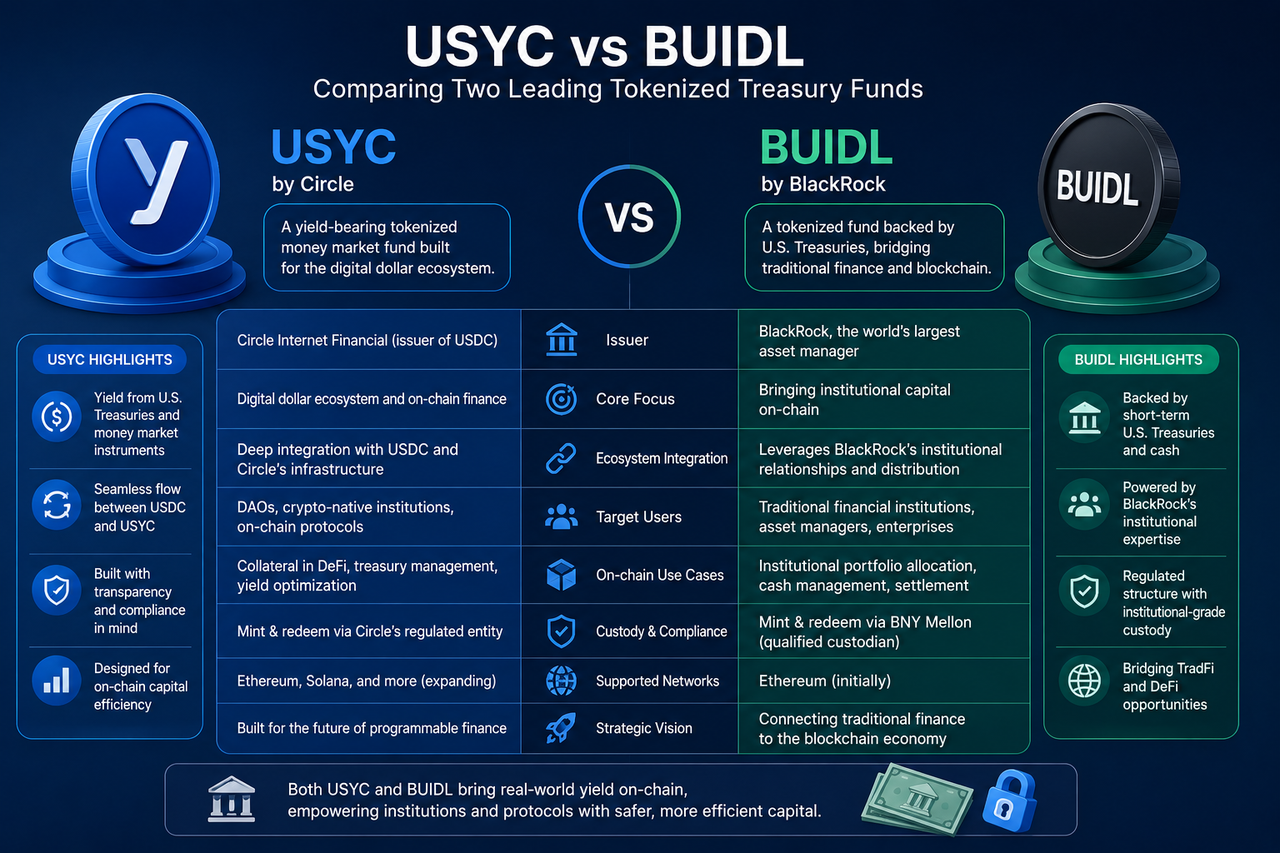
What’s Different About Their Issuers?
The origin of each product’s issuer directly shapes its development path.
USYC Issuer Background
USYC is part of the Circle ecosystem.
Circle’s long-standing focus is stablecoins, payment networks, and digital dollar infrastructure, so USYC’s development is tightly linked to on-chain finance. Its value comes not only from the fund itself, but also from deep integration with the USDC ecosystem.
BUIDL Issuer Background
BUIDL is backed by BlackRock.
As the world’s largest asset manager, BlackRock’s strengths are its institutional client base, expertise in traditional financial products, and global compliance capabilities. This gives BUIDL a strong appeal to traditional financial institutions.
Are the Underlying Asset Structures the Same?
From a portfolio perspective, both products are highly similar.
USYC and BUIDL primarily invest in:
- Short-term US Treasuries
- Treasury repurchase agreements
- Cash and cash equivalents
Their core objective is not high-risk returns, but stable interest income with liquidity and safety. In terms of risk characteristics, both products belong to the same asset class.
How Do USYC and BUIDL Compare in Ecosystem Integration?
Ecosystem integration is a major differentiator.
USYC Ecosystem Integration
USYC is natively synergistic with USDC. Institutions can seamlessly move between payment and yield assets, and use USYC for Treasury management, collateral, and on-chain financial protocols. As a result, USYC is well positioned for integration into the crypto-native ecosystem.
BUIDL Ecosystem Integration
BUIDL’s strength lies in institutional trust. Many traditional financial institutions are already familiar with BlackRock’s suite of products, making BUIDL a natural first step for these entities to enter blockchain markets. Its ecosystem development centers on institutional-grade financial infrastructure.
Which Product Best Fits the On-Chain Financial Market?
Both products serve overlapping markets, but with distinct priorities.
USYC is best suited for:
- DAO Treasury management
- Crypto fund cash management
- On-chain collateral frameworks
- DeFi protocol integration
BUIDL is best suited for:
- Digital asset allocation by traditional institutions
- Compliant asset management needs
- Institutional cash management
- Converged traditional finance and blockchain scenarios
Therefore, these solutions are not direct competitors, but serve different user segments.
USYC vs BUIDL: At a Glance
| Comparison Dimension |
USYC |
BUIDL |
| Product Type |
Tokenized money market fund |
Tokenized money market fund |
| Issuer |
Circle ecosystem |
BlackRock |
| Core Positioning |
Digital dollar yield layer |
Institutional asset digitization |
| Underlying Assets |
US Treasuries and money market instruments |
US Treasuries and money market instruments |
| Main Users |
DAOs, crypto funds, institutions |
Traditional financial institutions |
| Ecosystem Integration |
Deep integration with USDC |
Institutional system integration |
| On-Chain Application |
Collateral, Treasury, DeFi |
Institutional investment allocation |
| Strategic Direction |
Crypto finance infrastructure |
TradFi on-chain gateway |
Summary
USYC and BUIDL are both tokenized Treasury funds with similar underlying assets and sources of yield, but their development strategies are fundamentally different. USYC is dedicated to serving the digital dollar ecosystem and on-chain finance, building yield layer infrastructure in concert with USDC. BUIDL, meanwhile, focuses on providing a compliant pathway for traditional financial institutions to enter blockchain markets.
From an RWA market evolution perspective, USYC and BUIDL are not simply competitors—they represent two distinct market strategies. USYC’s origin is crypto-native finance, while BUIDL stems from the traditional asset management sector. Together, they drive the application and expansion of real-world assets in blockchain finance.
FAQs
Are USYC and BUIDL Both RWA Assets?
Yes. Both USYC and BUIDL are backed by US Treasuries and money market instruments, making them tokenized real-world asset (RWA) products.
Do USYC and BUIDL Have the Same Sources of Yield?
Essentially yes. Both derive yield primarily from US Treasury interest, repurchase agreement earnings, and returns from money market instruments.
Is BUIDL a Stablecoin?
No. BUIDL is a tokenized fund product whose value reflects changes in the fund’s NAV, rather than maintaining a fixed price like a stablecoin.
What’s the Relationship Between USYC and USDC?
USYC is a yield-generating asset within the Circle ecosystem; USDC is a payment stablecoin. Together, they comprise the yield and payment layers of the digital dollar ecosystem.
Why Are Traditional Financial Institutions Interested in BUIDL?
BUIDL is issued by BlackRock, which brings mature asset management experience and an established institutional client base, making it well positioned to gain traction with traditional financial market participants.
Which Is More Suitable for Institutional Investors: USYC or BUIDL?
Both are aimed at institutional investors, but with different emphases. USYC is more focused on on-chain finance and digital dollar infrastructure, while BUIDL is tailored to digital asset allocation for traditional financial institutions.