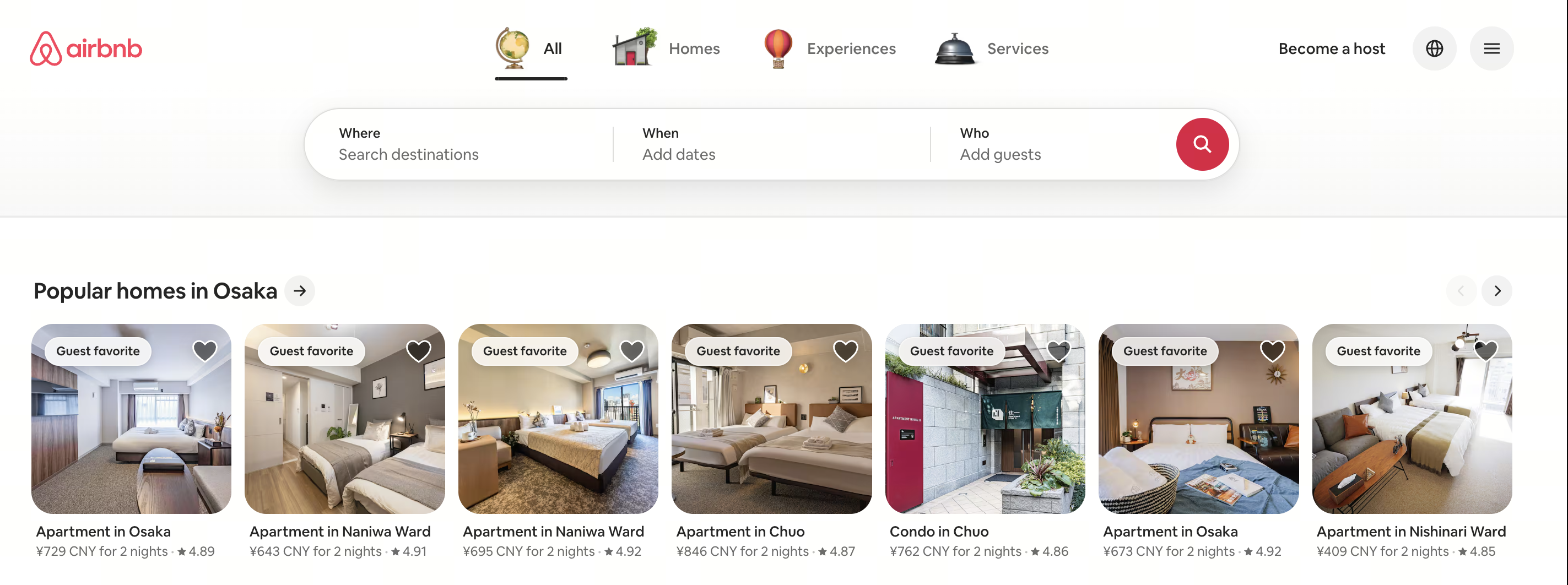
Unlike traditional hotel chains, Airbnb doesn’t primarily own or operate a large portfolio of hotel assets. Instead, it leverages a platform model to aggregate unused housing resources worldwide. Users can browse property listings, read reviews, book stays, and build transaction trust through a robust community feedback system.
Founded in 2008 in San Francisco, Airbnb’s origin traces back to the founders’ discovery that major conferences often left visitors struggling to find hotel rooms. They responded by renting out spare rooms in their own homes via an online platform. As demand surged, Airbnb evolved from a short-term home-sharing solution into a global travel platform.
Over the years, Airbnb has transformed from a simple “vacation rental website” into a comprehensive travel ecosystem. Its reach now spans a vast number of countries and regions, and its offerings have expanded beyond standard homes to include rural properties, luxury villas, unique architecture, and extraordinary lodging experiences.
Since 2019, Airbnb has doubled down on brand building, community management, and product experience optimization. In 2020, it went public under the ticker ABNB. Post-IPO, investor focus has shifted from sheer growth to profitability, user quality, and the long-term value driven by AI innovation.
Airbnb’s Core Business Structure
Airbnb’s business model centers on accommodations, experience services, and the broader travel ecosystem, with multiple business verticals.
Shared Accommodations: The Primary Revenue Driver
Accommodation booking remains Airbnb’s core business. The platform generates revenue by charging service fees to hosts and facilitating transactions for travelers.
Airbnb’s edge lies in its wide variety of listings. Unlike hotels that offer standardized rooms, Airbnb can satisfy more personalized needs—large homes for families, long-term stays, apartment-style lodging, and properties with local flavor.
This model enables Airbnb to serve diverse user groups:
- Young travelers seeking unique stays;
- Families needing spacious accommodations;
- Business professionals requiring extended-stay solutions;
- Digital nomads looking for flexible workspaces.
With a vast array of non-standardized lodging, Airbnb has built a competitive moat distinct from the hotel industry.
Airbnb Experiences: Expanding the Local Experience Market
Beyond lodging, Airbnb has entered the travel experiences sector.
Airbnb Experiences offers local activities such as:
- Urban cultural tours;
- Culinary classes;
- Outdoor adventures;
- Artistic workshops;
- Regional specialty events.
This business aims to meet the need for “what to do” in addition to “where to stay.”
Compared to traditional OTAs (online travel agencies) that focus on flights and hotels, Airbnb emphasizes connecting travelers with local communities.
Long-Term Stays and the Remote Work Market
The rise of remote work post-pandemic has fueled demand for long-term stays. More users are blending travel and work, increasing the need for flexible accommodations.
Airbnb has responded by enhancing search features, including:
- Monthly rentals;
- Long-term discounts;
- Filters for work-friendly properties.
This direction positions Airbnb as a lifestyle platform, extending beyond short-term tourism.
Airbnb’s biggest competitive advantage is its global network effect. The core logic of its platform model is: more hosts join → more listings → more choices for users → user growth → attracting even more hosts.
This two-sided marketplace creates substantial platform barriers.
Global Supply Network Delivers Scale
Traditional hotel groups expand by building or managing properties, but Airbnb rapidly scales supply through its open platform.
Hosts simply upload listings, set prices, and manage bookings to tap into the global travel market.
This asset-light model dramatically lowers expansion costs, allowing Airbnb to quickly enter new countries and regions.
Ratings and Reviews Foster Trust
A primary challenge in home sharing is building trust between strangers.
Airbnb addresses this with robust review systems, identity verification, host ratings, and transaction safeguards.
Users evaluate listings based on:
- Property ratings;
- Historical reviews;
- Host reputation;
- Photos.
Over time, accumulated data and verified transactions further strengthen the platform’s trust foundation.
Airbnb generates massive user behavior data daily, including:
- Search patterns;
- Travel intentions;
- Price sensitivities;
- Shifting regional demand.
This data powers smarter recommendation algorithms, helping users find the right stay more efficiently.
Unlike legacy lodging, which relies on manual management, Airbnb’s digital platform continuously improves matches through data insights.
How AI Is Upgrading Airbnb’s Search, Support, and Travel Experience
Artificial intelligence is fast becoming a critical pillar of Airbnb’s future strategy. Previously, users had to enter destination, dates, and guest count, then filter results.
AI is set to transform this entire interaction.
AI Search: Smarter, Faster Matching
Traditional search depends on keywords. AI, however, can interpret much more nuanced requirements. Instead of typing “three-bedroom apartment in Tokyo,” a user might say: “Looking for a place for a family of four, near the subway, with a kitchen, for two weeks.”
AI can analyze intent and surface the most relevant listings. Intelligent search is poised to become a key differentiator among travel platforms.
AI Customer Support: Reducing Costs, Improving Service
Customer service is a major expense for large travel platforms. Airbnb is leveraging AI to automate support, including:
- Resolving booking issues;
- Handling rescheduling;
- Assisting hosts with management;
- Addressing user complaints.
AI-driven support boosts response speed and lightens the workload for human agents.
AI Travel Assistant: The Next Evolution
Airbnb could soon become more than a booking tool—emerging as an AI-powered travel assistant.
Users might use natural language to:
- Build travel itineraries;
- Get recommendations on where to stay;
- Plan routes;
- Discover local activities.
This positions Airbnb not just against hotel booking platforms, but as a gateway for all travel decisions.
Airbnb’s Positioning in Lodging, Experiences, and Local Services
Airbnb’s long-term strategy is to evolve from an accommodation platform into a comprehensive travel ecosystem. While lodging remains foundational, future growth will be driven by a wider range of services.
From Transactions to Ecosystem
Traditional OTAs focus on transactions, while Airbnb prioritizes community and experience. Users turn to Airbnb not just for a place to stay, but to discover local lifestyles. This differentiation strengthens Airbnb’s brand.
The Local Services Opportunity
Looking forward, Airbnb could further expand into:
- Local activity recommendations;
- Personalized travel services;
- AI-powered itinerary planning;
- Strategic business partnerships.
If these services form a closed loop, Airbnb’s user value could rise even higher.
How Airbnb Differs from Booking, Expedia, and Hotel Chains
Airbnb stands apart from traditional travel platforms.
Compared to Booking Holdings and Expedia Group, Airbnb emphasizes home sharing and community. Booking and Expedia excel at aggregating standardized travel products like hotels and flights, while Airbnb specializes in unique stays and experiences.
Unlike hotel giants such as Marriott International and Hilton Worldwide Holdings, Airbnb’s asset-light approach allows for rapid, flexible expansion.
That said, hotel chains benefit from established brands, standardized service, and loyal customer bases—key competitive strengths that Airbnb must contend with.
The future of travel will likely see multiple models coexist:
- Hotels deliver standardized lodging;
- Airbnb offers personalized experiences;
- OTAs provide a one-stop booking gateway.
How to Trade Airbnb (ABNB) Stock on Gate
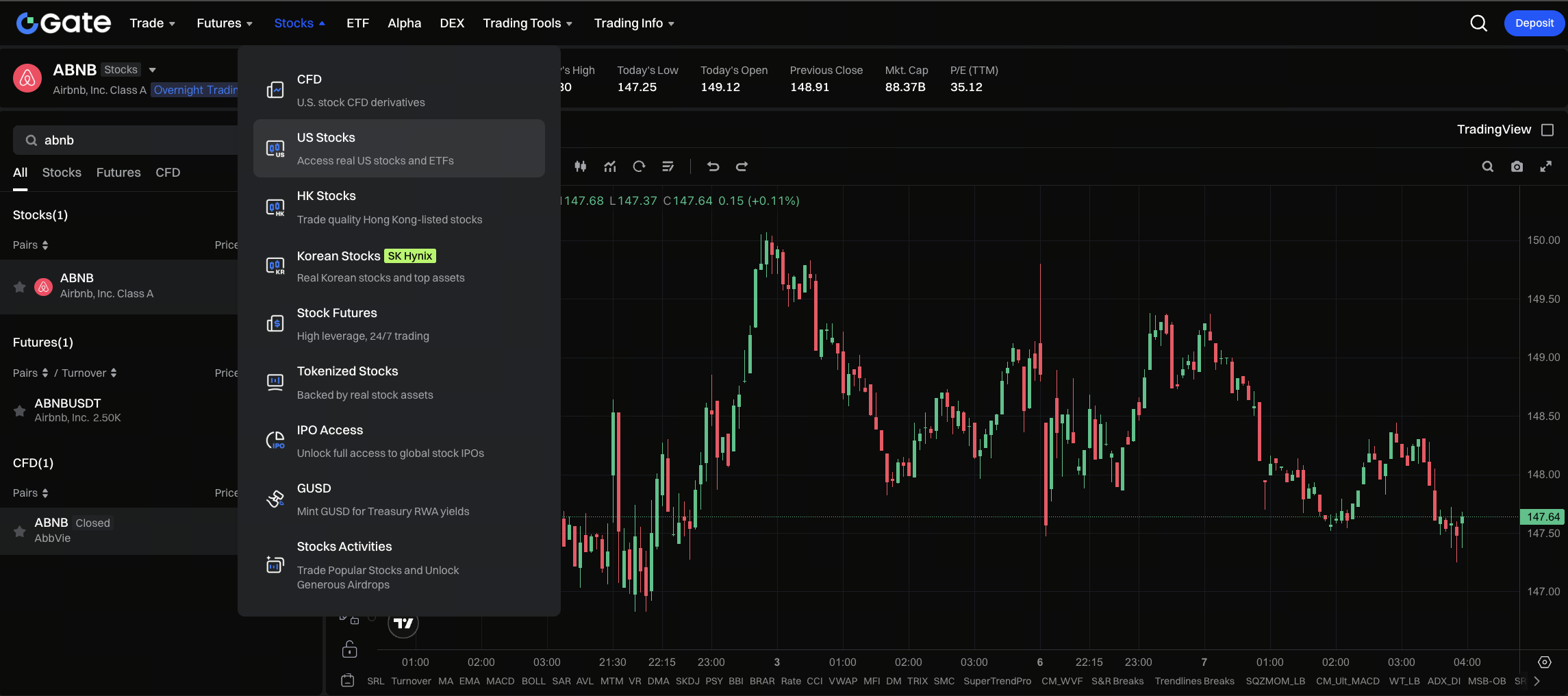
As global investors increasingly focus on tech companies, consumer platforms, and AI-driven businesses, US equities like Airbnb (ABNB) are drawing significant attention. For those looking to access US stocks, digital asset platforms are now joining traditional brokerages in offering stock trading.
Gate Stocks is Gate’s stock trading service, enabling users to invest in US stocks and ETFs directly on the Gate platform, manage funds and trades with USDT, and seamlessly connect digital and traditional assets in a unified account.
For investors interested in Airbnb (ABNB), the convenience of the trading platform is a critical factor. With Gate’s stock trading feature, users can search for the ABNB symbol, access market data, and tailor their stock allocation to their strategies. Gate Stocks supports a wide range of US equities and offers fractional shares, lowering the barrier to participate in trending stocks.
However, stock investing is still subject to company performance, market trends, macroeconomic factors, and industry competition. Regardless of the trading channel, investors should assess Airbnb’s revenue growth, profitability, regulatory environment, and AI strategy when evaluating ABNB.
Key Risks to Consider When Investing in ABNB
Despite Airbnb’s strong platform advantages, there are several risks to watch when investing in ABNB.
Regulatory Risks
The home-sharing sector faces ongoing regulatory scrutiny. Some cities are concerned that short-term rentals impact local housing supply, resulting in:
- Limits on the number of listings;
- Permit requirements;
- Tax policy changes.
Regulatory shifts could affect Airbnb’s growth trajectory.
Intensifying Competition
Travel industry competition remains fierce. Hotels are ramping up digital capabilities, and OTAs are enhancing user experiences. If rivals offer lower prices or broader selections, Airbnb could face user churn.
Macroeconomic Volatility
Travel spending is cyclical. Economic downturns may prompt consumers to cut travel budgets, impacting booking volume.
Uncertainty in AI Investments
While AI can boost efficiency, it demands sustained investment. If AI initiatives fail to materially improve user experience or reduce costs, returns may fall short of expectations.
Airbnb’s Future and Long-Term Growth Potential
Airbnb’s future growth will be driven by three main factors:
First, continued expansion in the accommodation market.
Global travel demand is on a long-term upward trajectory, and home sharing still has ample room for growth.
Second, strengthening AI capabilities.
AI is poised to transform the Airbnb user experience, from smarter search and recommendations to more efficient customer service.
Third, building a comprehensive travel ecosystem.
If Airbnb can seamlessly connect lodging, local experiences, and intelligent trip planning, it could evolve from a single platform into foundational travel infrastructure.
Ultimately, Airbnb’s value lies not just in the volume of listings, but in its global user network, data analytics, and community-driven ecosystem.
Summary
Airbnb (ABNB) has revolutionized the travel industry through its home-sharing platform model. Unlike traditional hotel groups that rely on asset-heavy expansion, Airbnb connects hosts and travelers worldwide through an asset-light, global network.
With the rapid advancement of AI, Airbnb is shifting from a booking platform to an intelligent travel ecosystem. AI-powered search, smart support, and personalized trip planning are set to further elevate the user experience and unlock new growth.
Still, investing in ABNB requires careful attention to regulatory changes, industry competition, and macroeconomic cycles. Airbnb’s ability to sustain its edge will depend on leveraging AI and data to deepen its ecosystem and reinforce its global market position.
FAQs
What is Airbnb?
Airbnb is a global home-sharing platform connecting hosts and travelers, offering short-term stays, long-term rentals, and local experience services.
Is ABNB the stock ticker for Airbnb?
Yes. Airbnb went public in 2020 under the ticker ABNB.
How is Airbnb different from hotels?
Hotels typically offer standardized rooms and services, while Airbnb provides a diverse range of unique accommodations from individual hosts and businesses.
How does Airbnb make money?
Airbnb generates revenue primarily by charging service fees to both hosts and travelers.
How will AI impact Airbnb?
AI will enhance search recommendations, automate customer support, streamline trip planning, and improve the overall user experience, driving greater platform efficiency.
Is Airbnb stock worth watching long-term?
Airbnb offers strong global network effects and AI-driven growth potential, but investors should remain mindful of regulatory risks, competitive pressures, and travel industry cycles.