Cardano Unveils New Development Proposals
(Source: Cardanians_io)
Input Output Global (IOG), Cardano’s blockchain research and development organization, has recently put forward nine funding proposals outlining Cardano’s technical and ecosystem roadmap for 2026. These proposals span infrastructure, developer tools, and economic mechanisms, with the centerpiece being the upcoming Leios scalability upgrade.
What Is Leios?
Leios is a planned network upgrade for Cardano focused on significantly increasing transaction processing capacity (throughput).
Key objectives include:
-
Boosting transaction throughput by 10 to 65 times
-
Raising monthly transaction volume from approximately 800,000 to over 27 million
-
Completing mainnet deployment by the end of 2026
This upgrade aims to enable Cardano to support a broader range of applications, including DeFi, real-world asset tokenization (RWA), and enterprise-level solutions.
Layer 2 Strategy Advancing in Parallel
Beyond mainchain enhancements, Cardano is actively developing Layer 2 solutions, such as:
IOG maintains that simultaneous development of both the mainchain and Layer 2 is essential for comprehensive scalability.
Network Operations and Security Investments
Within its funding allocation, IOG has earmarked approximately 62.1 million ADA for node upgrades, network monitoring, and security maintenance—critical pillars supporting the Cardano ecosystem.
Developer Experience Takes Center Stage
IOG acknowledges that developers face challenges in the Cardano ecosystem, including fragmented tools, steep learning curves, and high onboarding costs.
To address these issues, the team has launched a six-month optimization plan focused on:
-
Integrating development tools
-
Lowering the entry barrier for developers
-
Increasing overall development efficiency
-
Upgrading Smart Contract and verification tools
On the technical front, IOG also plans to enhance the Plutus Smart Contract platform.
A key initiative is making formal verification tools more accessible. While such tools currently present high entry barriers, future efforts will focus on broader adoption and usability.
Economic Model Adjustments
Alongside technical upgrades, Cardano plans to refine its network economic design:
- Babel Fees
Allowing users to pay trading fees with tokens other than ADA
- Wallet Micro-Return Mechanism
Enabling Wallet applications to collect small fees and establish new business models
Introducing Bitcoin Liquidity
(Source: POGUN)
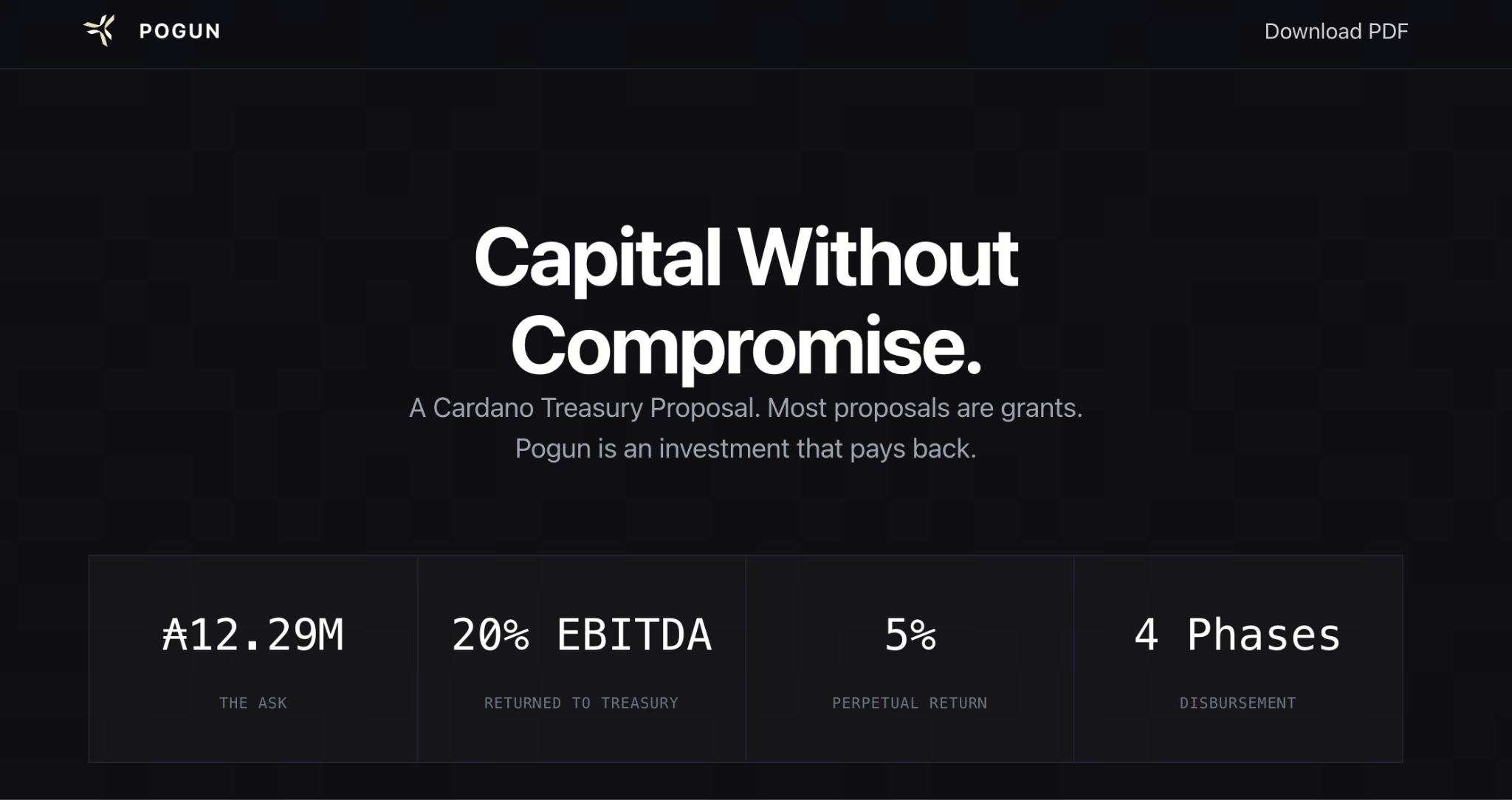
Another proposal, Pogun, is centered on Bitcoin—viewing BTC as a high-value yet underutilized asset—and aims to position Cardano as its return and credit layer. This reflects Cardano’s intent to attract greater cross-chain capital flows.
What Is IOG?
Input Output Global (IOG) is the primary development organization behind Cardano, previously known as IOHK.
Key attributes include:
-
Leveraging academic research and peer review in technology development
-
Focusing on decentralized systems and blockchain infrastructure
-
Sustained commitment to building the Cardano ecosystem
Summary
Cardano’s 2026 development proposals illustrate a comprehensive upgrade across technology, developer experience, and economic models. As the core scalability solution, Leios will be pivotal in determining Cardano’s capacity to support large-scale applications and future user growth.







