Cash Cat (CASHCAT) is best described as a “culture narrative-driven” meme token: its value proposition isn’t built on complex product features, but rather on the integration of early brand anecdotes, social media context, and onchain tradability into a cohesive story. The project’s website clearly presents phrases like “Zero utility (as promised in its narrative),” signaling that analysis should focus on narrative consistency, community engagement, onchain liquidity, and risk awareness—not the product roadmap of a functional protocol.
What is Cash Cat (CASHCAT)? How is it connected to Robinhood’s early “Cash Cat” naming?
Cash Cat (CASHCAT) is a meme token project centered on the “Cash Cat” internet meme, deployed on Robinhood Chain. Its core narrative comes from a widely shared historical tidbit on social media: in its early days, Robinhood used “Cash Cat” as a naming direction. The project transforms this history into an “original mascot returns” cultural narrative, and uses its token ticker for onchain symbolization.
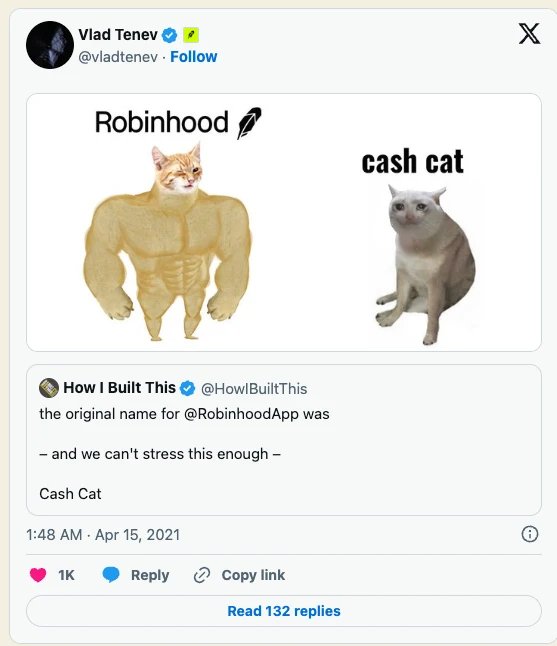
This narrative model prioritizes “shareability” over “feature completeness.” CASHCAT blends brand memory, community meme play, and onchain trading access into a unified storyline, helping users quickly grasp the project’s positioning. For content creation and research, CASHCAT is best classified as a “meme-native cultural asset,” not a DeFi application with a clear protocol revenue model.
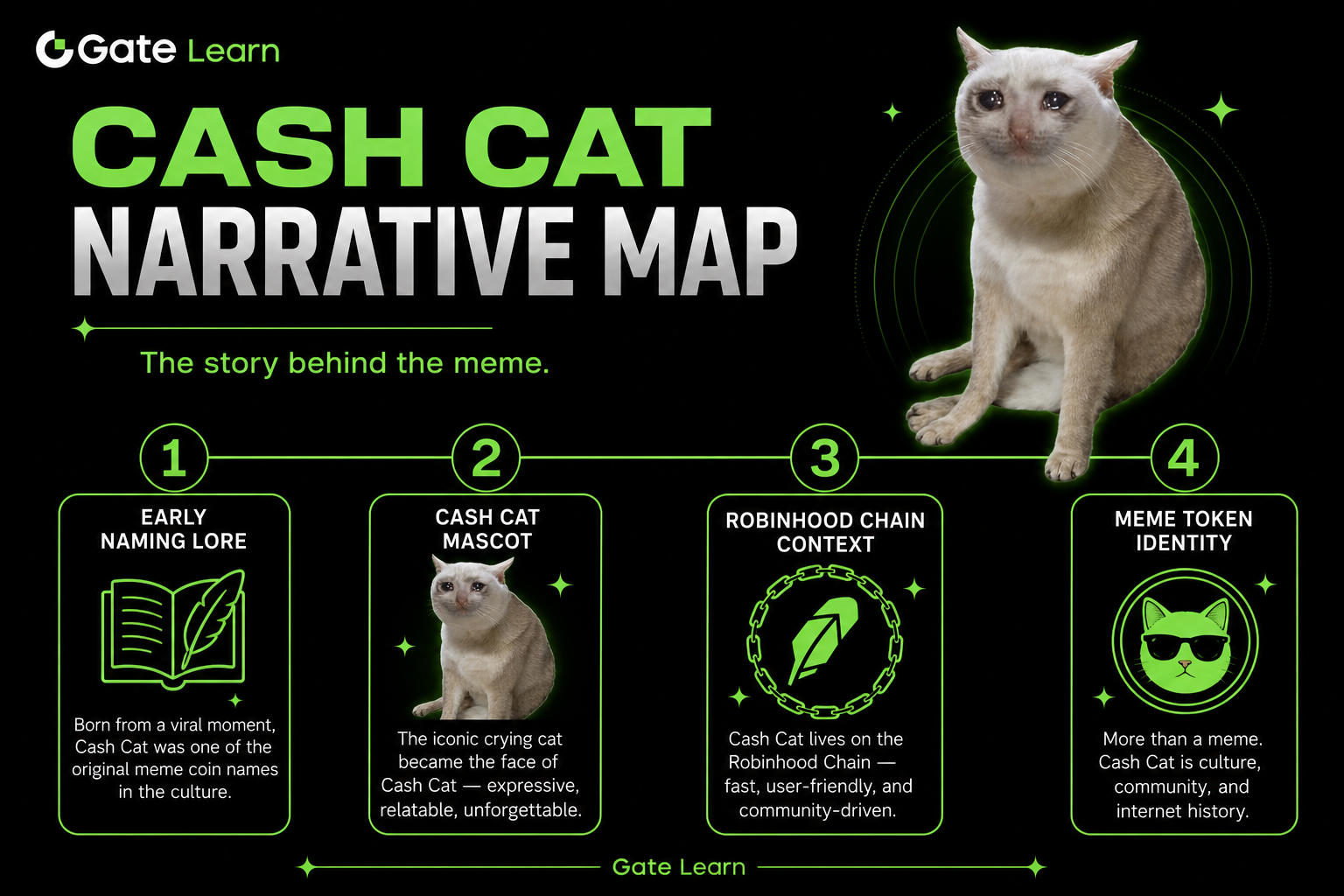
Figure 1. Illustration of Cash Cat’s narrative path from historical naming meme to onchain cultural symbol.
How does CASHCAT operate on Robinhood Chain?
CASHCAT’s operation can be broken down into four layers: network setup, asset bridging, contract interaction, and post-trade review. Users typically start by configuring the Robinhood Chain network, then bridge funds to the target chain, use a DEX to swap via the contract address, and finally check transaction receipts and holdings. For more detailed steps, see CASHCAT Onchain Trading Path.
| Layer |
Key Action |
Main Checkpoints |
| Network Layer |
Configure Robinhood Chain |
RPC, Chain ID, and wallet network alignment |
| Asset Layer |
Bridge funds to target chain |
Trusted bridge source, confirmation of arrival |
| Trading Layer |
Paste contract and swap |
Contract address verification, slippage settings |
| Review Layer |
Check trades and holdings |
Transaction hash, token display, approval status |
This process shows that CASHCAT’s “participation potential” depends on standard onchain operational skills. For new participants, the best way to avoid mistakes is not frequent trading, but establishing habits of “contract verification + traceable fund flows + minimal approvals.”
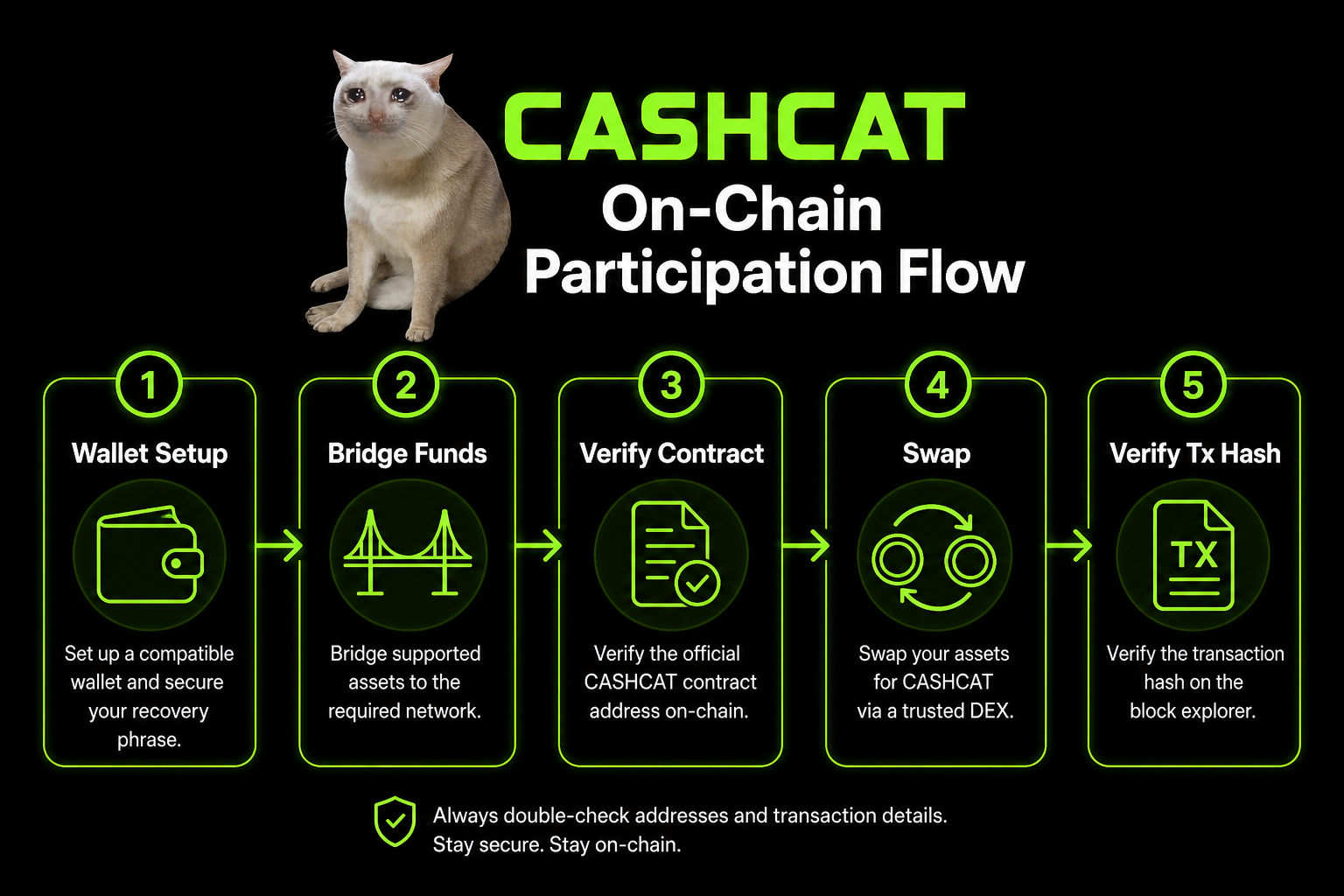
Figure 2. CASHCAT participation flow on Robinhood Chain: network setup, bridging, contract verification, and trade review.
What key signals does CASHCAT’s tokenomics reveal?
The official website discloses parameters including a total supply of 1B, a 0/0 tax rate, and 100% in pool (with LP burned). In the meme space, these are often used to communicate “fair launch” and “low-friction trading.” While these parameters don’t guarantee long-term project quality, they can serve as a starting point for structured assessment. For a detailed breakdown, see CASHCAT Tokenomics Explained.
| Parameter |
Official Expression |
Analytical Perspective |
| Total Supply |
1B |
Focus on circulation pace and holding distribution |
| Tax |
0/0 |
Low trading friction, but not a substitute for risk control |
| LP Status |
100% in pool / LP burned |
Actual status requires verification with onchain data |
For non-technical readers, the most practical approach is to treat tokenomics as an “information verification gateway”: first check onchain verifiable data, then judge whether the parameter matches community narrative. If parameters don’t match onchain behavior, rely on verifiable facts.
CASHCAT’s “Roadmeow” uses a classic meme project style, emphasizing humor, viral self-propagation, and community content co-creation. It’s not a traditional product development milestone, but a “narrative stage indicator”: first spark discussion, then amplify it, and ultimately help the community build lasting symbolic memory. For more on communication mechanisms, see Roadmeow and Community Communication Mechanisms.
This roadmap lowers the barrier to understanding. Unlike technical roadmaps, meme roadmaps act as content operation schedules: each stage corresponds to a topic template, social media material, and participation method. Researchers should focus on “communication density” and “community collaboration efficiency” as key metrics.
How does CASHCAT differ from other meme coins?
CASHCAT distinguishes itself through its “historical narrative anchor + Robinhood Chain context.” While many meme coins rely on visual symbols or short-term trends, CASHCAT uses historical naming stories as its long-term narrative axis, improving content consistency. For a systematic comparison, see CASHCAT vs Typical Meme Coins.
| Dimension |
CASHCAT |
Common Meme Coin |
| Narrative Anchor |
Early “Cash Cat” naming anecdote |
Character image or trending event |
| Chain Context |
Native Robinhood Chain narrative |
Multi-chain decentralized issuance is common |
| Project Expression |
Clearly emphasizes meme attributes |
Some stress utility, others are purely community-driven |
| Community Content Template |
Unified “cat + lore + chain” template |
Template varies by project |
These differences aren’t about superiority, but audience and communication paths. If users care about functional delivery and protocol revenue, meme projects aren’t a match; if they value cultural consensus and communication efficiency, CASHCAT fits a clearer evaluation framework.
What risks and limitations should you understand before participating in CASHCAT?
CASHCAT’s risks are typical of meme assets: high volatility, emotion-driven, and liquidity that can change rapidly. There are also information risks, including fake contracts, impersonated social media accounts, and unverified “insider news.” Onchain trading involves approvals and bridging, and any misstep can lead to asset loss. For a systematic risk overview, see CASHCAT Risks and Limitations and CASHCAT Participation Flow.
Limitations are clear: the project’s narrative doesn’t stress functional utility, so it’s not suitable for “protocol cash flow” evaluation. For content consumers, it’s best seen as a “high-risk cultural asset sample,” with position discipline, path verification, and tiered information management to reduce decision noise.
Summary
Cash Cat (CASHCAT) is a classic “story-first” meme token: it fuses internet history, onchain tradability, and community content co-creation into a unified narrative. The key isn’t technical complexity, but distinguishing “verifiable facts” from “marketing rhetoric.” Building a minimal research framework around contract verification, trading process, parameter interpretation, and risk boundaries can greatly improve efficiency when analyzing meme projects.
FAQ
Is CASHCAT officially related to Robinhood?
CASHCAT’s official FAQ clearly states it’s not an official Robinhood project; its narrative is closer to “community fan fiction with a ticker.” Any claims of official endorsement should be treated with caution. Always base judgments on publicly verifiable information, not secondary social media sources.
How do you verify CASHCAT’s contract address?
Start with the contract address from official project channels, then check token info and transaction records on chain explorers. If addresses differ across sources, stop trading and verify. Never rely solely on screenshots or group messages for contract text.
Does a 0/0 tax rate mean low risk?
A 0/0 tax rate only means simplified transaction tax structure—it doesn’t reduce price volatility risk. Meme asset prices are highly influenced by emotions, liquidity, and narrative heat. Risk assessment should consider holding distribution, trading depth, and market sentiment.
What does LP burned mean for regular participants?
LP burned is often used to indicate restricted control over the liquidity pool, but its true safety implications depend on onchain status and contract permissions. It alleviates some “direct pool withdrawal” concerns, but doesn’t cover all risks. Always verify both contract and liquidity before trading.
What’s the most important safety step before participating in CASHCAT?
Path verification is essential: confirm official links, check contracts, review approvals, and verify transaction hashes. Execute steps individually and avoid large one-off trades. For highly volatile meme assets, disciplined processes matter more than price prediction.