The measure is designed to clarify how crypto assets, token offerings, trading platforms, intermediaries, custody services, and decentralized finance should be regulated, with its central objective being to define the respective responsibilities of the Securities and Exchange Commission, or SEC, and the Commodity Futures Trading Commission, or CFTC.
For sophisticated retail traders, crypto project teams, exchanges, custodians, institutional investors, fintech operators, and others exposed to U.S. digital asset rules, that split matters because existing financial law was not written for blockchain networks whose tokens can change function over time. A token may initially be sold to finance development, later be used within a functioning network, and eventually trade independently of the original development team, making it difficult to determine whether the token, the original fundraising transaction, or its secondary-market trading should fall under securities or commodities law.
This article tracks the bill’s status and explains the practical market-structure questions around asset classification, SEC and CFTC authority, exchange and intermediary rules, token offerings, custody, DeFi treatment, stablecoins, investor protections, and what the proposal could mean for compliance, market access, and institutional participation in the U.S. crypto market. The CLARITY Act attempts to address that uncertainty by separating the legal treatment of a token from the transaction through which it is offered, while also proposing disclosure requirements, registration regimes, customer-asset protections, anti-money-laundering obligations, and tailored rules for software developers and DeFi services.
As of July 23, 2026, the CLARITY Act has not become law. The House of Representatives passed H.R. 3633 by a vote of 294–134 on July 17, 2025. The Senate Banking Committee advanced a substantially revised version by a 15–9 vote on May 14, 2026, sending it toward consideration by the full Senate. Additional language was still being negotiated in July 2026, meaning its final provisions remained unsettled.
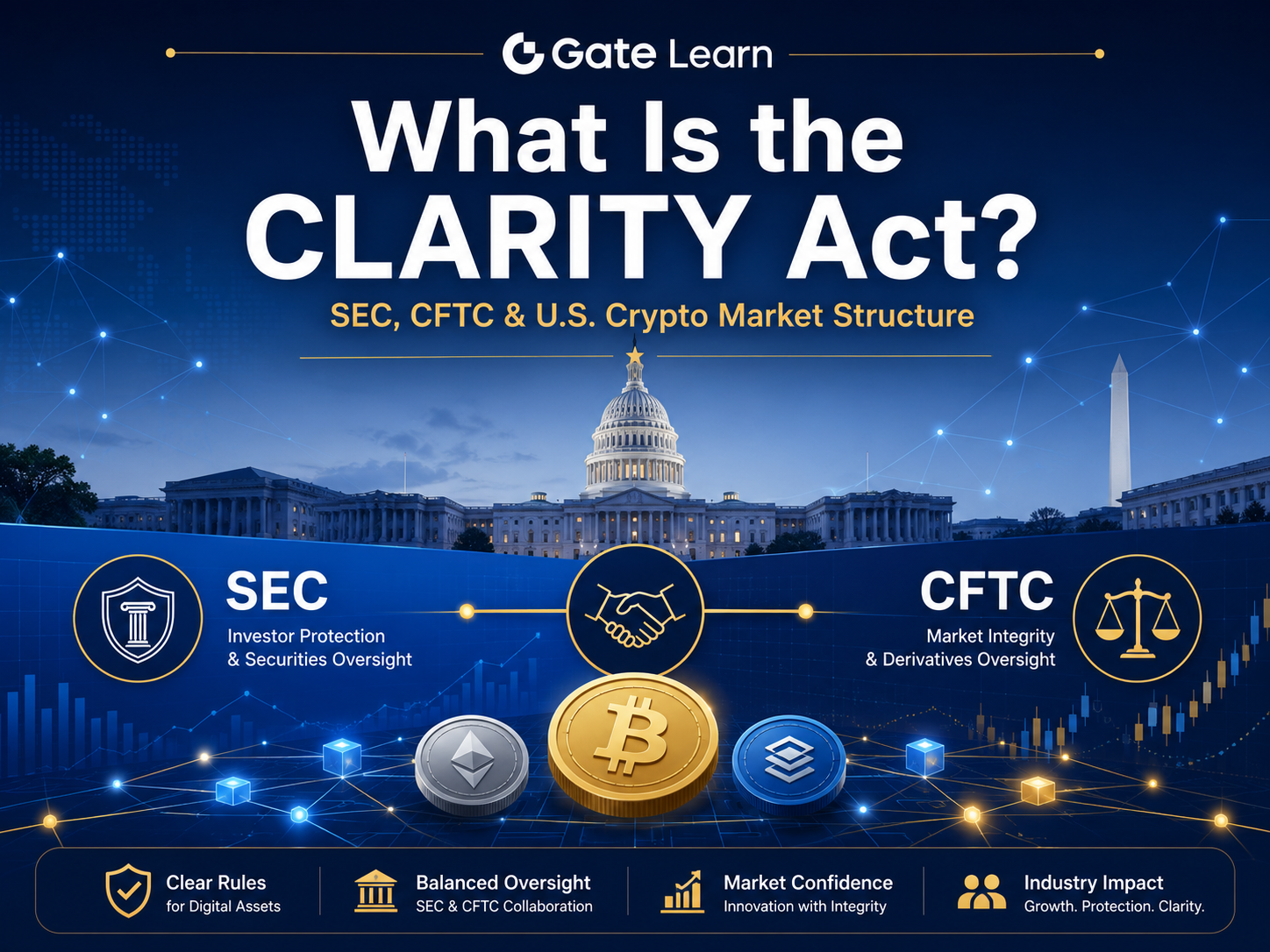
What Is the CLARITY Act, and Why Does the United States Need Digital Asset Regulation?
The CLARITY Act is a market structure bill rather than legislation focused on one cryptocurrency, one exchange, or one type of token. It aims to establish rules governing how digital assets are issued, traded, intermediated, and supervised across the U.S. financial system.
The current framework relies on securities laws, commodities laws, banking rules, money-transmission requirements, sanctions regulations, and anti-money-laundering obligations that apply differently depending on the activity. Crypto projects have therefore often struggled to determine whether a network token is a security, a commodity, or another category of asset.
This uncertainty has encouraged regulators and courts to resolve classification questions through enforcement actions and litigation. Supporters of the CLARITY Act argue that statutory definitions and registration pathways would allow companies and investors to identify applicable rules before launching or trading an asset. Critics argue that new categories or exemptions could reduce protections that would otherwise apply under securities law.
The Senate Banking Committee’s 2026 text seeks to create a tailored disclosure regime for certain network tokens while preserving anti-fraud powers and securities regulation for assets and transactions that remain securities.
What Is the Current Status of the CLARITY Act?
The CLARITY Act remains proposed legislation and is not yet legally binding. The House passed its version in July 2025, but the Senate developed its own revised approach rather than adopting the House bill without changes.
The Senate Banking Committee approved its substitute text in May 2026. That version addresses securities regulation, token disclosures, banking, financial crime, investor protections, DeFi, and related matters. Separately, the Senate Agriculture Committee advanced the Digital Commodity Intermediaries Act, which focuses on CFTC jurisdiction over digital commodity spot markets and intermediaries.
| Legislative milestone |
Status |
| May 29, 2025 |
H.R. 3633 introduced in the House |
| July 17, 2025 |
House passed the bill 294–134 |
| January 29, 2026 |
Senate Agriculture Committee advanced companion digital commodity legislation |
| May 14, 2026 |
Senate Banking Committee advanced revised CLARITY Act text 15–9 |
| July 2026 |
Negotiations remained focused on ethics provisions and securing bipartisan support |
| Current status |
Not enacted; Senate and bicameral action still required |
For the proposal to become law, the full Senate would need to approve legislation, the House and Senate would need to reconcile any differences, and the final text would need presidential approval. Regulators would then need to issue implementing rules, so enactment would not necessarily mean every provision would apply immediately.
How Would the CLARITY Act Divide SEC and CFTC Authority?
The CLARITY Act generally preserves SEC authority over securities, investment contracts, securities offerings, and certain token fundraising transactions, with the SEC maintaining regulatory authority over investment contracts under the bill. It would give the CFTC clearer authority over digital commodity spot markets and intermediaries that facilitate those transactions, with CFTC oversight covering digital commodities under the proposal.
The Senate Banking Committee text uses the concept of an “ancillary asset” for certain network tokens whose value remains dependent on the entrepreneurial or managerial efforts of an originator. Certain offers and sales involving these investment contract assets would remain subject to sec oversight through disclosure and resale rules, while the tokens themselves could be treated as commodities for relevant secondary-market purposes.
The Senate Agriculture Committee’s companion framework would authorize the CFTC to register and supervise digital commodity exchanges, brokers, and dealers. It would also establish procedures for listing assets, protecting customer property, monitoring markets, and addressing manipulation.
| Regulatory area |
SEC role |
CFTC role |
| Securities and investment contracts |
Primary regulator |
Generally outside its securities mandate |
| Token fundraising transactions |
Oversees qualifying offerings and disclosures |
May regulate later commodity-market activity |
| Ancillary assets |
Receives disclosures and enforces resale restrictions |
Oversees eligible spot-market trading |
| Digital commodity spot markets |
Limited or coordinated role |
Primary market regulator under the proposal |
| Trading platforms |
Regulates securities platforms |
Registers digital commodity exchanges |
| Brokers and dealers |
Oversees securities intermediaries |
Oversees digital commodity intermediaries |
| Fraud and manipulation |
Retains securities-law enforcement |
Retains commodities-market enforcement |
The division would not assign every token permanently to one agency. Classification would depend on the asset’s legal rights, offering structure, network development, issuer involvement, and the activity being regulated, which could leave some questions of regulatory authority involving both the SEC and the CFTC.
How Would Digital Commodities, Digital Asset Securities, and Ancillary Assets Be Classified?
The proposal distinguishes between the asset itself and the contract or transaction through which it is sold, and the CLARITY Act classifies digital assets into three categories in this framework. A token could be offered through an investment contract during an early fundraising round without necessarily remaining a security in every future transaction.
An ancillary asset under the Senate text is broadly a network token whose value depends on the continuing entrepreneurial or managerial efforts of an originator. The originator would need to provide initial and semiannual disclosures covering material project information, risks, development progress, ownership, and other matters.
Digital asset securities would continue to include tokens that are themselves securities or represent conventional financial rights such as equity, debt, profit participation, or claims on an enterprise. The CLARITY Act does not eliminate securities law; it attempts to create a separate pathway for network assets, while also distinguishing investment contract assets from digital asset securities and digital commodities when applying the broader legal framework.
The Senate approach therefore focuses less on assigning one permanent label to every token and more on regulating the offering, the originator’s continuing role, and the market in which the token trades, with a mature blockchain test allowing classification to change as a network develops.
How Would the Law Determine Whether a Blockchain Is Sufficiently Decentralized?
The House version relied heavily on the concept of a “mature blockchain system,” reflected in the House bill’s Mature Blockchain Test. That approach considered factors such as token concentration, governance control, open-source code, operational independence, and whether a single person or coordinated group retained decisive influence.
The Senate text shifts more attention toward whether an originator’s essential entrepreneurial or managerial efforts are still continuing. An originator or intermediary may seek to certify that the ongoing disclosure regime should end, while the SEC may challenge that conclusion based on evidence.
The underlying principle is that regulation may change as a network evolves. A project that initially depends on a core development team may require stronger issuer-style disclosures, while a network that later functions without that team may be treated more like decentralized protocols or a decentralized commodity system.
Decentralization would not be measured only by the number of nodes or wallet addresses. Regulators could examine governance votes, upgrade keys, treasury control, token concentration, emergency powers, front-end control, relationships among affiliated entities, whether any party retains centralized control, and how voting power is distributed.
What Rules Would Apply to Crypto Exchanges, Brokers, Dealers, and Custodians?
Digital commodity exchanges, brokers, and dealers serving the U.S. market would generally need to register with the CFTC under the proposed commodity-market framework, and registered venues could list eligible digital commodities on a national basis under that framework. Registration would bring obligations relating to customer property, recordkeeping, business conduct, conflicts of interest, market surveillance, cybersecurity, operational resilience, and reporting requirements.
The Senate Banking Committee proposal would also apply Bank Secrecy Act requirements to covered digital asset brokers, dealers, and exchanges. These obligations include anti-money-laundering programs, customer identification, sanctions compliance, suspicious activity monitoring, and reporting.
Customer asset segregation would be a major investor-protection requirement. Platforms would need to distinguish customer assets from company assets, reducing the risk that user property could be treated as part of the firm’s estate or used to satisfy corporate creditors during insolvency.
Clearer registration categories may reduce uncertainty for compliant firms but would also raise operating costs. High compliance costs may favor larger exchanges over smaller platforms, as smaller businesses could face heavier legal, technology, capital, and custody burdens while established financial institutions may find it easier to enter the market once federal rules are defined.
How Would the CLARITY Act Affect Token Offerings and Project Fundraising?
The Senate proposal creates a tailored fundraising exemption commonly referred to as Regulation Crypto. It is intended to provide qualifying network projects with a pathway between a full public securities registration and an unregulated token sale.
Projects relying on this pathway would still need to submit disclosures to the SEC, with those requirements aimed specifically at token issuers using the fundraising pathway, and comply with resale restrictions, anti-evasion provisions, and liability rules. Official materials describe initial and semiannual reporting for qualifying ancillary-asset transactions.
This model could give U.S. crypto projects a more predictable way to finance network development. A team could raise capital under a specialized framework while providing investors with information about the technology, token distribution, governance, risks, and the originator’s continuing role.
The exemption would not protect fraud, misleading statements, insider dealing, market manipulation, or structures designed to evade offering limits, and it would not override federal securities laws for deceptive or evasive offerings. Legal certainty would therefore come with formal compliance and ongoing disclosure obligations.
How Would the CLARITY Act Affect DeFi and Non-Custodial Developers?
The proposal attempts to distinguish software development from financial intermediation. Developers who publish, maintain, or contribute to software without controlling customer funds may receive protection from being automatically treated as regulated financial intermediaries. The DeFi protections also include a Blockchain Regulatory Certainty Act provision.
The Senate Banking Committee majority describes its approach as regulating control rather than code. It says the bill protects lawful software development and self-custody while setting clear rules to distinguish code publication from regulated intermediation, while allowing regulators to supervise centralized intermediaries that interact with DeFi systems or exercise practical control over users or transactions.
A nominally decentralized service may still face regulation if an identifiable operator controls the front end, upgrade process, customer assets, fees, transaction approval, or other essential functions. The legal question would therefore depend on practical control rather than whether the product uses smart contracts.
The DeFi provisions remain controversial. Senate Banking Committee minority staff argue that some exemptions could allow profitable service providers, mixers, or other influential participants to avoid basic illicit-finance obligations, and that unclear treatment of some providers could still pose risks. The majority argues that the bill targets misconduct without treating independent code publication as a regulated money-transmission business.
How Would the Act Address Stablecoins, Rewards, and Payment Activity?
The CLARITY Act is primarily a market structure proposal rather than a complete stablecoin issuance framework. While broader stablecoin legislation remains separate, the clarity act addresses stablecoin-related market use alongside rules for digital asset trading venues and intermediaries.
However, the CLARITY Act would still affect how stablecoins are used by trading platforms, intermediaries, DeFi services, and regulated digital asset markets. Its anti-money-laundering, sanctions, custody, and market-conduct provisions could apply to businesses handling stablecoin transactions.
Stablecoin rewards have also been part of the legislative debate. The bill would prohibit passive stablecoin yield while permitting incentives tied to transaction activity, reflecting how competitors frame the current push for regulatory clarity around rewards.
Because the Senate text has continued to change, restrictions on stablecoin rewards should not be presented as final. The applicable rules would depend on the enacted text and subsequent agency rulemaking.
What Investor Protections Would the CLARITY Act Introduce?
The investor-protection framework includes disclosure duties, insider resale restrictions, customer-asset protections, financial education, anti-fraud enforcement, and market surveillance for consumer protection. Originators would need to disclose information that helps users understand a network’s development, control structure, token economics, and material risks.
Resale restrictions are intended to reduce the ability of insiders and affiliated persons to sell large positions rapidly or benefit from information unavailable to the public. Anti-evasion provisions would allow regulators to challenge arrangements designed primarily to avoid the law’s requirements.
Registered intermediaries would also face customer-property, recordkeeping, risk-management, and reporting obligations. SEC and CFTC anti-fraud powers and anti-manipulation authority would remain available even where the underlying token is treated as a commodity.
Critics contend that the ancillary-asset regime could move some offerings out of the full securities-disclosure system and into a lighter framework, which they say could weaken investor protections. Supporters argue that it preserves essential disclosure and liability rules while adapting them to blockchain networks.
What Would the CLARITY Act Mean for Users, Crypto Companies, and Institutional Investors?
For retail users and other market participants, the proposal could make it easier to distinguish federally regulated platforms from unregistered services as the bill aims to reduce regulatory uncertainty and promote institutional adoption in a crypto market worth about $2.32 trillion. Customers could receive more standardized disclosures, stronger asset-segregation rules, clearer complaint mechanisms, and more consistent fraud warnings.
These protections may be accompanied by stricter identity verification, transaction monitoring, sanctions screening, and tax reporting tied to broader crypto activity. Greater regulatory clarity would therefore not necessarily mean less compliance for users.
For token projects, the bill could provide a specialized route for fundraising and network development. Teams would gain a clearer framework for issuance and secondary trading but would also face periodic disclosures, insider restrictions, and formal compliance responsibilities.
For exchanges and custodians, federal registration could reduce uncertainty while increasing capital, surveillance, custody, cybersecurity, and reporting costs. Firms that already maintain substantial compliance systems may be better positioned than smaller or offshore competitors. Clearer rules could also make traditional financial institutions, including banks and credit unions, more willing to participate.
Institutional investors could benefit from clearer asset classification, custody standards, market surveillance, and legal accountability. Citadel Securities' $400 million investment in Crypto.com in July 2026 is one example of growing interest. Whether institutions increase their exposure would still depend on liquidity, accounting treatment, capital rules, asset quality, and risk-adjusted returns, but regulatory certainty can help attract institutional capital.
What Are the Main Criticisms and Unresolved Issues?
One major dispute concerns whether the bill weakens securities-law protections. Supporters argue that securities remain securities and that ancillary-asset offerings would still require SEC disclosures and resale controls. Critics argue that some fundraising transactions could receive less comprehensive oversight than comparable securities offerings and could clash with existing securities regulations by shifting activity into a lighter regime.
A second dispute concerns DeFi and illicit finance. The majority says the legislation applies AML and sanctions requirements to centralized intermediaries while protecting legitimate software development. Minority staff and law-enforcement groups argue that some definitions and exclusions may leave mixers, service providers, or influential DeFi participants outside effective supervision.
A third issue involves potential conflicts of interest involving government officials and cryptocurrency investments. New ethics language released in July 2026 triggered criticism from Senate Banking Committee minority staff, who argued that the proposed restrictions contained enforcement and coverage gaps. Those claims represent the minority’s analysis and remain part of an active political dispute rather than settled legal conclusions.
The Senate Banking and Agriculture Committees also oversee different parts of the financial system, so their proposals must be coordinated with federal regulators. Any Senate bill that differs from the House version would then need to be reconciled before enactment.
Summary
The CLARITY Act represents a broad effort to reshape digital asset regulation and the crypto industry by creating a comprehensive U.S. market structure for digital assets. Its central objective is to clarify the division of authority between the SEC and CFTC while establishing rules for token fundraising, digital commodity trading, intermediaries, custody, DeFi, and investor protection.
The proposal distinguishes between a token and the transaction through which it is offered. The framework would give the SEC oversight over securities and qualifying ancillary-asset fundraising, while expanding CFTC oversight of digital commodities, spot markets, and registered intermediaries.
The legislation could improve legal certainty for projects and financial institutions, but it would also introduce disclosure, registration, customer-asset, AML, and market-conduct obligations, with new rules that could affect crypto markets and broader digital asset activities. Its treatment of ancillary assets, DeFi, stablecoin rewards, and political conflicts remains contested.
As of July 23, 2026, the CLARITY Act is not law. It has passed the House and advanced through the Senate Banking Committee, and that progress reflects bipartisan momentum, but enactment still depends on further Senate action, reconciliation of legislative texts, presidential approval, and agency implementation.
FAQ
How Is the CLARITY Act Different From the GENIUS Act?
The CLARITY Act focuses on digital asset classification, trading markets, intermediaries, and SEC-CFTC jurisdiction. The GENIUS Act focuses primarily on payment stablecoin issuers, reserves, redemption, and licensing.
Would the CLARITY Act Classify Bitcoin as a Security?
The bill is not primarily designed to reclassify Bitcoin as a security. Current SEC views have often treated the vast majority of tokens as securities under existing law, even though Bitcoin is generally analyzed differently. Its more difficult classification questions involve network tokens, fundraising transactions, ancillary assets, and secondary-market activity.
Would Every Token Be Regulated by the CFTC?
No. Tokens that constitute securities or represent equity, debt, profit rights, or other traditional securities interests would remain under SEC jurisdiction. CFTC authority would primarily cover qualifying digital commodities and their markets.
Yes. An offshore platform serving U.S. users or accessing the U.S. financial system could face registration, sanctions, AML, or market-access requirements, depending on its activities.
Would the CLARITY Act Ban Self-Custodial Wallets?
The current Senate framework does not ban self-custody. It includes protections for users holding their own assets and for developers who do not control customer funds, while preserving enforcement against fraud and illicit activity.
When Could the CLARITY Act Take Effect?
There is no confirmed effective date, and timing also depends on ongoing negotiations over ethics provisions and bipartisan support. The proposal must complete the legislative process, while many operational requirements would likely depend on later SEC, CFTC, and Treasury rulemaking, and the midterm elections could also affect timing.







