The role of compliant trading platforms, stablecoin circulation, and on-chain infrastructure is becoming increasingly important in the digital asset industry. As one of the few pure crypto trading platforms publicly listed in the US, Coinbase’s financial disclosures and regulatory interactions are key indicators of the institutionalization process in the American crypto sector.
From the Gate Stocks perspective, COIN is a standalone US stock ticker, distinct from comprehensive brokers such as Robinhood Markets, Inc. (NASDAQ: HOOD). When searching, placing orders, or reviewing positions, always confirm the ticker and company entity first.
What Is Coinbase (COIN)? What Role Does the Listed Entity Play in the Crypto Industry?
Coinbase Global, Inc. is a major US-based, compliance-focused digital asset trading platform, listed on NASDAQ under the ticker COIN. The company serves individuals and institutions with buying, selling, custody, staking, and related financial infrastructure, and operates Layer 2 networks like Base to expand its on-chain application ecosystem.
Coinbase fulfills three primary functions in the crypto industry: retail trading gateway, institutional custody and Prime services provider, and ecosystem participant for USDC stablecoin and developer APIs.
| Dimension |
Coinbase Global, Inc. (COIN) |
| Listing Market |
NASDAQ |
| Stock Ticker |
COIN |
| Headquarters |
Registered in Delaware, operating headquarters in San Francisco |
| Core Positioning |
Compliance-oriented digital asset trading platform |
| Main Users |
Retail traders, institutional clients, developers |
| Key Products |
Spot trading, Advanced Trade, custody, Prime, Coinbase One, Base |
The table above summarizes COIN’s basic profile. On trading pages, in financial reports, and in industry comparisons, Coinbase should be distinguished from comprehensive brokers, Bitcoin holding companies, and decentralized exchanges.
Where Is COIN Stock Traded? Ticker, Market, and Investor Relations Access
COIN is listed on NASDAQ under the ticker COIN. The investor relations page provides access to financial reports, governance documents, and event summaries. Buy COIN on Gate covers account setup, ticker search, order placement, and fee verification.
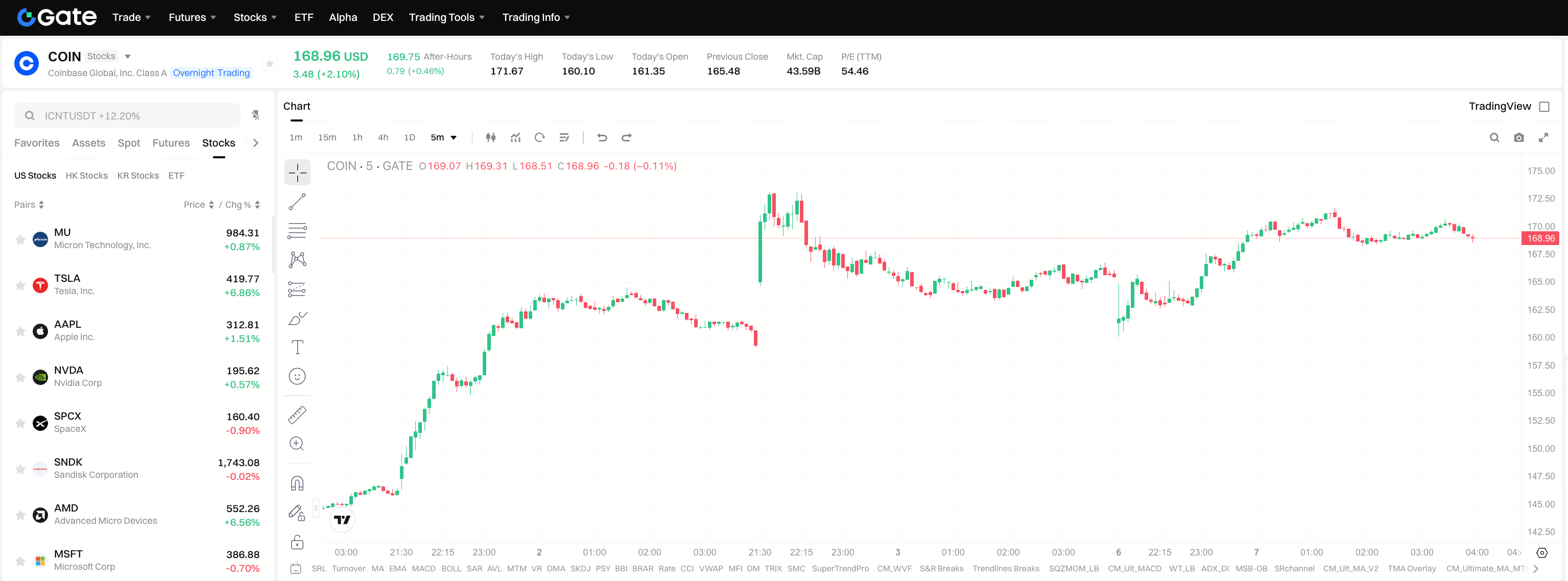
When viewing COIN on the Gate Stocks page, confirm that the page displays Coinbase Global, Inc. and NASDAQ information. The trading page resolves ticker identification and order execution; fundamental analysis should still consider revenue composition and regulatory environment.
What Is Coinbase’s Business Structure? How Are Its Segments Organized?
Coinbase’s business is structured into four layers: retail trading, institutional services, subscriptions and ecosystem products, stablecoin and developer infrastructure. Coinbase Stock Business Model requires analysis of each segment’s revenue contribution, user activity, and fee structure. The retail layer focuses on individual trading and Advanced Trade; the institutional layer covers custody, Prime brokerage, and OTC trading; the subscription layer includes Coinbase One and staking services; the ecosystem layer connects USDC, Base chain, and API tools.
| Segment |
Core Content |
Key Metrics |
| Retail Trading |
Spot trading, Advanced Trade |
Trading volume, fee tiers, user activity |
| Institutional Services |
Custody, Prime, OTC trading |
Custody AUM, institutional client count |
| Subscription & Ecosystem |
Coinbase One, staking, Earn |
Number of subscribers, service fee revenue |
| Stablecoin & Developer |
USDC, Base, API |
Circulation size, on-chain activity, developer adoption |
Retail trading drives short-term revenue flexibility, institutional custody anchors asset scale, subscription services smooth out cyclical fluctuations, and stablecoin and Base chain expand on-chain ecosystem exposure.
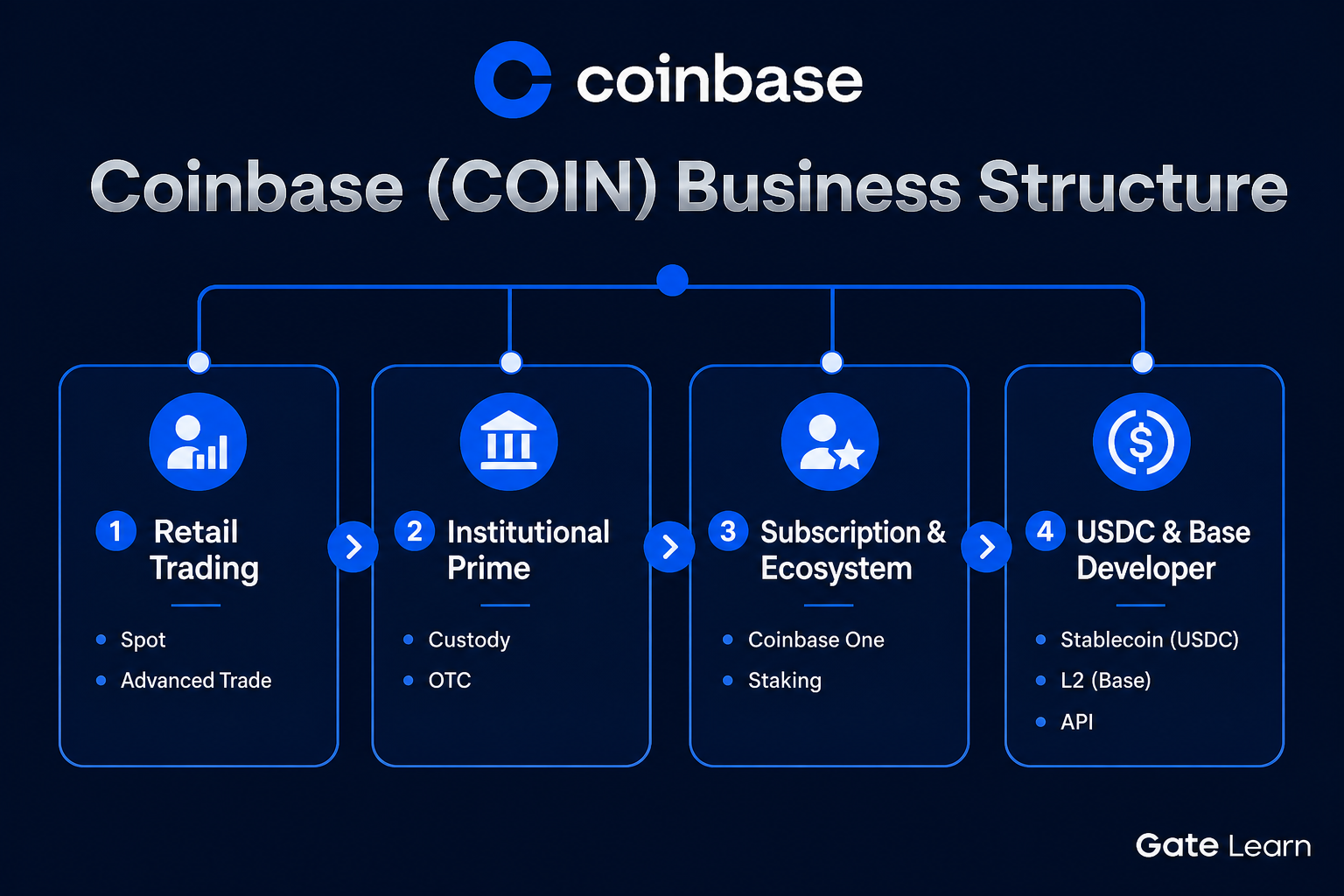 Figure 1. Coinbase business structure overview: Four major segments—retail trading, institutional Prime, subscription services, and USDC/Base developer ecosystem.
How Does Coinbase Generate Revenue? Trading Income vs Subscription Services
Coinbase’s revenue is divided into two primary categories: transaction revenue and subscription and services revenue. Transaction revenue is earned from fees collected on retail and institutional digital asset trades, directly tied to market trading volume and fee structure. Subscription and services revenue includes Coinbase One membership fees, blockchain rewards sharing, custody service fees, stablecoin-related income, and developer platform fees.
Transaction revenue is highly volatile, while subscription and services revenue provides a more stable, recurring stream. When analyzing COIN, evaluate the scale and gross margin differences between these two revenue sources.
How Do USDC, Coinbase One, and Institutional Custody Affect COIN’s Business?
USDC is issued by Circle, with Coinbase and Circle jointly managing the stablecoin ecosystem and sharing revenue from USDC circulation. Coinbase One offers retail users lower fees and priority customer support as subscription benefits.
Institutional custody and Prime serve hedge funds and corporate treasuries, providing tiered custody and OTC liquidity. USDC and Coinbase One examine stablecoin mechanisms, subscription benefits, and institutional custody architecture from three perspectives.
How Does COIN Differ from Fintech Stocks Like Robinhood (HOOD)?
Coinbase Global, Inc. (COIN) and Robinhood Markets, Inc. (NASDAQ: HOOD) both target retail investors, but their business structures and revenue drivers differ significantly. Coinbase centers on digital asset trading and custody, with revenue mainly from crypto trading fees and subscription services. Robinhood focuses on stocks, options, and some crypto trading, relying more on payment for order flow (PFOF), net interest income, and Gold subscriptions.
| Dimension |
Coinbase (COIN) |
Robinhood (HOOD) |
| Core Business |
Digital asset trading platform |
Multi-asset retail brokerage |
| Main Revenue |
Trading fees, subscription services |
PFOF, net interest, Gold subscription |
| Asset Focus |
Primarily crypto |
US stocks, options, some crypto |
| Regulatory Framework |
SEC, state money transmission licenses |
SEC, FINRA brokerage regulation |
| User Profile |
Crypto-native users |
Broad retail traders |
COIN vs HOOD provides a side-by-side comparison across revenue structure, regulatory exposure, and user segmentation. When comparing, first verify whether the target is a pure crypto trading platform or a comprehensive broker, then analyze its cyclical sensitivity and regulatory risk profile.
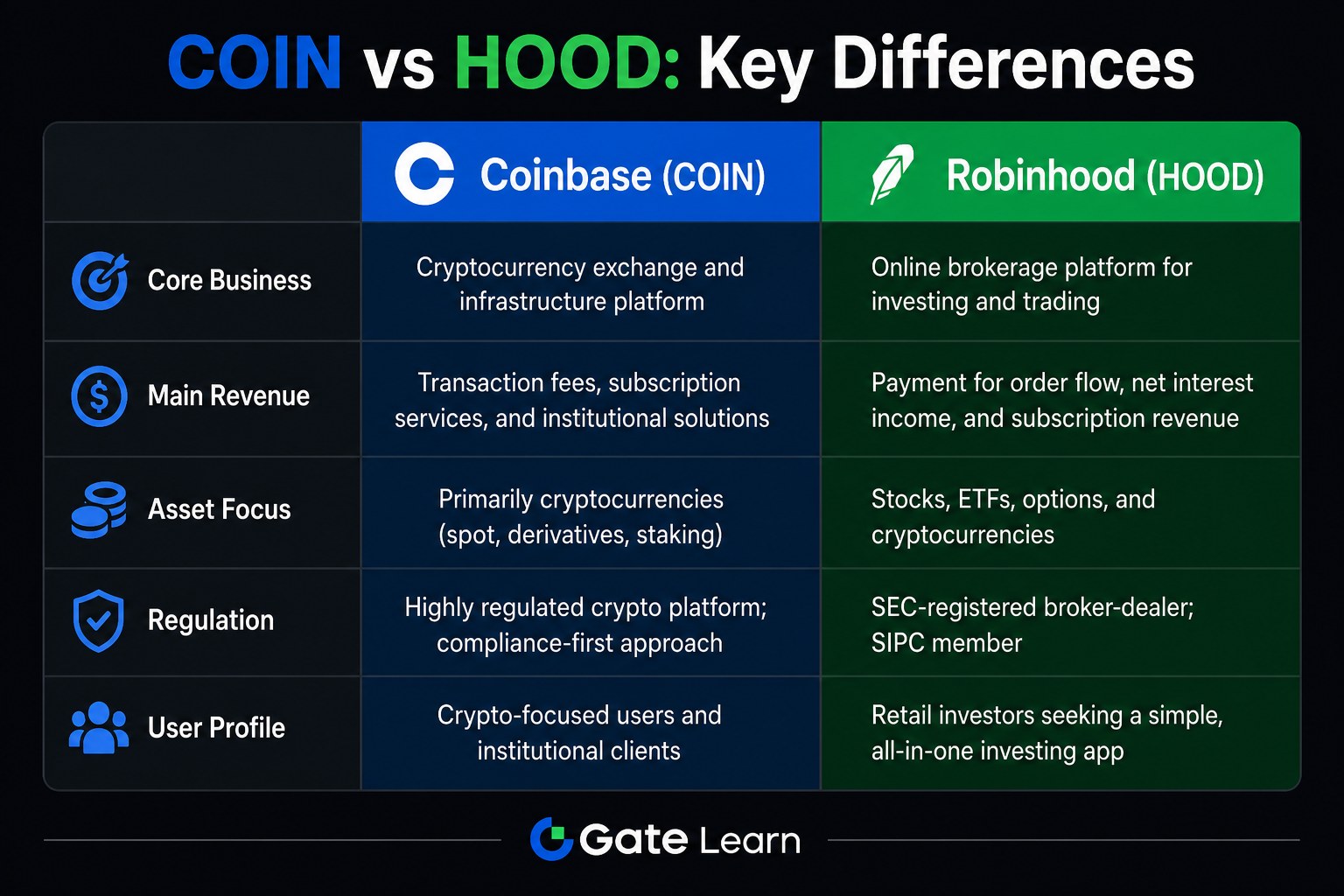
Figure 2. COIN vs HOOD core differences: Comparison across business focus, revenue drivers, asset scope, and regulatory frameworks.
What Are the Advantages and Risks of Holding or Trading COIN Stock?
Advantages: Established brand as a compliant crypto trading platform, institutional custody infrastructure, and diversified income streams (trading, subscription, stablecoin ecosystem). Listed status ensures standardized financial disclosures. Risks: Transaction revenue is highly correlated with crypto market cycles; the SEC’s stance on digital asset regulation remains uncertain; competition is intensifying from other exchanges and decentralized protocols. COIN Regulation and Compliance covers SEC litigation, state licensing, and compliance costs.
Limitations: Revenue structure varies significantly with market cycles. Gate Stocks does not substitute for independent review of financial reports and regulatory documents.
Summary
Coinbase Global, Inc. (COIN) is a major, compliance-driven, publicly listed digital asset trading platform in the US, defined by its multi-layered business structure (retail, institutional, subscription, stablecoin and developer ecosystem), dual-track revenue model (trading income and subscription services), and ongoing compliance with SEC and state regulatory frameworks. When evaluating COIN, distinguish its business structure, differences from fintech stocks like HOOD, Gate Stocks trading procedures, and regulatory risks—avoid labeling it solely as a "crypto exchange."
FAQ
What Is Coinbase Stock?
Coinbase stock refers to the common shares of Coinbase Global, Inc. publicly traded on NASDAQ under the ticker COIN. The company is a leading US digital asset trading platform, offering retail and institutional trading, custody, subscription services, USDC stablecoin ecosystem, and Base chain infrastructure.
What Is the COIN Stock Ticker? Where Is It Listed?
COIN is the stock ticker for Coinbase Global, Inc., listed on NASDAQ. The investor relations page provides financial reports, governance documents, and event summaries. Gate Stocks users can search for COIN and verify the company name.
How Does Coinbase Make Money?
Coinbase’s income is mainly derived from two categories: transaction revenue (fees from retail and institutional digital asset trades) and subscription and services revenue (Coinbase One membership fees, custody service fees, blockchain rewards sharing, stablecoin-related income, and developer platform fees). Transaction revenue fluctuates with market activity, while subscription services provide a more stable, recurring stream.
What Is the Difference Between COIN and HOOD?
COIN is a pure crypto trading platform, with revenue primarily from digital asset trading fees and subscription services. HOOD is a comprehensive retail broker, relying on payment for order flow, net interest, and Gold subscriptions, and focusing on US stocks and options. The two differ in regulatory frameworks, user profiles, and cyclical sensitivity.
What Are the Risks of Coinbase Stock?
Key risks include: transaction revenue is highly correlated with crypto market cycles, uncertainty in the SEC’s regulatory stance on digital assets, intensifying industry competition, rising custody asset security and compliance costs. On the trading side, pay attention to ticker selection errors, order types, and fee rules.
How Do You Buy Coinbase Stock with USDT on Gate?
On Gate Stocks, search for ticker COIN, verify Coinbase Global, Inc. and NASDAQ information. Confirm stock trading permissions and available USDT, select the order type, and after execution, review ticker, quantity, and fees in your holdings and order records.