U.S. electricity demand is being driven by the expansion of cloud computing, AI data centers, electrification, and industrial load growth. Nuclear power, with its 24/7 availability, low carbon footprint, and stable output, positions CEG as a core player in “clean, reliable power” and “AI power infrastructure.” To fully understand the CEG business model, you need to consider generation assets, wholesale markets, long-term power purchase agreements, and retail customers together.
From a Gate Stocks trading perspective, CEG is an independent U.S. stock ticker, distinct from other nuclear, utility, or renewable energy companies. When searching, placing orders, or reviewing positions, users should first verify the ticker, company name, and trading page rules, then cross-reference business structure and risk factors using CEG vs Vistra vs NextEra vs Duke and the CEG risk metrics checklist.
What Is Constellation Energy? Which Public Company Does It Represent?
Constellation Energy Corporation is a leading U.S. power generation and energy services provider, listed on Nasdaq under the ticker CEG. The company is positioned as a major independent power producer and supplier of clean, reliable energy, with core assets spanning nuclear plants and a diversified generation portfolio.
CEG’s operations extend beyond power generation to include electricity sales, retail supply, commercial services, and energy solutions. For most users, CEG is not simply a “nuclear power concept stock,” but a platform company operating across generation assets, market trading, and customer contracts.
| Dimension |
Constellation Energy (CEG) |
| Listing Market |
Nasdaq |
| Stock Ticker |
CEG |
| Core Position |
Major U.S. Independent Power Producer |
| Key Assets |
Nuclear, Natural Gas, Geothermal, Hydropower, Wind, Solar |
| Major Clients |
Commercial, Industrial, Public Sector, Retail Power Customers |
This table outlines CEG’s fundamental profile. In trading interfaces, financial reports, and industry comparisons, CEG should be distinguished from traditional regulated utilities, pure renewables, and natural gas power firms.
Why Is CEG Considered the Leading U.S. Nuclear Power Company?
CEG is recognized as the leading U.S. nuclear power company because nuclear energy is central to its generation portfolio. Nuclear facilities offer high capacity factors, continuous operation, and minimal direct carbon emissions, making them ideal for baseload power supply.
Nuclear’s value lies in more than just its “clean energy” label—it also provides “stable, dispatchable power.” Wind and solar are more susceptible to weather and time-of-day fluctuations, while natural gas units offer flexibility but face fuel price and emission risks. Nuclear delivers stable, long-term power, making it a critical asset for data centers, industrial clients, and grid reliability.
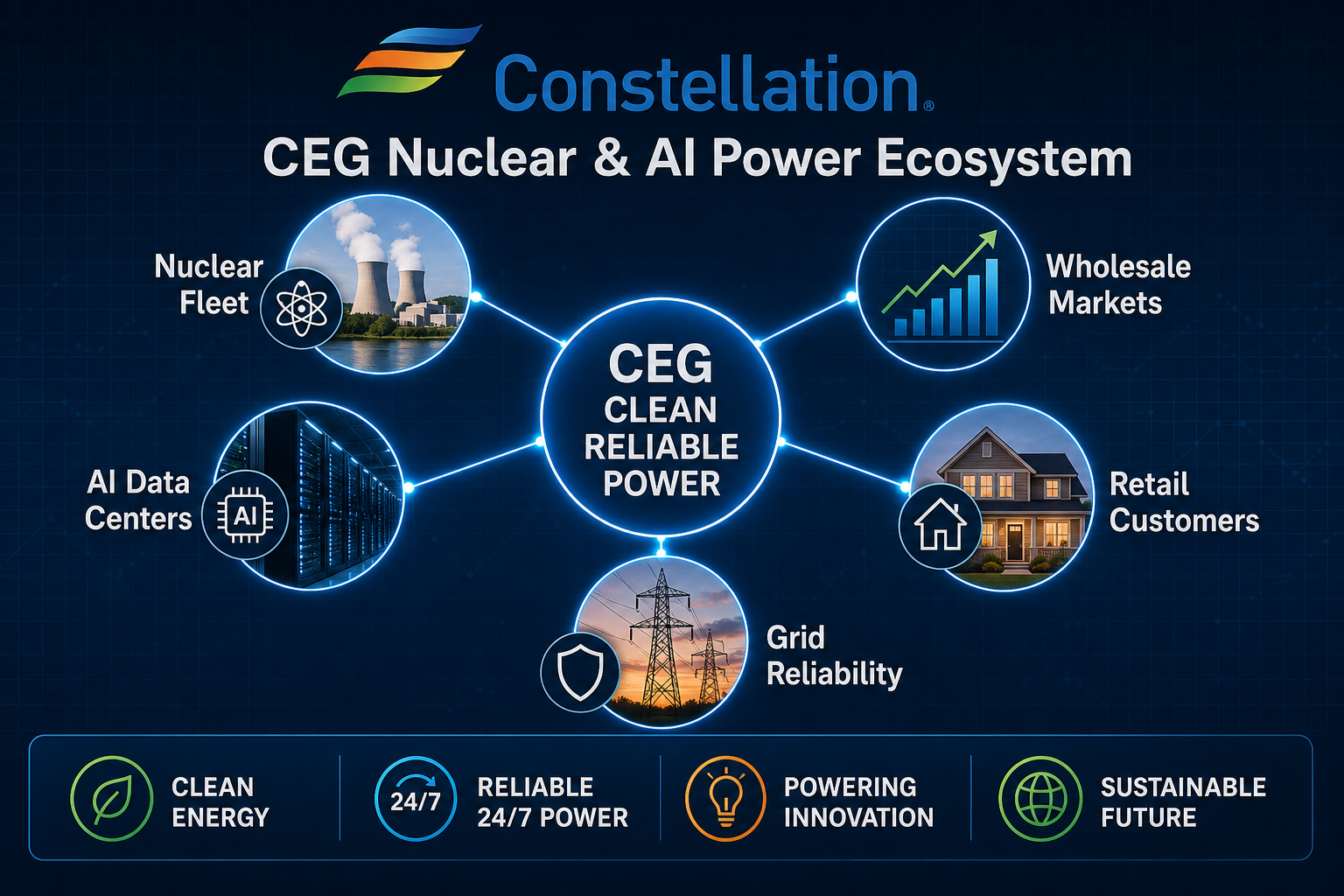 Figure 1. Constellation Energy’s power ecosystem: Nuclear assets link AI data centers, retail customers, wholesale markets, and grid reliability demands.
How Does CEG Structure Its Business?
CEG’s operations are structured in three layers: generation assets, markets & contracts, and end customers. Generation assets provide the power source, wholesale and capacity markets influence pricing and asset value, and long-term PPAs and retail supply agreements shape revenue visibility and customer mix.
| Layer |
Content |
Key Questions |
| Generation Assets |
Nuclear, Natural Gas, Geothermal, Hydropower, Wind, Solar |
Are operations stable? Are costs controlled? |
| Markets & Contracts |
Wholesale electricity, capacity markets, long-term PPAs |
How do prices and contract terms affect revenue? |
| Customer Side |
Commercial, industrial, retail accounts |
Is demand stable? What is customer concentration? |
This table illustrates that CEG does not rely solely on one generation technology. While nuclear is core, natural gas, retail supply, and commercial contracts also shape the overall structure. Following the Calpine integration, the impact of natural gas and geothermal assets warrants specific attention.
Why Are AI Data Centers Focused on Constellation Energy?
AI data centers require massive, stable, and sustainable electricity supplies. Training, inference, cooling, networking, and storage systems all demand uninterrupted power, and leading tech firms typically seek low-carbon energy sources. CEG’s nuclear assets are thus central to the “24/7 clean power” narrative.
Long-term power purchase agreements (PPAs) are essential for meeting AI electricity demand. PPAs connect generators with large customers, but contract duration, pricing mechanisms, grid access, regulatory approval, and delivery timelines all influence outcomes. AI demand is a variable, not a guaranteed growth trajectory.
How Does CEG Differ from Vistra, NextEra, and Duke Energy?
While CEG, Vistra, NextEra, and Duke Energy are all major U.S. power companies, their structures differ. CEG is distinguished by its focus on nuclear and independent generation; Vistra also operates nuclear and natural gas assets; NextEra emphasizes renewables and regulated utilities; Duke Energy aligns more closely with traditional regulated utility models.
When comparing these companies, first determine whether they are independent generators, integrated utilities, renewable platforms, or nuclear/gas hybrids. CEG vs Vistra vs NextEra vs Duke offers a side-by-side analysis across asset types, regulatory exposure, and power price risk. Each model entails different regulatory, market, customer, and capital expenditure profiles.
How to Find and Trade CEG on Gate?
On Gate Stocks, users can locate Constellation Energy by searching for the ticker CEG. The standard workflow involves verifying your account and trading permissions, preparing available USDT, navigating to the stock page, searching for CEG, confirming the company name, selecting an order type, and reviewing order records and positions post-trade. How to buy CEG on Gate Stocks details account setup, ticker search, order placement, and fee checks.
When viewing CEG on the Gate stock page, ensure that it displays Constellation Energy Corporation—not another energy or utility company. The trading interface addresses ticker, orders, fees, and positions; company analysis still requires consideration of nuclear assets, power market dynamics, and risk metrics.
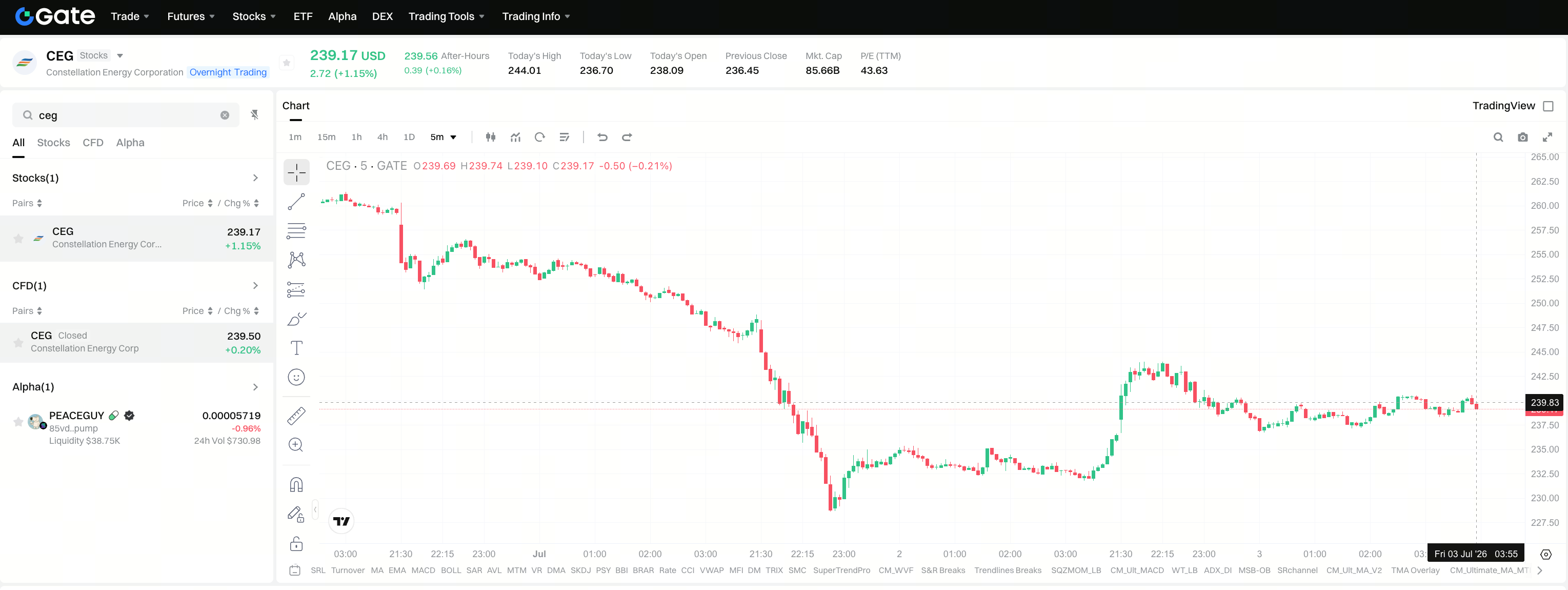 Image source: Gate Stocks
What Risks Should You Consider Before Investing or Trading CEG?
CEG’s risks fall into four categories: business, market, regulatory, and trade execution. Business risks include nuclear plant operation, maintenance, fuel management, and safety oversight; market risks involve power prices, capacity markets, and customer demand; regulatory risks cover nuclear policy, state and federal rules, M&A integration, and grid connection approvals.
Trade execution risks stem from ticker errors, order type mistakes, trading hours, liquidity, fee structures, and USDT funding requirements. Before trading CEG, users should cross-reference the CEG risk metrics checklist with Gate Stocks page information.
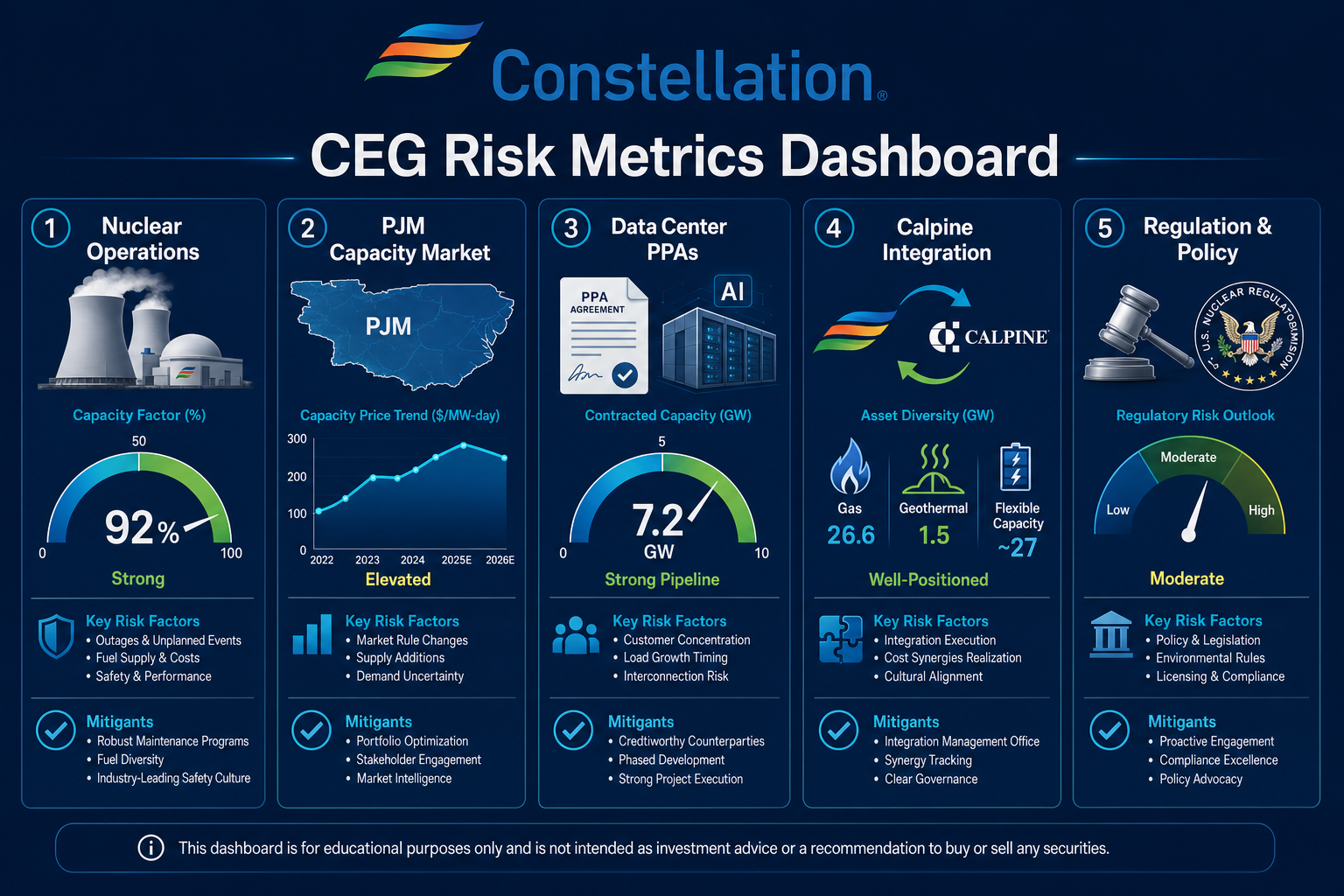 Figure 2. CEG risk dashboard: Core checkpoints include nuclear operations, PJM capacity market, data center PPAs, Calpine integration, and regulatory policy.
Summary
Constellation Energy (CEG) is a leading U.S. power company noted for its nuclear assets, clean and reliable power, wholesale and retail services, and long-term electricity demand from AI data centers. To fully understand CEG, distinguish its business model, peer group, Gate Stocks trading process, and risk metrics—do not oversimplify it as just a “nuclear” or “AI power” stock.
FAQ
What is Constellation Energy (CEG)?
Constellation Energy is a Nasdaq-listed U.S. power company (ticker: CEG) with operations spanning nuclear, natural gas, geothermal, hydropower, wind, solar, and retail electricity services.
Why is CEG connected to AI data centers?
AI data centers require continuous, stable, low-carbon power. CEG’s nuclear assets and long-term PPAs make it a key player in powering data center demand.
Is CEG a traditional utility company?
CEG is more akin to a large independent power producer and energy services provider—not a conventional regulated utility. Its revenue and risk profile reflect influences from generation assets, market prices, contracts, and customer demand.
How do I find CEG on Gate?
Go to Gate Stocks, search for the ticker CEG, confirm the company name Constellation Energy Corporation, and review trading rules, order types, and funding requirements.
What must be confirmed before trading CEG?
Confirm the stock ticker, company identity, available USDT, trading hours, fee structure, order type, and assess CEG’s nuclear operations, power market, and regulatory risks.