The evolution of the cross-chain ecosystem has driven decentralized finance from single networks toward multi-chain collaborative models. As users engage with different blockchains like Ethereum, Avalanche, Base, and Arbitrum simultaneously, assets and liquidity become fragmented across multiple networks. While cross-chain bridges and multi-chain wallets have improved asset mobility, liquidity fragmentation and operational complexity remain critical pain points for DeFi users.
Against this backdrop, cross-chain lending protocols have emerged as a key component of DeFi infrastructure. Folks Finance connects multiple blockchain networks through a unified liquidity architecture, aiming to build a shared cross-chain lending market that enables users to execute lending and asset management without separately managing pools on different chains.
Folks Finance: Origin and Evolution
Folks Finance was originally built on the Algorand ecosystem as a DeFi protocol focused on on-chain lending and liquid staking. Its early products were primarily designed around the Algorand network, offering users basic financial services such as deposits, borrowing, and staking.
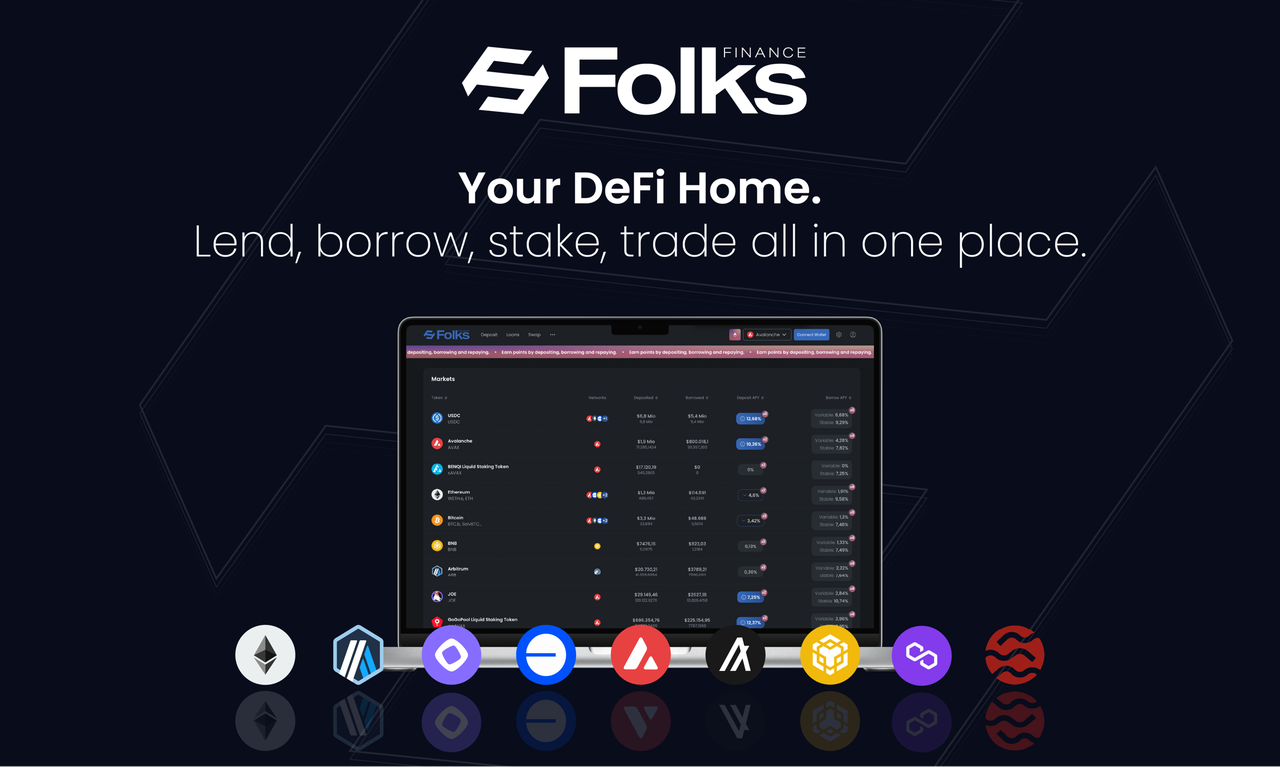
As the multi-chain ecosystem expanded rapidly, Folks Finance shifted its development focus from single-chain lending markets to cross-chain liquidity infrastructure. The protocol gradually rolled out cross-chain lending products and established a unified liquidity model, aiming to consolidate funds previously scattered across different networks into a single lending system.
This transformation repositioned Folks Finance from a traditional lending protocol into cross-chain financial infrastructure, shifting its core goal from serving a single ecosystem to enhancing capital efficiency across the broader multi-chain environment.
How Folks Finance’s Core Architecture Works
Folks Finance’s core design philosophy is unified liquidity. Unlike traditional lending protocols that create independent markets for each chain, Folks Finance connects multiple networks to the same lending system through a centralized liquidity layer.
The protocol adopts a Hub-and-Spoke architecture. The Hub chain manages the primary liquidity pool and risk parameters, while each supported blockchain serves as a Spoke chain interacting with the Hub.
When a user deposits assets on one chain, the system syncs the relevant information via a cross-chain messaging network and updates the user’s position in the unified market. Lending activities are executed within the unified liquidity pool, enabling shared liquidity across chains.
This architecture reduces redundant capital deployment and allows assets to operate across a broader network range.
Key Products Offered by Folks Finance
Folks Finance has built a comprehensive product suite covering lending, liquidity management, and cross-chain interactions.
xChain Lending
xChain Lending is Folks Finance’s flagship product. This system allows users to provide collateral on one blockchain and borrow assets on another, enabling true cross-chain lending.
Lending Markets
Traditional lending markets remain a critical component of the protocol. Users can deposit assets to earn yield or borrow other digital assets through over-collateralization.
Liquid Staking
Liquid staking products allow users to obtain tradable derivative assets while participating in network staking. This model improves the efficiency of staked capital, enabling users to continue engaging in other DeFi activities.
Folks Router
Folks Router is the protocol’s liquidity aggregation tool. It automatically identifies the optimal trading path, helping users execute asset swaps across multiple liquidity sources.
Role of the FOLKS Token
FOLKS is Folks Finance’s native governance token and a core component of the protocol ecosystem.
Governance is one of FOLKS’s primary functions. Token holders can vote on protocol upgrades, parameter adjustments, and strategic direction. Through on-chain voting, the community collectively decides the protocol’s future development path.
FOLKS also serves as an ecosystem incentive. The protocol can reward liquidity providers, lending users, and long-term participants with tokens to encourage ongoing engagement.
How Folks Finance Differs from Other Lending Protocols
Lending protocols represent one of the most mature sectors in DeFi. Projects like Aave, Compound, and Radiant offer on-chain lending but differ significantly in architecture.
Traditional lending protocols typically use an independent market model. Each blockchain maintains its own liquidity pool, risk parameters, and lending market. Even when a protocol is deployed across multiple networks, these markets remain separate.
Folks Finance, by contrast, establishes a unified liquidity system, allowing multiple blockchains to share the same lending market. Users can utilize assets across different networks without frequent cross-chain transfers.
The core advantage of this design is higher capital efficiency, but it also imposes stricter requirements on cross-chain communication, security mechanisms, and risk management.
| Dimension |
Folks Finance |
Traditional Multi-Chain Lending Protocol |
| Liquidity Structure |
Unified liquidity pool |
Independent on-chain markets |
| Lending Model |
Cross-chain lending |
Single-chain lending |
| Capital Utilization |
Higher |
Lower |
| Cross-Chain Capability |
Native support |
Typically relies on bridges |
| User Experience |
Unified account view |
Multi-chain independent management |
Conclusion
Folks Finance is a decentralized finance protocol centered on unified liquidity and cross-chain lending, designed to address liquidity fragmentation in a multi-chain environment. Through its Hub-and-Spoke architecture and cross-chain messaging system, Folks Finance connects multiple blockchains to a single lending market, enabling assets to flow more efficiently across different networks.
As DeFi moves toward multi-chain collaboration, cross-chain liquidity management is becoming a key industry trend. Folks Finance’s unified liquidity model offers a novel design approach for future cross-chain financial infrastructure, with the FOLKS token playing a vital role in governance and ecosystem coordination.
FAQs
How does Folks Finance enable cross-chain lending?
Folks Finance uses a Hub-and-Spoke architecture and cross-chain messaging network to connect multiple blockchains to a unified lending market. Users can provide collateral on one chain and borrow assets on another.
What is the purpose of the FOLKS token?
FOLKS is Folks Finance’s governance token, used for protocol governance, community voting, ecosystem incentives, and coordinating interests among multi-chain participants.
Does Folks Finance only support Algorand?
Folks Finance originated on Algorand but has expanded to multiple chains. The protocol now prioritizes cross-chain liquidity infrastructure over its original single-chain lending market.
What is the difference between Folks Finance and Aave?
Aave uses an independent on-chain market model, where each chain has its own liquidity pool. Folks Finance employs a unified liquidity architecture, allowing multiple chains to share the same lending market, improving capital efficiency.
What are the risks of Folks Finance?
As a DeFi protocol, Folks Finance faces smart contract risks, cross-chain communication risks, liquidation risks, and market volatility. Users should fully understand the protocol and its potential risks before participating.