As one of the world’s leading financial centers connecting Asian economies with international capital, the Hong Kong market is home to major listed companies across sectors such as technology, finance, consumer goods, renewable energy, and healthcare. As global capital markets become increasingly digitalized, the ways investors access the Hong Kong stock market are also evolving.
The growth of the digital asset industry has accelerated the integration of Real World Assets (RWA) with traditional financial markets. Stablecoins, on-chain settlement systems, and digital asset account infrastructures are becoming important foundations for connecting global capital markets. Gate Hong Kong Stocks emerged within this context as a new investment model, providing digital asset users with a new gateway to the Hong Kong stock market.
What Is Gate Hong Kong Stocks?
Gate Hong Kong Stocks is a Hong Kong stock trading service offered through Gate Stocks, allowing users to invest in the Hong Kong stock market through digital asset accounts.
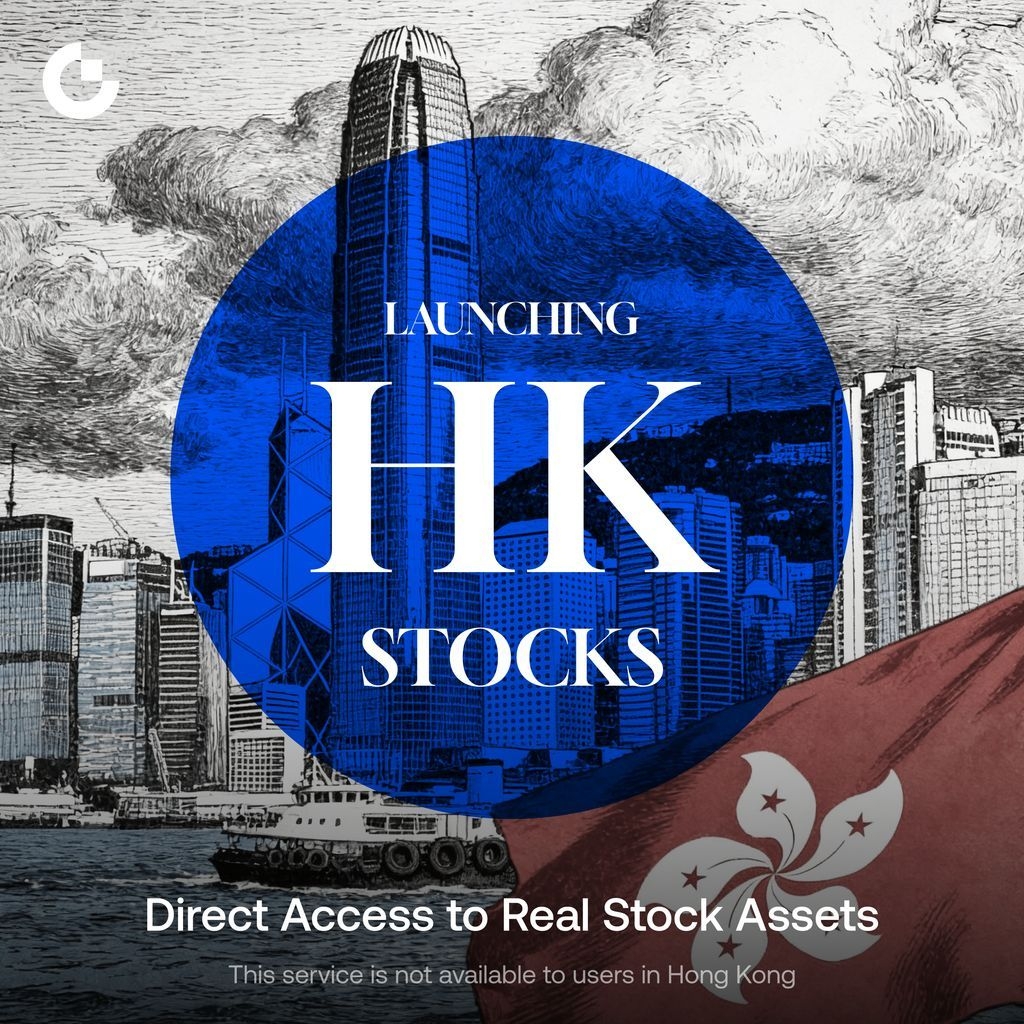
After the launch of Hong Kong stock trading, users can share the same stock account system as US stocks, enabling unified fund management, position management, and trading experience. Users only need to transfer USDT from their Spot Account or Unified Account into the Stock Account to start trading Hong Kong stocks. Compared with US stocks, Hong Kong stocks are priced in Hong Kong dollars (HKD), and prices, portfolio value, and profit and loss are all displayed in HKD. Trading is only available during regular market hours, with no pre-market or after-hours sessions. In addition, Hong Kong stock trading supports the same core functions as US stocks, including buy/sell execution, position management, order inquiry, and asset management.
Compared with traditional securities investment models, Gate Hong Kong Stocks places greater emphasis on connecting digital assets with traditional financial assets. Instead of managing accounts through multiple financial institutions, users can complete fund management, market exploration, and asset allocation within a single platform.
From the perspective of global asset market development, Gate Hong Kong Stocks represents an important expansion of Real World Asset (RWA) applications by digital asset platforms and serves as a practical example of how stablecoins can connect traditional capital markets.
What Is Traditional Hong Kong Stock Investing?
Traditional Hong Kong stock investing typically relies on brokerage firms and banking systems. Investors are required to open brokerage accounts and use bank accounts for deposits, withdrawals, cross-border remittances, and currency exchange.
Under the traditional model, investors access the Hong Kong Stock Exchange through brokerage trading systems to buy and sell listed company shares. Built on mature financial infrastructure, this approach has long been the primary method for global investors to participate in the Hong Kong stock market.
Because multiple financial institutions are involved, investors generally need to manage bank accounts, brokerage accounts, and related funding channels separately.
What Is the Biggest Difference Between Gate Hong Kong Stocks and Traditional Hong Kong Stock Investing?
The most significant difference lies in the funding mechanism and account structure.
Traditional investing primarily relies on coordination between bank accounts and brokerage accounts, whereas Gate Hong Kong Stocks is built on digital asset accounts and uses stablecoins such as USDT to connect users with the Hong Kong stock market.
From a user experience perspective, traditional investing depends more heavily on banking infrastructure, while Gate Hong Kong Stocks is based on digital asset infrastructure. Both approaches ultimately provide access to Hong Kong equities, but the pathways are fundamentally different.
How Do the Account Opening Processes Differ?
Traditional Hong Kong stock investing generally requires brokerage account applications, identity verification, and bank account linking. Investors from different regions may also face additional cross-border financial requirements.
Gate Hong Kong Stocks is built on an existing digital asset account infrastructure. After completing platform identity verification, users can apply for a stock account and access the Hong Kong stock trading section.
For users who already maintain digital asset accounts, this model reduces the need to manage multiple accounts across different financial platforms.
How Do Fund Transfer Methods Differ?
Fund transfers represent one of the most noticeable differences between the two models.
Traditional Hong Kong stock investing generally requires bank transfers for deposits and currency conversions between different fiat currencies. For international investors, cross-border remittances are often an essential part of the process.
Gate Hong Kong Stocks uses stablecoins as the funding medium. Users can transfer funds using digital assets such as USDT and then enter the stock trading ecosystem. In this process, stablecoins serve as a bridge between digital asset markets and equity markets.
How Does Asset Management Differ?
Under traditional investment models, stock assets are typically held in brokerage accounts, while digital assets must be managed on separate platforms.
Gate Hong Kong Stocks uses a unified account structure. Users can view both digital assets and stock holdings on the same platform and manage different asset classes in a centralized manner.
For investors focused on global asset allocation, a unified account model can improve asset management efficiency and reduce the complexity of switching between platforms.
What Are the Characteristics of Buying Hong Kong Stocks with USDT?
USDT is one of the most widely used stablecoins, typically maintaining a relatively stable value relationship with the U.S. dollar.
Within the Gate Hong Kong Stocks ecosystem, USDT primarily functions as a funding medium, enabling digital asset users to access the Hong Kong stock market more conveniently. Stablecoins do not change the underlying trading rules of the stock market itself; rather, they streamline the process of bringing capital into the market.
Which Method Is Better for Global Asset Allocation?
Both traditional brokerage systems and digital asset platforms can provide access to Hong Kong stock investing, but they serve different asset management needs.
Traditional models are more closely aligned with conventional financial market practices, while Gate Hong Kong Stocks may be more suitable for users who already hold digital assets and prefer a unified approach to managing global investments. For investors interested in digital assets, U.S. stocks, Hong Kong stocks, and ETFs simultaneously, a unified platform model offers greater convenience.
From the perspective of global asset allocation trends, the integration between digital asset platforms and traditional financial markets continues to deepen. Both models are likely to coexist in the future, serving different types of market participants.
Gate Hong Kong Stocks vs. Traditional Hong Kong Stock Investing
| Comparison Dimension |
Gate HK Stocks |
Traditional HK Stocks |
| Account System |
Digital Asset Account + Stock Account |
Bank Account + Securities Account |
| Fiat/Crypto Gateway (or Funding Method) |
Stablecoins (e.g., USDT) |
Bank Deposit |
| Funds Transfer |
Digital Asset Transfer |
Bank Transfer |
| Asset Management |
Unified Platform Management |
Multi-Platform Management |
| Global Asset Allocation |
Co-managed with digital assets |
Primarily manages securities assets |
| Use Case / Target User |
Digital asset users |
Traditional securities investors |
Conclusion
Gate Hong Kong Stocks is a Hong Kong stock investment model built on digital asset infrastructure. By connecting the Hong Kong stock market through stablecoins such as USDT, it provides users with a new way to participate in Hong Kong equity trading. Compared with traditional brokerage models, Gate Hong Kong Stocks differs significantly in terms of funding methods, account structures, and asset management approaches.
Traditional Hong Kong stock investing relies on banking and brokerage systems, while Gate Hong Kong Stocks uses digital asset account infrastructure for fund transfers and market access. Both approaches enable participation in the Hong Kong stock market, but they represent different paths of development for traditional financial infrastructure and digital financial infrastructure.
FAQs
What is the difference between Gate Hong Kong Stocks and traditional Hong Kong stock investing?
The biggest difference lies in the funding system. Traditional investing relies on banking and brokerage infrastructures, whereas Gate Hong Kong Stocks connects users to the Hong Kong stock market through digital asset accounts and stablecoins.
Do I need a bank account to use Gate Hong Kong Stocks?
Specific service procedures are subject to platform rules. Compared with traditional investing, Gate Hong Kong Stocks places greater emphasis on digital asset account infrastructure and stablecoin-based fund management.
Why can USDT be used for Hong Kong stock trading?
USDT is a stablecoin that serves as an important funding medium within the digital asset market. In the Gate Hong Kong Stocks ecosystem, USDT is used to connect digital asset accounts with stock trading accounts.
Is Gate Hong Kong Stocks considered a Real World Asset (RWA) application?
Hong Kong stocks are traditional financial assets. Using digital asset infrastructure to connect investors with the Hong Kong stock market is generally regarded as an important application area within the broader Real World Asset (RWA) ecosystem.
Gate Stocks aims to build a unified global stock trading platform. Users can manage stock assets from different markets through a single account system, with actual market availability subject to platform support.