Gate MCP — это слой подключения в экосистеме Gate for AI, который обеспечивает взаимодействие ИИ-моделей с криптосистемами через Model Context Protocol. Понимание работы Gate MCP позволяет оценить развитие ИИ-нативной инфраструктуры цифровых активов.
ИИ-агенты постепенно переходят от простых ассистентов к автономным системам, способным выполнять рабочие процессы. Для этого им необходимы структурированные связи с внешней инфраструктурой. В криптовалютных системах такие взаимодействия включают получение рыночных данных, анализ блокчейна и выполнение транзакций.
Для поддержки подобных сценариев появляются новые инфраструктурные слои, связывающие ИИ-системы с финансовыми сервисами. Gate MCP — часть этой архитектуры, предоставляющая ИИ-моделям стандартизированный протокол взаимодействия с криптоинфраструктурой.
Что такое Gate MCP
В Gate for AI Gate MCP — это протокольный слой, который связывает ИИ-агентов с криптоинфраструктурой Gate и предоставляет моделям доступ к инструментам для трейдинга, рыночных данных, кошельков, новостей и on-chain аналитики через стандартизированный интерфейс.
В архитектуре Gate for AI MCP — это слой подключения между ИИ-агентами и криптосервисами. Вместо прямой интеграции с многочисленными API, ИИ-агенты используют MCP-инструменты, предоставляющие стандартизированные функции.
Инструменты включают:
-
получение рыночных данных в реальном времени
-
выполнение торговых операций
-
доступ к информации о кошельках
-
запрос данных блокчейна и проектов
-
получение структурированных новостей и аналитики
Gate MCP обеспечивает единый интерфейс для последовательного и контролируемого взаимодействия ИИ-агентов с криптовалютными системами.
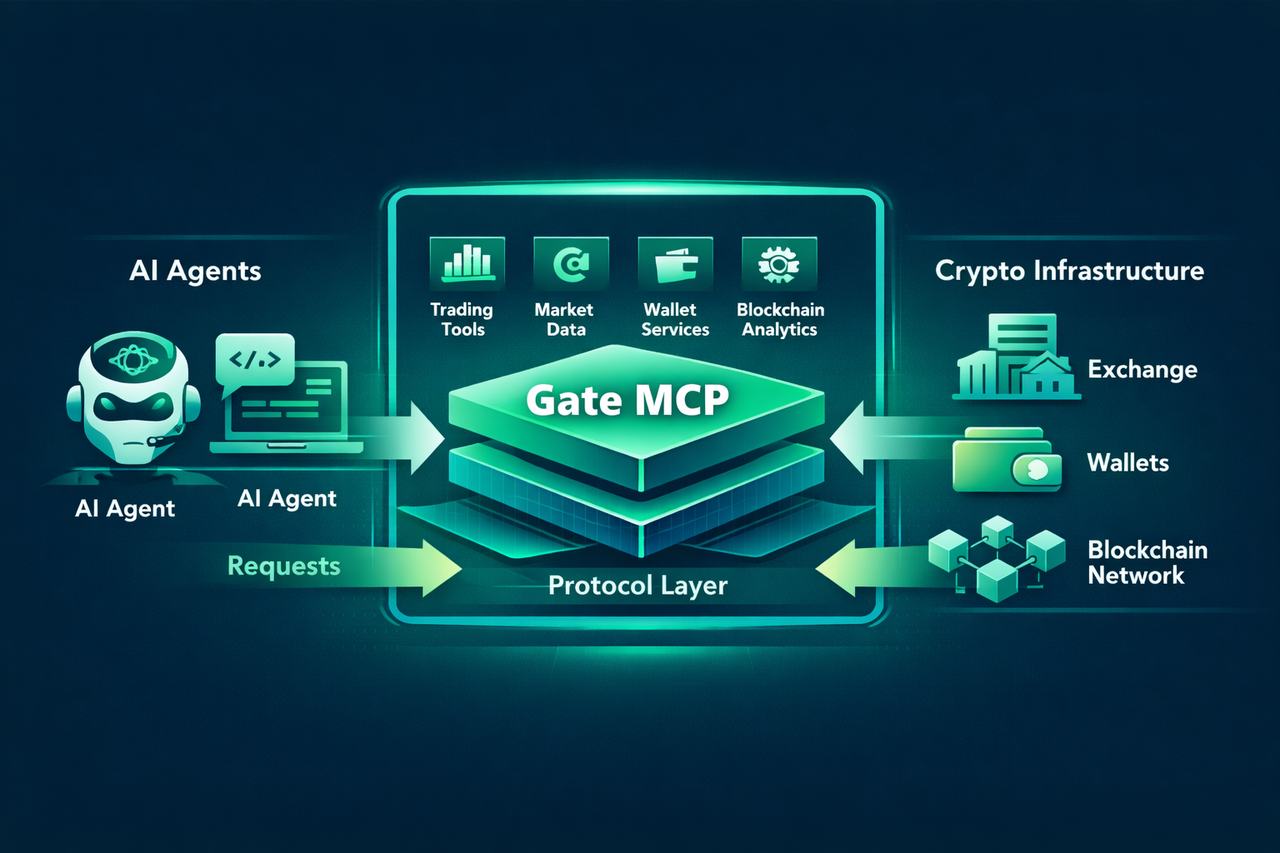
Model Context Protocol (MCP): основные принципы
Model Context Protocol (MCP) — это стандарт, позволяющий ИИ-моделям безопасно получать доступ к внешним инструментам, API и сервисам через структурированный интерфейс.
Вместо отдельной интеграции для каждой ИИ-модели и внешней системы MCP предлагает единый слой коммуникации, в котором ИИ-агенты могут обнаруживать и использовать доступные инструменты.
Основные компоненты протокола:
• ИИ-агенты или приложения (клиенты), формирующие запросы • MCP-серверы, предоставляющие инструменты и сервисы • протокольные интерфейсы, стандартизирующие обмен запросами и ответами
В Web3-среде MCP позволяет ИИ-агентам подключаться к криптобиржам, кошелькам и поставщикам on-chain данных. Через MCP endpoints агенты могут получать рыночные данные, анализировать блокчейн и выполнять операции с помощью стандартизированных API.
Как Gate MCP соединяет ИИ-агентов с криптосистемами
Gate MCP обеспечивает взаимодействие ИИ-агентов с компонентами криптоэкосистемы через единый протокольный слой.
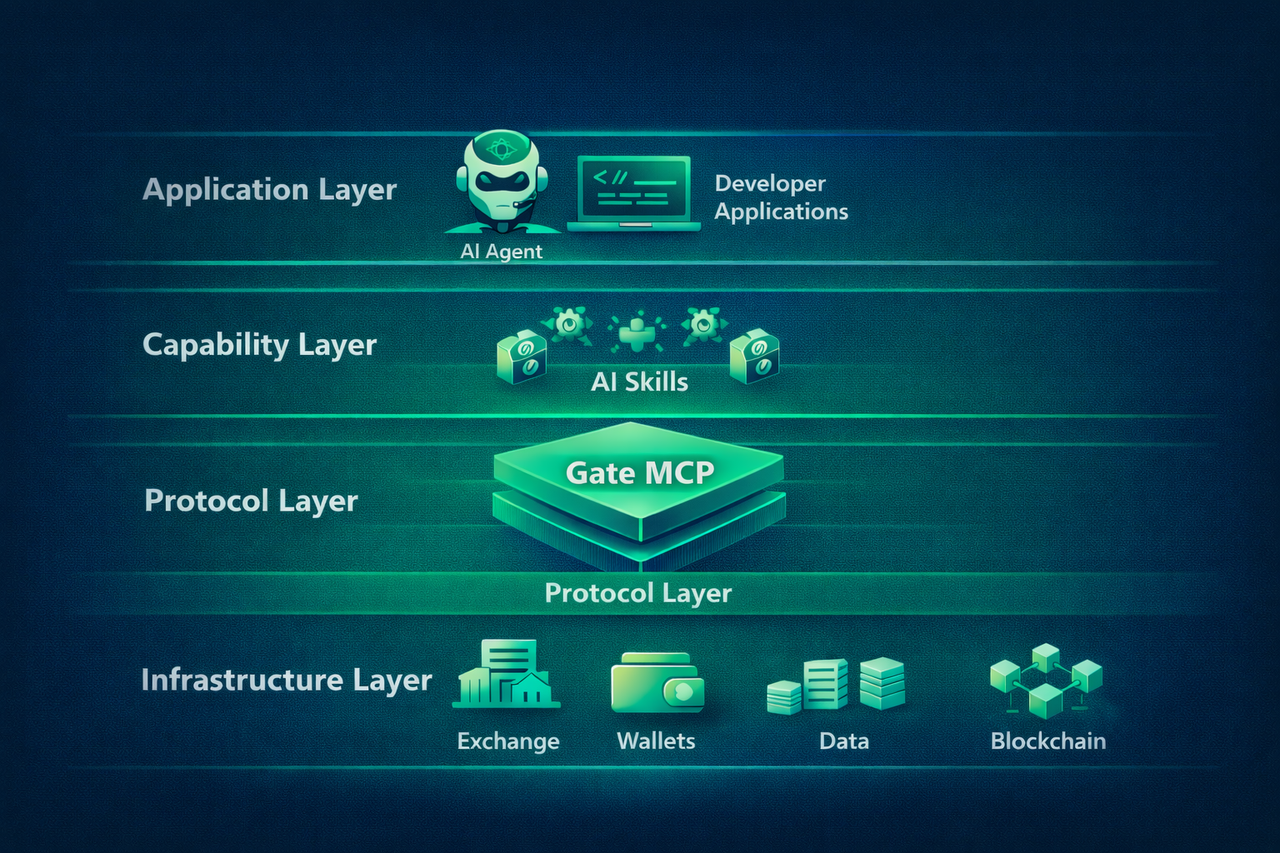
В архитектуре Gate for AI система состоит из четырёх слоёв:
-
Слой приложений — ИИ-агенты и приложения разработчиков
-
Слой возможностей — ИИ-навыки и оркестрация рабочих процессов
-
Протокольный слой — Gate MCP
-
Инфраструктурный слой — биржевые сервисы, децентрализованные торговые системы, инфраструктура кошельков и API данных.
Gate MCP работает в протокольном слое, выступая связующим звеном между ИИ-агентами и криптоинфраструктурой.
Стандартное взаимодействие включает:
-
ИИ-агент формирует запрос, например, для получения данных о токене или совершения сделки.
-
Запрос форматируется по стандарту MCP.
-
Gate MCP направляет запрос к соответствующим криптосервисам.
-
Структурированные данные или результаты операций возвращаются ИИ-агенту.
Такая архитектура позволяет ИИ-системам работать с множеством сервисов в единой стандартизированной среде.
Интеграция Gate MCP для разработчиков
Разработчики могут внедрять Gate MCP в ИИ-агентные системы для взаимодействия с криптоинфраструктурой.
Процесс обычно состоит из следующих шагов:
-
Интеграция агента: подключение фреймворка ИИ-агента к интерфейсу MCP.
-
Выбор модулей: доступ к таким модулям, как:
-
торговые сервисы
-
функции децентрализованных бирж
-
инфраструктура кошельков
-
рыночная информация и аналитика
-
Вызов инструментов: ИИ-агенты используют MCP-инструменты для получения данных или выполнения операций.
-
Оркестрация рабочих процессов: сложные задачи реализуются через последовательность вызовов MCP-инструментов.
В Gate for AI такие рабочие процессы могут управляться ИИ-навыками, координирующими работу нескольких MCP-инструментов для сложных задач, например, трейдинга или мониторинга портфеля.
Преимущества инфраструктуры на базе MCP
Инфраструктура MCP обладает рядом архитектурных преимуществ для ИИ-ориентированных криптосистем.
| Характеристика |
Описание |
| Стандартизированные интерфейсы |
ИИ-агенты получают доступ к разным сервисам через единый протокол, обеспечивая унифицированное взаимодействие с инструментами и API. |
| Модульная архитектура |
Сервисы можно добавлять, обновлять или заменять без полной переработки системы. |
| Кросс-модельная совместимость |
Инфраструктура интегрируется с разными ИИ-фреймворками и моделями, позволяя нескольким агентам работать в одной протокольной среде. |
| Автоматизация рабочих процессов |
Сложные задачи решаются через объединение нескольких MCP-инструментов на уровне оркестрации, что позволяет автоматизировать многоэтапные операции. |
Эти особенности поддерживают среду, где автономные агенты взаимодействуют с финансовой инфраструктурой.
Риски и особенности
Архитектуры MCP повышают интероперабельность, но создают новые вызовы.
Управление безопасностью: доступ к внешним инструментам должен строго контролироваться для предотвращения несанкционированных действий.
Операционная сложность: управление многочисленными ИИ-агентами и инструментами требует мониторинга и политики.
Надёжность внешних данных: решения ИИ зависят от точности и доступности внешних источников данных.
Риски автономного исполнения: при возможности выполнения финансовых операций ИИ-агентами необходимы механизмы защиты и контроля.
Будущее ИИ-нативной криптоинфраструктуры
Развитие Gate MCP отражает переход к ИИ-нативной финансовой инфраструктуре.
В такой модели ИИ-агенты становятся активными участниками цифровых систем, а не просто аналитическими инструментами. Вместо генерации инсайтов они могут получать данные, анализировать условия и взаимодействовать с финансовыми сервисами.
В криптоэкосистеме этот подход поддерживает:
-
автоматизированные торговые агенты
-
ИИ-системы рыночных исследований
-
автономный мониторинг портфеля
-
интеллектуальный анализ данных блокчейна
Gate MCP — ранний пример инфраструктуры, предназначенной для ИИ-ориентированных взаимодействий.
Заключение
Gate MCP — протокольный слой в экосистеме Gate for AI, соединяющий ИИ-агентов с криптоинфраструктурой через стандартизированные инструменты и интерфейсы.
Он обеспечивает структурированный доступ к торговым системам, кошелькам, рыночным данным и аналитике блокчейна, формируя основу для взаимодействия ИИ-систем с рынками цифровых активов.
По мере развития ИИ-агентов, инфраструктура вроде Gate MCP будет играть всё более важную роль в обеспечении безопасных и масштабируемых ИИ-ориентированных финансовых систем.
Часто задаваемые вопросы
Что такое Gate MCP?
Gate MCP — протокольный слой, который соединяет ИИ-агентов с криптоинфраструктурой и предоставляет стандартизированный доступ к инструментам: трейдинг, рыночные данные, кошельковые сервисы и аналитика блокчейна.
Что такое Gate for AI?
Gate for AI — платформа ИИ-нативной криптоинфраструктуры, позволяющая ИИ-агентам взаимодействовать с крипторынками через MCP и модульные ИИ-навыки.
Что такое ИИ-навыки?
ИИ-навыки — это функциональные возможности, которые координируют работу нескольких MCP-инструментов и позволяют ИИ-агентам выполнять рабочие процессы: трейдинг, рыночный анализ, мониторинг портфеля.
Могут ли ИИ-агенты выполнять криптооперации через MCP?
С помощью MCP-инструментов ИИ-агенты могут получать доступ к сервисам: рыночные данные, информация блокчейна, торговые интерфейсы — в зависимости от возможностей инфраструктуры.