Cross-Asset Investment Trends Are Emerging
In recent years, global financial markets have steadily advanced toward greater diversification and digitalization. Investors are no longer confined to a single asset class—they seek to allocate capital flexibly across multiple markets. For example, some traders simultaneously monitor cryptocurrency price trends, foreign exchange market volatility, and shifts in international stock indices.
Traditionally, participating in different markets required opening multiple accounts and transferring funds across various platforms. This process not only increased operational complexity but also reduced capital efficiency. To resolve these challenges, integrated trading platforms that span multiple markets have become a new direction for development. Gate TradFi was created in this context.
Start trading on Gate TradFi now: https://www.gate.com/tradfi
Core Principles of Gate TradFi
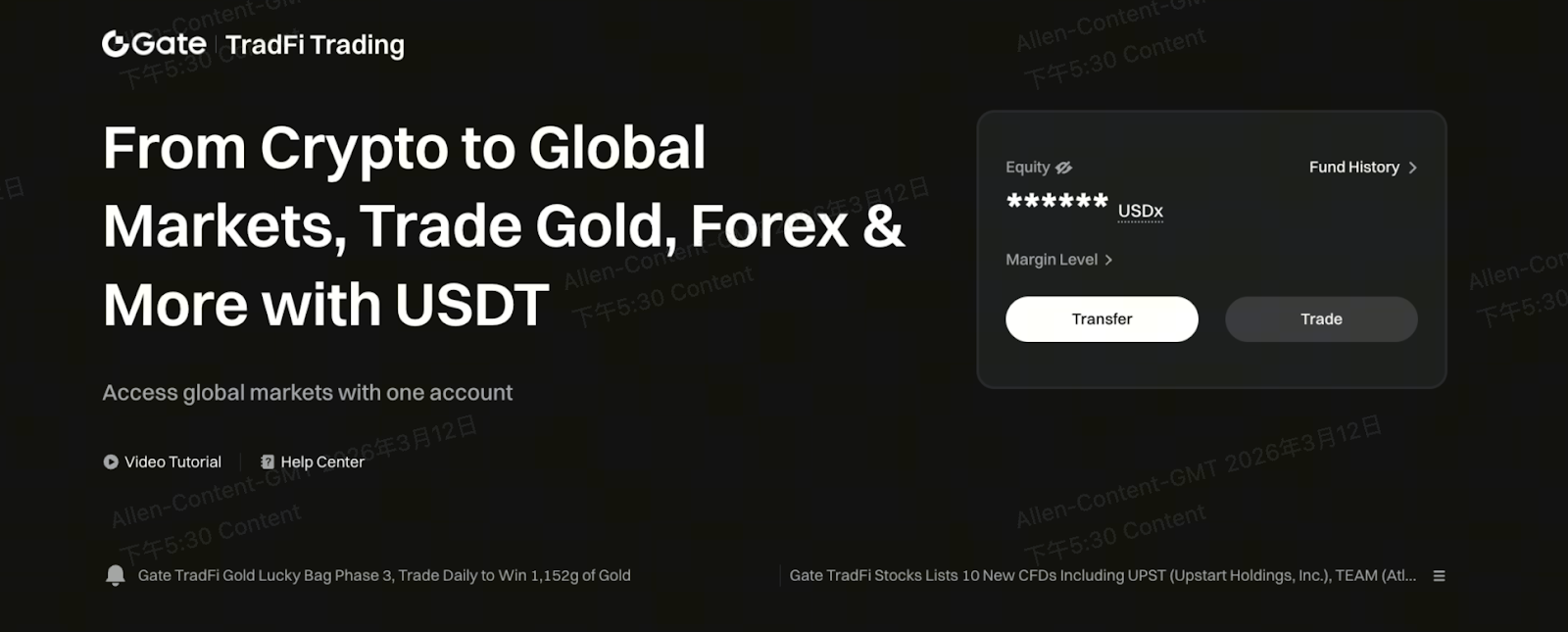
Gate TradFi is designed to establish a trading environment that bridges the crypto market and traditional financial markets. With this system, users can participate in the price trading of a wide range of traditional financial products using their existing crypto asset account structure.
This architecture delivers several key benefits:
- No need to transfer funds between different financial platforms
- Manage multiple investment targets within a single account
- Enhance overall trading and capital management efficiency
For investors seeking a diversified portfolio, this integrated platform streamlines operations significantly.
Access to Multiple Global Financial Markets
Gate TradFi offers a wide range of trading opportunities across various financial markets, enabling investors to track price movements in different asset classes. Most products are offered as Contracts for Difference (CFDs), allowing users to participate in market volatility without holding the underlying assets.
Currently, the platform covers the following main market types.
Precious Metals Trading
During periods of increased market uncertainty, precious metals often become vital assets in investment portfolios. Gate TradFi offers instruments such as XAUUSD, allowing users to engage in gold and other precious metals price movements.
Foreign Exchange Market
The foreign exchange market is among the world's most liquid financial markets. The platform provides a variety of major currency pairs, including:
- EUR/USD
- USD/JPY
- Other leading currency pairs
This enables investors to directly participate in global currency market price fluctuations.
Stock CFDs
With stock CFDs, users can track the price movements of globally recognized companies without purchasing the actual stocks. This expands trading opportunities for those interested in international equities.
Indices and Commodity Markets
The platform also includes major global stock indices, such as:
Additionally, it offers select energy and metal commodity products, enabling traders to adjust their investment strategies across diverse markets.
Integration of Crypto Assets and TradFi Markets
A key feature of Gate TradFi is the seamless integration of digital assets and traditional financial trading within a unified account system. Users can use crypto assets like USDT as collateral to trade forex, precious metals, or stock CFDs directly.
This approach provides several clear advantages:
- No repeated fund transfers between different platforms
- Simultaneous management of crypto assets and traditional financial trades
- Improved overall capital utilization
For investors who focus on both crypto and traditional financial markets, this integration enables more flexible asset allocation.
One-Stop Trading Experience
Gate TradFi delivers a consistent user experience with other platform products. Whether using the web platform or the mobile app, users can quickly access the TradFi trading interface.
The streamlined process includes:
- Access TradFi trading with the same Gate account
- No need to download additional third-party trading software
- Simple account opening and fund transfer procedures
This one-stop structure empowers users to explore more market opportunities within a familiar environment.
Leverage Trading and Cost Structure
Gate TradFi offers multiple leverage options, allowing investors to tailor trading strategies to different products and market conditions. Some products provide leverage up to 500x, offering greater flexibility in volatile markets.
The platform maintains competitive trading fees, enabling efficient control of overall costs during cross-market trading. For traders who use leverage strategies, this design offers enhanced operational flexibility.
Trading Risk Management Mechanisms
Managing risk is essential in high-leverage trading environments. Gate TradFi has implemented robust risk management mechanisms to help users maintain control during market volatility.
Key mechanisms include:
- Margin monitoring: The platform continuously tracks account margin ratios, helping traders understand current risk levels.
- Forced liquidation: If market volatility causes excessive account risk, the system may automatically close positions to prevent further losses.
- Real-time risk alerts: The platform provides instant notifications to help traders adjust strategies during rapid market changes.
These mechanisms support trading security while enabling high-leverage opportunities.
Getting Started with Gate TradFi
To begin using Gate TradFi’s cross-market trading features, follow these steps:
- Create a Gate account: Register via the official website or app.
- Complete identity verification: Undergo KYC and enable TradFi trading permissions.
- Transfer funds: Move USDT or other crypto assets into your TradFi account as trading funds.
- Select trading products: Choose from forex, precious metals, stock CFDs, or indices and start trading.
The process is straightforward, allowing users to quickly access cross-market trading.
Conclusion
As financial markets continue to converge, demand for cross-asset trading is rising. Gate TradFi integrates crypto assets with traditional financial markets, creating a diversified trading environment where users can access forex, precious metals, stocks, and indices on a single platform.
By combining leverage trading with risk management tools, this one-stop model offers investors a more efficient approach to asset allocation. For those looking to participate in both digital assets and traditional financial markets, Gate TradFi brings greater flexibility and more opportunities for cross-market investment.







