Glamsterdam is a hard fork upgrade in the Ethereum roadmap focused on restructuring protocol architecture, shifting the emphasis from single-parameter tweaks to redefining block production collaboration and execution constraints. According to the Ethereum.org roadmap, this upgrade continues the mainnet progression from the Lean Ethereum initiative, addressing core questions such as: who builds blocks, who validates them, how state access is pre-constrained, and how applications adapt to new execution expectations.
Lean Ethereum prioritizes long-term scalable growth, verifiable execution, and robust protocol boundaries. Glamsterdam, as a milestone in this trajectory, builds on the lessons of prior upgrades like Dencun and Fusaka, surfacing foundational issues that must be solved before parallel execution as modelable and testable engineering tasks. Evaluating the upgrade’s value should go beyond fee rates or throughput metrics, focusing also on whether execution paths are more interpretable, client coordination is more controllable, and ecosystem migration costs are more manageable.
A comprehensive perspective from protocol to application requires mapping block production collaboration, execution constraints, historical upgrades, node operations, and application adaptation together. Glamsterdam dissects the long-term vision into verifiable tasks, making the abstract roadmap testable, reviewable, and actionable.
What Is Glamsterdam? Why Is It an Independent Topic from Lean Ethereum?
Glamsterdam represents a structural change in Ethereum’s ongoing upgrade path, laying the groundwork for higher throughput and more robust execution. The protocol’s focus shifts from isolated optimizations to redefining collaborative boundaries, reframing upgrade discussions from “is it faster” to “how can it run more verifiably.”
It stands alone from the Lean Ethereum narrative because the issues are now concrete: the focus has shifted to how ePBS and BAL will change block production, validation, execution, and application deployment strategies. Search queries have evolved from abstract roadmaps to engineering problems, signaling the topic’s arrival at an actionable stage.
Cross-role impacts also drive the need for independent research: users, developers, and node operators each raise actionable questions, creating more targeted content consumption scenarios.
What L1 Pain Points Does Glamsterdam Address for Ethereum?
The first pain point is the opaque cost of block production collaboration. In traditional flows, when proposers and builders rely on external intermediaries, system interpretability and risk boundaries become more complex. Anomalies often require cross-component troubleshooting, lengthening response times.
The second pain point is execution scheduling efficiency: parallel execution requires a combination of pre-constraints, conflict detection, and client capability upgrades. The third is the read/write pressure from state growth; Glamsterdam surfaces these challenges as modelable, verifiable, and testable issues.
How Does ePBS (EIP-7732) Change Block Production and Validation?
The core of the ePBS (EIP-7732) mechanism is placing the relationship between proposer and builder into explicit protocol constraints, making “who decides the block, who builds it, and who validates it” much clearer. This clarity helps reduce structural risks from opaque external coordination.
From an engineering standpoint, ePBS brings not only throughput potential but also enhanced observability. With clearer responsibility layers, monitoring systems can target specific metrics: build latency, proposal consistency, validation failure rates, and reorg anomalies. Issue localization shifts from “overall instability” to pinpointing specific stages, enabling faster responses at both node and infrastructure levels.
| Dimension |
Traditional Collaboration Model |
ePBS-Oriented Model |
| Responsibility |
Easily affected by external layers |
Clearer protocol boundaries |
| Observability |
Long troubleshooting chains |
Stage-specific metrics possible |
| Risk Exposure |
Hidden intermediary dependencies |
Structural risks more explainable |
| Ecosystem Impact |
Delayed developer awareness |
Migration expectations manageable in advance |
This table reflects differences in engineering governance, not just performance. The ultimate impact of ePBS on user experience depends on client implementation quality, network conditions, and the pace of ecosystem adaptation.
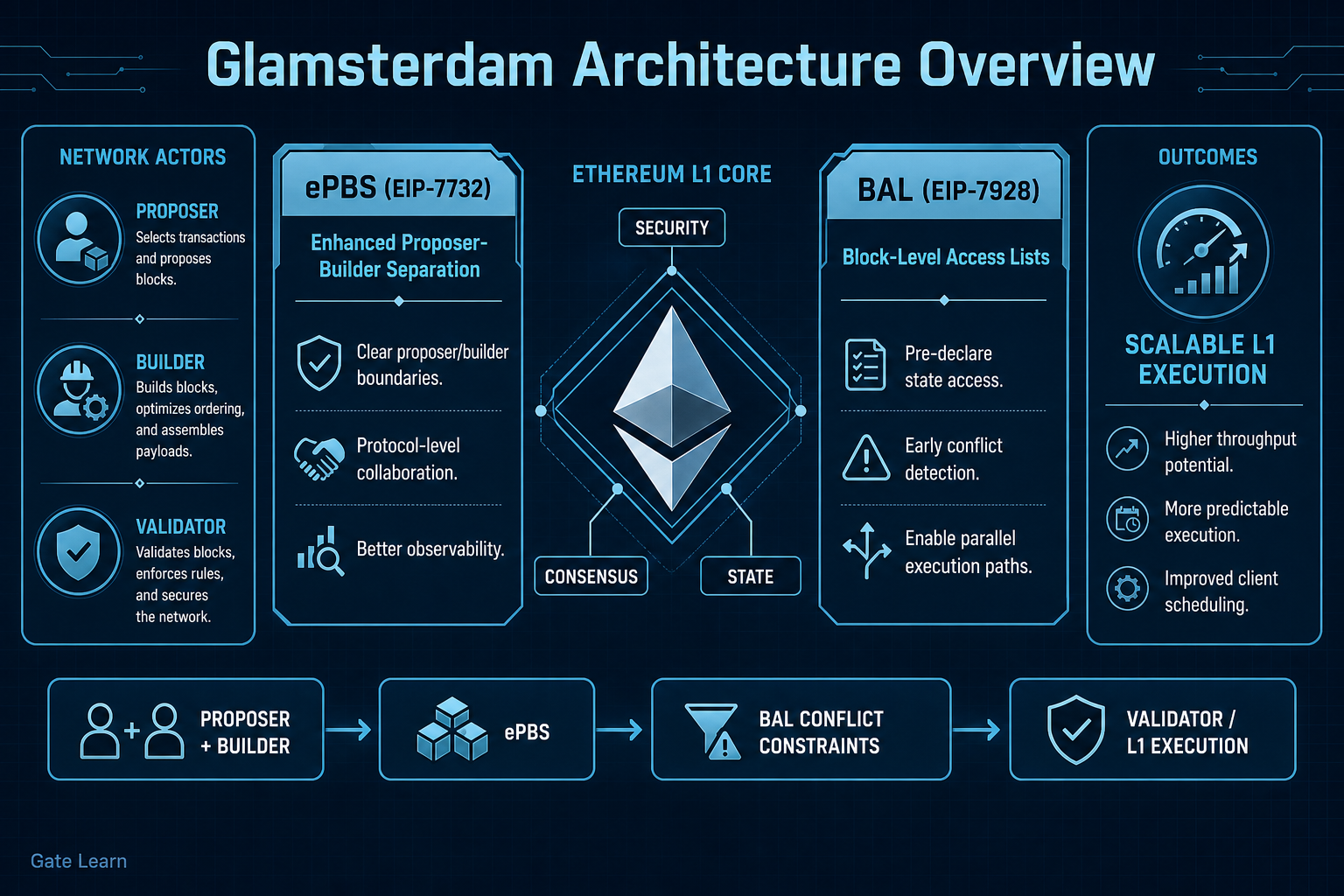 Figure 1. Glamsterdam architecture overview: division of labor between ePBS and BAL in the upgrade.
How Does BAL (EIP-7928) Enable Parallel Execution?
The core value of BAL (EIP-7928) and parallel execution is expressing account and storage access relationships as verifiable block-level records (Block-Level Access Lists), allowing clients to judge conflicts more clearly before execution. The challenge in parallel execution isn’t just “multithreading,” but reliably identifying “which transactions can be parallelized and which must be serialized.”
By surfacing access relationships in advance, clients can prepare data earlier, schedule parallel disk reads, and plan execution, reducing costs from on-the-fly conflict resolution. This doesn’t guarantee speedups in every scenario, but it reduces unpredictable execution jitter, shifting performance optimization from trial-and-error tuning to structured governance.
For developers, BAL also means “execution expectation management” must start earlier. Contract design, state access patterns, and batch operations may all be affected by new constraint logic. Teams that continue designing high-frequency interactions on old assumptions may see real-world performance diverge from expectations after the upgrade.
How Does Glamsterdam Relate to Dencun, Fusaka, and Lean Ethereum?
Dencun, Fusaka, and Glamsterdam are distinct functional segments along a continuous path. Glamsterdam vs. Dencun/Fusaka shows: Dencun focuses on short-term capacity and user experience, Fusaka emphasizes transitional collaborative improvements, and Glamsterdam addresses structural changes in block production and execution constraints. They are not replacements, but evolutionary steps on the same trajectory.
Lean Ethereum provides the “why”; Glamsterdam answers “what comes first and how to do it.”
| Path Level |
Focus |
Typical Question |
| Vision (Lean Ethereum) |
Long-term architecture and scaling |
Where should the protocol go? |
| Transition (Fusaka) |
Multi-module optimization |
How to transition smoothly? |
| Implementation (Glamsterdam) |
Block production and execution constraints |
How to control and verify implementation? |
This relationship chart helps avoid misplaced debates: judging long-term goals by short-term metrics, or treating implementation challenges as roadmap failures, leads to misperceptions.
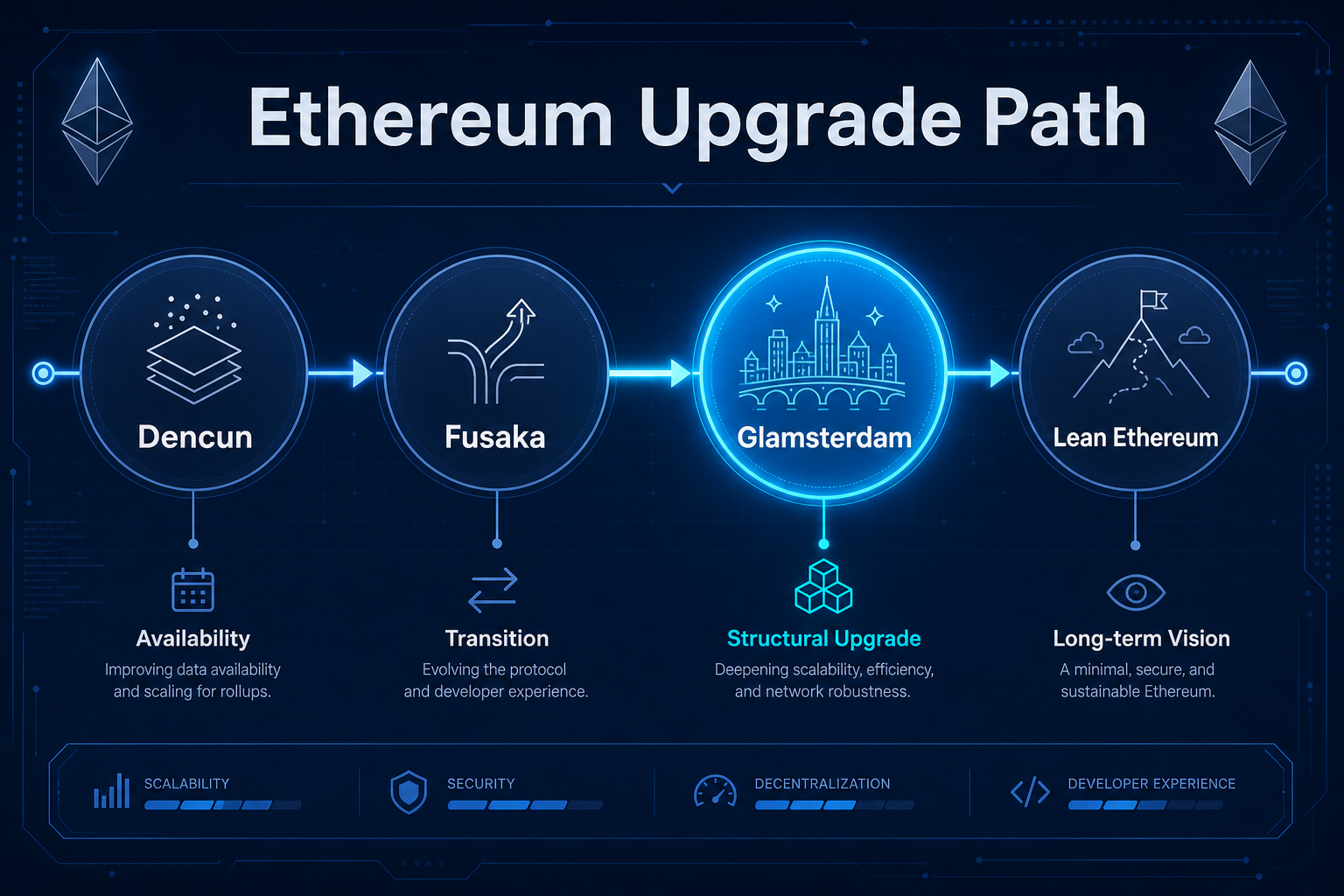 Figure 2. Ethereum upgrade timeline: the progression from Dencun and Fusaka to Glamsterdam and Lean Ethereum.
What Are the Impacts on Users, Developers, and Validators?
For everyday users, the impact is most noticeable through fee volatility, transaction confirmation stability, and peak-period performance. The upgrade may reduce systemic instability and improve predictability under complex loads.
For developers, the priority is updating execution assumptions. The impact of Glamsterdam on DApps shows that application performance, batch transactions, state access strategies, and monitoring thresholds all need review. Teams should treat the upgrade as a compatibility and expectation management project, not just a parameter tweak.
For validators and node operators, the focus is on client version coordination, testnet rehearsals, mainnet monitoring, and emergency rollback strategies. The node upgrade preparation checklist emphasizes that upgrade success depends not just on updating versions, but on having actionable checklists and exception handling processes.
What Are the Risks and Uncertainties of Glamsterdam?
The first risk is rollout timing. The upgrade window can be affected by client maturity, testing feedback, and ecosystem readiness. Adjustments to the roadmap schedule do not necessarily signal a change in direction, but they do affect market expectations and application launch plans.
The second risk is execution variance. Even with clear mechanisms, differences in client implementation, network conditions, and application loads can yield divergent experiences. Teams relying solely on ideal models, while neglecting real-world validation and monitoring, risk amplifying volatility during the upgrade.
The third risk is narrative mismatch: reducing Glamsterdam to a fee-reduction event obscures its purpose as a structural overhaul. The prudent approach is to track mechanism goals, implementation quality, and ecosystem adaptation in parallel.
Summary
Glamsterdam stands out as an independent topic because it turns long-term vision into actionable, verifiable, and debatable mechanisms. ePBS and BAL address block production collaboration and execution constraints, respectively, moving Ethereum’s conversation from mere performance to protocol governance.
A robust evaluation framework considers all three layers: protocol clarity, controllable implementation, and manageable ecosystem migration costs.
FAQ
Are Glamsterdam and Lean Ethereum the same thing?
No, they are at different levels. Lean Ethereum is the long-term roadmap and architecture; Glamsterdam is a specific upgrade milestone within that vision. The former defines strategic goals, the latter addresses stage-specific implementation and mechanism deployment.
Will fees definitely drop after Glamsterdam goes live?
The upgrade may improve execution stability and capacity management in certain scenarios, but fee outcomes depend on network demand, application load, and implementation details. Equating the upgrade with a single fee reduction is likely to create unrealistic expectations.
Do regular ETH holders need to manually migrate assets?
In most cases, regular holders do not need to take extra on-chain migration actions. Always refer to public upgrade instructions from wallets, exchanges, and Ethereum.org, and verify that guidance matches client release information.
What should development teams prioritize before Glamsterdam?
Teams should prioritize reviewing execution assumptions and testnet validation: confirm key contract paths, state access patterns, monitoring metrics, and rollback plans. Upgrade stability depends more on preparation than on last-minute responses at launch.
Why has Glamsterdam become an independent search term?
Because it addresses concrete mechanisms and operational issues, not just abstract vision. Users, developers, and node operators all have actionable questions, so search intent is naturally more focused, driving demand for dedicated content.