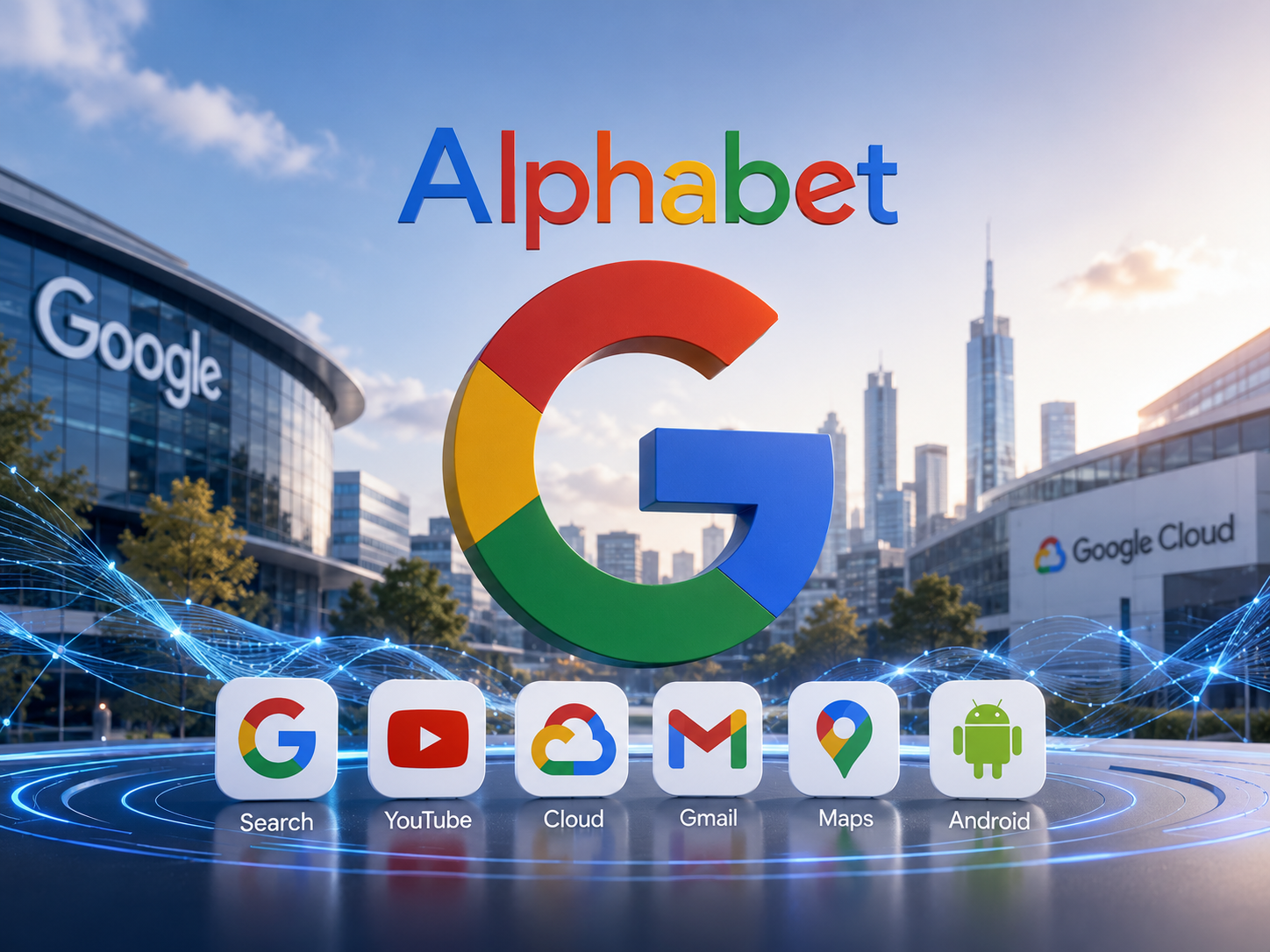
In the age of the global digital economy, Alphabet is no longer just a search engine company. Google Search connects billions of users with the information they need, YouTube has built one of the world’s largest online video platforms, and Google Cloud has become a key part of enterprise digital transformation. At the same time, advances in artificial intelligence are pushing Alphabet toward its next stage of growth.
For investors, technology industry professionals and researchers studying the digital economy, understanding Alphabet’s business model and ecosystem helps explain how internet platform companies create value, as well as how the competitive landscape among technology giants is changing in the AI era.
What Is GOOGL(Alphabet)
GOOGL represents the publicly listed company Alphabet Inc. Alphabet was established in 2015 as the holding company structure created after Google’s corporate reorganization. It manages Google as well as other innovation driven businesses.
Alphabet’s core business still revolves around Google, including products and services such as Search, advertising, Android, Chrome, YouTube, Google Maps and Google Cloud.
Alphabet adopted a holding company structure mainly to improve management efficiency and allow different businesses to develop more independently. Beyond Google’s main business, Alphabet also invests in frontier areas such as autonomous driving, life sciences and artificial intelligence research.
Alphabet has become one of the world’s most valuable technology companies and an important player in global digital advertising and internet infrastructure markets.
Google’s History and Market Position
Google was founded in 1998 as a company focused on internet search technology.
With its PageRank algorithm, Google built a leading advantage in search result quality and quickly became one of the most popular search engines in the world.
Google then gradually expanded its business, launching products such as Gmail, Google Maps, the Chrome browser, the Android operating system and YouTube. Together, these products formed an ecosystem that covers many of the internet’s core use cases.
In 2015, Google completed a corporate restructuring and established Alphabet, with Google becoming Alphabet’s largest business segment.
Today, Alphabet’s market position has evolved from a search engine company into a global provider of digital infrastructure, with significant influence across search, advertising, cloud computing and artificial intelligence.
How Google Search Works
Google Search is the most important foundation of Alphabet’s business and the core source of its advertising revenue.
Google’s search engine continuously collects webpage information through web crawlers and builds a massive index database. When a user enters a keyword, the system evaluates content relevance, authority and user experience through algorithms, then generates search results.
The core value of Google Search lies in connecting user intent with information resources.
When users look for products, services or information, Google can use search ads to match commercial information precisely with target users, turning traffic into revenue.
The success of Google Search is built on three core strengths:
The synergy between search traffic and advertising revenue has helped Google maintain an important position in the internet advertising market over the long term.
Alphabet’s Revenue Sources and Business Model
Alphabet’s business model is mainly built on advertising revenue, while gradually expanding into areas such as cloud computing and subscription services.
Alphabet’s main revenue sources currently include:
| Revenue Source |
Main Business |
| Search advertising |
Google Search |
| Video advertising |
YouTube |
| Display advertising |
Google Network |
| Cloud computing |
Google Cloud |
| Subscription services |
YouTube Premium and others |
Advertising has long accounted for the majority of Alphabet’s revenue. Google Search and YouTube have enormous user traffic, allowing Alphabet to commercialize its platforms through targeted advertising.
At the same time, Google Cloud has become one of Alphabet’s fastest growing businesses and is gradually becoming an important source of profit growth.
At its core, Alphabet’s business model is a platform based ecosystem model that creates value by connecting users, advertisers and enterprise customers.
Google Cloud’s Role in the Enterprise Market
Google Cloud is an important strategic business for Alphabet in the enterprise market.
Similar to Amazon Web Services and Microsoft Azure, Google Cloud provides enterprises with computing resources, data analytics tools, artificial intelligence services and cloud infrastructure solutions.
Google Cloud’s competitive advantages mainly come from Google’s long accumulated capabilities in data processing and artificial intelligence.
Many enterprises use Google Cloud to build data platforms, run machine learning models and develop AI applications, improving operational efficiency and digital capabilities.
As demand for AI applications continues to grow, Google Cloud is gradually becoming an important growth engine for Alphabet in the enterprise market.
Alphabet’s Positioning in the AI Market
Artificial intelligence has become one of Alphabet’s most important strategic priorities.
Google DeepMind, a subsidiary of Alphabet, has long been at the forefront of global AI research and has contributed to several major technological breakthroughs.
In recent years, Alphabet has launched the Gemini family of models and has continued integrating AI technology into Search, advertising, productivity software and cloud computing platforms.
Alphabet’s AI strategy mainly focuses on the following areas:
| Area |
Main Content |
| Large language models |
Gemini |
| AI search |
Search AI |
| Enterprise AI |
Google Cloud AI |
| AI assistants |
Gemini Assistant |
Alphabet aims to use AI technology to improve user experience while further strengthening the competitive advantages of its advertising, search and cloud computing businesses.
Alphabet, Meta and Microsoft are all leading global technology companies, but their revenue structures and business models differ significantly.
Meta’s revenue mainly comes from social media advertising, with core platforms including Facebook, Instagram and WhatsApp.
Microsoft relies more heavily on enterprise software, cloud computing and office productivity services, giving it a more diversified revenue base.
Alphabet’s defining feature is its search advertising and internet traffic ecosystem.
| Company |
Core Business |
| Alphabet |
Search, advertising, cloud computing, AI |
| Meta |
Social media and advertising |
| Microsoft |
Software, cloud computing, enterprise services |
These differences shape the three companies’ distinct competitive strategies in AI, advertising and enterprise markets.
How to Trade GOOGL Stock on Gate
As multi asset trading markets continue to develop, investors have more ways to gain exposure to US technology stocks.
As an important company in the global internet and artificial intelligence industries, Alphabet’s market performance is influenced by factors such as advertising revenue, cloud computing growth and progress in its AI strategy. As a result, it has become a technology stock watched closely by many investors.
Within the Gate TradFi product system, users can participate in GOOGL market movements in different ways.
| Product Type |
Main Features |
| Spot token |
More aligned with a long term holding approach |
| CFD products |
Track fluctuations in GOOGL’s stock price |
| Leveraged products |
Increase market exposure |
| Other derivatives |
Support more trading strategies |
For users who are focused on Alphabet’s long term development, different products can meet different needs, including asset allocation, trend trading and trading around market volatility.
Alphabet’s Strengths and Limitations
Alphabet’s strengths mainly come from its search ecosystem, advertising network, research and development capabilities and global user base.
Google Search holds a very high market share, YouTube has a massive video user base, and Android has become one of the world’s most widely used mobile operating systems.
At the same time, Google Cloud and artificial intelligence businesses provide Alphabet with new room for growth.
However, Alphabet also faces certain challenges.
Regulatory pressure, competition in the digital advertising market and industry changes brought by artificial intelligence could all affect Alphabet’s long term development.
As AI search and generative artificial intelligence develop rapidly, Alphabet needs to keep its technological innovation capabilities strong in order to maintain its competitive advantage in the global technology industry.
Summary
Alphabet is an important infrastructure provider for the global digital economy, with businesses spanning search, advertising, cloud computing, video platforms and artificial intelligence. Google Search has built a massive traffic gateway, advertising has long supported revenue growth, and Google Cloud together with Alphabet’s AI strategy is becoming a new source of growth momentum.
Understanding Alphabet’s business model, search ecosystem and artificial intelligence strategy helps build a fuller view of Google’s position in the global technology industry, as well as how internet platform companies create long term value through technology and ecosystem development.
FAQs
What Is the Difference Between GOOGL and GOOG?
GOOGL is Alphabet’s Class A stock and carries voting rights; GOOG is Class C stock and does not carry voting rights. Both represent equity ownership in Alphabet.
What Are Alphabet’s Main Revenue Sources?
Alphabet’s main revenue comes from Google Search advertising, YouTube advertising and advertising network services. Google Cloud is also an important source of growth.
How Is Google Cloud Different from AWS?
AWS has a larger market scale, while Google Cloud has strong competitiveness in data analytics, AI and machine learning.
What Role Does Gemini Play in Alphabet’s AI Strategy?
Gemini is Alphabet’s core large model system and is used across multiple product scenarios, including Search, productivity software and cloud computing.
Alphabet’s revenue comes from search advertising, cloud computing and AI businesses, while Meta mainly relies on social media advertising revenue.
How Can Users Participate in GOOGL Market Movements on Gate?
Users can participate in GOOGL market movements through spot tokens, CFDs or other related products provided by Gate. Specific availability is subject to the products actually listed on the platform.