What Is Linea’s Lineth Open-Source Project?
 (Source: LineaBuild)
As the Ethereum Layer 2 ecosystem grows at a rapid pace, an increasing number of scaling solutions are wrestling with a fundamental question: How can we prevent core technologies from being controlled by a single entity?
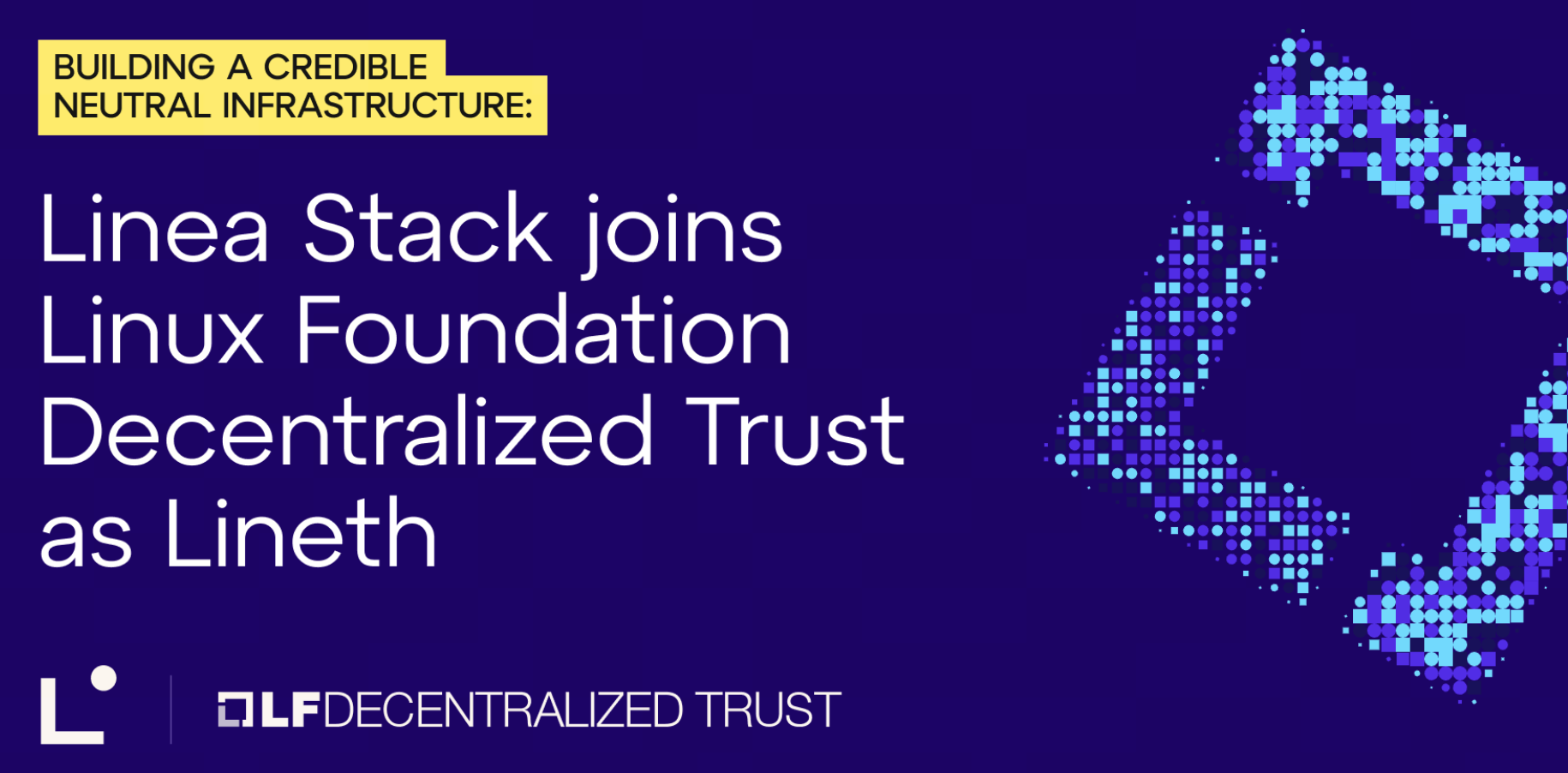
Linea recently joined the Linux Foundation Decentralized Trust (LFDT) and open-sourced its core ZK Rollup technology stack as the Lineth project — a deliberate move in this direction. By embracing foundation-backed governance and an open-source model, Linea aims to invite more developers and enterprises to co-shape the evolution of its Layer 2 technology.
What Is Linea?
 (Source: LineaBuild)
Linea is a Layer 2 network built on Ethereum that leverages ZK Rollup (Zero-Knowledge Rollup) technology to boost transaction efficiency.
Its primary goals include:
- Lowering transaction costs
- Increasing transaction speed
- Preserving Ethereum's security
- Supporting EVM-compatible applications
Linea strives to offer users lower-cost access to Ethereum applications while maintaining the main chain’s security guarantees.
What Is ZK Rollup?
ZK Rollup is a widely adopted Layer 2 scaling solution.
Its core logic works as follows:
- A large batch of transactions is first processed off-chain on Layer 2
- The resulting state is bundled and submitted to the Ethereum main chain
- A Zero-Knowledge Proof (ZK Proof) validates the correctness of the results
This approach drastically reduces the main chain’s workload without compromising security.
What Is Lineth?
Lineth is the open-source ZK Rollup technology project that Linea contributed to the Linux Foundation.
It encompasses:
- The Execution Layer
- The Consensus system
- The Zero-Knowledge Proof system
- Layer 1 and Layer 2 smart contracts
Lineth effectively covers the entire core technical architecture of Linea’s Layer 2.
Why Hand Over Management to the Linux Foundation?
Many blockchain projects in the past have touted decentralization while keeping core code and decision-making authority tightly held by a single team.
By placing its technology under the Linux Foundation’s LFDT, Linea aims to achieve several key outcomes:
1. Establish a Neutral Governance Structure
The foundation model helps mitigate:
- The risk of single-company control
- Commercial interests skewing development direction
- Excessive centralization within the ecosystem
2. Attract More Enterprises and Developers
Open-source governance tends to foster:
- Greater enterprise adoption
- Stronger community engagement
- Reliable long-term maintenance support
3. Enhance Technical Sustainability
Even if the original team undergoes changes in the future, an active open-source community can continue to maintain and evolve the technology.
Is Linea Fully Decentralized Yet?
Not yet. Although the technology stack has entered an open-source governance phase, the Linea network still contains certain centralized components, including:
- Sequencer
- Prover (Proof Generator)
- Upgrade control rights
- Security Council
These elements remain under the team’s management for now.
The current change is therefore more about opening up technical governance rather than achieving full network decentralization.
What Is the "Stage" for Layer 2?
The Layer 2 ecosystem commonly uses "Stages" to assess the degree of decentralization.
For example:
- Stage 0: Highly dependent on team control
- Stage 1: Partially decentralized
- Stage 2: Primarily controlled by smart contracts and permissionless mechanisms
Linea is currently classified as Stage 0 by several analysis platforms, meaning it still requires significant team intervention.
This is one of the most debated issues in Ethereum Layer 2 development today.
Ethereum has been moving toward a rollup-centric scaling roadmap, relying heavily on Layer 2 networks. However, if Layer 2 becomes overly centralized, it could introduce single points of failure, excessive concentration of authority, network censorship risks, and governance concerns. As a result, Credible Neutrality has emerged as a critical topic. Linea’s decision to place its technology under foundation governance represents a meaningful step toward a more open Layer 2 ecosystem.
What Goals Does Linea Aim to Achieve?
Through the Lineth initiative, Linea seeks to broaden its community of technology maintainers, drive enterprise adoption, ensure long-term development stability, and promote open-source standardization for Layer 2. This could also encourage more enterprises to contribute to Ethereum Layer 2 infrastructure.
Summary
Linea’s Lineth open-source project is not simply about making code publicly available — it signals a shift in Layer 2 governance philosophy. By joining a Linux Foundation entity, the project aims to make technical governance more neutral and expand open-source collaboration, potentially increasing transparency across the Layer 2 ecosystem. That said, the Linea network itself is not yet fully decentralized, so this initiative is better understood as a phased step on the path toward greater decentralization.