The global modernization of power infrastructure, data center buildouts, renewable energy grid integration, and industrial automation needs are fueling market growth in power distribution equipment, switchgear, transformers, and automation systems. This directly links LS Electric's business to themes like smart grids, AI data center power consumption, ESS, and EV power components.
Understanding LS Electric's business model requires a simultaneous look at the Power segment, Automation segment, and project order structure. From a Gate Stocks trading perspective, 010120 is an independent Korean stock code, distinct from other listed entities under the LS Group.
When searching, placing orders, or reviewing holdings, users should first verify the code, company name, and trading page rules. Business context can be cross-checked in LS Electric Peer Classification and Key Metrics to Review Before Investing in LS Electric.
What Is LS Electric (010120)? Which Listed Company Is It?
LS ELECTRIC Co., Ltd. is a South Korean power and automation equipment company, trading under stock code 010120 on the Korea Exchange (KRX). Founded in 1974, its business spans power equipment manufacturing, industrial automation systems, smart energy solutions, and some metal material production.
The company was formerly known as LSIS (LS Industrial Systems) and officially renamed LS ELECTRIC in 2020. When researching historical data, LSIS and LS ELECTRIC generally refer to the same listed entity.
LS Electric's product chain is extensive, encompassing power equipment like switchgear (SWGR), transformers, GIS, HVDC, and ESS, as well as automation products such as PLCs, servo systems, drives, and HMIs. For most users, LS Electric is not a pure power distribution concept stock but a platform company built around power infrastructure and industrial automation.
| Dimension |
LS Electric (010120) |
| Listed Market |
Korea Exchange (KRX) |
| Stock Code |
010120 |
| Core Positioning |
Smart Energy & Industrial Automation Solutions Provider |
| Key Business |
Power Equipment, Automation, Metal Materials |
| Group Relationship |
Listed subsidiary of LS Group |
This table summarizes LS Electric's basic profile. In trading pages, financial reports, and industry comparisons, LS Electric should be distinguished from other Korean power equipment companies, automation firms, and other LS Group entities.
LS Electric's operations can be understood through three segments: Electric (power), Automation, and Metal. The Power segment supplies transmission and distribution equipment and systems; the Automation segment offers PLCs, servo drives, drives, smart factory solutions, and railway automation; the Metal segment produces copper tubes, stainless steel tubes, and other materials for electronics, construction, and industrial applications.
| Segment |
Main Products |
Typical Use Cases |
| Power |
SWGR, Transformers, GIS, HVDC, ESS |
Power grids, data centers, industrial distribution |
| Automation |
PLCs, Servo, Drives, HMI |
Smart factories, rail transit, equipment control |
| Metal |
Copper tubes, stainless steel tubes |
Electronics, construction, industrial materials |
Power and automation are not completely independent. Many industrial clients and data center projects require integrated "power + automation" solutions, which is why LS Electric emphasizes its total solution capability. Order structures, project deliveries, and overseas expansion affect both segments simultaneously.
Why Is LS Electric Linked to Smart Grids and Power Distribution Equipment?
LS Electric holds a strong position in the Korean low-voltage switchgear and circuit breaker market, covering the entire power value chain from generation, transmission, distribution to end users. SWGR, transformers, GIS, protection measurement devices, and energy management systems are key to understanding LS Electric's Power segment.
Smart grids enhance reliability, visibility, and management efficiency of power systems. LS Electric's offerings in distribution management, SCADA, microgrids, VPP, and ESS mean its business extends beyond hardware into system-level energy management.
Stable power distribution is critical for data centers, industrial plants, and large buildings, further driving demand for distribution equipment. The order flow and project delivery cadence for distribution equipment are core variables for monitoring LS Electric's Power segment performance.
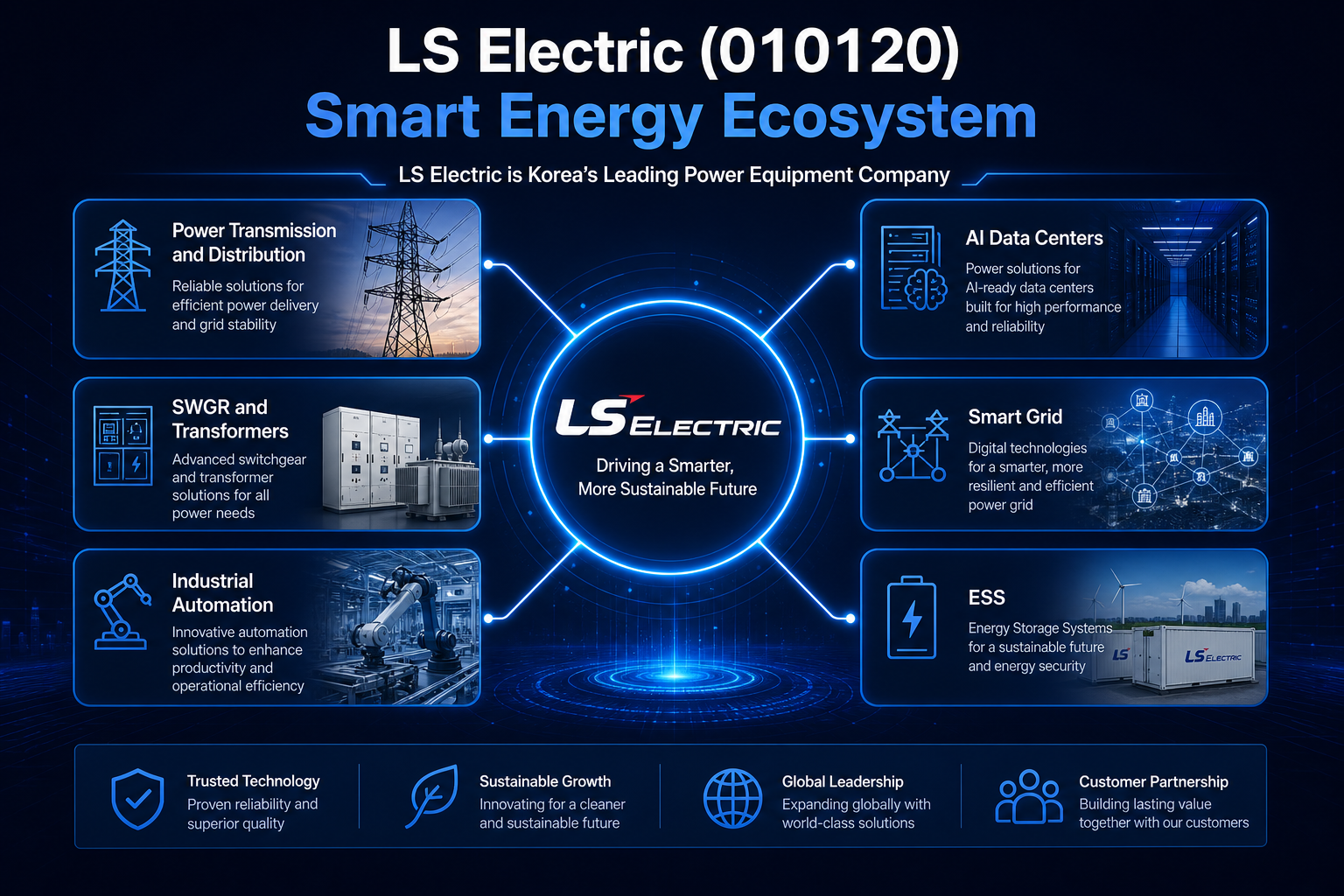 Figure 1. LS Electric Smart Energy Ecosystem: Power transmission and distribution equipment, industrial automation, AI data center, and smart grid demands are interconnected.
Why Are AI Data Centers Interested in LS Electric?
AI data centers require stable, high-density, and scalable power distribution infrastructure. Training, inference, cooling, and networking equipment generate continuous power loads, imposing higher demands on SWGR, transformers, PDUs, power distribution cabinets, and DC power solutions.
LS Electric is therefore a key player in the discussion around data center power equipment and global distribution infrastructure. The company is advancing DC power solutions, UL-certified distribution systems, and related automation products in the North American data center market, connecting with power equipment orders from major global tech companies.
Data center demand is one business variable—it should not be oversimplified as a single order determining the entire outcome. Project delivery, certification, grid connection, and customer concentration still require independent assessment.
How Does LS Electric Differ from Other Korean Power Equipment Companies?
Companies like LS Electric, Hyosung Heavy Industries, Hyundai Electric, and Iljin Electric are all Korean power equipment players, but they differ in product mix, automation exposure, overseas presence, and project types. LS Electric's differentiators include the synergy between power equipment and automation, dominance in SWGR and transformers, and expansion into data center and overseas projects.
When comparing Korean power equipment firms, first determine whether revenue is primarily from distribution equipment, heavy electricals, automation, or materials. Companies with higher automation exposure, greater data center order share, and more overseas revenue will have different cyclical drivers and risk profiles.
What Risks Should Be Considered Before Investing in or Trading LS Electric?
Risks for LS Electric fall into business, project, market, and trading execution categories. Business risks include order cycles, project delivery, raw material costs, automation demand fluctuations, and overseas expansion execution.
Market risks include KRW exchange rates, liquidity on the Korean stock market, and industry competition. Trading execution risks come from code misidentification, order type selection, fee rules, and USDT capital management.
Before trading LS Electric, users should separately verify the LS Electric Risk Metrics Checklist against the Gate Stocks page. Company fundamentals and platform operations are two distinct layers and should not be conflated.
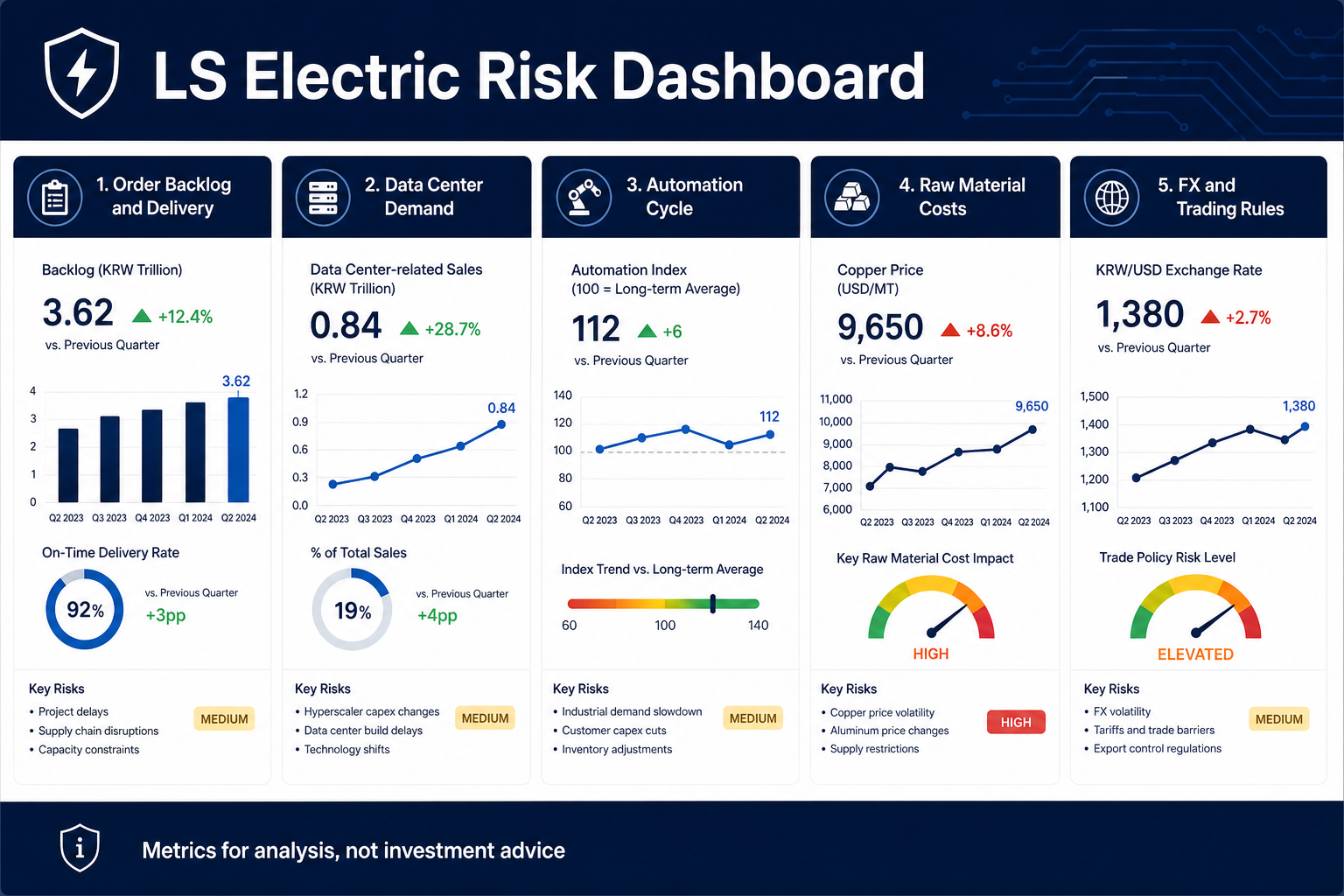 Figure 2. LS Electric Risk Dashboard: Order delivery, data center demand, automation cycles, raw material costs, and FX trading rules are core checkpoints.
How to Find and Trade 010120 on Gate?
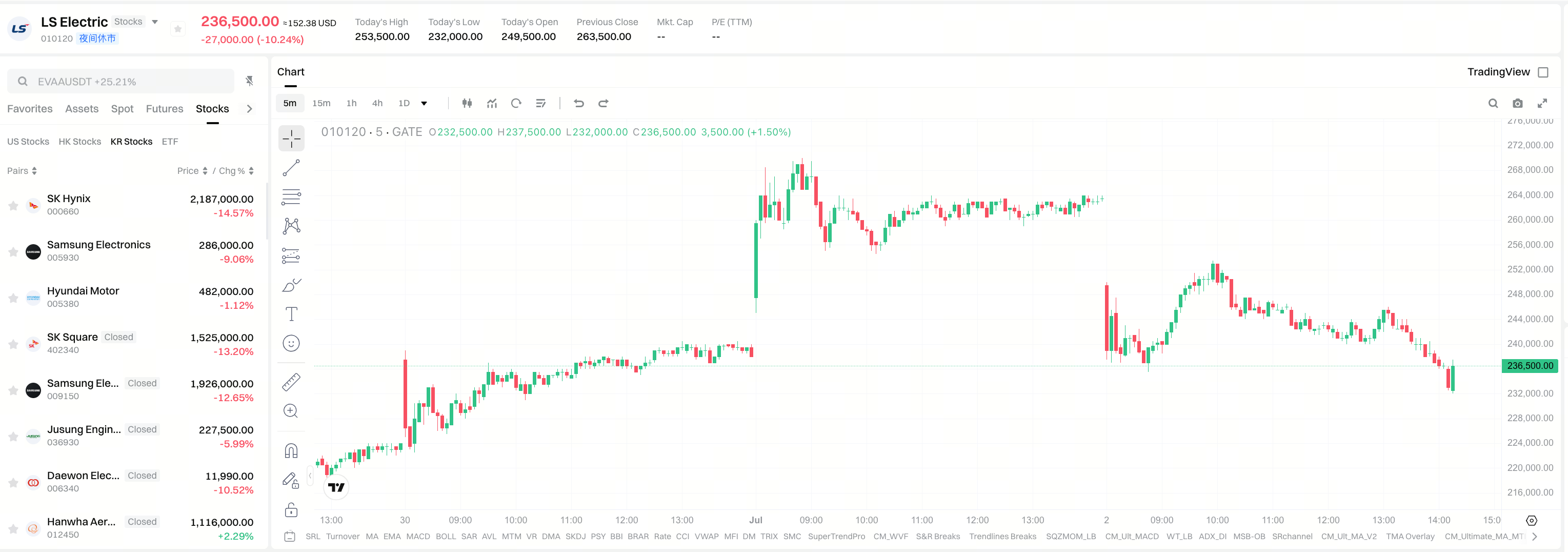
On Gate Stocks, users can search for LS Electric using the stock code 010120. The standard process includes confirming account and Korean stock trading permissions, preparing available USDT, navigating to the stock page, searching for 010120, verifying the name LS Electric or LS Electric (LS电气), selecting an order type, and reviewing order history and holdings after execution.
Investors buying LS Electric with USDT should incorporate account preparation, code search, order placement, and fee verification into their workflow.
When viewing 010120 on the Gate Stocks page, confirm tradable sessions, order types, fee rules, KRW quote scope, and available USDT balance. The trading page handles code, order, fee, and position issues. Company analysis still requires attention to power equipment orders, automation cycles, and risk metrics.
Summary
LS Electric (010120) is a major listed company in South Korea's power equipment and automation sector, defined by its transmission and distribution equipment, industrial automation, smart energy solutions, and LS Group affiliation. When analyzing LS Electric, simultaneously differentiate its business segments, peer categories, Gate Stocks trading path, and risk metrics—avoiding oversimplification with a single label like "power distribution" or "AI data center."
FAQ
What is LS Electric (010120)?
LS Electric corresponds to LS Electric Co., Ltd., a power and automation equipment company listed on the KRX with stock code 010120. Its core business covers transmission and distribution equipment (SWGR, transformers, GIS), industrial automation (PLC, servo, drives), and metal materials. LS Electric is a subsidiary of LS Group, but code 010120 only represents the LS Electric entity.
Why is LS Electric related to AI data centers?
AI data centers need stable, high-density power distribution infrastructure. Training, inference, and cooling equipment create continuous power loads. LS Electric's SWGR, transformers, and DC power solutions are therefore frequently analyzed within the data center power demand framework. UL-certified distribution systems and DC power solutions in North America are important areas for tracking LS Electric's data center exposure.
What is the relationship between LS Electric and LS Group?
LS Electric is a listed subsidiary of LS Group. Stock code 010120 corresponds exclusively to LS Electric Co., Ltd. LS Group has other listed entities and business segments. Do not confuse 010120 with other LS Group listed companies when searching codes or placing orders.
How to find 010120 on Gate?
Enter Gate Stocks, search for code 010120, and verify the company name is LS Electric or LS Electric (LS电气). Before placing an order, confirm Korean stock trading permissions, available USDT, order type, fee rules, and tradable sessions. After execution, check order status and position quantity under "Current Orders" and "Holdings."
What is the most important thing to confirm before trading LS Electric?
At the trading level, confirm stock code 010120, company entity LS Electric, available USDT, trading session, fee rules, and order type. At the business level, focus on SWGR and transformer order cycles, project delivery progress, automation sentiment, and the impact of KRW exchange rates on account calculations.