Quản trị DAO truyền thống thường dựa vào việc bỏ phiếu bằng token để quyết định đề xuất, nhưng cách này dễ dẫn đến tỷ lệ tham gia thấp, quyết định cảm tính và hiệu quả kém. MetaDAO hướng tới phản ánh kỳ vọng quản trị thông qua Giá thị trường, sử dụng “Giao dịch” thay cho “Bỏ phiếu” làm phương thức ra quyết định chủ đạo.
Về cấu trúc, MetaDAO được xây dựng dựa trên Futarchy, thị trường dự đoán, quản lý Treasury, cơ chế tài trợ STAMP và hệ thống META token. Mục tiêu là thiết lập hệ thống quản trị dựa trên thị trường trên chuỗi.
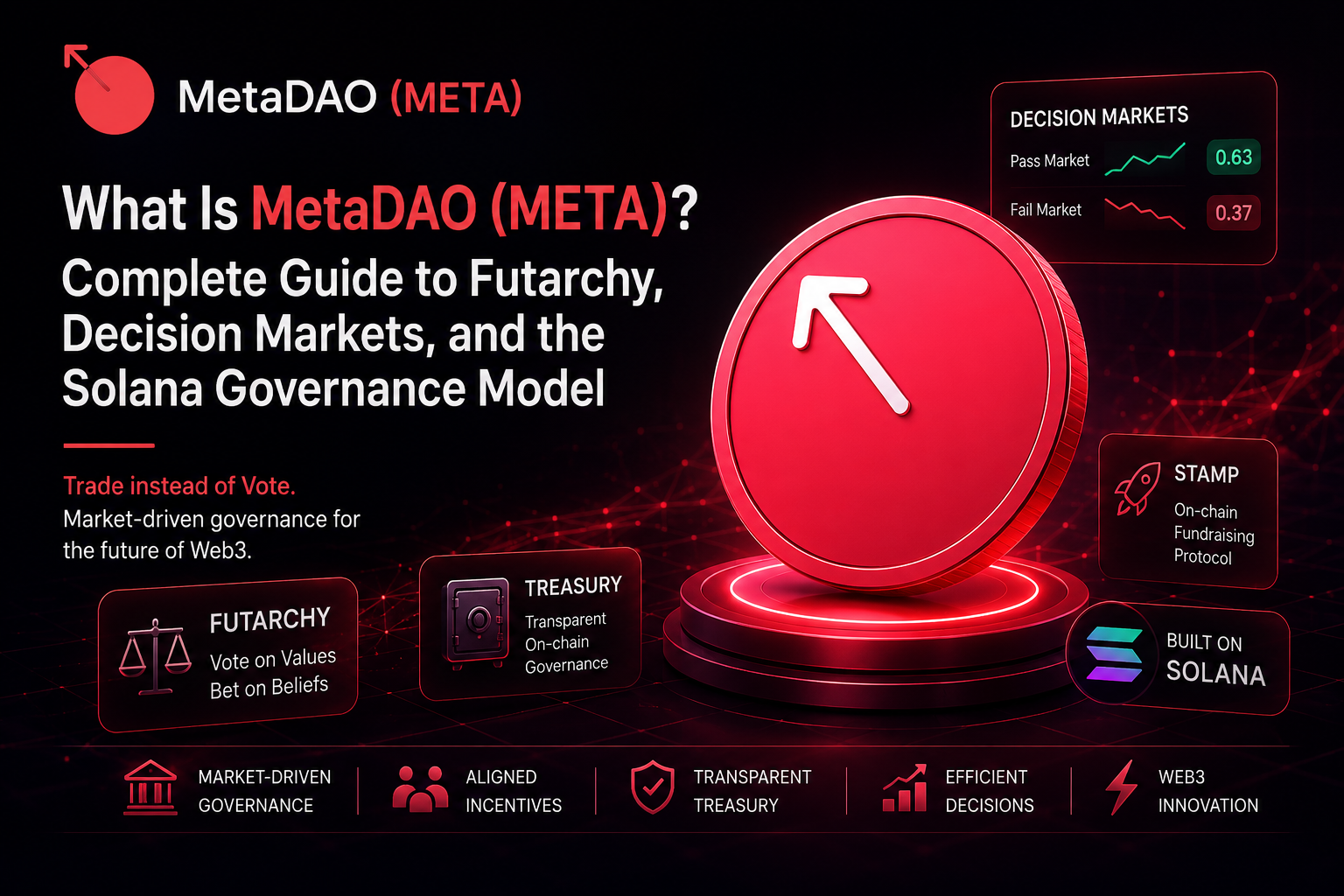
MetaDAO là giao thức quản trị trên chuỗi dựa trên lý thuyết Futarchy, thiết kế để xác định kết quả đề xuất DAO bằng hoạt động thị trường thay cho bỏ phiếu truyền thống. Nguyên tắc cốt lõi là “Giao dịch thay cho Bỏ phiếu”, nghĩa là giao dịch thay thế bỏ phiếu bằng token làm cơ chế ra quyết định.
MetaDAO hoạt động trên mạng Solana, xây dựng hệ thống quản trị xoay quanh thị trường dự đoán. Thành viên cộng đồng gửi đề xuất quản trị, hệ thống tạo thị trường cho các kết quả khác nhau. Người dùng thể hiện kỳ vọng bằng giao dịch, và Giá thị trường quyết định việc thực thi đề xuất.
Cơ chế này chuyển quản trị từ “thể hiện ý kiến” sang “khám phá giá”. Với DAO, Giá thị trường được xem là chỉ báo chính xác hơn về kỳ vọng thực sự, thay vì quyền lực bỏ phiếu dựa trên lượng token.
Futarchy là nền tảng lý thuyết quản trị của MetaDAO, tận dụng dự đoán thị trường để xác định Hướng quản trị. Thay vì bỏ phiếu trực tiếp, Futarchy cho phép thị trường cạnh tranh giá để đánh giá đề xuất nào có giá trị hơn.
Trong MetaDAO, cộng đồng gửi đề xuất quản trị. Hệ thống tạo hai thị trường cho mỗi đề xuất—một cho Phê duyệt, một cho Từ chối. Nhà giao dịch hành động dựa trên kỳ vọng về kết quả. Hệ thống xác định Hướng thực thi bằng giá, thanh khoản và TWAP.
Tài liệu MetaDAO nhấn mạnh ý tưởng Futarchy: “Bỏ phiếu về giá trị, đặt cược vào niềm tin.” Cộng đồng xác định mục tiêu, thị trường quyết định cách đạt được mục tiêu đó.
Cấu trúc này gắn kết kết quả quản trị với động lực thị trường. Người phán đoán sai chịu chi phí kinh tế, người đúng nhận Lợi nhuận. Quá trình quản trị giống thị trường dự đoán hơn bỏ phiếu truyền thống.
Thị trường dự đoán thay thế bỏ phiếu DAO truyền thống ra sao
Thị trường dự đoán là lớp thực thi cốt lõi của MetaDAO, chuyển đề xuất thành thị trường giao dịch. Giá thị trường trở thành tín hiệu quản trị, không chỉ là công cụ định giá.
Hệ thống tạo thị trường Proposal Pass và Proposal Fail cho mỗi đề xuất. Người dùng Giao dịch dựa trên đánh giá về kết quả. Giá thị trường hình thành kỳ vọng quản trị. Giao thức quyết định thực thi đề xuất dựa trên TWAP và kết quả thị trường.
| Chiều so sánh |
Thị trường dự đoán MetaDAO |
Bỏ phiếu DAO truyền thống |
| Phương thức quản trị |
Giao dịch thị trường |
Bỏ phiếu bằng token |
| Tín hiệu cốt lõi |
Giá thị trường |
Số phiếu bầu |
| Chi phí tham gia |
Rủi ro giao dịch |
Thường không có rủi ro |
| Hình thành kết quả |
Khám phá giá |
Đếm phiếu bầu |
| Động lực khuyến khích |
Phán đoán đúng nhận Lợi nhuận |
Quyền lực bỏ phiếu quyết định ảnh hưởng |
So sánh này cho thấy MetaDAO tập trung vào động lực kinh tế và khám phá giá, trong khi DAO truyền thống đề cao trọng lượng token. Người tham gia quản trị phải chịu rủi ro thị trường cho phán đoán, không chỉ thể hiện ý kiến.
META token là tài sản cốt lõi trong hệ thống quản trị MetaDAO, cho phép tham gia quản trị, quản lý Treasury, động lực thị trường và kiểm soát giao thức. META kết nối thị trường dự đoán với quản trị DAO.
Người nắm giữ META tham gia quản trị giao thức và quy trình đề xuất. Thị trường dự đoán tạo tín hiệu giá cho đề xuất. Quản lý Treasury và phân bổ nguồn lực chịu ảnh hưởng từ kết quả quản trị. Chủ sở hữu META điều chỉnh hướng giao thức qua thị trường và quản trị.
Tài liệu chính thức xác nhận META không có Hard Cap cố định; phát hành thêm phải thông qua đề xuất quản trị và quyết định thị trường. Quyền đúc token được kiểm soát bởi quy trình quản trị, không phải đội ngũ tập trung.
Cơ chế này gắn thay đổi nguồn cung META trực tiếp với quản trị. So với mô hình nguồn cung cố định, MetaDAO ưu tiên quản lý tài nguyên và phát hành token dựa trên thị trường.
Quản lý Treasury của MetaDAO dựa trên Futarchy và thị trường dự đoán, sử dụng phán đoán thị trường để quyết định thời điểm dùng quỹ Treasury.
Cộng đồng gửi đề xuất liên quan đến Treasury như tài trợ hệ sinh thái, chi tiêu đội ngũ hoặc động lực thị trường. Hệ thống tạo thị trường dự đoán phù hợp. Nhà giao dịch Giao dịch quanh kết quả đề xuất, hình thành Giá thị trường. Giao thức quyết định thực thi hoạt động quỹ Treasury dựa trên kết quả thị trường.
Cấu trúc này khiến việc kiểm soát Treasury không còn phụ thuộc hoàn toàn vào bỏ phiếu token, mà còn tích hợp ràng buộc thị trường. Điều này giúp DAO giảm vấn đề phân bổ nguồn lực do quản trị cảm tính và bỏ phiếu không chi phí.
Cơ chế tài trợ STAMP hoạt động ra sao
STAMP là cơ chế tài trợ trên chuỗi của MetaDAO, thiết kế để tạo quy trình khởi động dự án dựa trên thị trường trong hệ sinh thái Solana. STAMP tích hợp tài trợ, Ownership Coin và quản lý Treasury trong cùng hệ thống quản trị.
Dự án tạo cấu trúc tài trợ qua STAMP. Hệ thống phát hành Ownership Coin và mở giao dịch thị trường. Treasury nhận quỹ và quyền quản trị. Phân bổ nguồn lực, phát hành bổ sung và hành động quản trị được quản lý qua thị trường dự đoán Futarchy.
Tài liệu MetaDAO ghi chú STAMP kết hợp ICO, Treasury và Futarchy, nhấn mạnh quỹ huy động trên chuỗi vẫn chịu ràng buộc quản trị.
Cơ chế này liên kết tài trợ với quản trị dài hạn, thay vì chỉ hoàn thành bán token một lần.
Ứng dụng chính của MetaDAO gồm quản trị DAO, quản lý Treasury, tài trợ trên chuỗi và thị trường dự đoán. Giá trị cốt lõi là thay thế quy trình bỏ phiếu kém hiệu quả bằng cơ chế thị trường.
DAO có thể dùng Futarchy để quản lý Treasury và đề xuất quản trị. Dự án hoàn thành tài trợ trên chuỗi qua STAMP. Ownership Coin và thị trường dự đoán thiết lập quản trị liên tục cho giao thức. Giá thị trường là yếu tố chính cho phân bổ nguồn lực.
MetaDAO không chỉ là công cụ quản trị, mà là khung quản trị trên chuỗi tập trung vào quyết định thị trường. Ứng dụng hướng tới các giao thức cần quản lý nguồn lực liên tục và quản trị dài hạn.
Khác biệt cốt lõi của MetaDAO so với DAO truyền thống là chuyển từ “bỏ phiếu token” sang “giao dịch thị trường” làm cơ chế quản trị.
| Chiều so sánh |
MetaDAO |
DAO truyền thống |
| Logic quản trị cốt lõi |
Futarchy |
Bỏ phiếu token |
| Phương thức ra quyết định |
Giá thị trường |
Số phiếu bầu |
| Động lực quản trị |
Lợi nhuận và rủi ro giao dịch |
Trọng lượng token |
| Quản lý Treasury |
Ràng buộc thị trường |
Bỏ phiếu cộng đồng |
| Cơ sở thực thi đề xuất |
TWAP và kết quả thị trường |
Tỷ lệ phê duyệt phiếu bầu |
DAO truyền thống dựa vào số người nắm giữ token và tỷ lệ tham gia bỏ phiếu, còn MetaDAO đề cao tín hiệu thị trường và động lực kinh tế. Người tham gia quản trị phải chịu rủi ro thị trường thực sự, không chỉ bỏ phiếu với chi phí thấp.
Ưu điểm của MetaDAO gồm nâng cao hiệu quả quản trị nhờ Futarchy và thị trường dự đoán, đồng thời đưa động lực thị trường vào quyết định DAO. Kết quả quản trị phụ thuộc nhiều hơn vào phán đoán thị trường thay vì số lượng token.
Người tham gia thị trường phải chịu rủi ro giao dịch, nên kết quả quản trị có thể phản ánh kỳ vọng thực sự tốt hơn. Quản lý Treasury và tài trợ cũng vận hành trong khung quản trị thống nhất.
Hạn chế tiềm năng gồm thanh khoản thị trường chưa đủ, ngưỡng tham gia cao hơn, và thị trường dự đoán có thể bị ảnh hưởng bởi tâm lý ngắn hạn. Nếu Độ sâu thị trường thấp, giá có thể không phản ánh giá trị quản trị dài hạn.
Tóm tắt
MetaDAO là giao thức quản trị Futarchy trên Solana, nổi bật với thị trường dự đoán, quản lý Treasury, hệ thống tài trợ STAMP và quản trị META token. Thông qua thị trường Proposal Pass và Proposal Fail, MetaDAO thay thế bỏ phiếu DAO truyền thống bằng khám phá giá.
Đổi mới cốt lõi của MetaDAO là gắn kết quản trị với động lực thị trường, yêu cầu người tham gia thể hiện kỳ vọng và chịu rủi ro bằng giao dịch. Trọng tâm là quản trị DAO, quản lý Treasury và tài trợ trên chuỗi.
Câu hỏi thường gặp
MetaDAO là gì
MetaDAO là giao thức quản trị Futarchy trên Solana, thay thế cơ chế bỏ phiếu DAO truyền thống bằng thị trường dự đoán và Giá thị trường.
Futarchy nghĩa là gì trong MetaDAO
Futarchy là cơ chế sử dụng dự đoán thị trường để xác định kết quả quản trị. Trong MetaDAO, kết quả đề xuất hình thành qua giao dịch thị trường và định giá, không phải bỏ phiếu trực tiếp.
Chức năng của META token là gì
META token dùng để tham gia quản trị, quản lý Treasury, động lực thị trường và kiểm soát giao thức, đồng thời gắn với cơ chế phát hành token.
Sự khác biệt giữa MetaDAO và DAO truyền thống là gì
DAO truyền thống dựa vào bỏ phiếu token, còn MetaDAO đề cao giao dịch thị trường và khám phá giá, sử dụng Futarchy để xác định hướng quản trị.
STAMP là gì
STAMP là cơ chế tài trợ trên chuỗi của MetaDAO, kết hợp Ownership Coin, Treasury và Futarchy để hỗ trợ tài trợ dự án và quản trị liên tiếp.