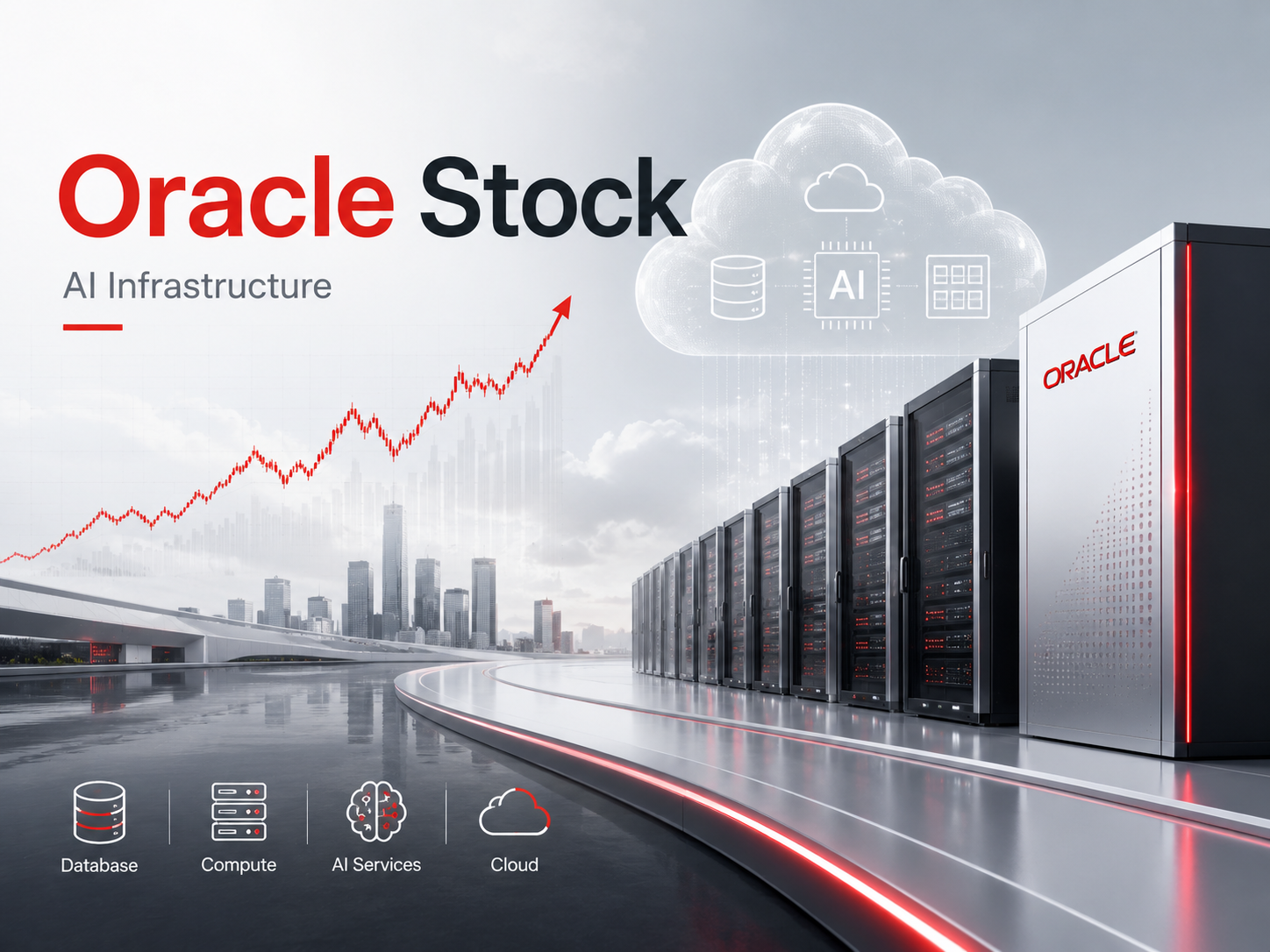
Oracle built its early competitive advantage with relational database software, then steadily expanded into middleware, ERP, customer management, industry applications, servers, and cloud computing. As enterprise IT architecture shifted from on-premises deployment to cloud services, Oracle transitioned from traditional software licensing to a revenue structure driven by cloud services, subscription support, and long-term contracts.
AI infrastructure has further redefined Oracle’s business landscape. OCI not only supports traditional enterprise applications, but also delivers compute, storage, and networking for model training, inference, GPU clusters, and large-scale data processing—positioning Oracle as a database provider, enterprise software company, and cloud infrastructure operator all at once.
What Is Oracle Corporation
Oracle’s core value lies in helping organizations store, manage, analyze, and leverage mission-critical business data. Unlike software platforms focused on individual users, Oracle’s customers are typically large enterprises, public agencies, and industry organizations. Its solutions are deployed across finance, HR, supply chain, customer management, healthcare, and other long-term business systems.
The company’s strategic focus has evolved from a single database product to a comprehensive enterprise technology stack. Oracle now delivers databases and development platforms, operates the OCI cloud infrastructure, and, through applications like Fusion Cloud and NetSuite, covers enterprise processes such as ERP, HCM, supply chain, and customer experience.
This integrated ecosystem allows clients to run databases, infrastructure, and business applications on a unified technology platform. While this high level of integration offers significant product synergy, enterprises must also consider migration complexity, compatibility with existing systems, and long-term service costs.
Oracle’s Growth and Market Position
Oracle’s evolution can be summarized as a shift from a database vendor to a full-spectrum enterprise cloud platform. Relational databases built its initial customer base; subsequent in-house innovation and acquisitions expanded the company into enterprise applications, middleware, servers, industry software, and cloud services.
In the cloud era, Oracle’s strategy follows two main tracks: OCI delivers foundational services—compute, storage, databases, and networking—while Fusion Cloud Applications and NetSuite provide SaaS solutions for business units. Oracle officially positions its product portfolio as a complete, highly integrated stack of cloud applications and platform services.
From a competitive standpoint, Oracle’s reach extends beyond database vendors. In infrastructure, OCI targets large-scale cloud and AI workloads; in enterprise applications, Fusion Cloud and NetSuite compete with other ERP, HCM, and CRM platforms; in databases, Oracle maintains on-premises, cloud, and multi-cloud deployment capabilities.
Oracle’s Core Business Structure
Oracle’s business is structured across cloud services and license support, cloud and on-premises software licenses, hardware, and professional services. Cloud services and license support are the primary revenue drivers, encompassing OCI and cloud application subscriptions as well as technical support for traditional database and software products.
| Business Segment |
Key Products or Services |
Revenue Model |
Core Customer Needs |
| Cloud Infrastructure |
OCI, compute, storage, networking, database cloud |
Cloud resource usage & contract revenue |
Running enterprise systems, databases, and AI workloads |
| Database & Platform |
Oracle Database, Autonomous Database |
Cloud subscription, software licensing & support |
Data storage, transaction processing, analytics |
| Cloud Applications |
Fusion ERP, HCM, SCM, CX |
SaaS subscription revenue |
Managing finance, HR, and supply chain |
| Midmarket Applications |
NetSuite |
Cloud subscription revenue |
Integrated ERP, finance, and business management |
| Software Licensing |
Database and enterprise software licenses |
New and renewal licenses |
On-premises and hybrid cloud environments |
| Hardware & Services |
Engineered systems, implementation, consulting |
Product sales & project services |
Specialized systems, deployment, technical support |
This structure highlights Oracle’s blend of stable, recurring cloud subscriptions and support revenue with more variable income from software licensing, hardware, and professional services. As cloud business grows, revenue predictability improves, but capital expenditure for data center expansion also rises.
Why Oracle Database Remains Foundational
Oracle Database remains the company’s foundational business because countless enterprise core systems depend on it for transaction processing, data integrity, security, and continuity. Banks, retailers, telecoms, public sector, and large-scale enterprise applications require stable, long-term data architectures, making database migration a technically and operationally intensive process.
The database business generates both licensing and support revenue, while also serving as a migration on-ramp to OCI. Enterprises can continue leveraging familiar Oracle database technologies while shifting workloads to OCI, dedicated cloud environments, or interconnected multi-cloud architectures—lowering the barrier to core system modernization.
This synergy between database and cloud infrastructure is central: Oracle Database provides the customer base and data gateway, OCI delivers compute and deployment environments, and cloud applications transform data into business processes. The database is no longer standalone software but the underlying foundation of Oracle’s cloud platform and application ecosystem.
How Oracle Cloud Infrastructure Powers Cloud and AI
Oracle Cloud Infrastructure is the company’s foundational cloud platform, offering compute, storage, networking, database, security, and developer services. Official documentation notes OCI spans global commercial and government regions, provides 200+ infrastructure services, and supports direct interconnects with Microsoft Azure and Google Cloud.
For AI workloads, OCI supports model training, inference, data processing, and GPU-intensive tasks. AI systems require immense compute, high-bandwidth networking, and storage capacity. Oracle’s cloud data centers deliver these as on-demand services, sparing customers the burden of building their own infrastructure.
OCI impacts Oracle’s business in three key ways:
- It expands cloud infrastructure revenue and increases the scale of long-term contracts and remaining performance obligations.
- It centralizes Oracle Database, enterprise data, and generative AI workloads in a unified environment.
- It drives data center, server, and network investments, increasing depreciation, financing needs, and cash flow pressure.
As such, OCI is both Oracle’s main growth engine and its most capital-intensive business. Investors must consider not just revenue growth, but also data center capacity, margins, capital expenditures, and contract fulfillment rates.
Revenue Generation: Fusion Cloud, NetSuite, and Enterprise Applications
Fusion Cloud Applications use a SaaS subscription model to deliver ERP, HCM, supply chain management, enterprise performance management, and customer experience solutions to large enterprises. Customers pay on a contract cycle, while Oracle handles software updates, cloud operations, security, and feature enhancements—making this revenue stream more recurring than one-off licenses.
NetSuite targets mid-sized and growth organizations, offering finance, ERP, inventory, project, and business management. It extends Oracle’s reach beyond large enterprises, enabling multi-tiered service for organizations of various sizes and needs.
The value of Fusion Cloud and NetSuite lies in both subscription fees and long customer lifecycles. Enterprise applications are deeply embedded in finance, HR, and supply chain processes; replacing them requires reconfiguring data, permissions, and workflows. This complexity increases customer retention but also makes implementation and organizational change more challenging.
Oracle’s Revenue Sources and Profit Model
Oracle’s revenue is primarily driven by cloud services and license support. In fiscal 2025, total revenue reached $57.4 billion, with cloud services and license support contributing $44 billion; cloud and on-premises software licenses added $5.2 billion. Growth in cloud services and support shows Oracle’s shift from one-time licensing toward subscriptions, cloud resource usage, and long-term support.
Within cloud services and license support, applications and infrastructure are the two key sources. Oracle’s 2025 Form 10-K indicates that application cloud services and license support account for 44% of this segment’s revenue, with the rest mainly from infrastructure cloud services and support.
| Profit Source |
Revenue Traits |
Stability |
Main Growth Drivers |
Key Costs or Constraints |
| Cloud Infrastructure |
Usage- or contract-based billing |
Medium-high |
OCI capacity, AI demand, database migration |
Data center & server capital expenditures |
| Cloud Applications |
SaaS subscription fees |
High |
Fusion, NetSuite customer growth |
Sales, implementation, R&D |
| License Support |
Renewals from existing software clients |
High |
Customer renewals, product upgrades |
Migration of legacy systems to cloud |
| Software Licensing |
New and renewal licenses |
Lower |
Large projects, database procurement |
Revenue recognition volatility |
| Hardware |
Server & engineered system sales |
Lower |
Specialized deployments |
Supply chain, hardware margins |
| Professional Services |
Consulting, implementation |
Medium-low |
Enterprise migration, app rollouts |
Personnel costs, project cycles |
Oracle’s profit model can be summed up as: “Legacy support revenue provides stability, cloud applications drive recurring growth, and OCI delivers expansion.” This balances traditional and new business, but cloud infrastructure growth makes the relationship between operating cash flow and capital expenditures a critical financial variable.
What Does ORCL Stock Represent and What Drives Its Price
ORCL is Oracle Corporation’s common stock, traded on the New York Stock Exchange under the ticker ORCL. Holding common stock means owning equity in the company—not direct ownership of Oracle Database, OCI servers, or any single cloud contract. Oracle’s investor relations page confirms ORCL as its NYSE-listed security.
ORCL’s price reflects market expectations for Oracle’s future revenue, profit, cash flow, and capital requirements. Growth in cloud services, OCI capacity, AI contracts, remaining performance obligations, database renewals, and enterprise application performance all shape how the market values Oracle’s future.
Key drivers include:
- Sustained growth in OCI and cloud application revenue
- Large cloud contracts converting to recognized revenue as planned
- The impact of AI data center buildout on capital expenditures, debt, and cash flow
- Stable renewals in database and license support
- Shifts in competition across cloud, database, and enterprise software markets
- Margins, free cash flow, share buybacks, and dividend policies
These factors can pull valuation in different directions. For example, new AI cloud contracts may boost future revenue, but building the required compute capacity means upfront investment—so order growth, revenue recognition, and cash flow pressure may all occur together.
The Relationship Between Oracle Corporation and ORCL Stock
Oracle Corporation is the underlying business entity that operates databases, cloud infrastructure, and enterprise applications; ORCL stock is the tradable equity that represents ownership in the company on capital markets. Oracle’s products, customers, revenue, and assets form its fundamentals; the stock price reflects those fundamentals plus market expectations, interest rates, and valuation multiples.
Business improvements may not result in immediate stock price gains, as markets often price in expectations ahead of results. If cloud revenue growth is already reflected in valuation, even improving financials may not lift the stock unless growth beats expectations; conversely, short-term capex increases don’t necessarily signal long-term value erosion.
| Comparison |
Oracle Corporation |
ORCL Stock |
| Nature |
Operates software, cloud services, infrastructure |
Listed equity representing company ownership |
| Core Elements |
Products, staff, customers, contracts, assets |
Stock price, market cap, trading, shareholder rights |
| Value Source |
Revenue, profit, cash flow, competitiveness |
Company fundamentals + market valuation |
| Key Drivers |
Product demand, customer contracts, capital investment |
Earnings, rates, sentiment, capital flows |
| Ownership |
Cannot be directly “owned” by individuals |
Shareholders own a portion of company equity indirectly |
| Key Metrics |
Cloud revenue, RPO, margins, capex |
EPS, valuation multiples, dividends, stock price |
Thus, to understand Oracle, start with the business, then consider ORCL stock. ORCL is simply the capital market expression of Oracle’s ownership and future prospects—it cannot substitute for in-depth analysis of databases, cloud services, enterprise applications, or financial structure.
Oracle’s Advantages and Limitations
Oracle’s strengths stem from its database customer base, enterprise application suite, and end-to-end cloud technology stack. Oracle Database is deeply embedded in mission-critical systems; Fusion Cloud and NetSuite generate recurring revenue; OCI enables the company to capture AI compute and cloud migration demand.
Limitations include intense cloud market competition, complex system migrations, and high capital investment requirements. Large enterprises may adopt multi-cloud strategies, and database/application migrations can be lengthy. OCI’s expansion requires ongoing data center construction and hardware procurement, so revenue growth is closely tied to capital needs.
An integrated product stack can boost customer lock-in but may also increase implementation complexity. Clients must weigh product compatibility, migration effort, vendor lock-in, compliance, and long-term costs—all factors that impact adoption speed and contract cycles for Oracle products.
Summary
Oracle Corporation is an enterprise technology leader built on databases, now expanded into cloud infrastructure and enterprise applications. Oracle Database provides a stable customer base, Fusion Cloud and NetSuite generate subscription revenue, and OCI propels the company into AI compute and large-scale cloud infrastructure markets.
ORCL stock represents investor ownership in Oracle—not in a specific database or cloud product. Understanding ORCL requires analyzing Oracle’s business structure, revenue streams, cloud growth, and capital expenditures, then factoring in market expectations for future profits and cash flow.
FAQ
What does Oracle Corporation mainly do?
Oracle provides databases, cloud infrastructure, and enterprise applications. Core offerings include Oracle Database, OCI, Fusion Cloud Applications, and NetSuite.
Why is Oracle Database important?
Oracle Database underpins critical enterprise data and transaction systems, supporting software maintenance, cloud migration, and OCI database services.
What’s the relationship between OCI and Oracle Database?
OCI supplies the cloud infrastructure for running databases and enterprise apps; Oracle Database is a key workload and migration driver for OCI.
How do Fusion Cloud and NetSuite differ?
Fusion Cloud targets large enterprises and complex organizations; NetSuite focuses on mid-sized and growth companies. Both use a cloud subscription model.
Does ORCL stock represent Oracle Corporation?
Yes—ORCL is Oracle Corporation’s common equity. Its price reflects company fundamentals, profit outlook, and market valuation.
What factors affect ORCL stock?
ORCL is influenced by OCI growth, cloud contract execution, database renewals, enterprise app growth, capital spending, cash flow, and market valuation trends.