Founded in 1971, Starbucks began as a small retail shop selling coffee beans and equipment. Its early business model differed from today’s familiar café format, focusing primarily on the sale of premium coffee beans. In 1987, after Howard Schultz acquired Starbucks, the company introduced the “Third Place” concept, transforming coffee shops into social spaces distinct from home and work.
This strategic shift reshaped global coffee consumption. Starbucks doesn’t just sell coffee—it offers a lifestyle, featuring inviting environments, social settings, personalized service, and a strong brand culture. As store numbers grew rapidly, Starbucks expanded from the US into Europe, Asia, and the Middle East, gradually establishing a global coffee chain network.
In recent years, Starbucks has faced evolving consumer demands, rising operating costs, and increased competition. After Brian Niccol became CEO in 2024, the company launched its “Back to Starbucks” transformation plan, prioritizing store experience, service quality, operational optimization, and reinforcing Starbucks’ identity as a coffee culture brand.
For investors, Starbucks (SBUX) represents more than a food and beverage company—it’s a business with robust brand assets, a digital user base, and a global supply chain.
What Are Starbucks’ Core Business Segments
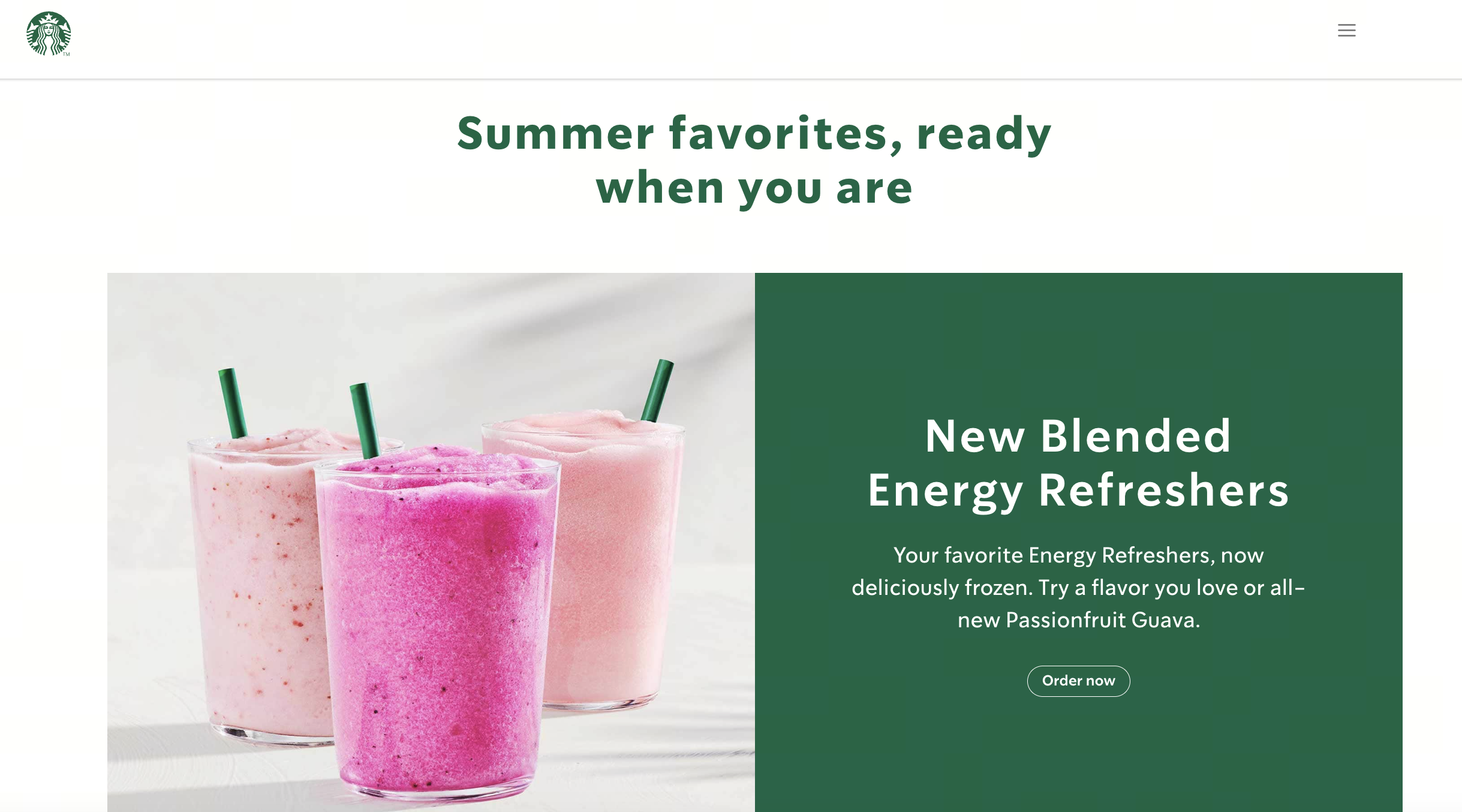
Starbucks’ business framework centers on coffee retail, consumer products, digital membership, and its global supply chain.
- Coffee store operations are Starbucks’ primary revenue driver.
Starbucks operates thousands of stores worldwide, including company-operated and licensed locations. Company-operated stores ensure brand experience, product quality, and operational standards, while licensing accelerates overseas expansion and reduces capital requirements.
Store sales cover:
- Coffee beverages, such as lattes, Frappuccino, and Americanos
- Tea drinks and other specialty beverages
- Breakfast items, light meals, and baked goods
- Seasonal offerings, like Pumpkin Spice Latte
Seasonal product innovation is key to increasing repeat purchases. By frequently launching new products, Starbucks boosts brand engagement and raises average transaction values.
- Consumer product sales broaden Starbucks’ brand reach.
Beyond physical stores, Starbucks sells coffee beans, instant coffee, capsules, and other products through retail channels. Consumers can enjoy Starbucks products at supermarkets, online platforms, and at home.
This segment has enabled Starbucks to evolve from an in-store brand to a coffee ecosystem that extends into home consumption.
- Digital membership is a major growth engine.
The Starbucks Rewards program integrates consumers, payment systems, and purchase data. Users place orders, make payments, redeem points, and receive personalized marketing through the app, enabling Starbucks to better understand customer needs.
Digital capabilities allow Starbucks to build lasting user relationships beyond store traffic.
How Starbucks Builds a Global Coffee Brand Ecosystem
Starbucks’ competitive edge is rooted not only in coffee quality but also in its enduring brand ecosystem.
Standardized management enables global replication. Maintaining consistent store experiences across regions is a major industry challenge. Starbucks leverages a unified supply chain, training, product standards, and store design to deliver similar experiences worldwide. This reduces expansion barriers and strengthens brand protection.
Merging coffee consumption with cultural experience. Traditional coffee consumption emphasizes the product, while Starbucks focuses on space, social interaction, and emotional connection. Store design, music, staff engagement, and community involvement all contribute to Starbucks’ brand value. This “experience economy” model fosters strong customer loyalty.
Leveraging the supply chain for long-term advantage. Starbucks sources coffee beans from Latin America, Africa, and Asia. Through long-term procurement, quality management, and supplier partnerships, Starbucks ensures supply stability.
The company also invests in coffee research, roasting technology, and supply chain digitalization to boost operational efficiency.
Digitalization, AI, and Membership Systems as Growth Drivers
Digitalization is central to Starbucks’ strategy. The Starbucks app anchors the company’s digital ecosystem, enabling:
- Mobile ordering
- Digital payments
- Membership points management
- Personalized recommendations
- Participation in promotions
Compared to traditional F&B companies, Starbucks leverages digital channels to amass consumer data, analyze preferences, and optimize product and marketing strategies.
AI is further enhancing operational efficiency. Starbucks is piloting AI tools to support employees, optimize workflows, and reduce repetitive tasks. The company emphasizes that AI is intended to assist—not replace—human interactions.
Future AI applications may include:
- Demand forecasting
- Inventory management
- Personalized recommendations
- Store operations optimization
- Supply chain forecasting
For Starbucks, digitalization is about using data to elevate customer experience and operational performance—not just adding technology.
Starbucks’ Competitive Advantages in Coffee, Retail, and Consumer Experience
Starbucks maintains global industry leadership through several core strengths.
Strong Brand Assets
Starbucks is among the world’s most influential coffee brands. Customers buy not just beverages but also brand recognition and a unique experience.
This brand equity supports premium pricing.
Global Store Network
Starbucks operates stores across numerous countries and regions, delivering scale advantages.
Extensive store coverage drives revenue and strengthens brand visibility and customer access.
Mature Digital Ecosystem
Starbucks’ membership program and app operations surpass most traditional F&B competitors.
Digital membership boosts repeat purchase rates and lowers marketing expenses.
Product Innovation
Starbucks excels at launching new products aligned with seasonal, cultural, and consumer trends—such as cold drinks, plant-based options, and high-protein beverages—helping the brand adapt to changing preferences.
Starbucks vs. Luckin Coffee, Costa, and Tim Hortons
Global coffee competition is intensifying, with brands pursuing distinct strategies. Starbucks prioritizes brand experience and long-term customer relationships.
Its core strengths are coffee culture, store ambiance, and membership ecosystem. Customers visit Starbucks for both coffee and social or leisure experiences.
Luckin Coffee focuses on digital efficiency and price competitiveness. Through app-based ordering, rapid expansion, and high-value strategies, Luckin has grown quickly in China. Compared to Starbucks, Luckin emphasizes convenience, speed, and operational scale.
Costa Coffee’s strengths lie in its European roots and traditional café culture positioning.
Tim Hortons leverages Canadian heritage and mass-market appeal, excelling in breakfast, coffee, and quick-service formats.
In summary, Starbucks differentiates itself via “brand experience + digital ecosystem + global supply chain,” while rivals focus on price, convenience, or regional markets.
Tracking Starbucks (SBUX) Investment Opportunities with Gate Stock Trading
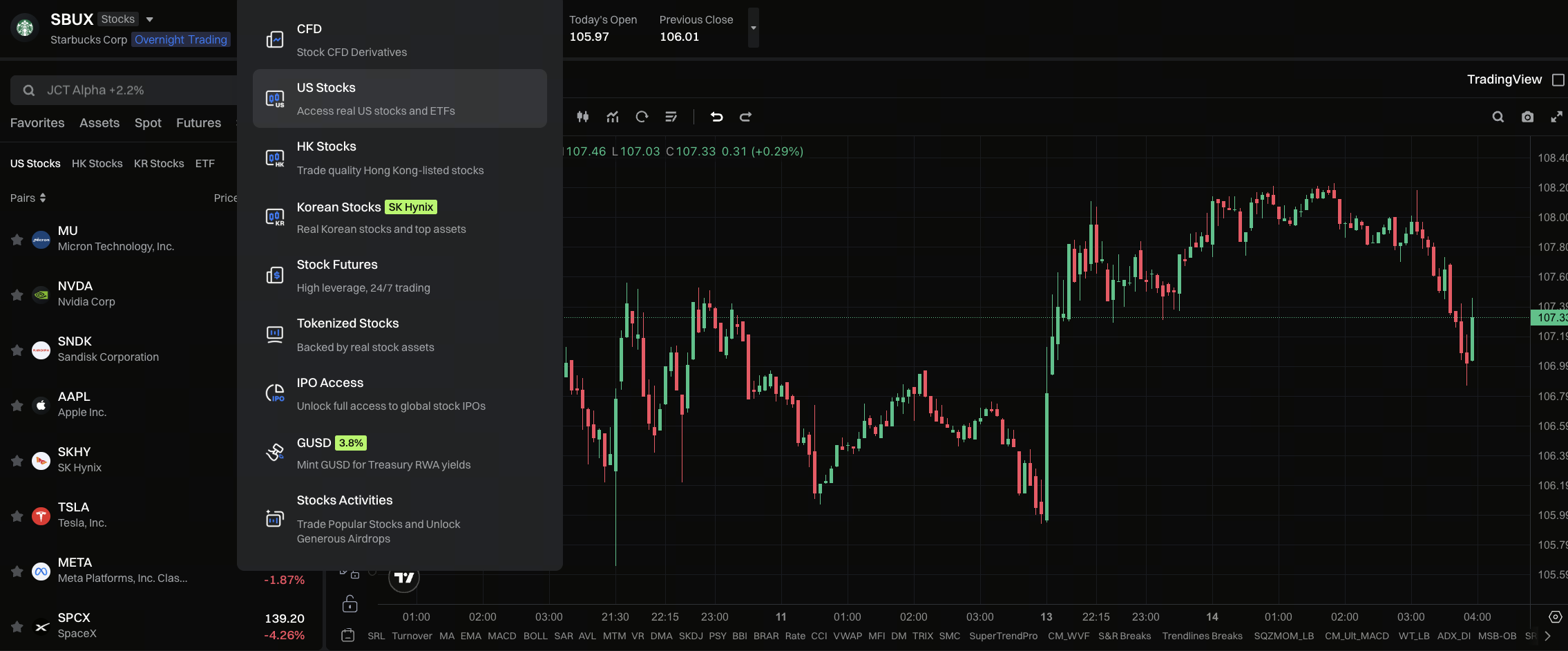
For global investors, Starbucks (SBUX) is a leading US consumer sector company and a key indicator for trends in global consumption, brand economics, and retail digitalization. Gate Stock Trading gives users access to US stocks, ETFs, and other global assets, offering insight into how international companies like Starbucks perform in capital markets.
Gate Stock Trading enables stock trading with USDT and covers major US exchanges including NYSE, Nasdaq, NYSE Arca, and NYSE American. It offers over 10,000 US stocks and ETFs, plus more than 1,000 Hong Kong stocks. Users interested in Starbucks (SBUX) can monitor market price changes, financial reports, revenue growth, store expansion, and industry competition to assess company value.
Compared to traditional methods, Gate Stock Trading lowers the barrier for global investors to access international markets. Users can manage both digital and stock assets in a unified account system and trade fractional shares, with a minimum of 0.01 shares, enabling flexible participation in large-cap companies.
For global consumer leaders like Starbucks, stock prices reflect both current performance and market expectations for brand value, digital strategy, and future growth. Tracking SBUX stock helps investors understand how industry leaders drive long-term value through business model innovation and digital transformation.
Key Risks for SBUX Investors
Despite Starbucks’ strong business model, investing in SBUX stock involves several risks.
- Changing consumer demand.
Coffee is a discretionary item. Economic downturns may prompt consumers to cut back on premium coffee, impacting store sales.
- Heightened competition.
The global coffee market is expanding rapidly. Digital-first brands like Luckin Coffee and numerous local specialty coffee companies may erode Starbucks’ market share.
- Operating cost pressures.
Fluctuations in coffee bean prices, labor costs, rent, and supply chain expenses can affect profit margins.
- Overseas market risks.
Starbucks faces local competition, cultural differences, and shifting market conditions in international markets such as China.
- Brand repositioning risks.
Starbucks is reinforcing store experience with its “Back to Starbucks” strategy. If transformation efforts fall short, investor confidence may suffer.
Starbucks’ Future Growth and Long-Term Potential
Starbucks’ growth prospects include several key directions.
Enhancing store efficiency. Rather than simply increasing store numbers, Starbucks aims to optimize single-store sales, improve service speed, elevate customer experience, and boost engagement.
Strengthening the digital membership ecosystem. Membership data remains a core asset. Through AI and analytics, Starbucks can further personalize marketing.
Expanding global markets. Asia, the Middle East, and emerging markets offer substantial growth potential for coffee consumption.
Exploring broader consumption scenarios. Starbucks may continue to grow in home coffee, retail products, and digital channels, extending its brand into wider lifestyle domains.
Long-term value for Starbucks lies in its brand, customer relationships, and global operations. While addressing growth slowdowns is essential, its business fundamentals remain highly competitive.
Summary
Starbucks (SBUX) has evolved from a coffee chain into a global consumer brand, with core strengths shifting from product sales to brand ecosystem, digital membership, and global supply chain capabilities.
Through its store network, Starbucks Rewards, mobile payments, and AI technology, the company is driving the transition from traditional coffee retail to a digital consumption ecosystem.
Going forward, Starbucks’ growth will depend on balancing brand experience, operational efficiency, and global expansion. The “Back to Starbucks” strategy is central to shaping the company’s new growth trajectory.
FAQs
What is Starbucks (SBUX)?
Starbucks (SBUX) is a global leader in coffee retail, offering coffee beverages, food, retail coffee products, and digital membership services.
Why is Starbucks successful?
Starbucks’ success is driven by brand influence, global store network, supply chain strength, and digital membership ecosystem.
Who are Starbucks’ main competitors?
Key competitors include Luckin Coffee, Costa Coffee, Tim Hortons, and numerous regional specialty coffee brands.
Is Starbucks a technology company?
Starbucks is fundamentally a consumer retail business, but it leverages its app, membership system, data analytics, and AI to enhance operational efficiency, giving it a strong digital profile.
What should investors watch when investing in SBUX stock?
Investors should monitor consumption trends, competitive dynamics, cost pressures, international performance, and strategic execution.