As global consumer preferences shift, shoppers are placing greater emphasis on product value and price efficiency, positioning the Off-Price Retail model as a key growth driver beyond traditional retail. TJX draws customers with its “low prices + brand names + frequent new arrivals” shopping experience and leverages its large-scale procurement capabilities to steadily expand its market share.
From a modern retail business model perspective, TJX exemplifies a value-driven retail system propelled by supply chain efficiency. The company boosts store productivity through data analytics, inventory optimization, and digital operations, while actively exploring the integration of online and offline retail channels.
What Is TJX Companies (TJX)? Company Overview and History
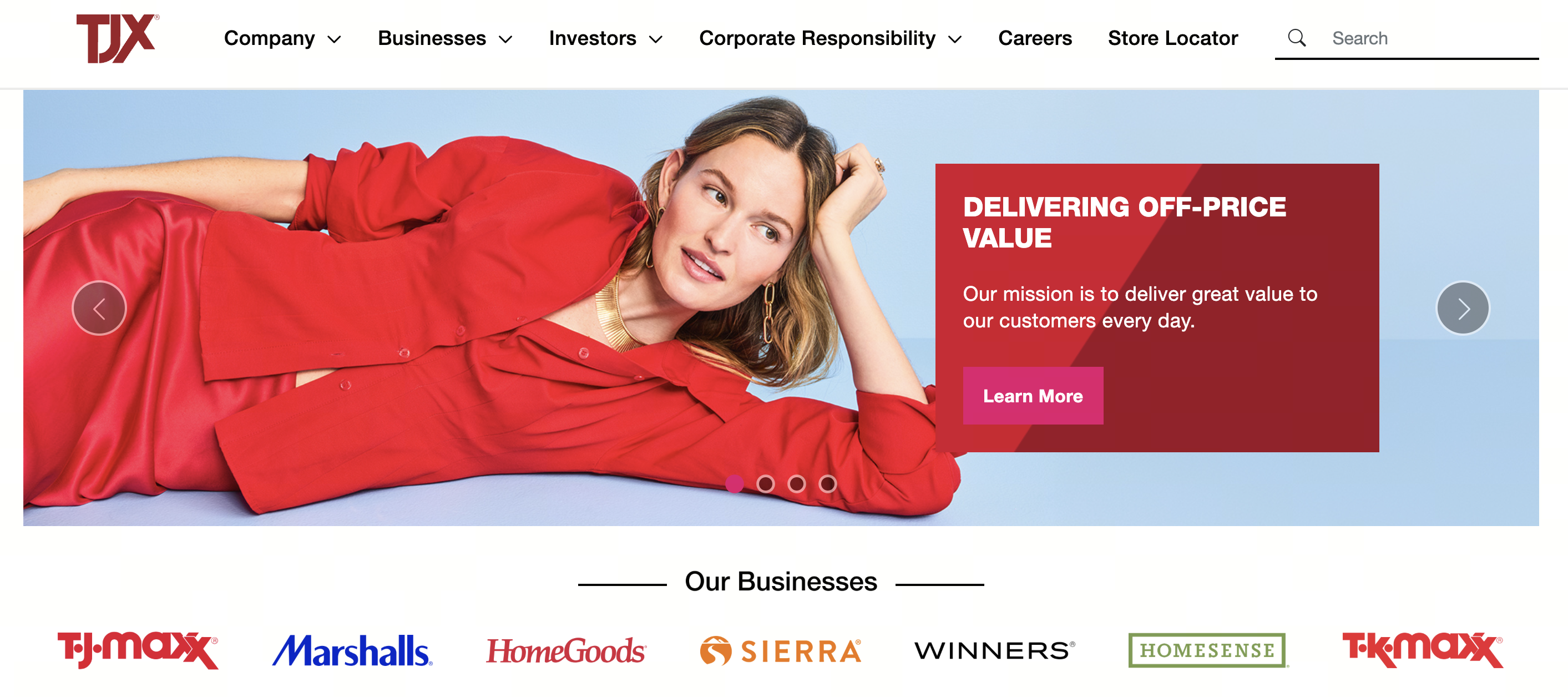
TJX Companies (TJX) is a global leader in Off-Price Retail (discount retail), headquartered in Framingham, Massachusetts. The company specializes in apparel, footwear, home goods, accessories, and lifestyle products. With a portfolio that includes TJ Maxx, Marshalls, HomeGoods, Sierra, Winners, and Homesense, TJX stands as one of the world’s largest value retail groups.
TJX’s origins date back to the 1980s, a period when the US retail landscape was transforming as consumers shifted from traditional department stores to more value-focused shopping experiences. TJ Maxx thrived in this environment, eventually establishing a distinctive discount retail model.
TJX Companies was officially founded in 1987. The company rapidly expanded through acquisitions, brand development, and international market entry. Unlike traditional department stores that rely on fixed product plans and long-term supplier relationships, TJX employs a highly flexible procurement strategy—sourcing brand inventory, seasonal merchandise, and manufacturers’ surplus globally, then distributing these goods to consumers through its vast retail network. TJX’s business
This model enables TJX to quickly respond to market shifts. When price sensitivity rises, discount retail becomes more attractive; when consumer confidence rebounds, shoppers are drawn to stores by the promise of brand discovery and engaging shopping experiences.
Today, TJX is a dominant force in the global Off-Price Retail sector, with operations spanning the US, Canada, Europe, and Australia, and it continues to grow its global footprint through aggressive store expansion.
What Are TJX’s Core Business Segments?
TJX’s business centers on apparel, home, and lifestyle categories. Its core competitive edge lies not merely in offering low-priced goods, but in delivering a “high-value shopping experience” powered by supply chain excellence.
Apparel is a primary revenue driver, covering women’s, men’s, and children’s clothing, footwear, and accessories. TJX partners with brands, manufacturers, and authorized suppliers to acquire large volumes of merchandise at discounted prices, passing those savings to consumers with prices below those found in traditional department stores.
For brands, TJX offers an efficient inventory management solution. When brands face seasonal transitions, product updates, or inventory adjustments, they can quickly recoup capital through Off-Price Retail channels without resorting to direct price cuts that could harm brand image.
For consumers, TJX provides access to popular branded products at a discount. This “brand discount” mindset is central to the company’s long-term customer loyalty.
Beyond apparel, home goods have become a strategic focus for TJX. HomeGoods is the company’s flagship brand for home-related retail. Unlike apparel, home products require a tactile, in-person experience—shoppers want to see, touch, and visualize furniture and décor in real spaces—making brick-and-mortar retail especially advantageous.
By combining apparel and home as dual pillars, TJX has evolved from a single-category discounter to a comprehensive retail platform addressing a wide range of consumer needs.
How Do TJ Maxx, Marshalls, and HomeGoods Shape TJX’s Retail Ecosystem?
TJX’s retail ecosystem is anchored by three core brands: TJ Maxx, Marshalls, and HomeGoods. Each targets distinct consumer needs, together creating significant scale advantages.
TJ Maxx is TJX’s flagship brand and a major growth engine in the US. It offers fashion apparel, footwear, beauty products, and select home goods—allowing shoppers to buy branded merchandise at lower prices.
TJ Maxx stands out for its “treasure hunt” shopping experience. Unlike traditional stores with static assortments, TJ Maxx rapidly rotates inventory, so each visit feels unique. This sense of discovery fuels shopper curiosity and drives repeat visits.
Marshalls has a similar positioning but differentiates with its product mix and target audience. Marshalls emphasizes family shopping, excelling in footwear, family apparel, and broad merchandise selection. Together, the two brands use distinct store strategies to reach a wider range of customers.
HomeGoods is TJX’s entry point into the home sector, offering furniture, kitchenware, bedding, décor, and seasonal home products. As demand for quality home environments grows, HomeGoods has become a key growth driver.
Collectively, these brands enable TJX to serve consumer needs from personal fashion to home living, reducing exposure to fluctuations in any single market segment.
How Does the Off-Price Retail Model Work?
Off-Price Retail is the foundation of TJX’s business and its main differentiator from traditional retailers.
While traditional retail relies on advance product planning, demand forecasting, and fixed procurement cycles, Off-Price Retail is built on agile sourcing and rapid inventory turnover.
TJX’s buying teams continuously scout for opportunistic deals—brand inventory, canceled orders, seasonal surpluses, and production overruns. By sourcing at prices below conventional channels, TJX can offer significant discounts to consumers while maintaining healthy profit margins.
The model creates a virtuous cycle:
Suppliers offload inventory quickly via TJX, TJX acquires low-cost goods, consumers enjoy brand discounts, and all parties benefit within this business ecosystem.
Unlike traditional retailers, TJX does not depend heavily on promotional campaigns. Because products are already attractively priced, there’s less need for large-scale discounts, supporting stable profitability.
Another strength of Off-Price Retail is resilience in downturns. When economic conditions tighten, consumers shift from premium to value channels, making TJX especially appealing during volatility.
How Does TJX Leverage Digitalization for Supply Chain Efficiency?
Though rooted in brick-and-mortar retail, TJX has accelerated digital transformation in recent years to enhance supply chain efficiency through technology.
A core TJX advantage is rapid inventory turnover, and digital systems enable more precise management of merchandise flow.
Through data analytics, TJX tracks consumer preferences by region and adjusts product allocation based on sales trends. For example, the same apparel category may have varying demand in different markets; digital tools help TJX optimize inventory and maximize sales efficiency.
The company is also strengthening its online presence. While physical stores remain its mainstay, e-commerce and digital experiences let consumers preview products and deepen brand engagement.
Unlike pure-play online retailers, TJX prioritizes online-offline integration, using digital tools to enhance the value of its physical stores.
Looking forward, as AI, big data, and automated logistics advance, the race for supply chain efficiency in retail will intensify—and TJX’s scale gives it a lasting edge.
How Does TJX Differ from Ross Stores, Burlington, and Walmart?
TJX competes with several Off-Price Retailers like Ross Stores and Burlington, as well as large-scale players like Walmart.
Compared to Ross Stores, TJX offers a broader brand mix. While Ross focuses on discounted apparel and home goods, TJX—via TJ Maxx, Marshalls, and HomeGoods—addresses a wider spectrum of consumer needs.
Relative to Burlington, TJX leads in brand recognition, international reach, and supply chain sophistication. Both use the discount retail model, but TJX’s established procurement network and operational expertise create higher barriers to entry.
Unlike Walmart, which competes mainly on everyday low prices through massive supply chains, TJX emphasizes “brand value and the thrill of the find.” TJX targets consumers seeking branded bargains, not just the lowest prices.
In sum, TJX’s edge lies in supply chain agility, rapid product refreshes, and a distinctive shopping experience—not in price alone.
What Risks Should Investors Consider with TJX Stock?
Despite its strengths, TJX investors should be mindful of several risks:
-
Shifts in consumer spending. While discount retail is somewhat recession-resistant, downturns in discretionary spending on apparel and home goods can still impact results.
-
Competitive pressure. As more retailers—including traditional stores, e-commerce platforms, and other Off-Price Retailers—adopt discount strategies, competition may intensify.
-
Supply chain vulnerabilities. TJX’s heavy reliance on global sourcing means changes in trade policy, logistics costs, or supply chain disruptions could affect inventory availability.
Digital transformation is another long-term challenge. As shopping habits evolve, brick-and-mortar retailers that fail to optimize their online experience risk future growth.
How to Invest in TJX via Gate Stock Trading
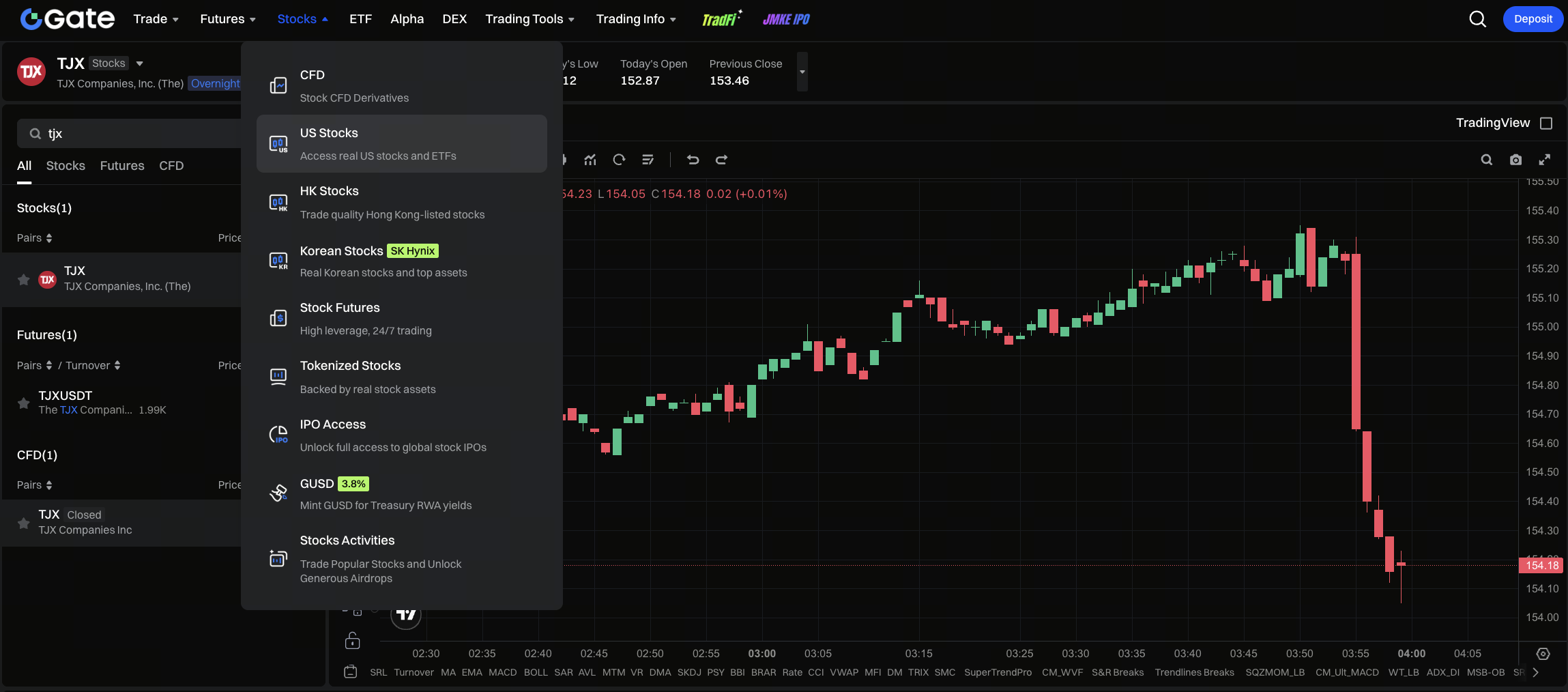
For investors seeking exposure to global retail leaders, TJX Companies (TJX) is a flagship US consumer retail stock. As investment channels become increasingly digital, investors can access opportunities like TJX not only through traditional brokers but also via Gate Stock Trading.
Gate Stock Trading provides trading for stocks and ETFs across the US, Hong Kong, and Korea, supporting over 11,000 assets—10,000+ US stocks and ETFs, and 1,000+ Hong Kong stocks. Investors can trade using USDT, managing both digital assets and equities within a unified account, streamlining global portfolio management.
For retail names like TJX, investors typically monitor fundamentals such as revenue growth, same-store sales, profit margins, and consumer trends. Gate Stock Trading allows users to conveniently participate in global equity markets and adjust asset allocations as market conditions evolve.
The platform also offers 24/7 trading—including pre-market, after-hours, and overnight sessions—enabling investors to respond flexibly to earnings releases, macroeconomic shifts, and industry news. While settlement follows local market rules, the round-the-clock trading model delivers unmatched flexibility for global investors.
As traditional and digital assets converge, blue-chip stocks like TJX are becoming top choices for digital asset investors seeking diversification. By combining market research with digital trading tools, investors can more efficiently capture global growth opportunities.
TJX’s Future Growth Prospects
Looking ahead, TJX is well-positioned for continued growth.
Demand for value is rising—regardless of economic cycles, consumers consistently seek “more for less.” TJX also has ample room for expansion, whether through new stores, international growth, or scaling the HomeGoods business.
Digitalization remains a strategic priority. Leveraging AI, big data, and supply chain automation, TJX can further boost inventory efficiency and reduce costs.
Finally, the value retail trend is going global. As consumers increasingly weigh price and value over pure brand appeal, TJX’s business model is set to capture long-term opportunities.
Summary
TJX Companies (TJX) is a global leader in Off-Price Retail, building a robust ecosystem across apparel, home, and lifestyle through brands like TJ Maxx, Marshalls, and HomeGoods.
Its core advantages—flexible sourcing, efficient supply chain management, and a unique treasure-hunt shopping experience—allow TJX to rapidly adapt its product mix and remain resilient amid changing consumer trends.
With ongoing consumer focus on value, advances in digital supply chain management, and continued global expansion, TJX is poised to maintain its leadership in value retail.
FAQs
What does TJX Companies (TJX) primarily sell?
TJX Companies specializes in discount apparel, footwear, home goods, and lifestyle products, with brands including TJ Maxx, Marshalls, and HomeGoods.
Why can TJX offer products at low prices?
TJX sources goods at lower cost by purchasing brand inventory, seasonal surpluses, and manufacturers’ excess stock, enabling it to pass discounts on to consumers.
What is the main difference between TJX and Walmart?
Walmart delivers everyday low prices through large-scale supply chains, while TJX focuses on branded discounts and a treasure-hunt shopping experience.
What sector does TJX stock belong to?
TJX is part of the consumer retail sector. Investors typically track sales growth, profit margins, store expansion, and evolving consumer trends.
Why is Off-Price Retail gaining popularity?
As consumers become more value-conscious, Off-Price Retail offers branded discounts, making it especially attractive during economic shifts and changes in consumption patterns.