With the development of social media and digital communities, Troll has expanded from early forum culture to Twitter, Reddit, Telegram, and Web3 communities, and it has begun to influence the development of Meme Coins, AI Memes, and on chain social ecosystems. Projects such as TROLL further combine the internet culture represented by Troll Face with blockchain community distribution, creating a new Meme narrative.
Against the backdrop of continued growth in Web3 and AI driven content distribution, Troll is no longer just a form of internet joke culture. It is gradually becoming an important part of digital community identity and the on chain Meme ecosystem.
How Was Troll Face Created?
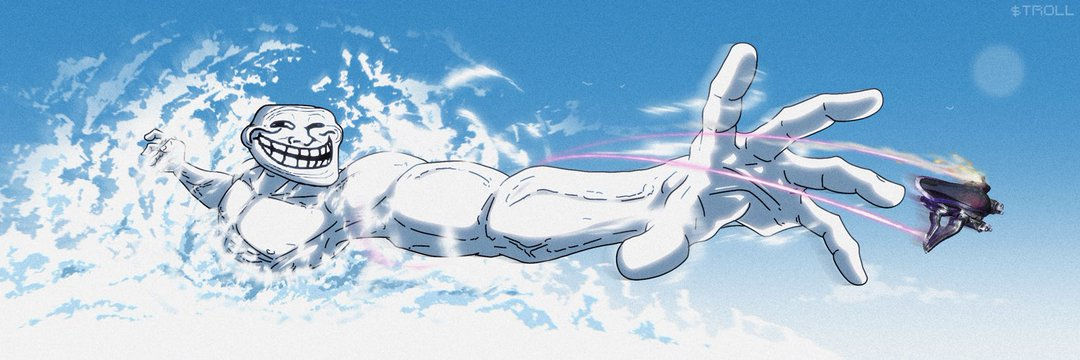
Troll Face was first created by Carlos Ramirez in 2008 and quickly spread across Reddit, 4chan, and other internet forums. Its exaggerated grin and playful expression have been widely used to convey “a successful prank,” “deliberate teasing,” or “a humorous reaction after stirring controversy.”
Because Troll Face is instantly recognizable and carries a strong sense of internet humor, it soon became one of the classic symbols of Meme culture.

In the early days of the internet, many users spread Troll Face through image edits, forum replies, and reaction images. This low barrier, highly interactive form of distribution also helped Troll gradually develop into a stable online subculture.
What Is Troll Culture?
Troll usually refers to the internet culture formed around the act of “trolling.”
In an internet context, “trolling” does not necessarily mean malicious attacks. More often, it refers to using exaggerated expression, contrarian humor, prank content, or deliberately provocative discussion to spark community interaction.
The core features of this culture include:
| Feature |
How It Appears |
| Playfulness |
Using humor and prank based content |
| Interactivity |
Building community participation through comments and sharing |
| Irony |
Creating contrast through exaggerated expression |
| Meme Format |
Content can be quickly copied and spread |
As social media has developed, Troll culture has gradually evolved from a small forum based culture into a broader internet communication phenomenon.
Why Does Troll Culture Spread So Quickly?
The speed at which Troll culture spreads is closely tied to the structure of internet communities.
Meme content usually has a low barrier to understanding and can easily trigger emotional reactions, which makes it well suited to rapid distribution across social platforms. Compared with traditional long form text, images, short phrases, and Meme reactions are easier for users to share and recreate.
Internet platform algorithms have also strengthened this distribution mechanism. Content with high engagement is usually more likely to be recommended, while Troll culture itself emphasizes comments, controversy, and social interaction. As a result, it can create a self reinforcing cycle of continued distribution.
As platforms such as Twitter, TikTok, and Telegram have become important gathering places for crypto communities, Troll culture has also begun to merge with the communication patterns of Web3 communities.
Why Has Troll Culture Entered Web3?
Web3 communities have strong internet native cultural traits, so Meme and Troll culture can spread easily within on chain communities.
Compared with traditional internet communities, Web3 places greater emphasis on:
Troll culture fits naturally with these characteristics.
As Meme Coins have become an important part of the crypto market, internet culture has gradually begun to merge with on chain assets. Some Meme projects even use community jokes and Troll style distribution to generate market attention.
This shift also means that internet Memes are gradually evolving from simple entertainment content into cultural assets within digital communities.
Is Troll Controversial?
Troll has long been somewhat controversial on the internet. Some users believe Troll can increase humor and interaction within communities, while others argue that excessive pranks, misleading information, or emotional provocation may negatively affect the community environment.
As Troll enters broader social media and crypto communities, platform governance, community rules, and content moderation have also become key topics of discussion. Therefore, when observing Troll, it is usually necessary to distinguish humorous interaction, Meme creation, and community entertainment from malicious attacks and harassment.
Conclusion
As an important part of internet Meme culture, Troll centers on pranks, irony, and social interaction. Meme symbols represented by Troll Face have not only influenced internet forums and social media, but have also gradually entered Web3 communities and the Meme Coin ecosystem.
As AI Memes, Agent Memes, and digital communities continue to develop, the way Troll spreads is also evolving. From traditional forum jokes to on chain Meme communities, this internet native culture has become an important part of the digital social ecosystem.
FAQs
Where Did Troll Originate?
Troll first originated in internet forums and early online communities, then gradually spread to social media platforms as Meme culture developed.
Why Does Troll Spread Easily?
Because Meme content has a low barrier to participation, high interactivity, and strong emotional distribution power, Troll can spread more quickly across internet communities.
What Is the Relationship Between Troll and Meme Coins?
Many Meme Coins use Troll to build community atmosphere and distribution logic, thereby increasing user participation and social interaction.
Will AI Change Troll?
AI content generation and automated social bots are changing how Memes are produced and distributed, so Troll may also evolve further toward AI Memes.
What Is the Relationship Between the TROLL Project and Troll?
TROLL’s core narrative comes from Troll Face and internet Troll Culture, and its community distribution model is closely related to Meme culture.