Neutron Seed is the foundational unit of the Vanar semantic memory layer, designed to transform files, documents, or business data into structurally readable objects. Unlike conventional methods that “retain only the address after file upload,” Seed ensures that data remains understandable and verifiable as it enters subsequent logic systems.
The Vanar Chain (VANRY) Overview details Vanar’s integrated architecture. In this framework, Neutron Seed functions as the input layer, while the Kayon on-chain reasoning mechanism consumes these structured inputs to trigger execution.
What Is Neutron Seed? How Is It Different from Standard On-Chain Storage?
Neutron Seed can be viewed as a “data object with semantic structure and a verifiable fingerprint.” Standard on-chain storage typically focuses on “proof of existence” or “address anchoring,” whereas Seed emphasizes “subsequent system readability and interpretability.” This distinction determines whether data can actively drive automated decision-making or merely serve as a static attachment.
At the application layer, standard storage solutions can prove a file was submitted, but rarely support “conditional content retrieval and rule-driven execution.” Seed’s design goal is to bridge this gap, turning files from static records into callable context objects. This is why Vanar refers to it as Semantic Memory—the emphasis is on semantic utility, not just storage capacity.
How Is a Seed Generated? What Is the Workflow from File Upload to Queryable Object?
The Seed generation process consists of four core steps: input reception, structure extraction, semantic compression, and fingerprint anchoring. First, the system receives the original data file; second, it extracts structured elements; third, it compresses content into retrievable semantic fragments; fourth, it generates a verifiable identifier for future referencing and validation.
| Step |
Goal |
Output |
| Input reception |
Accept original file and metadata |
Raw data object |
| Structure extraction |
Extract parsable fields |
Structured fragment |
| Semantic compression |
Establish context-retrievable units |
Semantic memory object |
| Fingerprint anchoring |
Create verifiable reference path |
Seed identifier and linkage |
This process transforms a “file upload action” into the creation of a “queryable knowledge object.” When an application needs to perform conditional logic, the system can directly call the Seed, eliminating the need to reparse raw data each time.
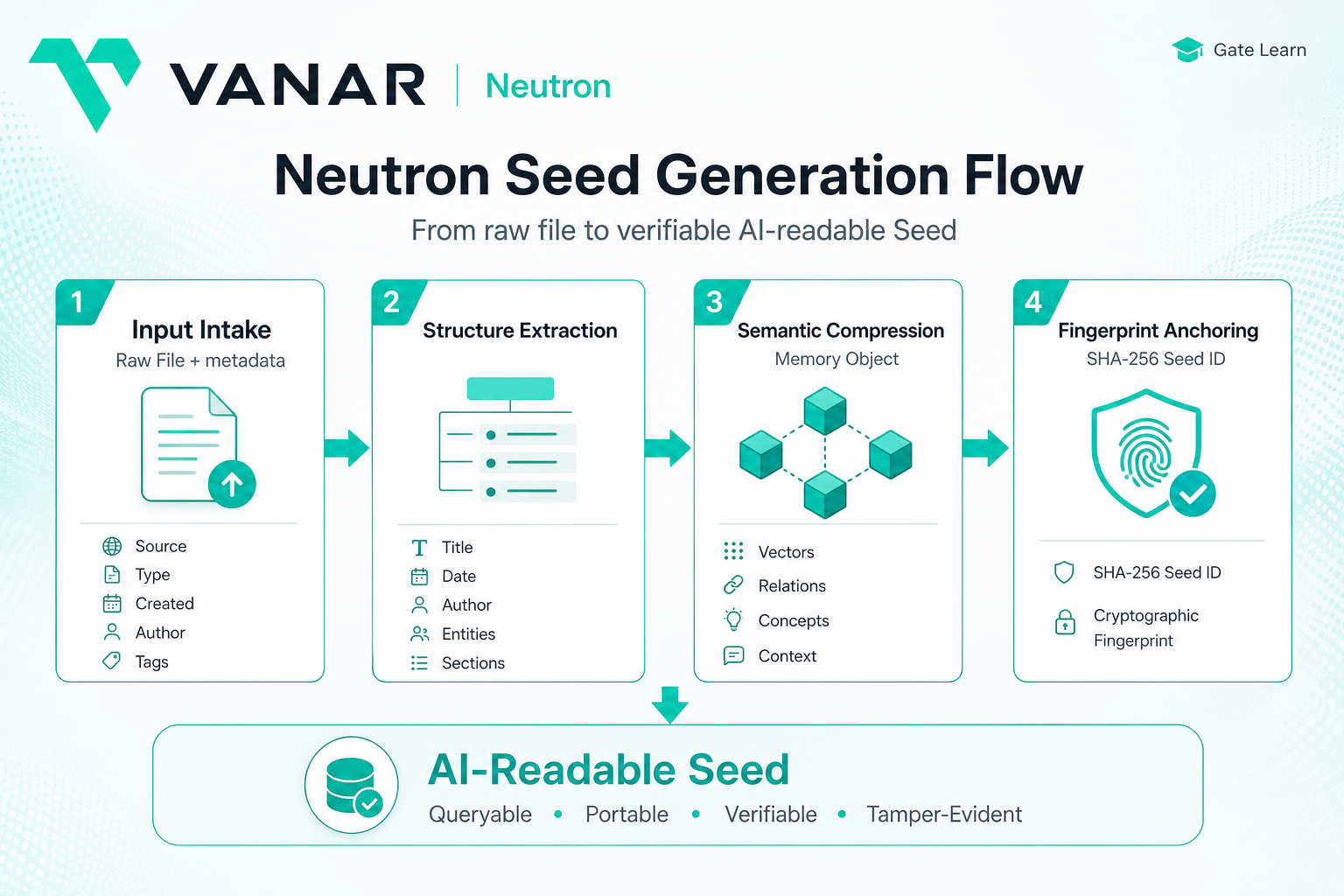
Figure 1. Neutron Seed workflow: from raw file to verifiable semantic object.
What Is the Relationship Between Seed and Data Ownership? How Should “Portable Memory” Be Understood?
The central issue of Seed ownership is “who controls access and invocation rights.” In traditional centralized AI applications, user history is locked within proprietary platform databases, resulting in high migration costs. The Seed model aims to reduce this lock-in by standardizing objects and verifiable references, shifting data from “platform private asset” to “portable context asset.”
Portability does not mean unlimited openness. Instead, it highlights controlled cross-system invocation, with clear access policies, stable references, and auditable authorization boundaries. For enterprises, this directly impacts compliance audits and cross-system collaboration efficiency.
Why Is Seed Critical for On-Chain Reasoning? How Does It Support Kayon Execution?
The reliability of reasoning systems depends on input quality. If inputs are unstructured, untraceable, or unverifiable, reasoning results will lack consistency. By providing a unified object format and verifiable path, Seed delivers a stable context foundation for the reasoning layer.
Within the Vanar framework, once Seed enters the reasoning process, Kayon leverages its semantic structure for conditional judgments, rule matching, and action triggers. This “structure-first, then reasoning” approach minimizes ad hoc parsing and context drift, making execution outcomes easier to audit and review.
What Business Scenarios Are Best Suited for Neutron Seed?
Seed is ideal for scenarios with clear data logic, multi-step workflows, and traceability requirements. Common use cases include payment voucher triggering, asset file verification, compliance document referencing, and process state orchestration. In these settings, data serves as the operational condition itself—not just background material.
For lightweight applications requiring only short text Q&A or lacking strict execution flows, the engineering benefits of Seed may be limited. Adoption should depend on data complexity, process rigidity, and audit needs—not solely on “whether AI is used.”
What Are the Advantages, Risks, and Limitations of Seed?
Key advantages include verifiability, retrievability, and reusability. Seed enhances data’s structural readability, reduces redundant parsing, and lowers cross-system mapping costs. For reasoning chains needing consistent input, this stability is a major asset.
Risks and limitations fall into three main areas: First, semantic compression quality affects usability—input noise can be amplified. Second, misconfigured permissions can cause data exposure or invocation failures. Third, without clear data governance, Seed can be misapplied. As with the Vanar vs. external AI architecture comparison, system design boundaries ultimately shape outcomes.
Summary
Neutron Seed is more than a “new storage format”—it’s a pre-execution capability within the Vanar semantic memory layer. It transforms files from static records into queryable objects, providing a robust input foundation for subsequent reasoning and execution. For AI + Web3 scenarios where verifiable links matter, Seed’s core value lies in strengthening the continuity and auditability from “data to action.”
FAQ
What Is the Fundamental Difference Between Neutron Seed and Standard IPFS Links?
Standard links mainly address file localization and proof of existence. Neutron Seed, in contrast, emphasizes semantic structure and retrievability. The former is suited for static proof, while the latter serves as a callable context object—ideal for rule-based execution chains.
Does Seed Mean All Data Is Publicly On-Chain?
No. The Seed mechanism centers on verifiable referencing and semantic invocation, not on exposing all original content. Actual visibility and invocation scope depend on access controls and system configuration.
How Does Seed Help Kayon with On-Chain Reasoning?
Seed provides Kayon with structured input, minimizing ad hoc parsing and context drift. The reasoning layer uses Seed for rule matching and conditional logic, then maps conclusions to on-chain execution.
What Should Be Confirmed Before Using Seed?
Three points should be clarified: whether the data is suitable for structured extraction, whether permission boundaries are well-defined, and whether execution rules are auditable. Without clear answers, Seed’s verifiability advantage cannot be fully realized.







