As the Web3 financial ecosystem continues to evolve, the on-chain derivatives market has become a major battleground in DeFi. Yet most platforms still grapple with liquidity shortages, shallow trading depth, and the challenge of effectively bringing real-world assets (RWAs) on-chain. Against this backdrop, Variational proposes a new trading architecture that fuses traditional finance (TradFi) with decentralized finance (DeFi). By leveraging an RFQ (Request-for-Quote) quotation mechanism, integrating TradFi liquidity, and expanding into RWA derivatives markets like gold and crude oil, it aims to create a more efficient, highly liquid on-chain trading environment.
What Is Variational?
 (Source: variational_io)
Variational is a Web3 platform purpose-built for on-chain derivatives trading, running on the Arbitrum ecosystem. Its core mission is to bring the liquidity and trading mechanics of traditional finance (TradFi) into decentralized markets. Unlike typical derivatives exchanges that depend on on-chain order books, Variational leans toward creating a hybrid trading environment that blends DeFi with TradFi architecture—allowing users to trade real-world asset (RWA) markets like gold, crude oil, and silver directly on-chain.
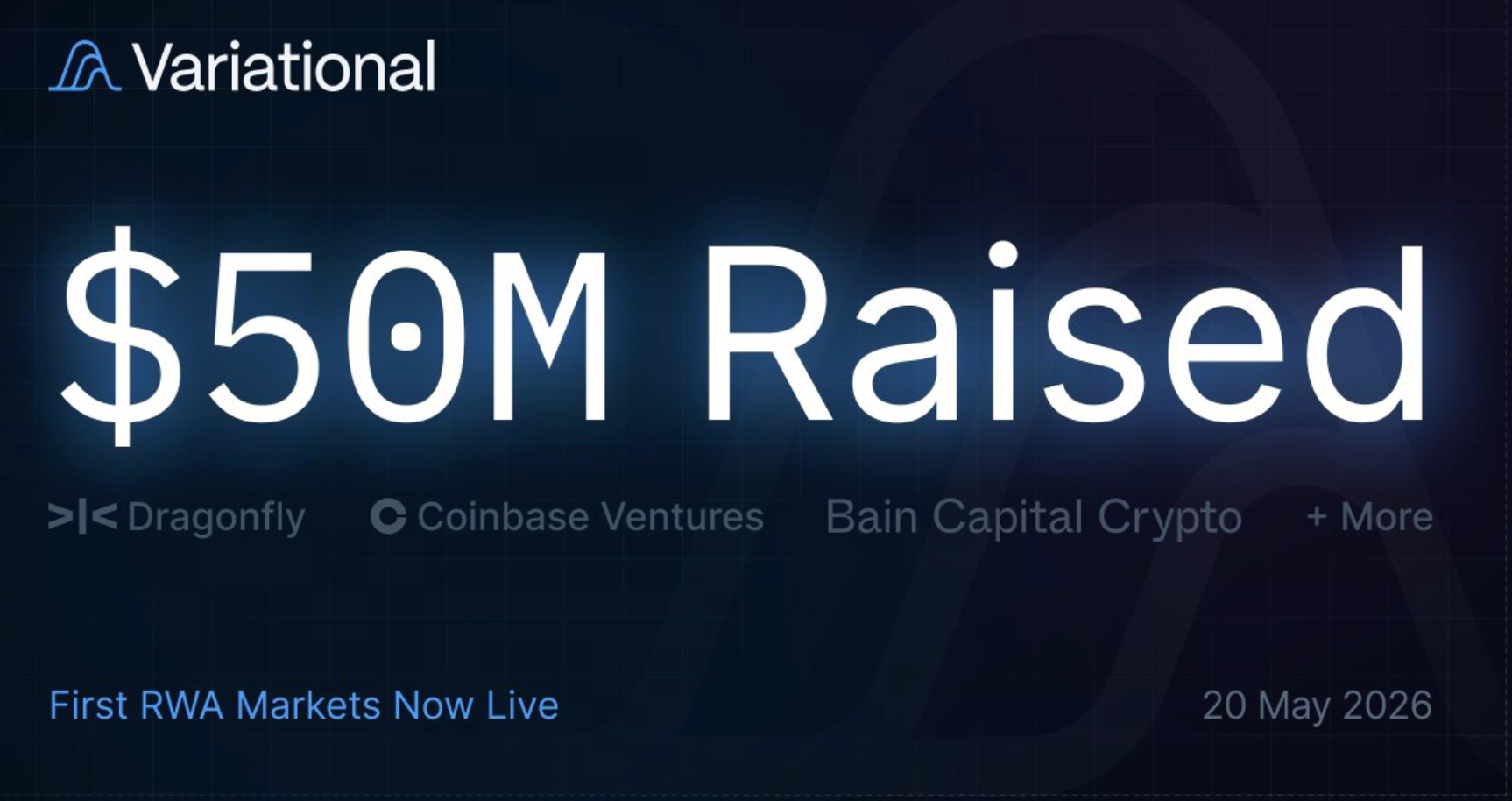
The project recently closed a $50 million Series A funding round led by Dragonfly Capital, with participation from Bain Capital Crypto and Coinbase Ventures—a clear signal of strong market interest in on-chain derivatives and the RWA narrative.
What Problems Is Variational Solving?
Today, most on-chain derivatives platforms still face several pain points:
Variational's core strategy is to directly tap into liquidity sources from traditional financial markets, rather than relying solely on on-chain users to provide liquidity.
This approach gives the platform relatively stable trading depth and price efficiency from day one of any market launch.
How Does Variational Work?
Variational Uses the RFQ (Request-for-Quote) Quotation Model
Variational is not a conventional on-chain order book exchange. Instead, it employs an RFQ quotation system: when a user submits a trade request, the system queries liquidity providers for quotes and returns the best price to the trader.
Key benefits of this mechanism include:
Compared to a full reliance on on-chain limit orders, RFQ more closely mirrors the professional trading model found in traditional financial markets.
Omni Liquidity Provider (OLP) Liquidity Architecture
Variational has also built a liquidity system called OLP, which acts as the primary counterparty for trades, helping to provide stable depth and reliable quoting. By integrating established financial market liquidity, the platform avoids the cold-start problem that plagues many on-chain trading venues—namely, the lack of depth and participants in new markets.
Support for RWA and Traditional Financial Markets
Another standout feature of Variational is its aggressive push into real-world asset (RWA) markets. The platform is already testing trading in traditional commodities like Gold, Silver, Copper, and Crude Oil.
Going forward, users may be able to trade a wide range of traditional financial derivatives directly on-chain, bypassing the need for traditional brokers or futures platforms. The team has also indicated that over 100 TradFi markets will be rolled out in subsequent phases.
What Is the Single Cross-Margin Account?
Variational offers a Cross-Margin feature that lets users manage multiple trading positions from a single unified account, rather than maintaining separate margin for each market. This model has grown increasingly popular in crypto derivatives trading because it boosts capital efficiency, reduces idle funds, and simplifies multi-market position management.
For traders, the cross-margin setup also enhances operational flexibility, making it easier to reallocate capital and adjust risk across different markets quickly.
Why Did Variational Choose Arbitrum?
Variational chose to build on Arbitrum primarily because derivatives trading demands low costs and high speed. Low Gas fees, fast trade confirmations, and high throughput are critical—they directly affect the user experience and market liquidity.
As a Layer 2 scaling solution for Ethereum, Arbitrum provides an environment far more suitable for high-frequency trading than the mainnet, while remaining fully compatible with the Ethereum ecosystem. This makes it a go-to infrastructure choice for many on-chain financial and derivatives platforms.
Variational's Development Direction
Beyond professional trading markets, Variational is also developing an application called Omni. The team aims to position it as a Robinhood-like on-chain trading platform, lowering the barrier for everyday users to enter the derivatives market.
Its goals include:
-
A more streamlined and simplified user interface
-
Lower trading costs
-
Integration of TradFi and DeFi markets
-
A zero-fee trading experience
This shift signals that on-chain financial platforms are increasingly aligning with mainstream financial applications.
Summary
Variational is pioneering a new model that departs from traditional DeFi derivatives platforms. Through its RFQ quotation system, TradFi liquidity integration, and RWA market expansion, it aims to solve the liquidity and efficiency challenges that plague on-chain trading. As more traditional financial assets migrate to the blockchain, platforms like Variational—bridging TradFi and DeFi—could become a cornerstone of Web3 financial infrastructure.
FAQ
Q1: What Is Variational?
Variational is a Web3 on-chain derivatives trading platform built on Arbitrum. By combining traditional finance liquidity with DeFi architecture, it enables trading of real-world asset (RWA) markets such as gold and crude oil.
Q2: What Are the Advantages of Variational's RFQ Quotation Model?
RFQ (Request-for-Quote) solicits quotes from liquidity providers and returns the best price to the trader. This reduces slippage, improves execution speed, and is especially well-suited for large trade sizes.
Q3: Why Did Variational Choose to Build on Arbitrum?
Because Arbitrum offers low Gas fees, fast trade confirmations, and high throughput—making it an ideal environment for on-chain derivatives trading—while remaining fully compatible with the Ethereum ecosystem.







