U.S. electricity demand is being shaped by the combined effects of data center expansion, AI hashrate growth, electrification, and rising industrial loads. Vistra stands out for its large-scale generation capacity, wholesale market expertise, and retail customer network, making it a prime example of a “multi-asset power platform” and a provider of “stable electricity supply.”
From the Gate Stocks trading perspective, VST is a distinct U.S. equity ticker—not interchangeable with nuclear leader Constellation Energy (CEG), renewable platform NextEra, or regulated utility Duke Energy. When searching, placing orders, or reviewing positions, users must first verify the ticker and corporate entity, then cross-check business structure and risk sources.
What Is Vistra (VST)? Which Public Company Does It Represent?
Vistra Corp is a Fortune 500 integrated retail electricity and power generation company in the U.S., trading under ticker VST on the NYSE. The company delivers essential electricity resources to customers, businesses, and communities, with operations spanning multiple states—from California to Maine.
Vistra is neither a single-technology generator nor a traditional regulated utility. Instead, it operates as an integrated “generation + market + retail” power platform.
| Dimension |
Vistra Corp (VST) |
| Listing Market |
NYSE |
| Stock Ticker |
VST |
| Headquarters |
Irving, Texas |
| Core Position |
Integrated retail electricity and power generation |
| Key Assets |
Natural gas, nuclear, coal, solar, battery storage |
| Main Markets |
ERCOT, PJM |
| Retail Brands |
TXU Energy, Ambit Energy, Dynegy, etc. |
This table summarizes VST’s core identity. In trading screens, financial reports, and industry comparisons, Vistra should be distinguished from pure nuclear companies, pure renewables, and traditional regulated utilities.
How Does Vistra’s Business Structure Work?
Vistra’s business model is structured in three layers: generation assets, wholesale power markets, and retail/customer contracts. The Vistra Business Model requires analyzing the generation portfolio, ERCOT and PJM market exposure, and retail contract structures like TXU Energy and Ambit Energy. The generation layer covers natural gas, nuclear, coal, solar, and battery storage; the market layer determines price and capacity value; the retail layer connects residential, commercial, and industrial customers.
| Layer |
Content |
Key Issues |
| Generation |
Natural gas, nuclear, coal, solar, storage |
Unit availability, fuel costs, maintenance cycles |
| Wholesale Market |
ERCOT, PJM electricity and capacity |
Price volatility, dispatch rules, grid connection |
| Retail/Customer |
TXU Energy, Ambit Energy, etc. |
Customer scale, contract term, rate structure |
The generation portfolio sets costs and available supply; the wholesale market impacts marginal revenue; retail contracts anchor demand.
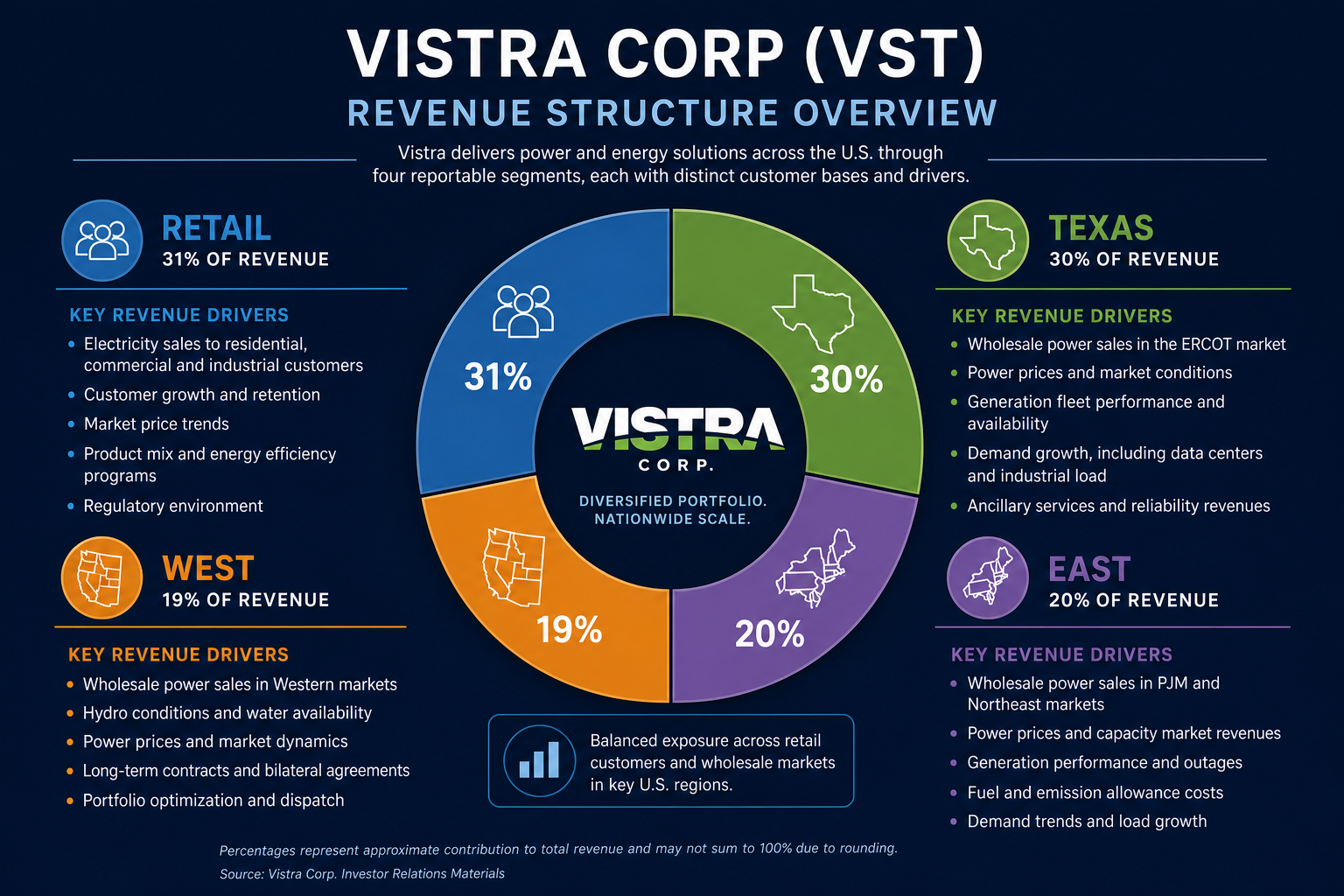
Figure 1. Vistra’s integrated power business structure: generation assets connect retail brands and end customers via ERCOT/PJM wholesale markets.
Why Is Vistra Closely Linked to AI Data Center Power Demand?
AI data centers require vast, continuous, dispatchable, and ideally low-carbon electricity. AI Data Center Power and PPAs highlights Vistra’s nuclear assets, long-term power purchase agreements, and mechanisms connecting large customer demand. Vistra operates nuclear facilities and large-scale natural gas plants—nuclear provides 24/7 baseload, natural gas covers peak demand, and storage/solar diversify the zero-carbon mix.
Long-term PPAs can lock in volume, term, and pricing, but grid approvals, unit upgrades, and regulatory conditions affect real-world execution. AI power demand is a variable, not a guaranteed growth trend.
What Roles Do Vistra’s Nuclear, Gas, and Storage Assets Play?
Nuclear in Vistra’s portfolio delivers baseload and zero-carbon power, ideal for stable supply to data centers and industrial clients. Gas plants offer flexible peaking but face fuel price and emissions regulation risks. Battery storage supports peak-shaving, arbitrage, and grid services, and—combined with solar—enables Vistra Zero and other zero-carbon business lines with greater flexibility. The assets are complementary: nuclear provides baseload, gas adds dispatch flexibility, storage balances short-term needs.
How Does Vistra Differ from CEG, NextEra, and Duke Energy?
Vistra, Constellation Energy (CEG), NextEra, and Duke Energy are all major U.S. power companies, but their business models differ substantially. Vistra emphasizes multi-asset generation and integrated retail, CEG is nuclear-centric, NextEra focuses on renewables and regulated utilities, while Duke is more traditional regulated utility.
| Company |
Core Features |
Key Differences |
| Vistra (VST) |
Multi-asset generation + retail |
ERCOT/PJM exposure, gas and storage mix |
| CEG |
Nuclear-focused |
Higher nuclear concentration, PJM nuclear assets |
| NextEra |
Renewables + utilities |
Large wind/solar portfolio, regulated business |
| Duke Energy |
Regulated utility |
Strong transmission/distribution regulation, lower market exposure |
VST vs CEG vs NextEra vs Duke compares asset types, regulatory exposure, and price risk. When analyzing, first identify if the company is an independent generator, integrated utility, renewables platform, or a nuclear/gas hybrid, then assess revenue drivers and risk structure.
How to Find and Trade Vistra (VST) on Gate?
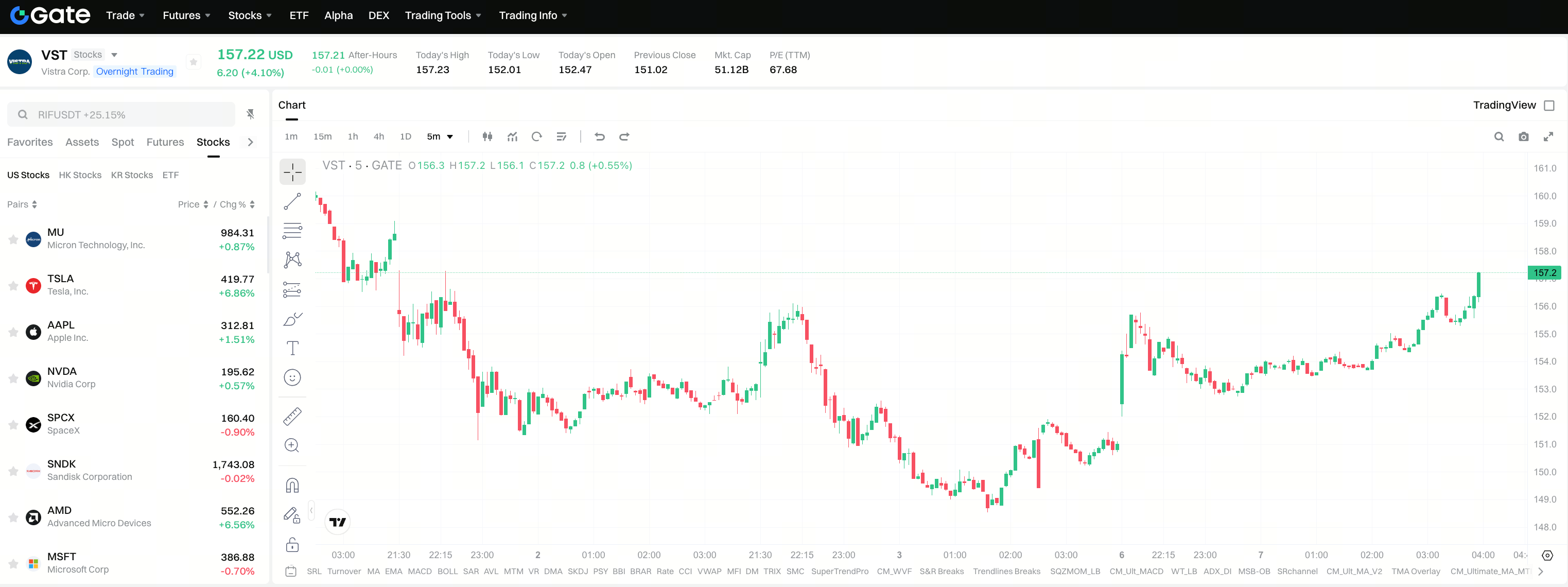
On Gate Stocks, users can search for Vistra Corp using ticker VST. The standard workflow involves confirming account and trading permissions, preparing available USDT, entering the stock page, searching VST, verifying company name, choosing order type, and reviewing order and position records after execution. How to Buy VST on Gate Stocks covers account setup, ticker search, order placement, and fee review.
When viewing VST on the Gate stock page, ensure the page shows Vistra Corp, not another energy or utility company. The trading page handles ticker recognition, order execution, fee rules, and position review; fundamental analysis still requires examining generation assets, market exposure, and risk metrics.
What Risks Should You Consider Before Investing or Trading VST?
VST’s risks fall into business, market, regulatory, and trading execution categories. Business risks cover nuclear operations, gas fuel costs, and storage returns; market risks include ERCOT/PJM price volatility; regulatory risks relate to nuclear policies and environmental compliance. Trading execution risks stem from ticker errors, order misreading, liquidity differences, and USDT funding scope. Before trading VST, users should separately review the VST Risk Metrics Checklist and Gate Stocks information.
What Are the Advantages, Risks, and Limitations of Trading Vistra Stock?
Advantages: Diverse generation assets and retail network, nuclear and gas provide complementary baseload and peaking, long-term PPAs anchor part of the supply. Risks: Price and fuel cost volatility, nuclear regulatory risk, storage return cycles, and retail competition. Limitations: Multi-asset structure cannot be captured by a single industry label, wholesale market exposure makes revenue sensitive to price swings, and Gate Stocks is not a substitute for independent financial and market rule verification. Advantages and risks coexist—avoid single-narrative analysis.
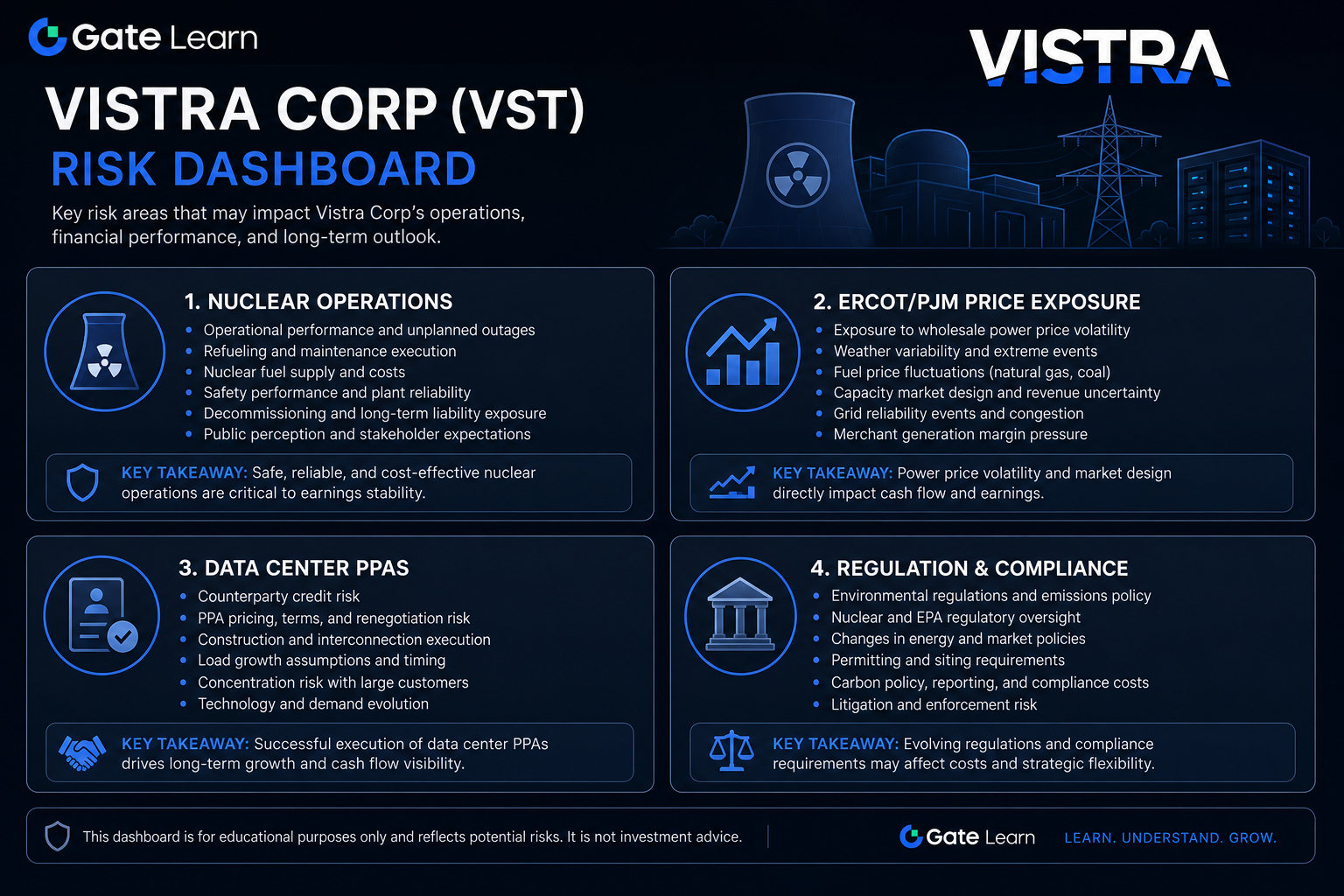
Figure 2. VST risk dashboard: nuclear operations, ERCOT/PJM price exposure, data center PPAs, gas fuel, and regulatory policies are key checklist items.
Summary
Vistra Corp (VST) is a leading U.S. integrated power company, defined by its multi-asset generation portfolio, ERCOT and PJM market participation, retail brands like TXU Energy, and long-term supply capabilities for AI data centers. Understanding VST requires distinguishing business structure, peer categories, Gate Stocks trading routes, and risk metrics—avoid reducing VST to a single “nuclear” or “AI power” label.
FAQ
What kind of company is Vistra Corp (VST)?
Vistra Corp is a U.S. integrated power company listed on NYSE, ticker VST, headquartered in Irving, Texas. Its generation portfolio includes natural gas, nuclear, coal, solar, and battery storage. Retail brands include TXU Energy and Ambit Energy, with main markets in ERCOT and PJM.
What are the components of Vistra’s business structure?
Vistra’s business is divided into three layers: generation assets (multi-type capacity), wholesale power markets (ERCOT, PJM energy/capacity trading), and retail/customer contracts (TXU Energy and other brands). Generation sets available supply, markets set price and capacity value, retail connects end demand.
Why is VST associated with AI data center power?
Large hashrate facilities require 24/7 continuous, dispatchable, and low-carbon power. Vistra’s nuclear baseload, gas peaking, and long-term PPA experience enable contract-secured stable supply for data center clients.
How does VST differ from CEG, NextEra, and Duke?
CEG is a nuclear-focused independent generator; NextEra emphasizes renewables and regulated utilities; Duke Energy is a traditional regulated utility. Vistra is an integrated platform for multi-asset generation and retail power, with prominent ERCOT exposure and gas/storage mix.
How do you search and trade VST on Gate?
Go to Gate Stocks, search ticker VST, verify Vistra Corp and NYSE info; confirm account permissions and available USDT, select order type, and after execution, review ticker, quantity, and fees in positions and order records.
What risks should you check before trading VST?
Separately review business risks (nuclear operations, gas fuel costs, ERCOT/PJM price volatility, retail competition) and trading execution risks (ticker errors, order types, fee rules, USDT funding scope). Company fundamentals should not be conflated with Gate operational fields in analysis.