AI, cloud computing, and enterprise digitization continue to generate massive data volumes, making storage infrastructure a critical pillar alongside the hashrate ecosystem. SSDs and NAND Flash prioritize speed and low latency, while HDDs maintain a vital role in large-scale, long-term, low-cost-per-capacity storage. To understand WDC, you need to grasp the post-SanDisk spin-off relationship between WDC and SNDK, the logic behind HDD demand, and how storage stocks are classified.
From a Gate Stocks trading perspective, WDC is a standalone U.S. stock ticker distinct from SanDisk's SNDK. When searching, placing orders, or reviewing holdings, always confirm the ticker, corporate entity, and business scope first. The WDC trading path on Gate Stocks and the WDC key metrics checklist provide a solid pre-trade verification framework.
What Is Western Digital (WDC)? Which Listed Company Does It Represent?
Western Digital Corporation is a data storage device and solutions company trading on the Nasdaq under the ticker WDC. Founded in 1970 and headquartered in San Jose, California, the company has long served enterprises, cloud providers, OEMs, channel partners, and consumers.
Following the spin-off, WDC's core business centers on HDD technology. HDDs store data on spinning magnetic disks, making them ideal for high-capacity, long-term, cost-sensitive storage. Unlike SSDs optimized for high-speed reads and writes, HDDs deliver value through lower cost per unit capacity and efficient large-scale deployment.
| Dimension |
Western Digital (WDC) |
| Listed Market |
Nasdaq |
| Stock Ticker |
WDC |
| Core Business |
HDD data storage devices and solutions |
| Primary Markets |
Cloud, Client, Consumer |
| Post-Spin Relationship |
SanDisk handles Flash/NAND independently |
This table captures WDC's identity after the spin-off. When reviewing quotes, earnings reports, or trading pages, investors should treat WDC and SNDK as separate entities.
What's the Relationship Between SanDisk and Western Digital? What Changed After the 2025 Spin-Off?
SanDisk was originally a key part of Western Digital's Flash business. In February 2025, Western Digital completed the spin-off, making SanDisk Corporation an independent publicly traded company under the ticker SNDK. Post-spin-off, WDC focuses on HDDs, while SNDK handles NAND Flash, SSDs, and advanced storage products.
The core rationale behind the split: giving each storage business a clearer capital structure, R&D cadence, and investor identity. HDD and NAND operate on different market cycles, customer requirements, technology paths, and capital expenditure profiles. The separation allows WDC and SNDK to pursue strategies tailored to their specific markets.
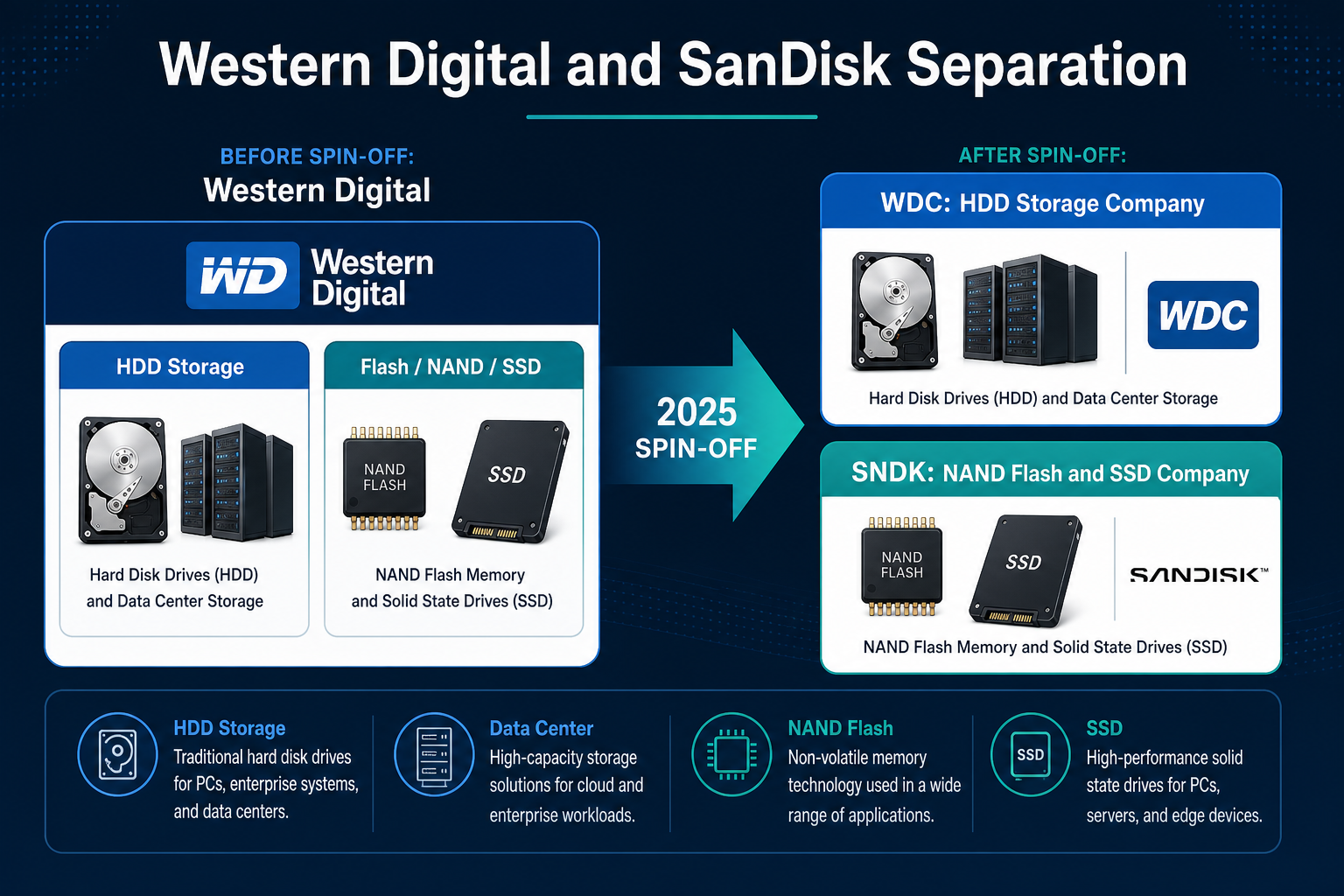 Figure 1: Western Digital and SanDisk spin-off structure: WDC focuses on HDD storage; SNDK operates as an independent NAND Flash and SSD company.
What Does Western Digital Do? A Look at HDDs, Cloud Storage, and Enterprise Data Centers
Western Digital's post-spin-off market segments fall into three categories: Cloud, Client, and Consumer. Cloud serves public cloud, private cloud, enterprise data centers, and hyperscale clients; Client targets OEMs and channel partners; Consumer includes external drives, personal backup, and retail storage products.
| Market |
Typical Customers |
Demand Characteristics |
| Cloud |
Cloud providers, enterprise data centers |
High capacity, low unit cost, high reliability |
| Client |
OEMs, channel partners |
Desktop, workstation, edge device storage |
| Consumer |
Individuals and small offices |
External storage, backup, content management |
Cloud is the key to understanding WDC. AI training, inference, logging, backup, video, and enterprise data archiving all generate ongoing storage demand — but much of that data doesn't need to live on the fastest media at all times. HDDs, with their capacity and cost advantages, remain essential for long-term data retention in cloud data centers.
Why AI and Cloud Computing Still Need HDDs
AI workloads require more than GPUs and high-speed networks — they also produce massive training datasets, model checkpoints, logs, enterprise knowledge bases, and archival files. Not all of this data needs top-tier read/write speed throughout its lifecycle. Much cold and warm data is better suited to lower-cost HDDs.
HDDs aren't meant to replace SSDs; they serve as capacity-grade infrastructure within the storage hierarchy. Cloud providers typically combine HDDs, SSDs, and object storage based on access frequency, latency needs, and cost. WDC's opportunity lies in sustained demand for high-capacity HDDs in cloud infrastructure.
How Is WDC Different From SanDisk, Micron, and Seagate?
Post-spin-off, WDC is essentially an HDD pure-play. SanDisk (SNDK) focuses on NAND Flash and SSDs; Micron (MU) covers DRAM and NAND memory; Seagate (STX) is also HDD-centric. All four operate in the storage chain, but their business cycles diverge.
HDD companies are more sensitive to cloud data center capacity demand, hard drive pricing, and large client procurement cycles. NAND and DRAM players are more driven by memory pricing, wafer capacity, and consumer electronics cycles. Treating them all simply as "storage stocks" can mask important underlying differences.
How to Find and Trade WDC on Gate
On Gate Stocks, search for Western Digital using the ticker WDC. The standard workflow includes: completing account verification and stock trading permissions, funding your account, navigating to the Gate Stocks page, searching for WDC, verifying the company name and ticker, choosing an order type, and confirming the trade.
When viewing WDC on the Gate Stocks page, double-check trading hours, order types, fee schedules, and account balances. WDC and SNDK are different tickers — never mix them up when searching or placing orders.
What Risks Should You Consider When Investing in Western Digital (WDC)?
WDC's key risks stem from storage industry cycles, cloud customer demand, technological disruption, and customer concentration. HDD demand is closely tied to large cloud clients' procurement plans — any slowdown in data center capex could affect order flow. Price shifts in SSDs and NAND also influence the mix between storage media.
After the spin-off, WDC's financial profile is more focused, but historical data may still reflect the now-separated business. When analyzing WDC, focus on continuing operations metrics: HDD gross margins, cloud customer demand, unit capacity shipments, free cash flow, and capital expenditure.
Trading risks should be evaluated separately from business fundamentals. WDC's business risks involve HDD cycles, cloud procurement, and post-spin-off accounting. Execution risks come from wrong ticker selection, order types, trading hours, fees, and account funding. Separating these two categories helps avoid misreading platform issues as changes in the company's outlook.
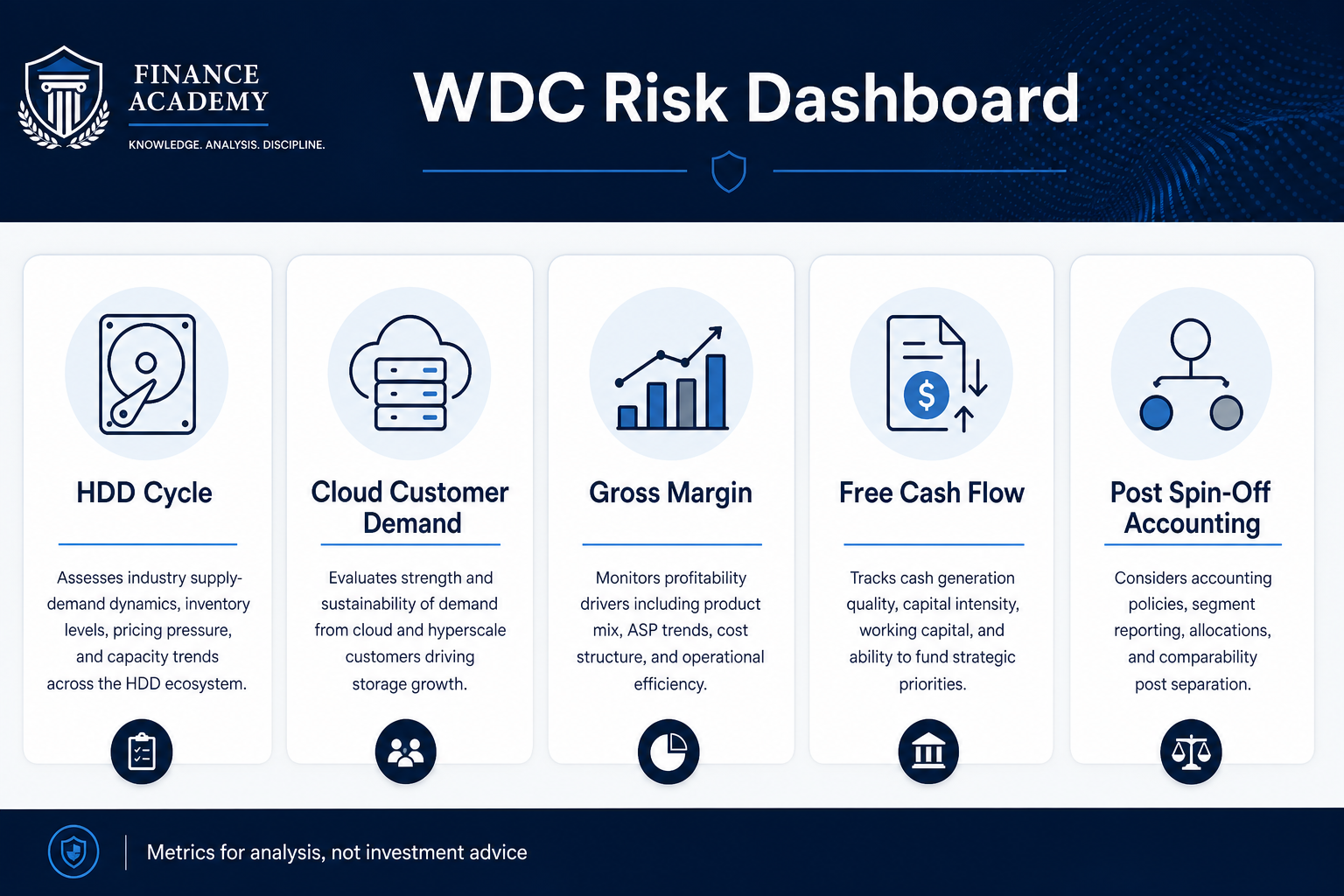 Figure 2: WDC risk dashboard: HDD cycle, cloud customer demand, gross margin, cash flow, and post-spin-off financial reporting are the core checkpoints.
Summary
After the SanDisk spin-off, Western Digital (WDC) emerged as a more focused HDD data storage company. WDC's value story ties into AI data growth, cloud data center capacity demand, HDD cost advantages, and storage cycles. SanDisk (SNDK) now independently handles NAND Flash and SSDs. Before trading WDC through Gate Stocks, confirm the ticker and corporate entity, then assess risks using HDD industry metrics and the company's financial profile.
FAQ
What is Western Digital (WDC)?
Western Digital is a Nasdaq-listed data storage company with the ticker WDC. After the SanDisk spin-off, WDC focuses primarily on HDD hard drive devices and solutions.
Are SanDisk and WDC still the same company?
No. SanDisk was spun off in 2025 and now trades independently as SNDK. WDC retains the HDD business, while SNDK handles Flash, NAND, and SSD operations.
What's the difference between WDC and SNDK?
WDC is mainly an HDD storage company; SNDK is mainly a NAND Flash and SSD company. They have different tickers, business cycles, and technology paths.
Why do cloud data centers still need HDDs?
Much cloud data doesn't need to live on the fastest media at all times. HDDs still offer advantages in high capacity, long-term retention, and low cost per terabyte.
How do I find WDC on Gate?
Go to Gate Stocks, search for ticker WDC, verify the Western Digital company name and trading page, then proceed based on your account permissions and order rules.