The energy industry has long held an important place in the global economy. Industrial production, transportation, chemical manufacturing, and power supply all depend on energy resources to operate. As a result, changes in the energy market affect not only energy companies themselves, but also global economic activity and capital market performance.
In recent years, factors such as global energy security, geopolitics, the energy transition, and the buildout of artificial intelligence infrastructure have continued to draw market attention to energy assets. The interaction among oil, natural gas, nuclear power, power grids, and new energy has also made the energy industry one of the major themes in global capital markets.
What Is XLE, the Energy Select Sector SPDR ETF?
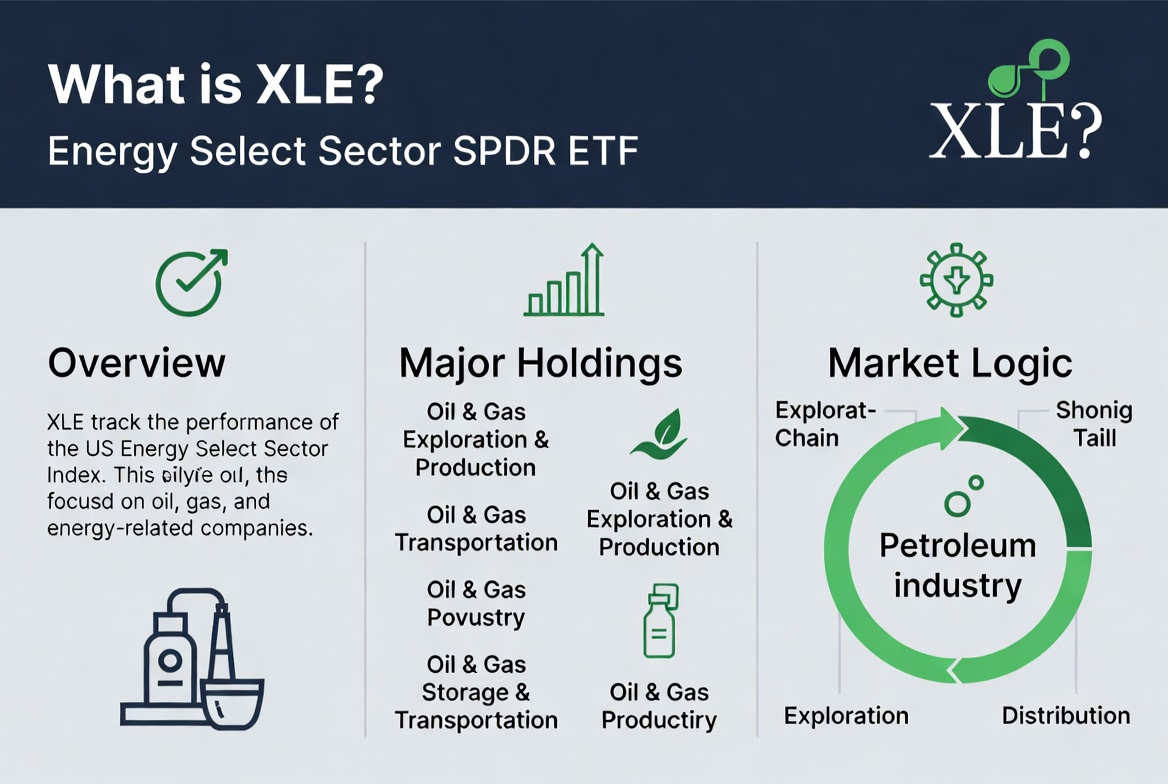
As one of the largest and most liquid energy sector ETFs in the U.S. market, XLE is designed to track the overall market performance of large U.S. energy companies. Unlike broad based index ETFs, XLE does not cover every industry. Instead, it focuses on the energy sector. Its holdings are mainly drawn from large oil and gas companies, so its market performance often reflects the broader trend of the U.S. energy industry.
XLE does not represent a single company. It represents a basket of energy companies. Through the ETF structure, market participants can gain exposure to the entire U.S. energy sector through a single product. In essence, XLE is one of the most representative assets tied to the U.S. energy industry.
Why XLE Focuses on the U.S. Energy Industry
The United States has long been one of the world’s largest energy producers, as well as an important participant in the international energy market. The energy industry spans many parts of the value chain, including oil exploration, natural gas production, refining and processing, pipeline transportation, and energy services. Because the industry is so large, U.S. capital markets are home to many of the world’s leading energy companies.
The profitability of energy companies is usually closely tied to international energy prices, which gives the energy sector a clear cyclical character. When global economic activity expands, energy demand usually rises. When demand weakens, the profitability of energy companies may also come under pressure. This industry pattern makes the energy sector an important area to watch in global macro markets.
XLE’s holdings mainly consist of large U.S. energy companies, and its composition is generally built around the oil and gas value chain. From an industry perspective, the companies covered by XLE mainly include:
| Industry Segment |
Main Business |
| Upstream Companies |
Oil and natural gas exploration and production |
| Midstream Companies |
Pipeline transportation and storage |
| Downstream Companies |
Refining and energy sales |
| Energy Services |
Technical and equipment support |
Because large integrated energy companies often operate across multiple parts of the value chain, XLE’s holdings tend to lean toward industry leaders.
This structure means XLE places more emphasis on the overall performance of the U.S. energy industry, rather than on changes in the price of a single energy commodity.
How the Oil and Gas Value Chain Affects XLE
Oil and natural gas form the most important industrial foundation for XLE. The energy value chain usually begins with resource extraction, then moves through transportation, storage, refining, and sales before ultimately reaching industrial, transportation, and consumer markets.
When international oil prices rise, upstream energy companies are usually better positioned to achieve revenue growth. When energy demand increases, profit expectations across the entire value chain may also improve at the same time.
The natural gas market also has a major impact on energy companies. As electricity demand grows and the energy mix changes, natural gas has gradually become one of the world’s important energy sources. Since XLE’s holdings cover multiple parts of the energy value chain, changes in the oil and natural gas markets usually have a direct effect on XLE’s performance.
XLE’s Role in the U.S. Energy Market
XLE has become one of the important market indicators for observing the U.S. energy industry. Because the ETF’s holdings are concentrated in large energy companies, XLE’s price movement can often reflect the market’s overall expectations for the U.S. energy sector.
During an upswing in the energy market cycle, XLE often becomes an important tool for institutional investors seeking exposure to energy assets. During periods of market adjustment, XLE’s performance can also reflect changes in risk appetite toward the industry.
For those studying the energy market, XLE is not only an ETF. It is also an important window into the structure of the U.S. energy industry.
What Factors Affect XLE Price Volatility?
XLE’s price fluctuations are shaped by a range of factors. International crude oil prices are usually one of the most important variables. Since energy company revenue and profit are often directly affected by oil price movements, rises or declines in oil prices usually drive volatility across the energy sector.
In addition, natural gas prices, global energy demand, geopolitical events, and the broader macroeconomic environment can all affect XLE’s performance. The following factors are usually closely watched by the market:
-
Changes in international crude oil prices
-
Supply and demand shifts in the natural gas market
-
Expectations for global economic growth
-
Geopolitical risks
-
Changes in U.S. energy policy
Together, these factors determine profit expectations and market valuation levels for the energy industry.
What Is the Relationship Between XLE and Crude Oil Prices?
XLE and crude oil prices are usually strongly connected, but they are not the same thing.
Crude oil is an energy commodity, while XLE represents a portfolio of energy company stocks.
When crude oil prices rise, the profitability of energy companies usually improves. Related stocks may then move higher, helping push XLE upward.
However, energy company share prices are also affected by factors such as operating efficiency, capital expenditure, shareholder return policies, and market sentiment.
Therefore, crude oil prices are an important variable affecting XLE, but they are not the only determining factor.
XLE more accurately reflects the value of energy companies, rather than simply tracking the oil price itself.
How Is XLE Different from Other Energy ETFs?
Energy ETFs are not all the same. Different products have different investment focuses.
Some energy ETFs place more emphasis on upstream oil and gas exploration and production companies, while others focus on energy service companies or the new energy sector.
By comparison, XLE places greater emphasis on large integrated U.S. energy companies, so its industry concentration is usually relatively high.
| ETF Type |
Main Characteristics |
| XLE |
Large integrated energy companies |
| Upstream Energy ETF |
Focuses on oil and gas exploration and production companies |
| Energy Services ETF |
Focuses on equipment and service companies |
| New Energy ETF |
Focuses on the new energy value chain |
These differences mean that different energy ETFs may vary in their sensitivity to oil price cycles, industry conditions, and market risk.
What Are the Main Use Cases for XLE?
XLE is mainly used for energy sector research and market allocation.
Some market participants use XLE to observe changes in the health of the U.S. energy industry. Some institutions use it as a tool for allocating exposure to the energy sector.
As the global energy transition advances, the energy market is gradually developing into a system where oil, natural gas, nuclear power, and new energy coexist.
For this reason, XLE is also often used to analyze the market position of traditional energy within the global energy system.
For anyone focused on the energy market, XLE offers a relatively direct way to observe the industry.
How to Buy XLE, the Energy Select Sector SPDR ETF
As a sector themed ETF listed in the U.S. market, XLE can usually be bought and sold through brokerage platforms that support U.S. stock trading. Under the traditional model, investors need to open an account that supports trading in the U.S. securities market and participate in the ETF market through a securities trading system.
In addition to traditional brokerage accounts, some platforms in recent years have also begun offering CFD products related to energy ETFs. CFD products are traded by tracking price movements and do not involve actual ownership of the ETF.
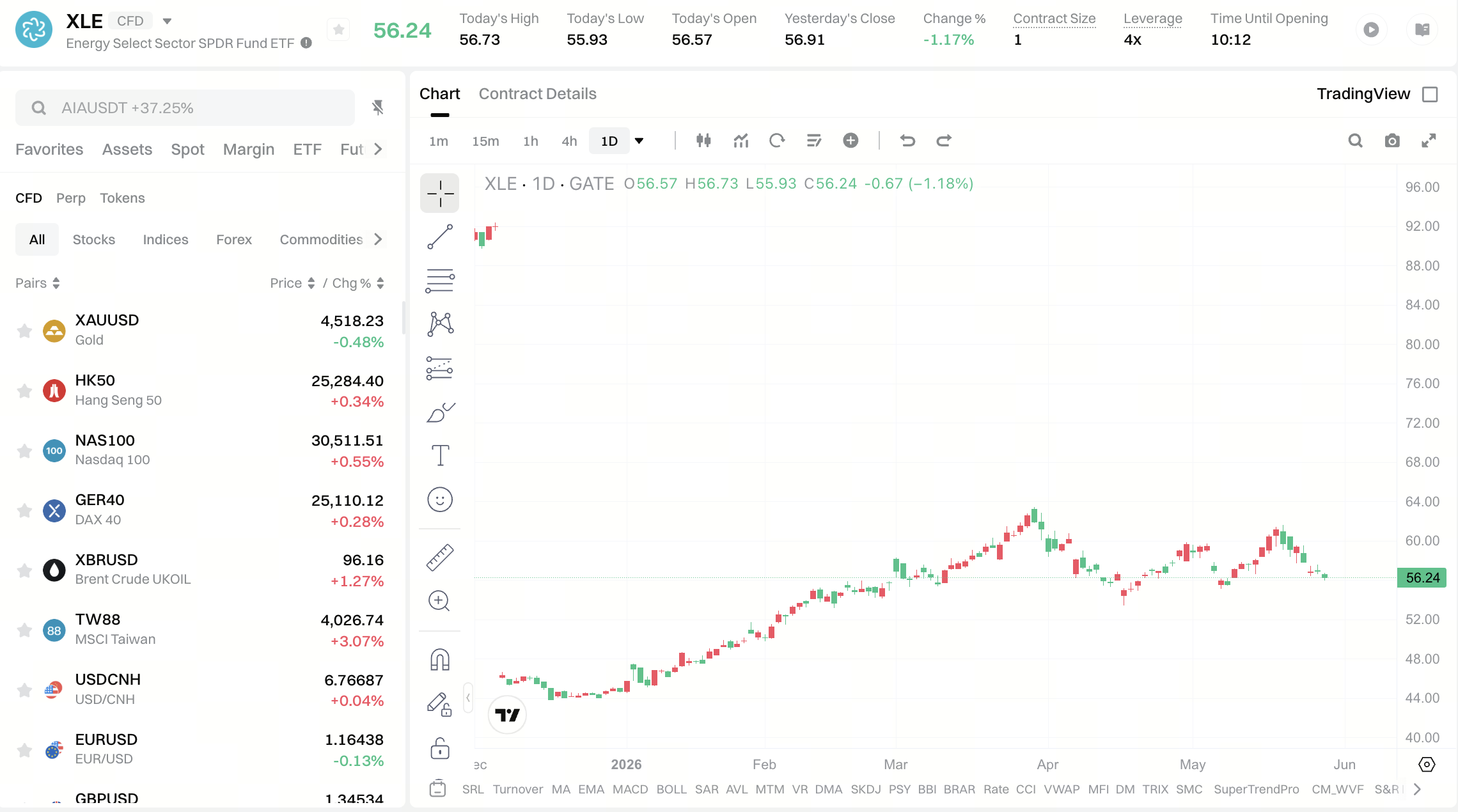
At the same time, some digital asset platforms have also started expanding into TradFi market products. For example, products such as Gate TradFi CFD now cover some global market assets, including energy ETFs, stock indexes, and commodities. When participating in trading XLE or related energy products, market participants generally need to pay attention to factors such as product structure, liquidity, leverage mechanisms, and local regulatory rules.
XLE’s Advantages and Limitations
One advantage of XLE is that it provides exposure to major leading companies in the U.S. energy industry through a single ETF, helping reduce single company risk. Compared with investing directly in individual energy companies, XLE can better reflect the market performance of the industry as a whole.
XLE also has strong liquidity and a mature market structure, which is why it has long attracted attention from both institutional and individual investors. However, XLE also has certain limitations.
Because its holdings are concentrated in the energy industry, XLE’s performance is usually highly dependent on the condition of the energy market. When oil prices fall or energy demand weakens, the profitability of related companies may be affected. As a result, XLE is still, by nature, a thematic asset with clear industry cycle characteristics.
Conclusion
XLE is one of the most representative ETFs in the U.S. energy industry. It mainly covers large energy companies involved in oil, natural gas, refining, and energy services.
The development of the energy value chain, changes in international oil prices, supply and demand in the natural gas market, and global economic activity all work together to influence XLE’s market performance. As an important tool connecting capital markets with the energy industry, XLE not only reflects the health of the U.S. energy sector, but also helps the market understand how the global energy market operates.
FAQs
What Is XLE?
XLE is the ticker symbol for the Energy Select Sector SPDR Fund, a sector themed ETF that tracks the performance of large U.S. energy companies.
What Companies Does XLE Mainly Invest In?
XLE mainly covers large U.S. oil, natural gas, and integrated energy companies, with a focus on reflecting the overall performance of the U.S. energy industry.
What Is the Relationship Between XLE and Crude Oil?
Changes in crude oil prices affect the profitability of energy companies, so they usually affect XLE’s performance. However, XLE does not directly track crude oil prices.
Is XLE a New Energy ETF?
XLE mainly focuses on the traditional energy industry, including oil and natural gas companies. It is not a new energy themed ETF.
Which Factors Are Most Likely to Affect XLE Volatility?
International oil prices, natural gas prices, global economic growth, energy policy, and geopolitical risks are usually important factors affecting XLE volatility.
How Can XLE Be Traded?
XLE can be traded through brokerage accounts that support the U.S. stock market. Some platforms also offer CFD products related to XLE.